
How Can You Keep a Toddler Rear-Facing Longer? 7 Practical Ways That Work
Quick Answer
You keep a toddler rear-facing longer by using a seat with higher rear-facing weight and height limits, installing it at the right recline angle, and giving your toddler more legroom and a better view. Most toddlers can stay rear-facing until age 3 or 4 if the seat still fits. Check the label on your seat first, because age alone never decides the switch. Rear-facing vs. forward-facing car seats explains why that extra time matters so much in a crash.
The 7 moves that make the biggest difference
- Pick higher limits: Choose a convertible or all-in-one seat rated to 40 or 50 pounds rear-facing.
- Fix the angle: Use the upright angle allowed for toddlers, not the newborn recline.
- Move the seat: Try the centre or the side with the most legroom in your car.
- Free the legs: Let bent knees and crossed legs be normal, not a reason to turn.
- Improve the view: Use a safe mirror and talk to your toddler so the ride feels less boring.
- Check the fit monthly: Weigh your toddler and check headroom, harness height, and the one-inch rule.
Do this first today
- Read the rear-facing weight limit, height limit, and headroom rule on your seat label.
- Compare those limits with your toddler’s current weight and height before you shop for a new seat.
I’ve fitted rear-facing seats in tight back seats for years, and I know the exact moment most parents start to doubt the setup. Your toddler’s legs look folded, the front seat feels cramped, and someone at daycare says it’s time to turn.
That doubt is normal. This guide goes deeper than a quick tip list, so you can tell a real limit from a myth and keep your toddler rear-facing with confidence.
In This Guide
- How Long Should a Toddler Stay Rear-Facing?
- Why Do Toddlers Outgrow Rear-Facing Seats So Soon?
- How Do You Pick a Seat With Higher Rear-Facing Limits?
- How Can You Make More Legroom in a Small Car?
- What Do You Do When Your Toddler Hates Rear-Facing?
- When Is It Really Time to Turn Forward-Facing?
- Frequently Asked Questions
How Long Should a Toddler Stay Rear-Facing?
Keep your toddler rear-facing as long as possible, up to the highest weight or height limit allowed by your car seat maker. That is the rule in plain English.
For many toddlers, that means age 3 or 4. Some tall or heavy toddlers reach a limit sooner, and some smaller toddlers can stay rear-facing even longer.
Extended rear-facing means keeping a child rear-facing past age 2, until the seat’s own limits say stop. It is not a contest, and it is not about holding out for a birthday.
The seat label decides, not the calendar. Your toddler’s weight, height, and headroom all matter more than age alone.
Safety experts in the United States recommend this approach for a clear reason. A rear-facing seat spreads crash forces across the whole back, neck, and head, instead of letting the head snap forward.
I learned this the practical way in my garage. I once helped a neighbour check a seat in a Honda CR-V, and the toddler had at least a year of rear-facing room left, even though the parents thought age 2 meant time to turn.
Check the NHTSA car seat guidance if you want the official wording for your state and your seat type. Your seat manual still wins when the two disagree on a specific limit.
Pro tip: check your car seat manual and the NHTSA recall lookup before you change anything, and ask a certified child passenger safety technician if the label wording feels unclear.
Section Takeaway: Age 2 is a minimum, not a finish line. Stay rear-facing until your toddler hits a weight limit, a height limit, or the headroom rule on your seat label.
Why Do Toddlers Outgrow Rear-Facing Seats So Soon?
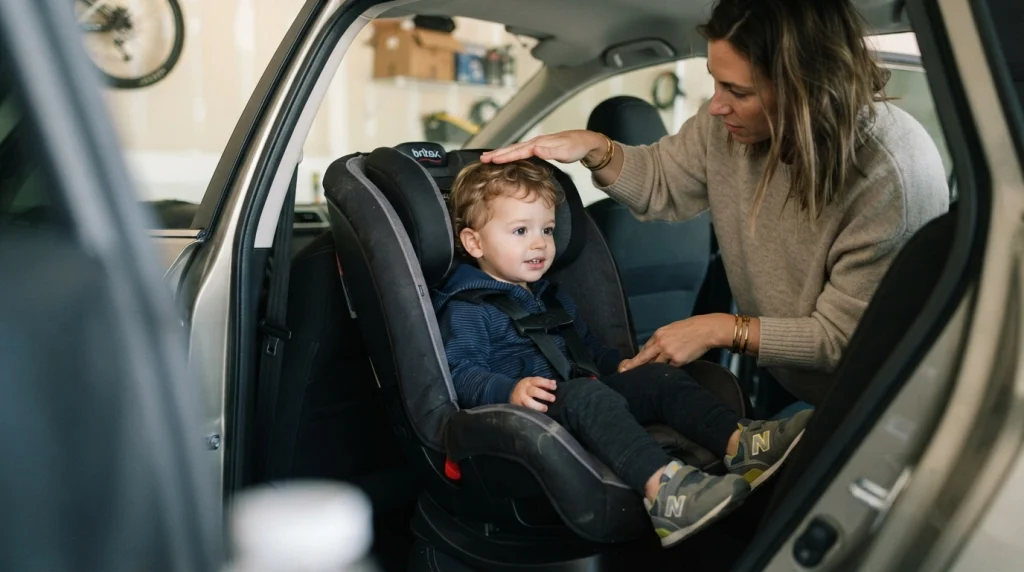
Most toddlers do not outgrow rear-facing because they turn 2. They outgrow it because the seat they started in was built for a baby, not a toddler.
Infant carriers are the usual culprit. Many top out at 30 or 35 pounds rear-facing, and a busy toddler can hit that weight fast.
Height is the other quiet limit. A seat may still allow the weight, but your toddler’s head may sit too close to the top of the shell.
That headroom rule is simple to check. Most seats need at least one inch of shell above the top of your toddler’s head.
Legroom causes the most worry, yet it rarely ends rear-facing. Bent knees, crossed legs, and feet on the seatback look cramped to adults, but toddlers fold up with ease.
Here are the four limits that actually end rear-facing:
- Weight limit: The maximum rear-facing weight printed on the label.
- Height limit: The maximum rear-facing height, if your seat lists one.
- Headroom rule: The one-inch rule, or the limit your manual states.
- Harness fit: Straps that can no longer sit at or below the shoulders rear-facing.
Leg length is not on that list. No major seat maker lists leg length as a turn-around trigger.
Watch for a different problem instead. A seat that was fine at 12 months can feel tight at 30 months because the harness, crotch buckle, and headrest all need to move up.
I see this mistake often. Parents keep the infant insert in too long, or they leave the harness slots at the baby setting, and the seat suddenly feels small.
Fix the fit first, then judge the size. You may find months of rear-facing room you thought was gone.
Section Takeaway: Weight, height, headroom, and harness fit end rear-facing. Leg length alone does not, even when those little legs look folded.
How Do You Pick a Seat With Higher Rear-Facing Limits?
Pick the seat by its rear-facing limits, not by its looks or its forward-facing headline. The rear-facing numbers sit on the label and in the manual.
Look for three numbers before you buy. Check the rear-facing weight limit, the rear-facing height limit, and the shell height.
A taller shell buys you time. A higher weight limit buys you time too, and the best seats for extended rear-facing offer both.
Here is how the main seat types usually compare. Treat these as typical ranges, and always check the exact label on the seat you buy.
| Seat type | Typical rear-facing weight limit | Typical rear-facing height limit | Best for |
|---|---|---|---|
| Infant carrier | 30 to 35 pounds | 30 to 32 inches | Newborns and easy carry-out |
| Standard convertible | 40 pounds | 40 inches | Toddlers moving out of a carrier |
| Extended rear-facing convertible | 50 pounds | 44 to 49 inches | Keeping a toddler rear-facing to age 3 or 4 |
| All-in-one | 40 to 50 pounds | 40 to 49 inches | One seat through several stages |
Do not shop by weight alone. A 50-pound limit means little if the shell is short and your toddler’s head reaches the top early.
Check the shell height in the shop if you can. Sit your toddler in the floor model, check the one-inch rule, and look at where the harness slots sit.
Think about your car too. A tall shell needs more back-seat depth, and some seats fit better in a RAV4 than in a small sedan.
Look for a load leg or an anti-rebound bar if your car and seat allow them. These features help control movement in a crash, and they can make a rear-facing install feel more solid.
Read independent Consumer Reports car seat ratings for fit and ease-of-use notes before you narrow your shortlist. Then test the top two seats in your own car.
Ask yourself three questions before you pay:
- Does it fit my car? Install it rear-facing and check front-seat legroom.
- Does it fit my toddler? Check headroom, harness height, and crotch buckle position.
- Can I install it tight? The seat should move less than one inch side to side at the belt path.
If you need help choosing the right size for your toddler’s age and build, read our guide on how to choose a car seat for a toddler. It walks through the same fit checks in more detail.
Section Takeaway: Buy for rear-facing weight, rear-facing height, and shell height together. A tall shell with a 50-pound limit gives most toddlers the longest rear-facing run.
How Can You Make More Legroom in a Small Car?
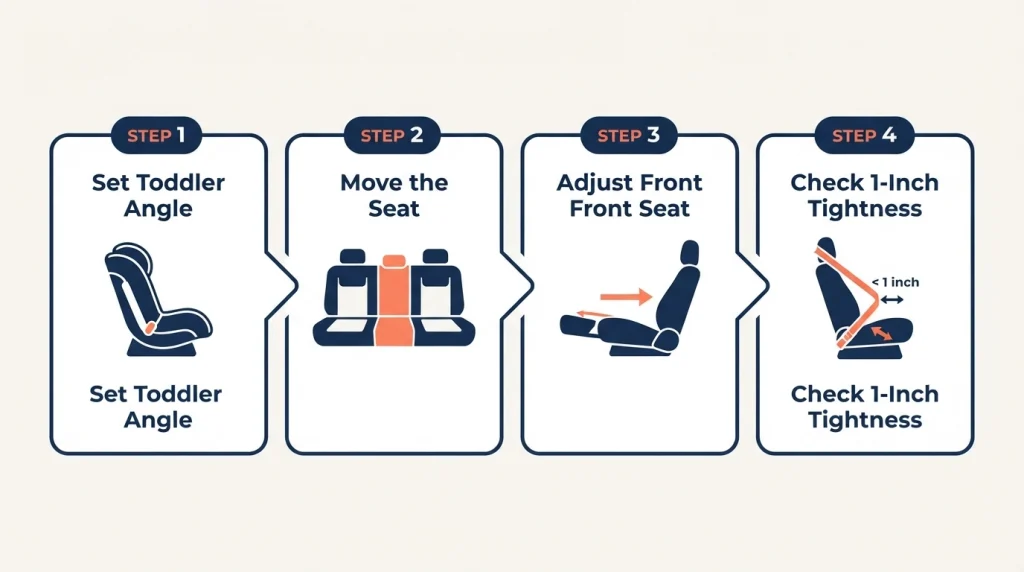
Small cars cause most of the rear-facing stress. The fix is usually install angle and seat position, not a new car.
Start with the recline angle. Newborns need a deep recline, but toddlers can sit more upright once they hold their heads up well.
Most convertible seats allow a more upright rear-facing angle for toddlers. Check the angle indicator on your seat, and use the upright range your manual allows.
That one change can free up several inches. I have seen a Subaru Outback gain enough room for the driver to move the seat back two clicks, just by switching from newborn recline to toddler upright.
Try these install moves in order:
- Set the toddler angle: Use the upright rear-facing setting in your manual.
- Move the seat: Try the centre seat, then each outboard seat, and keep the spot with the best fit.
- Slide the front seat: Move it up a notch, then tilt the backrest a touch more upright.
- Check the install: Re-check the one-inch movement test after every move.
Do not use a pool noodle or a rolled towel unless your manual allows it. Some seats allow an approved aid for angle, and many do not.
Keep the front seats safe too. The driver needs a clear view and full pedal reach, and the passenger airbag needs the right distance.
A compact seat can help in a tight car. Some extended rear-facing seats are built with a shorter front-to-back footprint, even with a tall shell.
Read our step-by-step guide on how to install a rear-facing car seat before you redo the install. It covers belt path, angle, and the tightness check.
Check Edmunds car seat fit guides if you want model-specific notes on back-seat space. Your own test fit still matters more than any guide.
Section Takeaway: Use the upright toddler angle, try the centre seat, and re-check the install. A few inches from the angle change often solves the small-car squeeze.
What Do You Do When Your Toddler Hates Rear-Facing?

Some toddlers fuss rear-facing because they feel bored, not because they feel hurt. Fix the boredom first, and the fuss often fades.
Give them a view. A crash-tested mirror made for car seats lets your toddler see you, and it lets you see them.
Do not hang a loose mirror or a toy on a string. Use only a mirror your seat maker allows, and attach it exactly as directed.
Talk more on short trips. Narrate what you see, sing a song, or play a simple game like spotting red cars.
Keep a small set of car-only toys. Rotate two or three soft toys, and swap them every week so they stay fresh.
Check comfort before you blame the direction. A twisted strap, a bulky coat, or a hot seat can make any toddler cry.
Here are the comfort checks I run first:
- Harness snug: Do the pinch test at the collarbone, with no slack to pinch.
- No bulky coat: Remove thick coats, then buckle, then cover with a blanket if needed.
- Cool air: Point a rear vent at the seat, or crack a window for fresh air.
- Clean straps: Check for twists, crumbs, or a buckle pressing on the belly.
Try a calm routine for a week. Same mirror, same two toys, same song, and a short practice ride around the block.
Many parents tell me the fuss peaks for a few days, then drops. Toddlers learn the new routine fast when the ride feels the same each time.
Do not turn the seat to stop a tantrum. A forward-facing seat will not fix a hot, hungry, or tired toddler, and it trades away crash protection.
Watch for car sickness instead. If your toddler vomits on most rides, talk to your paediatrician and check the seat angle before you change direction.
Section Takeaway: Boredom, heat, and a poor harness fit cause most rear-facing fuss. Fix the view, the comfort, and the routine before you think about turning.
When Is It Really Time to Turn Forward-Facing?
Turn forward-facing only when your toddler hits a rear-facing limit on your seat. That is the clean test, and it keeps the decision simple.
Check all three limits again. Weight, height, and the one-inch headroom rule all count.
If one limit is hit, the seat is outgrown rear-facing, even if the other limits still have room. Do not stretch the last limit.
Read our guide on when to turn a car seat forward-facing for the full checklist. It covers the same limits, plus the install change you need to make.
Plan the switch in advance. Buy the next stage early if you can, so you are not rushed into a poor fit.
Use the transition checklist in our parents checklist for car seat transitions to check fit, laws, and expiry before every move. It helps you catch the small steps that are easy to miss.
Check Car and Driver car seat advice for plain-English explainers on seat types if you want a second view. Your manual still decides your seat’s limits.
Do not turn early for these reasons:
- Age 2 alone: Age is not a limit on the label.
- Legs look bent: Bent legs are normal and safe rear-facing.
- Friends turned early: Their seat, car, and toddler are not yours.
- Daycare pressure: Ask what rule they mean, then check your manual.
When you do turn, install forward-facing with the top tether every time. The tether cuts forward head movement in a crash, and it is not optional.
Keep the harness snug forward-facing too. Straps should sit at or above the shoulders in forward-facing mode, and the chest clip should sit at armpit level.
Section Takeaway: Turn only when a rear-facing limit is hit, then use the top tether and re-check the harness. An early turn trades protection for convenience.
Frequently Asked Questions
Are bent legs safe when a toddler is rear-facing?
Yes, bent legs are safe rear-facing. Toddlers sit cross-legged with ease, and crash data shows leg injuries are rare rear-facing. Turn only when a weight, height, or headroom limit is hit, not because the legs look folded.
How long can a toddler stay rear-facing?
Most toddlers can stay rear-facing until age 3 or 4, if the seat allows it. Check the rear-facing weight limit, height limit, and one-inch headroom rule on your label. Your toddler’s size decides, not their birthday.
What rear-facing weight limit should I look for?
Look for 40 pounds as a solid start, and 50 pounds if you want the longest run. A tall shell matters just as much, because headroom often ends rear-facing before weight does. Check both numbers on the label.
Does rear-facing work in a small car?
Yes, rear-facing can work in a small car with the right angle and seat. Use the upright toddler angle your manual allows, try the centre seat, and test a compact convertible. A test fit in your own car tells you more than any spec sheet.
What if my toddler cries every time we drive rear-facing?
Check comfort first, then boredom. Fix twisted straps, remove bulky coats, cool the back seat, and add a safe mirror and car-only toys. If the crying stays severe or your toddler vomits often, talk to your paediatrician before you change direction.
Is it safe to use a mirror with a rear-facing seat?
Yes, if the mirror is made for car seats and your seat maker allows it. Attach it exactly as directed, and keep it light and secure. Do not use a loose household mirror or hang toys on strings near the seat.
When must I turn my toddler forward-facing?
Turn when your toddler hits any rear-facing limit: weight, height, or the one-inch headroom rule. If one limit is hit, the seat is outgrown rear-facing. Install forward-facing with the top tether, and re-check the harness fit.
Keeping a toddler rear-facing longer is not about being strict. It is about using the seat you already have to its full, safe limit.
Check the label today, fix the angle, and give your toddler a better view. Those three steps alone buy most families months of extra rear-facing time.

Daniel Brooks is an automotive writer and product researcher focused on car accessories, car tech, maintenance, and practical driving guides. At Plug-in Car World, he helps drivers make smarter automotive decisions through honest reviews and research-driven content.
