
Do You Need Two Car Seats for Two Cars? 7 Checks to Make
Quick Answer
No law says you need two car seats for two cars, but you do need a correct seat in every car your child rides in. If both cars are used each week, a second seat or a second base saves daily swaps and cuts install mistakes, so check whether a car seat will fit in my car before you buy the second one.
The short version
- One child, two cars: You need one safe ride in each car, not two seats by rule.
- Second base often wins: For an infant carrier, a spare base is the cheapest easy fix.
- Convertibles need a seat: A convertible has no click-in base, so a second seat is the simple answer.
- Weekly use decides it: Use the second car once a week or more, and a second setup pays off.
- Rare use is different: For a rare trip, move one seat and reinstall it with care.
If you are unsure
- Count how often the second car carries your child in a normal week, then match the setup to that count.
- Test the fit in both cars before you buy, because the same seat can fit one car well and the other badly.
Do you need two car seats for two cars? I asked myself that the first week my daughter rode in both our Honda Civic and my wife’s Toyota RAV4.
I moved one convertible seat back and forth for a month. It worked, but every swap added time, sweat, and one more chance to miss a tight install.
This guide goes deeper than a yes-or-no answer. It covers when a second base is enough, when a second seat is safer, what to buy for the second car, and how to install it right in both cars.
In This Guide
- Do You Need Two Car Seats for Two Cars?
- Second Base vs Second Seat: What Works for Each Seat Type?
- Two Car Seats vs Moving One Seat: A Side-by-Side Comparison
- How Often Do You Use the Second Car?
- What Should the Second Car Seat Be?
- How to Install a Car Seat in Both Cars Correctly
- What About Grandparents, Babysitters, and Rideshares?
- Frequently Asked Questions
Do You Need Two Car Seats for Two Cars?
No, you do not need two car seats by law. You need a correct, tight seat in each car your child rides in, every single trip.
A second car seat is a separate seat kept in the second car, so your child has a ready, installed ride without a daily swap. It is a convenience buy that also removes a safety risk.
That risk is real. A rushed reinstall in rain, in the dark, or with a tired toddler in your arms is when small errors creep in.
I learned this on a wet Tuesday. I moved our convertible from the Civic to the RAV4 in a parking lot, and I forgot to recheck the recline angle.
The seat felt tight. The angle was off by a notch, and I only caught it when I checked the indicator at home.
That one miss changed how I think about a second seat. It is not about owning more gear, it is about fewer rushed installs.
So ask a simpler question first. How often does your child ride in the second car, and who installs the seat each time?
If the answer is weekly, a second setup is worth it. If the answer is once a month, moving one seat can work.
Section Takeaway: You do not need two seats by rule, but you do need a correct seat in both cars, and weekly use in the second car makes a second setup the safer, calmer choice.
Second Base vs Second Seat: What Works for Each Seat Type?
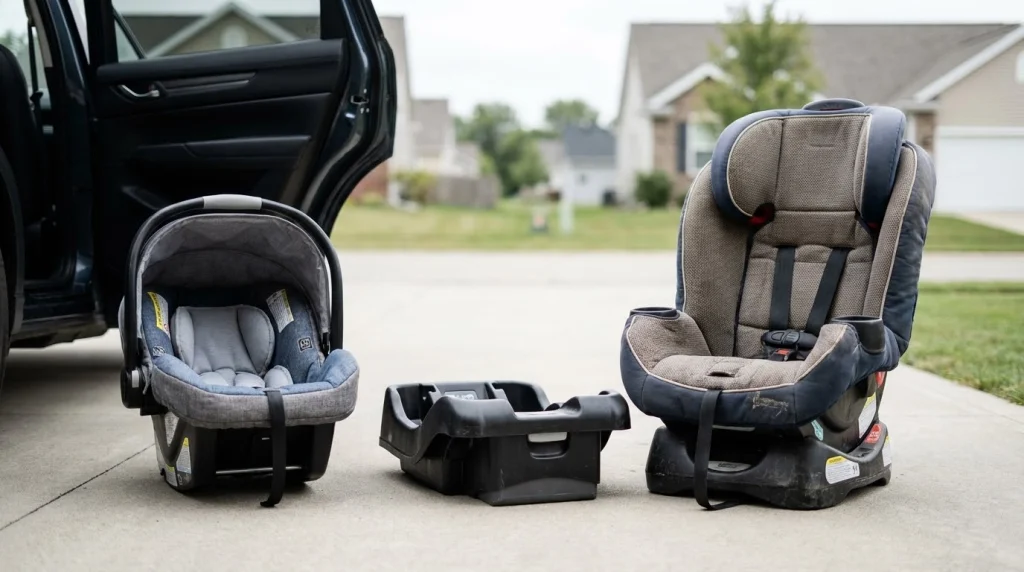
The right answer depends on your seat type. An infant carrier and a convertible seat solve this problem in very different ways.
An infant carrier clicks into a base. That base stays in the car, and the carrier moves with your baby.
A second base is the smart fix here. You buy one extra base, install it once in the second car, and click the same carrier in and out.
I used this setup for six months with our first carrier. The carrier clicked into the Civic base in the morning and the RAV4 base at daycare pickup.
Check that the spare base matches your exact carrier model. Bases are not universal, even within one brand.
Learn how to remove a car seat from its base before you buy a spare, so the release feels easy in both cars.
A convertible seat has no click-in base. You must unbuckle the whole seat, carry it, and reinstall it in the other car.
That swap takes longer, and it is harder with a heavy seat. A rotating convertible is heavier still, and it needs more space to turn.
For a convertible, a second seat is the simple answer. You install it once in each car and leave it there.
A booster is the easiest case of all. Most boosters are light, and many older children can sit in one with a quick belt check.
You can still keep a second booster in the second car. It costs less in hassle than moving one booster every school run.
Compare infant vs convertible car seat types before you choose, because the carrier-to-convertible switch changes the whole two-car plan.
Section Takeaway: Buy a second base for an infant carrier, buy a second seat for a convertible, and keep a spare booster in the second car if your child rides there often.
Two Car Seats vs Moving One Seat: A Side-by-Side Comparison
Which setup fits your week? The table below compares the four common options, so you can match one to your real routine.
| Setup | Best for | What you move each trip | Main downside |
|---|---|---|---|
| Move one seat | Rare second-car trips | The whole seat | Full reinstall every time |
| Second base plus carrier | Babies in an infant carrier | Only the carrier | Base must match the exact model |
| Second full seat | Weekly use in both cars | Only your child | Higher upfront cost, more gear |
| Second booster | Older children, school runs | Only your child | Belt fit must be checked in each car |
Moving one seat is free, and that tempts many parents. It is also the option with the most steps.
You unbuckle the seat, carry it across a parking lot, and reinstall it from scratch. Then you check the belt path, the recline, and the 1-inch test.
A second base is the middle ground. It costs less than a second seat, and the daily move takes seconds.
It only works while your baby still fits the carrier. Once you switch to a convertible, the base trick ends.
A second full seat is the calmest option for weekly use. Both cars stay ready, and both installs stay checked.
It also helps when two adults split drop-off and pickup. No one waits for the seat to arrive in the other car.
Section Takeaway: Move one seat for rare trips, use a second base for a carrier, and keep a second full seat in place when both cars carry your child each week.
How Often Do You Use the Second Car?
How often is often enough? Use this simple test, and count a normal week, not a holiday week.
- Daily in both cars: Get a second seat or a second base now, without debate.
- Two or three times a week: Get a second setup, because swaps will eat your evenings.
- Once a week: A second setup still helps, especially if the swap happens in bad weather or at night.
- Once a month or less: Move one seat, and reinstall it with a full check each time.
- Unplanned use: If the second car is your backup for sick days and car repairs, keep a seat ready in it.
Count the driver, not just the car. A grandparent who drives once a week still needs a ready seat.
I kept a simple log for two weeks. Our Civic carried our daughter five days, and the RAV4 carried her three days.
That count made the choice clear. Three swaps a week was enough to justify a second seat.
Also think about who installs the seat. If your partner, a grandparent, or a babysitter moves it, they need the same skill and the same time.
A second seat removes that training burden. Each driver learns one install in one car, and that install stays put.
Revisit the decision when your routine changes. A setup that worked in spring may fail in a new school term.
Section Takeaway: Count real trips for two normal weeks, and if the second car carries your child at least once a week, a second seat or base is worth it.
What Should the Second Car Seat Be?
Should the second seat match the first one? In most cases, yes, and for a simple reason: you already know how it installs.
The same model means the same belt path, the same recline settings, and the same harness adjuster. You do not relearn a new seat under pressure.
It also means one manual to remember. Two different manuals invite two different mistakes.
A cheaper second seat can still work, if it fits your child and both cars. Check its weight and height limits first, not its price tag.
Consumer Reports safety guides can help you compare seat types and fit notes before you shop. Read the fit details for your car, not just the star rating.
Check these four points before you buy the second seat:
- Fit in the second car: Test the seat in that car, with the front seat in its normal driving position.
- Child size now: Match the seat to your child’s current weight, height, and harness slot, not next year.
- Install method: Check LATCH anchors and seat belt length in the second car, because both can differ.
- Expiry and history: Check the expiry date and crash history, and never use a seat with an unknown past.
A used second seat needs extra care. It can save money, but only if you know its full history.
Read is it safe to use a secondhand car seat before you accept a hand-me-down for the second car.
Skip a used seat if it is expired, crashed, recalled, or missing parts or labels. A free seat is not free if it cannot protect your child.
For a booster, the belt fit decides everything. The lap belt must sit low on the hips, and the shoulder belt must cross the chest.
Test that belt fit in the second car, not just the first. Seat shapes and belt anchor points change the fit from car to car.
Section Takeaway: Match the second seat to the first when you can, check fit and limits in the second car, and skip any used seat with an unknown history.
How to Install a Car Seat in Both Cars Correctly
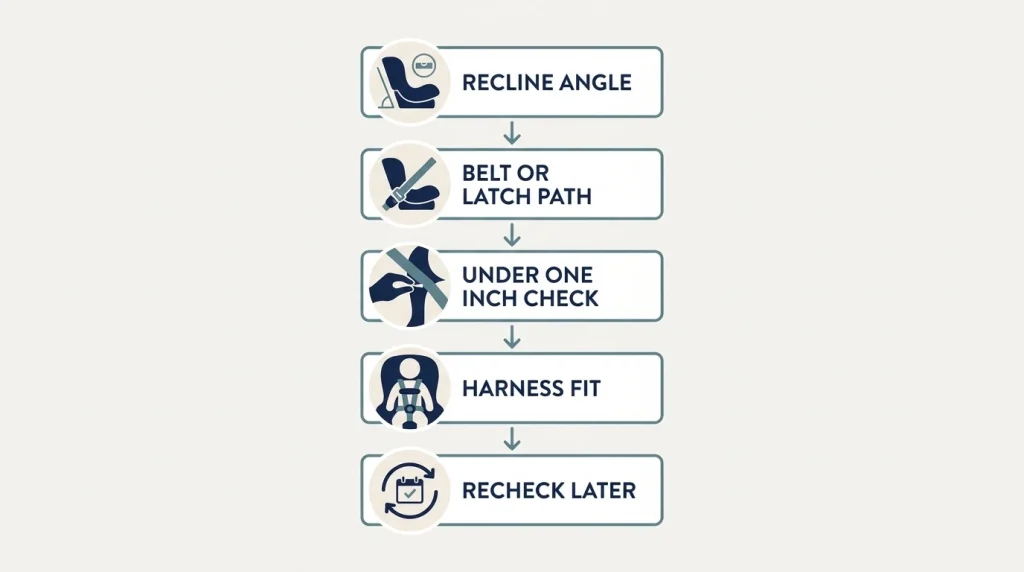
How do you install a car seat in both cars correctly? Install each seat as if it were the only seat, and test it alone in each car.
Do not copy the install from one car to the other. The seat angle, the belt length, and the anchor positions can all differ.
Start with both manuals open. Read the car seat manual and the vehicle manual for each car, side by side.
One car may allow LATCH in the centre seat, and the other may not. One car may need a rolled towel for recline, and the other may not.
Use what is LATCH in a car seat to check how lower anchors work, and read your vehicle manual for the anchor weight limit in each car.
Follow these steps in each car:
- Place the seat in the chosen row, and set the recline for your child’s age and direction.
- Route the belt or LATCH strap exactly as the manual shows, with no twists.
- Press the seat down with your knee or hand, and tighten the strap until the seat moves less than 1 inch at the belt path.
- Attach the top tether for a forward-facing seat, and check the load leg or anti-rebound bar if your seat has one.
- Check the harness: snug straps, chest clip at armpit level, and no bulky coat under the straps.
- Recheck the install after a week, and after any seat move, car service, or growth spurt.
Learn how car seats are installed in detail, then repeat the full check in the second car, not just a quick tug.
Get both installs checked by a certified Child Passenger Safety Technician if you can. Many checks are free, and a second pair of eyes catches what tired parents miss.
You can find a technician through the NHTSA website, and book a check for both cars in one visit.
Pro tip: Check your car seat manual, your vehicle owner’s manual, and the NHTSA recall lookup before you drive, and ask a certified technician if any step is unclear.
Section Takeaway: Install each seat from scratch in its own car, test it alone with the 1-inch check, and get both cars checked by a technician when you can.
What About Grandparents, Babysitters, and Rideshares?
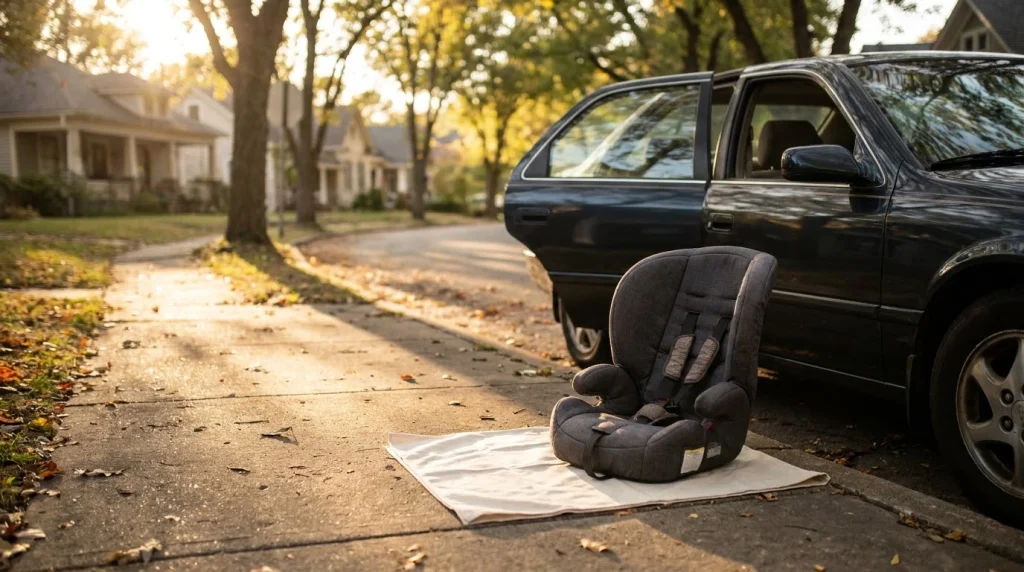
What about grandparents, babysitters, and rideshares? They count as second cars too, even if the car is not yours.
A grandparent who picks up your child twice a week needs a ready seat. Moving your seat to their car each time is the same daily swap, with a new driver added.
A spare seat in the grandparent’s car is often the kindest fix. It lets them drive without a last-minute install lesson.
Teach them the harness check, not the full install. Show them the chest clip, the pinch test, and the 1-inch check.
For a babysitter, a second base plus carrier is ideal while your baby still fits it. The sitter clicks the carrier in, and you keep the base installed.
Rideshares are different. You cannot leave a seat in a taxi or a rideshare car, so a light infant carrier or a travel seat is the practical choice.
Edmunds travel and family-car guides can help you compare light travel seats, but test the fit in your own car first.
Section Takeaway: Treat a grandparent’s car like a second car, keep a ready seat or base in it, and use a light travel seat for rideshares.
Frequently Asked Questions
Do I legally need two car seats for two cars?
No, no law requires two seats. The law requires a correct child restraint in every car, on every trip, so a second seat is a practical way to meet that rule in both cars.
Is it cheaper to buy a second base instead of a second car seat?
Yes, for an infant carrier, a second base is usually the cheaper fix. It only works while your baby still fits that carrier, and the base must match your exact model.
Can I move one car seat between two cars every day?
Yes, you can, if you reinstall it fully each time and pass the 1-inch test. It takes time, and rushed moves raise the risk of a loose install.
Should the second car seat be the same model?
Ideally, yes. The same model means the same install steps, the same harness, and one manual to remember, which cuts errors in the second car.
Do grandparents need their own car seat?
Yes, if they drive your child often. A spare seat or base in their car is safer than a rushed install before every pickup.
Can I use a secondhand car seat in the second car?
Yes, only if you know its full history. Skip it if it is expired, crashed, recalled, or missing parts, labels, or its manual.
Bottom line: do you need two car seats for two cars? Not by law, but if both cars carry your child each week, a second seat or a second base is the safer, calmer choice.
Count your trips, test the fit in both cars, and install each seat as if it were the only one.

Daniel Brooks is an automotive writer and product researcher focused on car accessories, car tech, maintenance, and practical driving guides. At Plug-in Car World, he helps drivers make smarter automotive decisions through honest reviews and research-driven content.