Are Maxi-Cosi Car Seats Good? An Honest Guide for Parents
Quick Answer
Yes, Maxi-Cosi car seats are good for most families. They meet US safety standards, they install in a clear and steady way, and their fabrics feel soft enough for long rides. The catch is fit. Check your car, your child’s height and weight, and the seat’s limits before you buy, and read the car seat safety standards that apply to every seat sold in the US.
Why parents pick Maxi-Cosi
- Strong safety record: Maxi-Cosi seats meet FMVSS 213, the US crash standard for child restraints.
- Easy daily use: The carriers are light, the buckles are simple, and the covers wash well.
- Long use: Convertible models such as the Pria cover newborn to booster in one seat.
- Soft fabrics: PureCosi fabrics on newer models skip added fire-retardant treatments.
- Good for small cars: The Mico infant carrier fits tight back seats better than most bulky carriers.
Check before you buy
- Measure your back seat first, then match the seat’s height and weight limits to your child.
- Try the install in your own car when you can, and get it checked by a certified technician.
Are Maxi-Cosi car seats good? I asked the same question before my sister bought her first one.
We stood in the shop, carrier in one hand and a very long spec sheet in the other. The seat felt light and well made, but the price made us pause. This guide answers that question the way I wish someone had answered it for us, with the good parts, the weak spots, and the models that suit each stage.
In This Guide
- What Is Maxi-Cosi, and Are Its Car Seats Good?
- Are Maxi-Cosi Car Seats Safe?
- Which Maxi-Cosi Car Seat Should You Buy?
- How Easy Are Maxi-Cosi Car Seats to Install?
- Which Maxi-Cosi Seat Fits Your Child’s Age and Size?
- What Are the Downsides of Maxi-Cosi Car Seats?
- Maxi-Cosi vs Graco, Chicco, Britax, and Nuna
- Frequently Asked Questions
What Is Maxi-Cosi, and Are Its Car Seats Good?
Maxi-Cosi is a child seat brand from the Netherlands, and it has sold car seats in Europe and North America for decades.
Parents know it best for the Mico infant carrier and the Pria convertible. Both show up in a lot of family cars, and both have earned a steady following for the same reason: they feel calm to use on a tired morning.
So, are Maxi-Cosi car seats good? Yes, for most families they are.
The brand sits in the mid to upper price range. You pay more than a basic Graco, but less than a Nuna in most cases. What you get for that money is a solid shell, soft padding, and a design that thinks about small cars and sore backs.
I fitted a Mico 30 into my sister’s Honda CR-V in about ten minutes. The base clicked in, the level line sat right, and the carrier dropped in with one hand. That first fit matters more than any spec sheet.
Maxi-Cosi also keeps its range simple. There are infant carriers, convertibles, rotating seats, and boosters. You do not need to learn twenty model names to find the right one.
Section Takeaway: Maxi-Cosi is a good choice for most families, and its strength is easy daily use in a well-built seat, not flashy extras.
Are Maxi-Cosi Car Seats Safe?
Yes. Every Maxi-Cosi seat sold in the US must meet FMVSS 213, the federal crash standard for child restraints.
That standard sets the crash test rules, the harness rules, and the labelling rules. A seat cannot reach the shop shelf without passing it. Maxi-Cosi builds to that standard, then adds its own side-impact features on top.
Side impact protection is the feature to look for first. Maxi-Cosi uses deep side wings and foam around the head and torso on most models. The idea is simple: keep the head inside the shell in a side crash.
Some models add an anti-rebound bar or a load leg. A load leg is a support leg from the base to the car floor, and it cuts down how far the seat tips forward in a crash. Not every Maxi-Cosi base has one, so check the model you are buying.
Safe use still depends on you more than on the brand. A loose install or a loose harness undoes good design in seconds. Tighten the harness until you cannot pinch a fold at the shoulder, and check the install regularly.
Pro tip: check your seat against the official recall list on the NHTSA site before you buy, and register the seat with Maxi-Cosi so recall notices reach you.
For a plain-language look at the rules every seat must meet, read the guide to NHTSA safety information for parents.
Section Takeaway: Maxi-Cosi seats meet US crash standards and add useful side-impact features, but a correct install and a snug harness are what make them safe in your car.
Which Maxi-Cosi Car Seat Should You Buy?
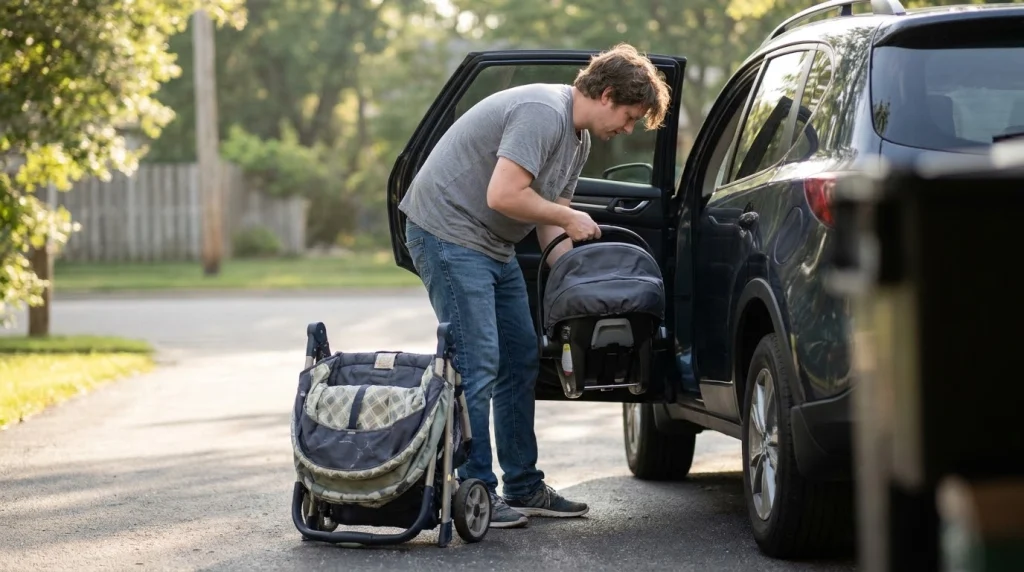
The right Maxi-Cosi depends on your child’s age, your car, and how long you want the seat to last.
Start with the stage, not the model name. A newborn needs an infant carrier or a convertible that fits from 4 lb. A toddler needs a convertible that rear-faces for years. An older child needs a high-back booster.
If you want one seat to cover the most years, look at the Pria or the Magellan Max first. If you want the lightest carrier to lift in and out, look at the Mico range first.
| Model | Best for | Rear-facing limit* | Key strength |
|---|---|---|---|
| Mico 30 | Newborns, small cars | 4 to 30 lb, up to 32 in | Light carrier, easy click-in base |
| Mico Luxe | Newborns, softer fabrics | 4 to 30 lb, up to 32 in | PureCosi fabrics, extra padding |
| Coral XP | Carrying baby in and out | 4 to 22 lb in inner carrier | Lift-out inner carrier, stays light |
| Pria 3-in-1 | Newborn to booster, one seat | 4 to 40 lb | Three modes, long use, washable cover |
| Magellan Max 5-in-1 | Growing families, five modes | 5 to 40 lb | Five modes, adjustable headrest |
| Emme 360 | Easy loading, sore backs | 5 to 40 lb | Rotates toward the door |
| RodiFix | Older children, boosters | Not rear-facing | High-back booster, side protection |
*Limits vary by model year, so check your own manual before you buy. Height matters as much as weight.
The Mico 30 is the safe first pick for most newborns. It is light, it fits small cars, and it clicks onto many strollers with an adapter. My sister used hers daily for eight months, and the weight never felt like a chore.
The Pria is the better pick if you want to buy once. It rear-faces to 40 lb, then turns forward, then works as a booster to 100 lb. That range covers most children from birth to school age.
The Emme 360 suits parents who lift a toddler in and out ten times a day. The seat turns toward the door, so you buckle at waist height instead of leaning across the car.
Learn the trade-offs first if you are torn between an infant carrier and a convertible. The infant vs convertible car seat guide walks through cost, fit, and how long each type lasts.
Section Takeaway: Pick by stage first, then by car fit, and choose the Pria for long use, the Mico for a light carrier, or the Emme 360 for easy loading.
How Easy Are Maxi-Cosi Car Seats to Install?
Most parents find Maxi-Cosi seats easy to install, once they have done it twice.
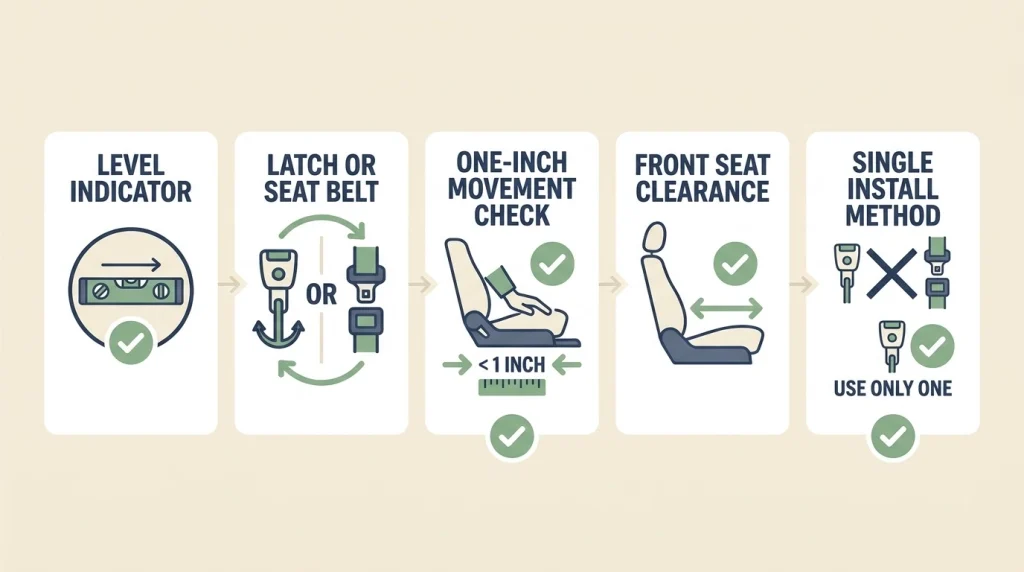
The infant bases use LATCH connectors or the car seat belt, with a clear level indicator on the base. Line up the indicator, push the base down, and pull the strap tight. The carrier then clicks in with a sound you can hear.
Convertibles take longer the first time. You thread the belt or LATCH strap through the right path, press your weight into the seat, and tighten. The seat should move less than one inch side to side at the belt path.
That one-inch test is the check that matters. Grab the seat where the belt passes through, and try to move it. If it shifts more than an inch, tighten again or try the other install method.
LATCH is the system of lower anchors built into most cars made after 2002. If you are new to it, read what LATCH in a car seat means before your first install, because the anchor limits change with your child’s weight.
Watch for two common mistakes. First, do not use LATCH and the seat belt together unless your manual says you can. Second, do not leave the harness loose because the coat looks thick. Take the coat off, buckle snug, then put the coat on backwards over the straps.
Small cars need a test fit. The Mico base is compact, but a rear-facing Pria takes more front-to-back room. Check that the front seat still slides back far enough for the driver, and read will a car seat fit in my car before you order online.
Section Takeaway: Maxi-Cosi installs are clear and steady, but always run the one-inch test, and get a certified technician to check your first install.
Which Maxi-Cosi Seat Fits Your Child’s Age and Size?
Age alone does not pick a car seat. Height and weight do.
A newborn needs a seat that fits from 4 lb, with a small insert that holds the head steady. The Mico range and the Pria both start at 4 lb, which covers most full-term babies.
Keep your child rear-facing for as long as the seat allows. The American Academy of Pediatrics advises rear-facing until at least age two, and longer when the seat still fits. Maxi-Cosi convertibles rear-face to 40 lb, which gives most children three or four rear-facing years.
Turn forward only when your child passes the rear-facing height or weight limit. The top of the head should stay below the top of the shell, and the harness straps should sit at or below the shoulders while rear-facing.
Move to a booster only when the harness no longer fits. The child must sit still, the lap belt must sit low on the hips, and the shoulder belt must cross the middle of the chest. That is usually between ages five and seven.
If you are buying for a newborn, start with a clear checklist of what a first seat needs. The guide to how to choose a car seat for a newborn covers weight, fit, and the inserts that matter in the first months.
Rear-facing versus forward-facing is the decision parents ask about most. The rear-facing vs forward-facing car seats guide explains why rear-facing protects the head, neck, and spine better in a crash.
Section Takeaway: Match the seat to height and weight, not age, and keep your child rear-facing until the seat’s own limits say it is time to turn.
What Are the Downsides of Maxi-Cosi Car Seats?
No brand is right for every family, and Maxi-Cosi has real weak spots.
Price is the first one. Maxi-Cosi seats cost more than most Graco and Evenflo seats, and the rotating Emme 360 costs more again. If your budget is tight, a cheaper seat that fits your car well protects your child just as well.
Weight is the second. The Pria and Magellan are heavy seats, and moving one between cars gets old fast. If you swap cars every day, a light carrier plus a second base is kinder than one heavy convertible.
Width is the third. Maxi-Cosi convertibles are wide, so three across a small back seat is hard. Measure your car before you plan a three-seat row, and test all three seats together.
Some parents also find the harness adjuster stiff at first. It loosens with use, but the first few days can feel fiddly. Pull the straps from the front, not from behind the seat, and the adjuster moves more freely.
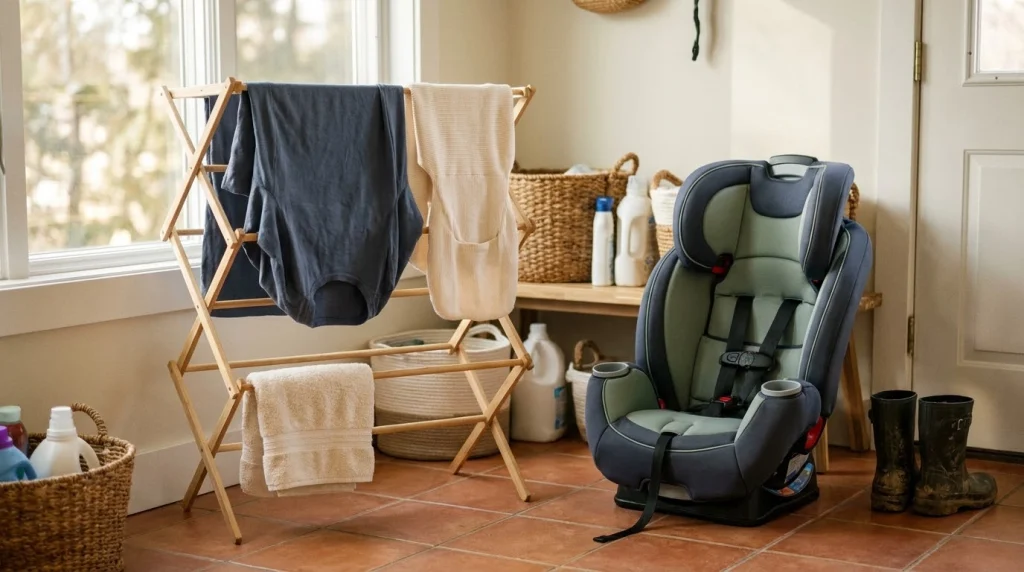
Fabric care is a smaller point, but it matters with babies. Most Maxi-Cosi covers come off and wash in the machine, yet drying takes time. Keep a spare cover or a towel ready if your child gets carsick often.
Section Takeaway: Maxi-Cosi costs more, weighs more, and runs wide, so check price, weight, and your back-seat width before you commit.
Maxi-Cosi vs Graco, Chicco, Britax, and Nuna
Maxi-Cosi sits in the middle of the big brands on price, and near the top on comfort.
Graco gives you the widest choice and the lowest prices. Its 4Ever range lasts as long as a Pria, and its parts are easy to find. Maxi-Cosi feels softer and lighter in the carrier range, but Graco wins on value and on three-across fit in some models.
Chicco is the install king for many parents. The KeyFit carrier clicks in with a clear, firm feel, and its base is simple to level. Maxi-Cosi carriers are just as light, yet Chicco’s base design still feels a touch more forgiving on a first install.
Britax builds the heaviest, sturdiest seats, with ClickTight install on many models. If you want a seat that feels like a tank, Britax is hard to beat. Maxi-Cosi is lighter and easier to carry, and its fabrics feel softer against a baby’s skin.
Nuna is the premium pick, with the lightest carriers and the cleanest fabrics. A Nuna Pipa carrier weighs less than a Mico, and its base feels more refined. Maxi-Cosi gives you most of that comfort for less money, which is why so many parents land on it.
Read independent reviews before you decide, and compare the same stage across brands. Consumer Reports and Edmunds both publish car seat guidance that helps you weigh safety, fit, and ease of use side by side.
Section Takeaway: Maxi-Cosi beats Graco and Chicco on comfort, trails Britax on sheer sturdiness, and trails Nuna on lightness, all at a mid-range price.
Frequently Asked Questions
Are Maxi-Cosi car seats good for newborns?
Yes. The Mico range and the Pria both fit from 4 lb, with inserts that support a newborn’s head. Check the height limit too, and keep the harness snug at the shoulders.
How long do Maxi-Cosi car seats last?
Most Maxi-Cosi seats expire after ten years from the date of manufacture, and convertibles cover newborn to booster. Check the label on your own seat, because the date and the limits vary by model.
Are Maxi-Cosi car seats FAA approved for planes?
Some are, and some are not. Infant carriers such as the Mico are approved for aircraft use when the label says so, while many convertibles are not. Read the label and your airline’s rules before you fly.
Can I wash a Maxi-Cosi car seat cover?
Yes, most Maxi-Cosi covers come off and wash in the machine on a gentle cycle. Air dry the cover, and never wash the harness straps in the machine. Spot clean straps with mild soap and water.
Is Maxi-Cosi better than Graco?
Neither brand is better for every family. Maxi-Cosi feels softer and lighter in the carrier range, while Graco costs less and offers more models. Pick the seat that fits your car, your child, and your budget best.
Do Maxi-Cosi car seats fit in small cars?
The Mico infant carrier fits most small cars well, thanks to its compact base. Convertibles such as the Pria need more room, so test the fit with the front seats in your normal driving position before you buy.
Are Maxi-Cosi car seats good? For most families, yes, and the reasons are simple.
They meet US safety standards, they feel good to use every day, and they cover each stage from newborn to booster. Check the fit in your car, match the limits to your child, and get that first install checked. Do that, and a Maxi-Cosi is a seat you can trust on the school run and on a long drive alike, as of 2026.

Daniel Brooks is an automotive writer and product researcher focused on car accessories, car tech, maintenance, and practical driving guides. At Plug-in Car World, he helps drivers make smarter automotive decisions through honest reviews and research-driven content.