
Is It Safe to Use a Secondhand Car Seat? A Complete Safety Guide
Quick Answer
Yes, a secondhand car seat can be safe if you know its complete history, it hasn’t expired, and it meets every applicable safety requirement. However, buying a used child car seat with an unknown crash history is risky, even if it looks perfect. The NHTSA used car seat safety checklist provides the essential checks before reuse.
Five Essential Safety Checks
- Known crash history: Confirm all previous crashes and follow the manufacturer’s replacement instructions.
- Valid expiration date: Check the manufacturer’s approved service life using the seat’s model and manufacturing date.
- No unresolved recalls: Verify recall status and confirm any required repairs were completed.
- Complete original parts: Inspect the harness, buckles, shell, padding, and installation hardware.
- Correct fit and instructions: Make sure the seat suits your child and vehicle, with an available manufacturer manual.
My Recommendation
- When in doubt: Choose a new, appropriately certified car seat rather than gambling on an unknown secondhand seat.
Buying a car seat can put a serious dent in a family budget. I understand why a clean secondhand seat, especially one offered by a trusted friend, can look appealing.
But there’s an important difference between buying a used automotive accessory and buying equipment designed to protect a child in a collision. I’ll walk through the checks that matter, the warning signs I wouldn’t ignore, and when buying new makes more sense.
In This Guide
When Is a Secondhand Car Seat Safe to Use?
A secondhand car seat is generally acceptable only when you can verify its history, service life, condition, and suitability. A used seat isn’t automatically unsafe simply because another child previously used it.
The important question is whether it can still provide the protection its manufacturer intended. That’s something you need evidence to establish.
What Exactly Counts as a Secondhand Car Seat?
A secondhand child car seat is a previously owned or used child restraint passed to another family. It includes infant carriers, convertible car seats, all-in-one seats, and booster seats.
Unlike ordinary vehicle seat covers, these restraints contain safety components designed for crash protection. Their design determines how forces are managed and how securely a child stays positioned.
Common components include:
- Plastic shell: Provides the seat’s primary structure.
- Energy-absorbing foam: Helps manage impact forces where included in the design.
- Harness webbing: Holds a child securely in harness-equipped seats.
- Buckles and adjusters: Maintain the required harness fit.
- Installation hardware: Connects the restraint to an approved vehicle anchorage or seat belt.
- Original padding and covers: Help preserve the fit and function specified by the manufacturer.
These parts must work together. An attractive replacement cover cannot make a damaged shell or unreliable buckle safe.
Is Getting a Used Seat From Family Safer?
Usually, a seat from someone you know is easier to assess than one from an anonymous seller. You can ask detailed questions and may be able to verify its entire ownership history.
Still, a family relationship isn’t a safety guarantee. I’d apply the same inspection standards to a relative’s seat as I would to one purchased online.
Ask the previous owner these questions:
- Did you purchase the seat new?
- Has anyone else owned or used it?
- Has it been involved in any vehicle collision?
- Was it ever dropped, damaged, or improperly repaired?
- Were any parts replaced or removed?
- Was it cleaned according to the manufacturer’s instructions?
- Can you provide the original model information and manual?
If the previous owner can’t confidently answer important questions, look for another seat. Missing history creates uncertainty that a visual inspection cannot resolve.
Section Takeaway: A trustworthy source helps, but verified safety information matters more than who offers the seat.
What Makes a Used Car Seat Unsafe?
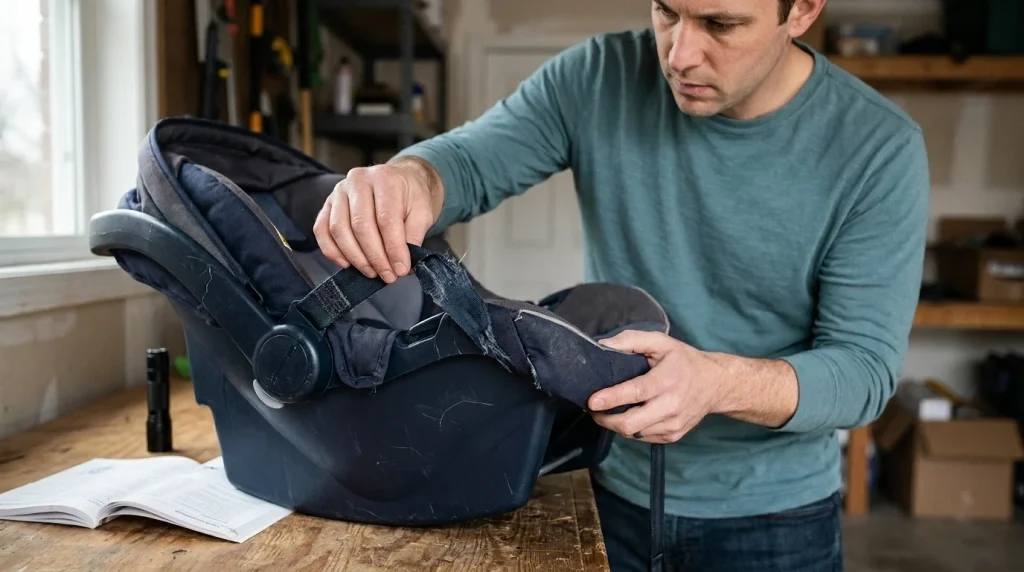
The biggest dangers include unknown crash damage, expiration, missing components, and unresolved recalls. Some problems are visible, while others may be impossible to identify through inspection alone.
1. Previous Crash Damage
A crash can place considerable stress on a car seat’s shell, attachments, and restraint components. Damage isn’t always obvious from the outside.
The National Highway Traffic Safety Administration recommends replacing car seats after moderate or severe crashes. A seat involved in a minor collision may remain usable if all NHTSA conditions are met and the manufacturer allows continued use.
For a collision to qualify as minor under NHTSA guidance, all five conditions must apply:
- The vehicle could be driven away after the crash.
- The door closest to the car seat wasn’t damaged.
- No vehicle occupant was injured.
- No airbags deployed.
- The car seat has no visible damage.
Manufacturers may apply stricter rules, including replacement after any collision. Check the official car seat guidance following a crash and the exact manufacturer’s instructions.
When a seller cannot explain whether the seat experienced a collision, I wouldn’t accept it. Appearance alone cannot prove crashworthiness.
2. Aging Plastic and Other Materials
Car seats have a limited manufacturer-approved service life. Over time, material aging, temperature exposure, and wear can affect components.
Some seats also become unsuitable because instructions, replacement parts, or safety information are no longer available. A seat that looked modern several years ago may no longer be appropriate.
In the U.S., manufacturers commonly specify service lives around 6 to 10 years, although exact limits vary. Never assume that every seat expires after the same number of years.
3. Missing or Modified Safety Components
Used car seats sometimes arrive without their original harness pads, newborn inserts, buckle components, or installation attachments. Certain pieces may be optional, while others are essential.
Only the manufacturer’s instructions can establish which parts are required for a particular configuration. Don’t substitute generic hardware or padding because it appears similar.
Look especially closely for:
- Cracked or deformed plastic.
- Damaged or fraying harness webbing.
- Broken or unreliable buckles.
- Missing foam or structural components.
- Unapproved repairs or modifications.
- Damaged lower-anchor connectors or tether hardware.
4. Unapproved Replacement Covers and Accessories
Replacement covers deserve attention because they can change how a car seat fits and functions. Extra padding may alter a child’s position or interfere with harness tightness.
A decorative cover designed for a vehicle’s adult seat isn’t the same as a replacement child-restraint cover. Never assume the two products are interchangeable.
For a used child restraint, choose the original cover or a replacement specifically approved by its manufacturer. Avoid generic infant inserts, extra cushions, and aftermarket harness accessories unless the manufacturer authorizes them.
Pro tip: If any structural part, harness component, or approved cover is missing, contact the car seat manufacturer before use.
Section Takeaway: A spotless secondhand seat can still have serious safety problems. Known history and manufacturer-approved components are essential.
How Do You Inspect a Secondhand Car Seat?
Start by identifying the exact model and checking its safety history. Then inspect the seat’s components and confirm that it can be installed and used correctly.
My preferred approach is to inspect everything before agreeing to buy. A few minutes with the seat’s labels and manual can prevent an expensive mistake.
Step 1: Identify the Manufacturer and Model
Look for the permanent manufacturer’s label on the seat’s shell or base. Its position varies between manufacturers and models.
Record the following information:
- Manufacturer or brand name.
- Complete model name and number.
- Date of manufacture.
- Expiration date, if listed.
- Serial number or batch information, where provided.
- Applicable safety certification labels.
If the model and manufacturing date cannot be verified, don’t use the seat. Those details are necessary for checking age and potential recalls.
Step 2: Check the Seat’s Structural Condition
Place the seat on a stable surface with good lighting. Inspect the plastic shell, foam, adjustment points, and accessible hardware.
Pay special attention to areas around the harness openings and installation belt paths. Damage in these areas deserves immediate investigation.
A useful inspection table looks like this:
| Component | What to Check | When to Reject or Stop |
|---|---|---|
| Plastic shell | Cracks, deformation, damaged attachment points | Any suspected structural damage |
| Harness straps | Fraying, cuts, modifications, unusual wear | Damage or unapproved replacement |
| Buckle and adjuster | Correct engagement, release, and adjustment | Unreliable or damaged operation |
| Foam and padding | Original pieces, cracks, missing sections | Missing required or damaged components |
| Installation hardware | Complete, undamaged connectors and straps | Damage or missing required hardware |
| Labels and instructions | Model identity, date, original usage guidance | Unverifiable model or unavailable instructions |
This is a screening checklist, not a crash-safety certification. Passing the visual inspection doesn’t resolve an unknown crash history.
Step 3: Test Accessible Adjustments
For a harness-equipped seat, operate its buckle and adjustment system as directed by the manual. Check whether the straps move correctly and remain secure.
Don’t dismantle the harness or release mechanism to investigate internal components. Unapproved disassembly can create new safety problems.
Step 4: Verify the Correct Parts
Compare the physical seat against the manufacturer’s manual. Confirm that every required part is present for the way you intend to use it.
For example, a rear-facing infant carrier may be usable without its separate base if the manufacturer permits baseless installation. That doesn’t mean every carrier supports this method.
Step 5: Evaluate the Seat’s Storage History
Ask where and how the seat was stored between uses. Prolonged exposure to harsh conditions, flooding, or improper cleaning can create concerns.
Unusual odors, staining, or surface discoloration aren’t reliable measures of structural safety. Contact the manufacturer about questionable exposure rather than guessing.
Section Takeaway: Inspect the exact seat, not just its photographs. Reject any seat with uncertain identity, damage, or unexplained missing parts.
How Do You Check Expiration Dates and Recalls?
Use the seat’s model number and manufacturing date to verify its service life and recall status. Both checks should happen before purchasing or accepting a secondhand car seat.
How Long Does a Car Seat Last?
Many car seats have manufacturer-specified lifespans of approximately 6 to 10 years. The precise period depends on the brand and model.
Some manufacturers print an expiration date directly on the seat. Others provide a service-life calculation in the manual or product documentation.
For example, imagine a seat manufactured in June 2020 with a manufacturer-approved eight-year lifespan. If that lifespan starts on the manufacturing date, the seat would reach its limit in June 2028.
That example isn’t a universal expiration rule. Always verify the exact date and calculation with the manufacturer.
Follow these steps:
- Locate the date-of-manufacture label.
- Record the complete model number.
- Find the official manual or manufacturer documentation.
- Identify the approved expiration date or service-life calculation.
- Check whether the seat will remain valid throughout your expected use.
The American Academy of Pediatrics provides further guidance in its car safety seat information for families. It recommends avoiding seats that are too old or cannot be properly identified.
How Can You Check for Car Seat Recalls?
A car seat recall means the manufacturer or safety authority identified a problem requiring action. Some recalls require replacement, while others have approved repairs or remedies.
In the United States, visit the official NHTSA recall search and select the car seat search option.
Use this process:
- Enter or select the manufacturer and model.
- Review relevant recall notices.
- Confirm whether the seat’s production information is affected.
- Contact the manufacturer if a recall applies.
- Verify that the required remedy has been completed before use.
A recalled model isn’t necessarily unusable forever. However, an affected seat must not be used contrary to the recall instructions.
Keep proof of any completed recall remedy when possible. Register the seat with its manufacturer so the current owner receives future safety notifications.
If you’re outside the United States, also check the safety authority and approval requirements in your country. U.S. guidance doesn’t replace local laws or certification rules.
Pro tip: If the manufacturer’s service-life information or recall remedy cannot be confirmed, avoid using the seat until you obtain an authoritative answer.
Should You Buy a Used Car Seat or Choose New?
A secondhand seat can save money, but a new seat offers a clearer ownership history and its full initial service life. The best choice depends on verified safety, fit, and realistic cost.
Buying From a Trusted Person vs. an Online Seller
I’d rather examine a documented seat from its original owner than gamble on an anonymous listing. Direct questions and access to the original purchase information make a meaningful difference.
Here’s how common purchasing options compare:
| Source | Main Advantage | Main Concern |
|---|---|---|
| Trusted original owner | History may be verifiable | Still requires full safety checks |
| Online marketplace | Potential lower purchase price | Unknown history and limited inspection |
| Thrift or resale store | May be inexpensive | Original ownership history often unavailable |
| New, certified car seat | Known history and full initial service life | Higher upfront cost in some cases |
Is the Cheapest Used Seat Really the Best Value?
Consider how long the seat will remain usable, not merely its selling price. A low-cost seat approaching expiration may offer poor long-term value.
Imagine a used seat costing $50 with just 12 months of approved life remaining. A new $100 seat with several usable years could be a better purchase, depending on your child’s growth and the model’s limits.
Those prices are only an illustration, not current market quotations. Your child’s height, weight, and required seating stage also affect actual value.
What If You Can’t Afford a New Car Seat?
Don’t assume that a premium-priced model is the only safe option. A correctly selected and installed seat that meets applicable safety standards can provide appropriate protection.
Possible lower-cost routes include:
- Comparing entry-level seats from established manufacturers.
- Checking local child passenger safety programs.
- Asking hospitals or community health organizations about assistance.
- Contacting family support programs that distribute eligible child restraints.
- Accepting a documented used seat only after all safety checks pass.
Availability varies by location, and some programs have eligibility requirements. Check directly with organizations serving your area.
Don’t sacrifice essential safety checks just to meet a budget. A lower-priced new seat may be preferable to an expensive used model with an uncertain history.
Section Takeaway: Prioritize confirmed safety and useful remaining life over brand reputation, appearance, or discount size.
How Do You Install and Maintain a Used Car Seat Safely?
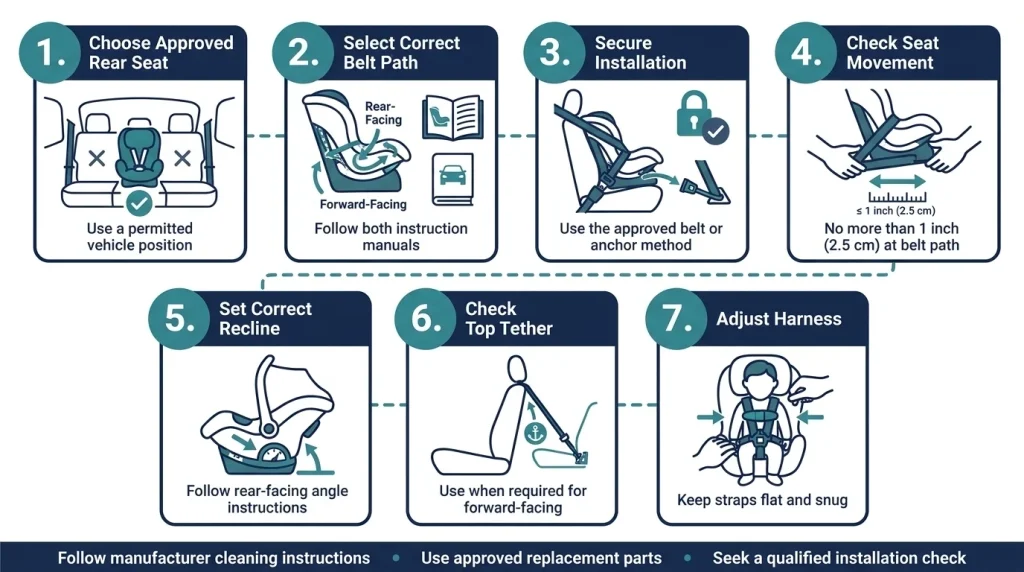
A safe secondhand seat still needs correct installation and proper everyday use. Even an undamaged, unexpired model cannot provide its intended protection if installed incorrectly.
Check Your Child’s Size Before Installation
Confirm your child’s weight and height fall within the seat’s limits for the intended configuration. Make sure the seat supports the correct stage of child restraint use.
A convertible seat may support both rear-facing and forward-facing use, but each position has its own requirements. Follow the manufacturer and applicable local guidance for when to transition.
Follow Both Instruction Manuals
Read the car seat manual and the vehicle owner’s manual together. They explain which vehicle seating positions and installation systems are permitted.
For U.S. seats, common installation methods include a vehicle seat belt or the LATCH system. LATCH means Lower Anchors and Tethers for Children.
Use the installation method permitted by the manuals. Don’t combine the vehicle belt and lower anchors unless both manufacturers explicitly allow it.
A basic installation check includes:
- Choose an approved rear seating position.
- Route the belt or lower-anchor attachment through the correct belt path.
- Secure and tighten the installation according to the manuals.
- Check for no more than 1 inch (2.5 cm) of movement at the belt path.
- Set the correct recline angle when rear-facing.
- Use the top tether when required for forward-facing installation.
- Adjust the harness to fit your child properly.
For harness-equipped seats, check that straps are flat and snug. Place the chest clip at armpit level where the model uses one.
Rear-facing harness straps generally sit at or below the child’s shoulders. Forward-facing harness straps generally sit at or above the shoulders, subject to the model’s instructions.
The NHTSA car seat installation tips explain these checks in greater detail.
Can You Wash a Used Car Seat Cover?
Usually, the manufacturer’s instructions allow some level of cover cleaning. However, cleaning methods differ, and removable fabric doesn’t automatically mean machine washing is permitted.
Use this cautious approach:
- Read the model’s cleaning instructions first.
- Remove the cover only as permitted.
- Use the approved detergent and washing method.
- Avoid harsh chemicals unless explicitly allowed.
- Never immerse or machine-wash harness webbing unless the manufacturer permits it.
- Reassemble every component according to the manual.
Some manufacturers prohibit bleach, soaking, or abrasive cleaning on safety components. These methods can damage materials or affect their performance.
Don’t remove harness straps or internal parts merely to make washing easier. Follow the approved procedure for your specific model.
Should You Get a Professional Installation Check?
Yes, an inspection by a qualified child passenger safety technician is a useful final step. A technician can help assess installation, harness fit, and available model information.
However, even a professional cannot reliably reconstruct an unknown crash history. An inspection doesn’t turn an undocumented secondhand seat into a verified one.
Pro tip: Consult the seat manufacturer or a certified child passenger safety technician whenever installation instructions, parts, or crash-replacement rules are unclear.
Section Takeaway: Proper installation, manufacturer-approved maintenance, and correct daily use are just as important as the seat’s purchase history.
Frequently Asked Questions About Used Car Seats
Can I safely use a free car seat from a friend?
Yes, potentially. Confirm its complete ownership and crash history, expiration date, recall status, original components, and overall condition. The seat must also fit your child and vehicle. A free seat isn’t automatically safe simply because it came from someone you trust.
Is it safe to buy a used infant car seat?
A used infant seat may be acceptable if every safety requirement is met. Pay particular attention to its crash history, harness, shell, and expiration date. Confirm whether the original base is required or whether the manufacturer permits installation without one.
Can you use a secondhand car seat after a minor accident?
Sometimes. NHTSA allows that a seat may remain usable after a crash meeting all five minor-crash criteria. However, the seat manufacturer may require replacement after any collision. Never reuse a seat after a moderate or severe crash.
Are used booster seats safer to buy than used harnessed seats?
Used boosters still require full safety checks. Their construction and restraint functions differ, but damage, expiration, recalls, missing parts, and unknown crash history remain concerns. Make sure the booster properly positions the vehicle seat belt on your child.
What if the used car seat doesn’t have a manual?
Contact the manufacturer or obtain the correct manual from its official website. Confirm the manual matches the exact model and production version. Don’t use the seat if proper instructions cannot be obtained or verified.
Can I use a secondhand car seat with a new aftermarket cover?
Only if the car seat manufacturer explicitly approves the replacement cover for that specific model. Generic covers, extra cushions, and harness pads can interfere with fit or restraint performance. Use original or manufacturer-approved components rather than selecting accessories by appearance.
What should I do with an expired or unsafe used car seat?
Stop using it and follow local disposal or recycling guidance. Prevent anyone from unknowingly reusing an unsafe seat, such as by clearly marking it unusable and following appropriate dismantling instructions. Never donate or resell a seat known to be unsafe.
Final Takeaway: Is a Secondhand Car Seat Worth the Risk?
A secondhand car seat can be a reasonable option when you can verify every important safety detail. The decision should depend on documented history, proper fit, approved service life, and reliable components.
As of 2026, the fundamental advice remains simple: avoid using a secondhand child restraint with an unknown history. A clean seat, a reassuring seller, and an attractive price don’t replace verified safety information.
Before accepting a used seat, check its label, contact the manufacturer when needed, and review its installation requirements. If any essential detail remains uncertain, choose a new seat that meets the applicable safety standards.
Protecting your child matters more than the discount. Make the decision only after every safety question has a satisfactory answer.

Daniel Brooks is an automotive writer and product researcher focused on car accessories, car tech, maintenance, and practical driving guides. At Plug-in Car World, he helps drivers make smarter automotive decisions through honest reviews and research-driven content.
