
Do Babies Need Car Seat Covers? When to Use One
Quick Answer
No, babies do not need a car seat cover for safety. A car seat protects your baby with or without one, so use a cover only when it adds warmth, shade, or mess protection without changing how the harness fits. Learn how to install a car seat cover correctly before you add any layer.
When a cover helps
- Cold wind: A canopy or a blanket over the buckled harness keeps warmth in.
- Sun and rain: A light canopy shields your baby during short walks to and from the car.
- Spills and leaks: A maker-approved pad makes cleanup easier after spit-up or a diaper leak.
- Clean car seats: A seat protector under the car seat guards your upholstery from crumbs and scuffs.
When to skip it
- Skip any thick layer that sits behind your baby or under the harness straps.
- Skip a cover that blocks a harness slot, hides the chest clip, or pushes your baby forward.
- Remove it at once if the harness no longer passes the pinch test.
I’ve fitted covers, removed covers, and re-checked harnesses more times than I can count. This guide cuts through the confusion, so you can tell a helpful cover from one that quietly changes how your baby’s seat works.
You’ll learn the three main cover types, the right times to use each one, and the warning signs that mean “take it off now.” I also share a simple fit check you can do in under a minute.
In This Guide
What Is a Baby Car Seat Cover, Exactly?
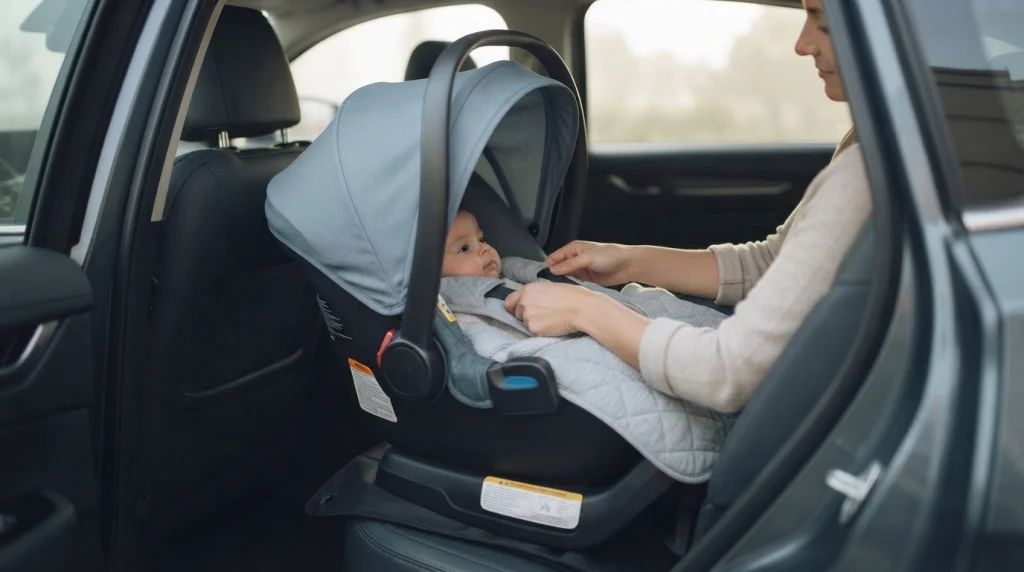
A baby car seat cover is any extra layer added to, over, or under a child’s car seat. The term covers several different products, and that overlap causes most of the safety confusion.
Some covers replace the fabric pad on the seat itself. Others drape over an infant carrier like a canopy. A third group sits on your car’s seat, under the car seat base.
Each type changes the seat in a different way. That difference matters far more than the brand name or the fabric.
What are the three main types?
- Replacement pad: This cover swaps for the original seat fabric and wraps around the shell, harness slots, and buckle area.
- Carrier canopy: This cover attaches to the infant carrier handle or frame and shields your baby from wind, sun, and light rain.
- Vehicle seat protector: This mat sits between your car’s upholstery and the car seat base, and it never touches your baby.
A blanket over a buckled harness belongs in a fourth, simpler group. You add it after you buckle your baby, and you remove it with ease at any stop.
An aftermarket insert is the type that needs the most care. It adds padding behind your baby’s back or under the harness, and that padding can compress in a crash.
Why does the harness fit matter so much?
The harness must sit snug against your baby’s body, with no thick layer in between. Thick padding creates slack, even when the straps feel tight at first.
Soft padding also compresses under force. That compression can leave room for your baby to move more than the seat design allows.
I learned this lesson on a cold morning run in my old hatchback. I had added a plush liner, and the straps felt snug in the driveway.
After I removed the liner and re-buckled, I found almost an inch of extra strap slack. That check changed how I judge every cover now.
Section takeaway: A baby car seat cover is not one product, and only a cover that leaves the harness fit unchanged earns a place in your car.
Do Babies Actually Need a Car Seat Cover?
No, your baby does not need a cover for the car seat to work. The seat shell, harness, and base do the protection work, with or without an extra layer.
Think of a cover as a comfort or cleanup aid. It can help, but it never replaces correct installation or a snug harness.
That distinction frees you from pressure to buy one. You can skip a cover with a clear conscience, especially in mild weather.
When does a cover solve a real problem?
- Winter cold: A canopy blocks wind while you carry the seat from the house to the car.
- Summer sun: A light shade keeps direct sun off your baby’s face during a short walk.
- Messy days: A washable pad saves the original fabric after spit-up, milk, or a diaper leak.
- Car protection: A mat under the base guards leather or cloth from dents, crumbs, and wet shoes.
None of those jobs requires a thick padded insert. A thin, approved layer or a blanket over the harness often does the job better.
Newborns lose heat faster than older babies, so warmth matters. Still, warmth must come from layers over the harness, not under it.
That rule also shapes choosing a car seat for a newborn. Fit, recline, and harness adjustment matter more than any bundled accessory.
Section takeaway: Babies need a correctly fitted car seat, not a cover, and a cover only earns its keep when it adds comfort without touching harness safety.
When Should You Use a Car Seat Cover?
Use a cover when the weather, the mess, or the car itself creates a clear need. Use the lightest option that solves that need, and test the harness after you fit it.
Start with the job in front of you. Then match the cover type to that job, not the other way around.
Should you use a cover in cold weather?
Yes, cold weather is the strongest case for a cover. A carrier canopy blocks wind and snow while you move between buildings and the car.
Dress your baby in thin, warm layers first. Then buckle the harness snug, and add a blanket over the straps as the final layer.
Leave your baby’s face clear at all times. You need a clear view of breathing, skin color, and comfort during every ride.
Avoid thick snowsuits under the harness. They compress, hide slack, and make a true snug fit hard to judge.
Should you use a cover in hot weather?
Use shade, not a heavy cover, in hot weather. A breathable canopy can block direct sun for a short walk to the car.
Remove the canopy once you reach shade or a cool car. Trapped heat builds fast under a closed cover, even on a mild day.
Check the buckles and seat fabric before you place your baby in the seat. Metal buckles and dark fabric can heat up fast in parked cars.
Never cover the carrier with a blanket to “keep the sun out” for a long period. Airflow matters, and you must see your baby’s face.
Should you use a cover for mess and daily wear?
Yes, a maker-approved replacement pad can help here. It protects the original fabric, and you can wash it after a messy ride.
Check that every harness slot lines up with the original slots. Misaligned slots can pull straps at the wrong angle.
Watch for bunching near the buckle and chest clip. Bunching can stop the clip from sitting at armpit level.
For older babies, a seat protector under the base also helps. It catches crumbs, guards against wet shoes, and wipes clean in minutes.
That same care applies to head position. Read how to position a newborn’s head safely before you add any head support or padded insert.
Section takeaway: Use a cover for wind, sun, or mess, keep your baby’s face visible, and always re-check the harness after you fit it.
When Should You Skip It or Take It Off?
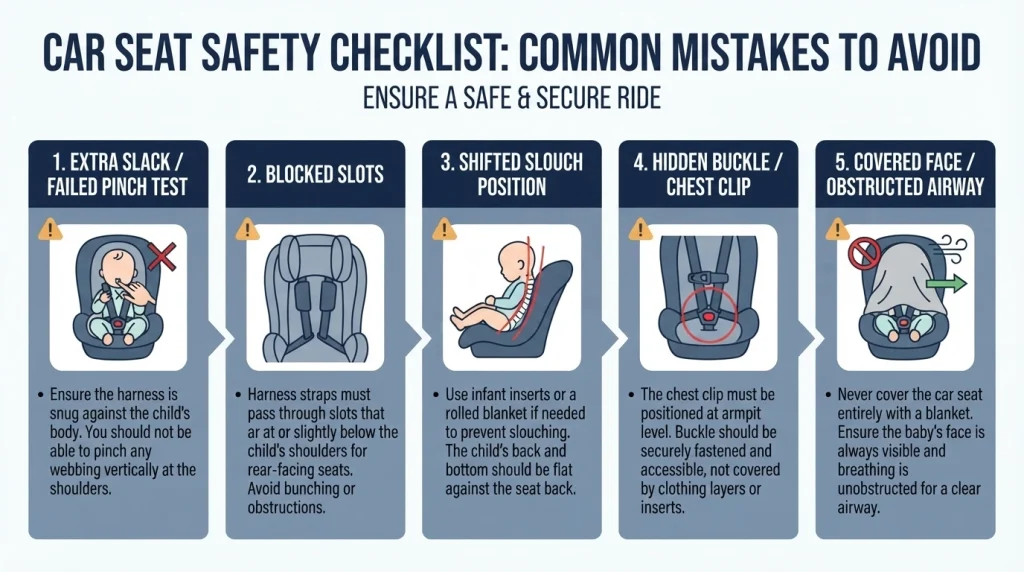
Skip a cover when it changes the harness, the recline, or your view of your baby. Safety wins over warmth, style, and convenience every time.
Remove a cover at once if you feel unsure about the fit. A quick removal beats a long ride with a doubtful harness.
What are the clear red flags?
- Extra slack: You can pinch strap webbing at the collarbone after you tighten the harness.
- Blocked slots: A harness strap cannot pass through its slot without force or folding.
- Shifted position: Your baby sits higher, more forward, or more slumped than without the cover.
- Hidden buckle: You cannot see or reach the buckle and chest clip with ease.
- Covered face: Fabric rests over your baby’s nose, mouth, or chin, or blocks your view.
Any one of those signs means the cover does not fit your seat. Remove it, re-buckle, and run the pinch test again.
Also skip universal covers that claim to fit “all” car seats. Car seats differ in shell shape, slot placement, and harness routing.
A cover made for one model can sit wrong on another model. That mismatch may look small, yet it can change strap angles.
Skip aftermarket inserts that add padding behind the back or under the legs, unless your seat maker approves that exact product. Crash testing covers the seat as sold, not the seat plus an add-on.
That point sits at the heart of car seat safety standards. Regulators test the seat system, and unapproved add-ons fall outside that tested system.
Pro tip: Check your car seat manual, the NHTSA car seat safety guidance, and a certified child passenger safety technician when a cover claim sounds unclear.
Section takeaway: If a cover adds slack, blocks a slot, hides the buckle, or covers the face, take it off and travel without it.
How Do You Choose a Safe Baby Car Seat Cover?
Choose safety approval first, then fabric, then convenience. A soft fabric means nothing if the cover fails the fit test.
Start with your car seat manual. It names approved accessories, and it warns against add-ons that change harness routing.
Contact the seat maker when the manual stays silent. A short message can confirm whether a specific cover keeps your warranty and safety testing intact.
What should you check before you buy?
- Maker approval: The cover comes from your seat maker, or the maker names it as approved for your exact model.
- Slot alignment: Every harness slot, buckle opening, and chest-clip path lines up with the original pad.
- Thin profile: The fabric adds no thick padding behind the back, under the legs, or under the straps.
- Secure fit: The cover stays put without slipping, bunching, or sliding under the harness.
- Washable fabric: You can wash it by the care label without shrinkage that pulls slots out of line.
Breathable cotton or a light, wipe-clean fabric suits most families. Heavy fleece suits a canopy better than a seat pad, since it stays away from the harness.
Avoid covers with loose strings, long ties, or bulky toys near the face. Loose parts create a distraction, and they can tangle near the harness.
Check return terms before you buy an online cover. You need a real fit test in your car, not just a photo match.
For independent context on seat ratings and testing, Consumer Reports offers a useful starting point. Use it for research, then confirm fit with your own seat manual.
Which cover type fits which job?
| Cover type | Goes where | Best for | Safety check |
|---|---|---|---|
| Maker-approved replacement pad | On the seat shell, in place of the original pad | Mess, spills, and daily wear | Slots line up, harness stays snug |
| Carrier canopy | Over the infant carrier, clear of the harness | Wind, sun, and light rain | Face stays visible, air flows freely |
| Blanket over buckled harness | Over the straps, after buckling | Extra warmth in winter | Remove it to check the harness |
| Aftermarket thick padded insert | Behind the back or under the harness | No clear safe job | Skip it unless the maker approves it |
| Vehicle seat protector | Under the car seat base | Protecting car upholstery | Base stays tight, with less than one inch of movement |
Use that table as a filter, not a shopping list. If a product falls in the thick-insert row, pause and seek maker approval first.
Section takeaway: Buy only a cover your seat maker approves, with aligned slots and a thin profile, and test it in your car before you rely on it.
How Do You Use and Wash One Without Hurting Safety?
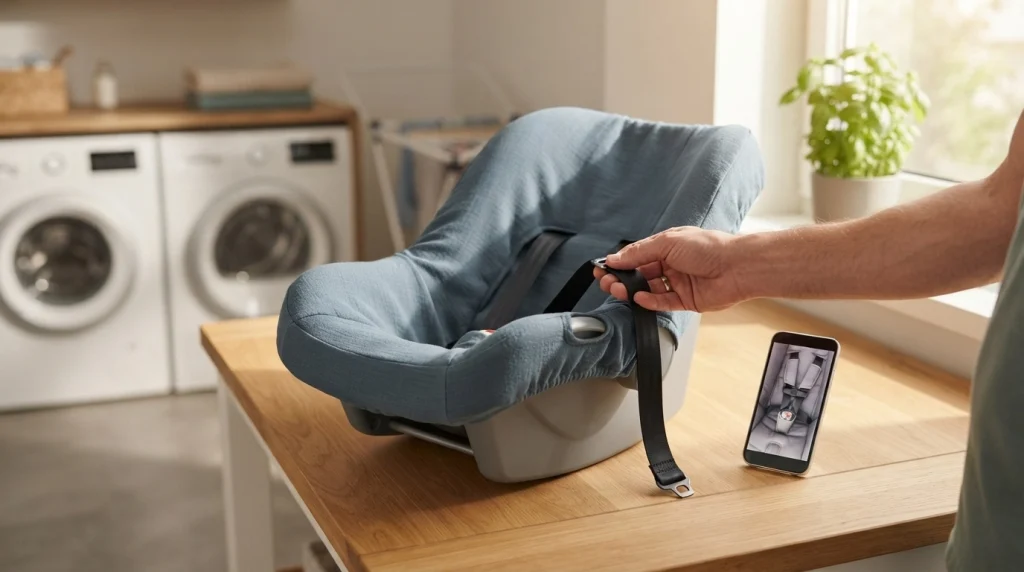
Fit the cover, buckle your baby, and test the harness in that order. Never judge fit with the cover alone, or with your baby unbuckled.
Small steps here prevent most problems. A calm, slow fit check beats a rushed install on a busy morning.
How do you fit a cover step by step?
- Remove the old pad only if your manual shows that step for your model.
- Line up each harness slot, buckle opening, and strap path with care.
- Refit the harness through the correct slots for your baby’s height.
- Buckle your baby, place the chest clip at armpit level, and tighten the straps.
- Run the pinch test at the collarbone, and check for bunching or shifting.
- Recheck base tightness if you also added a protector under the seat.
Repeat the pinch test after every wash and refit. Fabric can shrink, stretch, or shift, and each change can alter strap tension.
Keep the manual in the car or on your phone for the first few fits. Photos of the original pad layout help you spot a misaligned slot fast.
How do you wash a cover without ruining the fit?
Follow the care label first, every time. Heat, harsh soap, and long drying can shrink fabric or stiffen straps.
Wash seat pads apart from heavy items like towels. Heavy loads can stretch thin fabric and pull slot edges out of shape.
Air-dry when the label allows it. High heat can shrink a pad just enough to misalign a harness slot.
Refit the cover only when it feels fully dry and flat. Damp fabric stretches, then tightens as it dries on the seat.
Learn how to wash a car seat cover without damaging it before your first wash, and keep a spare approved pad for messy weeks.
When you need to strip the seat for a deep clean, learn how to remove a car seat cover for cleaning without forcing clips or harness parts.
Never wash harness straps in a machine unless your manual allows it. Clean straps by the manual method, and replace them only with maker parts.
Pro tip: Take a photo before you remove any pad or strap, and check the owner’s manual before you refit a part that feels stiff or misaligned.
Section takeaway: Fit, buckle, pinch-test, and re-check after washing, and treat any shift in fit as a reason to remove the cover.
Frequently Asked Questions
Can I use a car seat cover in winter?
Yes, if you use it the safe way. Dress your baby in thin layers, buckle the harness snug, then add a canopy or a blanket over the straps, and keep the face clear.
Is a canopy cover safe for a newborn?
A canopy can stay safe when it stays clear of the harness and face. It must allow airflow, leave breathing visible, and come off once you reach a warm car or shaded space.
Can I add a thick padded cover to my baby’s car seat?
Skip it unless your seat maker approves that exact cover for your exact model. Thick padding behind your baby can compress in a crash, add strap slack, and change how the seat performs.
Do I need a cover to protect my car’s seats?
No, you do not need one, but a thin protector under the base can help. It must not loosen the base install, so recheck for less than one inch of movement after you fit it.
When should I remove a baby car seat cover?
Remove it when the harness fails the pinch test, a slot misaligns, the chest clip shifts, or fabric covers the face. Also remove it in heat, or when your baby looks uncomfortable or hard to see.
Can I wash a baby car seat cover?
Yes, when the care label and seat manual allow washing. Wash it gently, air-dry it when possible, refit it flat and dry, and run the pinch test again before your next ride.
Final Takeaway
Your baby needs a snug harness, a correct install, and a clear airway. A cover only helps when it protects those three things, not when it competes with them.
As of 2026, the safest approach stays simple. Choose a maker-approved cover or a blanket over the harness, test the fit, and remove anything that adds slack.
When doubt creeps in, travel without the cover. A clean car seat and a safe harness beat a cozy-looking setup that fails the pinch test.
For more family car seat guidance, HealthyChildren.org offers parent-friendly safety information from pediatric experts. Pair that research with your seat manual, and you will choose with confidence.

Daniel Brooks is an automotive writer and product researcher focused on car accessories, car tech, maintenance, and practical driving guides. At Plug-in Car World, he helps drivers make smarter automotive decisions through honest reviews and research-driven content.
