
Can Babies Breathe Through Car Seat Covers? Airflow and Safety
Quick Answer
Babies can breathe through a thin, breathable car seat cover only when their face stays open and air can move freely. A thick, sealed, or tightly draped cover can trap heat and stale air, even if the fabric itself feels soft. Never cover a baby’s face, and check how to install a car seat cover correctly before you use one.
The short safety rule
- Face stays clear: No fabric should sit over the nose, mouth, or chin.
- Air stays moving: Mesh panels and open sides beat a sealed canopy.
- Heat builds fast: A closed cover warms the space around a baby quickly.
- Babies cannot fix it: A young infant cannot push heavy fabric away.
- Maker approval matters: Use only covers your car seat maker allows.
If you are unsure
- Remove the cover and check your baby’s breathing, colour, and temperature.
- Choose shade, car ventilation, and light clothing instead of sealing the carrier shut.
I’ve fitted more infant carriers in my garage than I can count, and this question comes up every winter and every heatwave.
Parents want warmth, sun protection, and privacy, but they also want to know their baby can breathe. This guide separates the two very different products people call a “car seat cover,” and it shows which ones help airflow and which ones block it.
In This Guide
- What Does “Car Seat Cover” Actually Mean for a Baby?
- Can Babies Breathe Through a Car Seat Cover?
- Which Covers Restrict Airflow Most?
- How Do Heat and Overheating Change the Risk?
- How Can You Use a Cover Safely Without Blocking Airflow?
- What Should You Check Before You Buy or Use One?
- Frequently Asked Questions
What Does “Car Seat Cover” Actually Mean for a Baby?
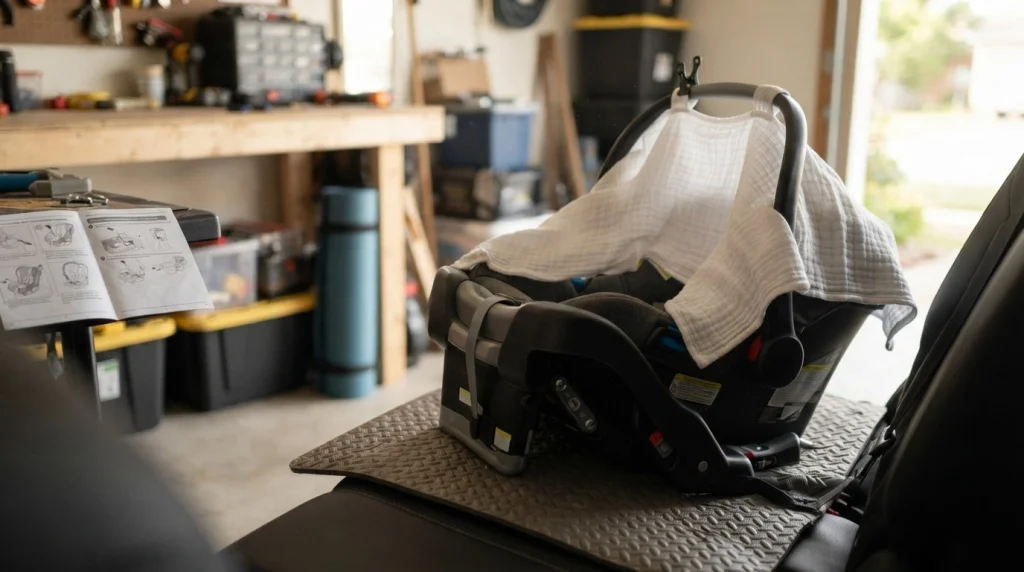
A baby car seat cover is any extra layer added around, over, or under an infant car seat. The term covers three different products, and only one of them sits near your baby’s face.
That distinction matters because airflow risk depends on where the fabric sits, not just what the fabric is made from.
The three types parents mix up
- Carrier canopy cover: A layer that drapes over the infant carrier, often with a hood or zippered front.
- Seat pad or insert cover: A layer that sits under or around the baby inside the seat, near the harness and padding.
- Vehicle seat protector: A layer that sits on the car’s own seat, underneath the whole child seat.
A vehicle seat protector does not cover the breathing zone at all. Its risk is different, and it centres on installation, movement, and harness fit.
A canopy cover is the product this article focuses on for breathing. It can change airflow, temperature, and your view of the baby in seconds.
Section takeaway: Name the exact cover type before you judge airflow, because a protector under the seat and a canopy over the carrier carry very different risks.
Can Babies Breathe Through a Car Seat Cover?
Yes, a baby can breathe through a light, breathable cover when the face stays uncovered and air flows around the carrier. No, a baby cannot breathe safely under a heavy, sealed, or face-covering layer.
Breathable fabric alone does not make a cover safe. Fit, openings, and supervision matter just as much as the material.
Why a baby’s breathing is more fragile
Newborns breathe through small airways, and they tire faster when they must work harder for air. They also cannot lift their heads well, shift position, or push a fallen blanket aside.
That combination turns a small airflow problem into a bigger safety problem. A gap that looks harmless to an adult can still sit too close to a newborn’s nose and mouth.
What “breathable” should mean in practice
- Open face area: You can see the nose and mouth without lifting fabric.
- Air path: Air enters from the sides or through mesh, not only through one small vent.
- Loose drape: Fabric hangs away from the face instead of clinging to it.
- Quick check: You can reach in, touch the baby, and hear breathing without a struggle.
If you must unzip, lift, or peel fabric back to see your baby’s face, the cover is too closed. Treat that as a stop sign, not a minor flaw.
I once fitted a thick cover to an infant carrier in my garage, and the inside felt noticeably warmer after a few minutes in the sun. The fabric looked cosy from outside, yet the enclosed space told a different story.
That hands-on check changed how I judge covers. I now look for open air paths first and warmth second.
Pro tip: Check your car seat manual and NHTSA car seat safety guidance before you add any aftermarket layer, because maker rules vary by seat.
Section takeaway: A baby breathes safely through a cover only when the face is clear, air moves freely, and you can check the baby at a glance.
Which Covers Restrict Airflow Most?
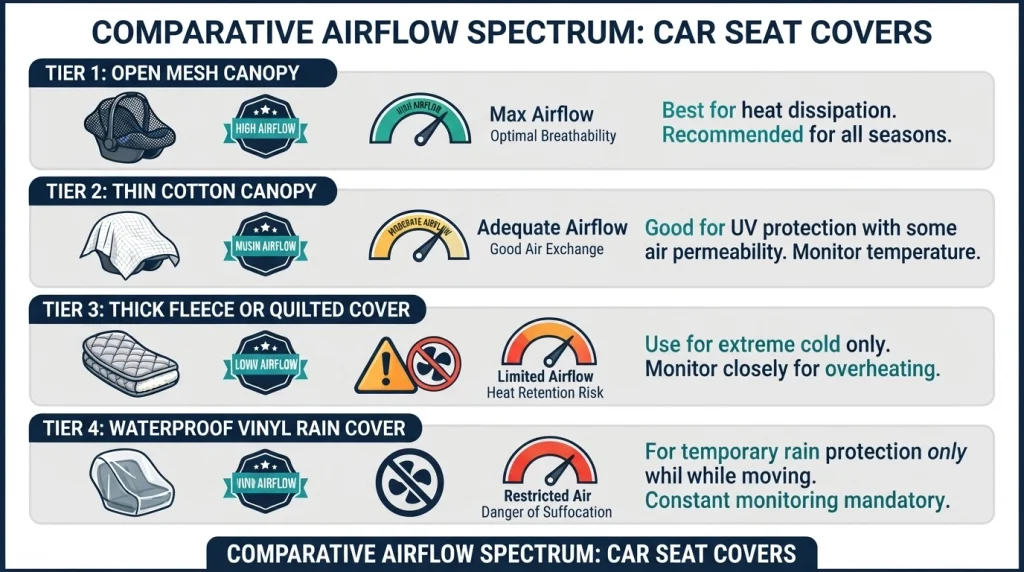
Thin mesh with a wide face opening restricts airflow least. Thick, waterproof, or tightly sealed layers restrict it most, even when the label calls the fabric breathable.
Marketing words do not measure airflow. Openings, weight, and drape do.
| Cover type | Airflow | Main risk | Safer use |
|---|---|---|---|
| Open mesh canopy with face opening | High | Sun or wind can still dry skin, so check comfort often | Keep the face opening clear and the mesh taut, not sagging |
| Thin cotton canopy, loosely draped | Moderate | Fabric can shift onto the face during a bumpy ride | Secure it away from the face and recheck it after every stop |
| Thick fleece or quilted cover | Low | Heat builds up and air exchange drops | Use it only as a blanket over the harness, never as a sealed hood |
| Waterproof vinyl or plastic rain cover | Very low unless vented | Moisture, heat, and stale air collect inside | Use it briefly outdoors, with vents open, and remove it in the car |
| Loose blanket tucked over a carrier | Unpredictable | It can slip, bunch, or cover the face without warning | Drape it over the legs only, below the chest, and never over the face |
| Vehicle seat protector under the child seat | Not a breathing layer | It can change how tightly the seat installs | Follow the car seat manual and retest installation after fitting it |
Rain covers deserve special care. A clear plastic layer may look open because you can see through it, yet it can still block air exchange.
As of 2026, the safest habit is simple: use a rain cover for a short walk to the car, then take it off before you drive. Your car’s heating, shade, and ventilation do the rest of the job.
Section takeaway: Mesh and open designs protect airflow best, while thick, plastic, and loose layers create the highest breathing and heat risks.
How Do Heat and Overheating Change the Risk?
Heat raises the risk even when breathing looks fine at first. A warm, enclosed carrier can make a baby sweaty, restless, and less able to cope with reduced airflow.
Babies also lose heat control faster than adults. They cannot sweat as well, shed layers, or tell you they feel too hot.
Warning signs to watch for
- Flushed cheeks: Skin looks redder than usual, especially on the face and chest.
- Damp hair or clothing: Sweat builds up under a closed cover.
- Fast or noisy breathing: Breathing sounds harder, faster, or more laboured than normal.
- Unusual quietness: A baby who stops fussing and goes limp needs urgent attention.
- Hot carrier shell: The seat, straps, or cover feel hot to your hand.
Do not wait for every sign to appear. One clear sign is enough reason to remove the cover, cool the space, and check the baby closely.
Sunlight adds another layer of risk. A dark cover absorbs heat, and a car parked in sun warms the carrier before you even start driving.
Shade the carrier from outside when you can, and point vents toward the back seat rather than sealing the baby inside a warm tent. Light clothing under the harness also helps, because bulky coats change harness fit and trap heat.
For wider child safety habits, Safe Kids child passenger safety resources offer plain-language checks parents can use alongside the car seat manual.
Section takeaway: Overheating can turn a borderline cover into an unsafe one, so check temperature and breathing often, and remove the cover at the first warning sign.
How Can You Use a Cover Safely Without Blocking Airflow?
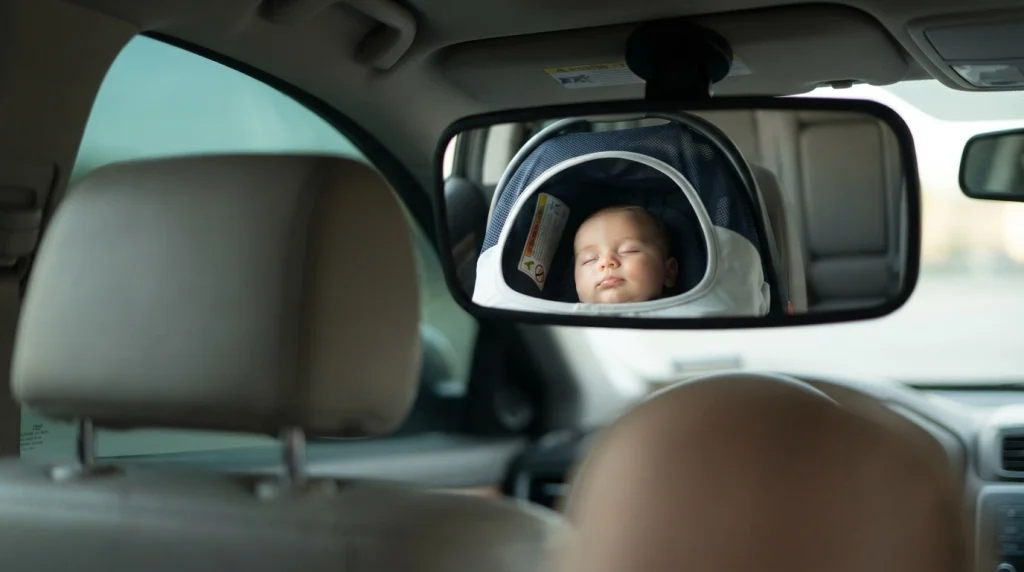
Use a cover only when the face stays open, air moves freely, and the harness still fits exactly as the maker intended. If any of those three fails, leave the cover off.
That rule sounds strict, yet it keeps the decision simple in a busy car park or on a cold morning.
Safe setup checklist
- Fit the harness first: Buckle and tighten the harness before you add any cover over the carrier.
- Keep straps clear: No cover layer should sit behind the baby, under the straps, or behind the chest clip.
- Leave the face open: Keep a wide, stable opening around the nose and mouth.
- Anchor the edges: Fasten the cover so wind and bumps cannot push it onto the face.
- Check the view: Sit in the driver’s seat and confirm you can still see the baby in the mirror.
Head position matters here too. A slumped head can narrow the airway, and a cover can hide that problem from view.
Read how to position a newborn’s head safely in a car seat before you add padding, inserts, or a hood near the head area.
Head supports raise a similar issue. Extra padding can look supportive, yet it can shift the head or change harness routing.
Learn the limits in this guide to car seat head support safety before you combine a support with a canopy cover.
When to remove the cover at once
- Fabric touches the nose, mouth, or chin.
- The baby feels hot, sweaty, or unusually quiet.
- You cannot see the face or hear breathing clearly.
- The cover keeps slipping, even after you refasten it.
- The harness feels looser than it did without the cover.
Installation checks belong in the same routine. A cover under the seat can change how the base grips the vehicle seat.
Use this guide to check whether your car seat is installed correctly after you fit any new layer underneath or around the seat.
Section takeaway: Safe use means harness first, face open, edges secured, and a quick recheck after every stop.
What Should You Check Before You Buy or Use One?
Check maker approval, harness fit, airflow design, and wash care before you buy. A cover that fails one check can still look perfect in a product photo.
Start with the manual, not the listing. Many car seat makers forbid aftermarket inserts, strap covers, and canopy layers that they did not test with that seat.
Four checks that save trouble later
- Maker approval: Look for the exact seat model in the cover maker’s fit list, and confirm it in your manual.
- Crash-test status: Ask whether the cover was tested with your seat, not just made from a soft fabric.
- Airflow design: Look for mesh panels, side vents, and a fixed face opening, not a single zip.
- Wash care: Check whether washing changes the shape, stiffness, or mesh openness.
Safety standards help you frame those questions. They explain why some accessories need maker approval even when they feel harmless.
Read this guide to understanding car seat safety standards before you judge a cover by its fabric label alone.
Washing matters more than most parents expect. A shrunken cover can pull tighter across the carrier, and a stiffened mesh panel can block air more than a soft one.
Follow the steps for how to wash a car seat cover without damaging it, and recheck fit and airflow after it dries.
Independent guidance can also help you spot weak claims. Consumer Reports car seat guidance stresses correct fit and maker instructions over extra accessories.
Section takeaway: Buy for maker approval, fixed airflow, and stable fit after washing, not for softness or warmth alone.
Frequently Asked Questions
Can a baby breathe through a mesh car seat cover?
Yes, in most cases, when the mesh stays taut, the face opening stays clear, and air flows from the sides. Check the baby often, because mesh can still sag, collect moisture, or sit too close to the face.
Is it safe to cover a baby’s car seat with a blanket?
No, a loose blanket over the carrier is not safe as a cover. It can slip onto the face, trap heat, and hide breathing problems. Drape a blanket over the legs only, below the chest, after the harness is buckled.
Can a car seat cover cause overheating?
Yes, a closed or thick cover can trap warm air and raise the temperature inside the carrier. Watch for flushed skin, damp clothing, and restless breathing, and remove the cover at the first sign of overheating.
Do breathable covers work in winter?
Yes, when you pair a breathable cover with warm clothing under a snug harness. Dress the baby in thin, warm layers, buckle the harness snugly, then add a blanket over the harness, not under it.
Should I use a cover made by another brand?
Only when your car seat maker allows it and the cover fits your exact seat model. Aftermarket layers can change harness fit and crash performance, even when they feel soft and light.
How often should I check my baby under a cover?
Check at every stop, and glance in the mirror often during the drive. Look for a clear face, steady breathing, and comfortable temperature, and remove the cover if any check fails.
When in doubt, choose the open option. A baby who feels a little cool can gain warmth from clothing and car heating, while a baby under a sealed cover cannot gain fresh air on their own.
Keep the face clear, keep air moving, and keep the harness exactly as the maker designed it. Those three habits answer most cover questions before they become safety problems.

Daniel Brooks is an automotive writer and product researcher focused on car accessories, car tech, maintenance, and practical driving guides. At Plug-in Car World, he helps drivers make smarter automotive decisions through honest reviews and research-driven content.
