
How to Wash a Car Seat Cover Without Damaging It
Quick Answer
Yes, you can wash most removable car seat covers without damage if you check the care label first, use cool water and a mild detergent, and air-dry the cover. Heat, harsh cleaners, and high dryer settings cause most shrinkage, fading, and cracking. Mesh and cooling designs need extra care, as shown in this cooling car seat cover review.
Wash it safely in four moves
- Check the label: The label beats any general guide when the two disagree.
- Use cool water: Cool water cleans well and limits shrinkage and colour loss.
- Stay gentle: A mild detergent and soft agitation protect seams, backing, and coatings.
- Air-dry flat: Air drying keeps shape better than a hot tumble dryer.
- Refit with care: Check straps, zips, and airbag seams before you drive again.
Skip the wash if you are unsure
- Spot-clean leather, suede, and covers with heated or cooled seat parts first.
- Stop and check the manual if the cover sits over a side airbag seam.
This guide covers the full job, from reading the label to drying and refitting the cover. It focuses on everyday vehicle seat covers, not child safety seats.
Child safety seats follow their own manuals, and those rules differ. Keep that distinction clear before you start.
In This Guide
- What Is a Car Seat Cover, and Why Does Washing Method Matter?
- How Do I Know If My Car Seat Cover Is Machine Washable?
- What Should I Use to Wash a Car Seat Cover Safely?
- How Do I Wash a Car Seat Cover by Hand or in a Machine?
- How Do I Dry and Refit a Car Seat Cover Without Shrinking It?
- How Do I Remove Stains and Smells Without Damaging the Material?
- Frequently Asked Questions
What Is a Car Seat Cover, and Why Does Washing Method Matter?
A car seat cover is a removable layer that sits over a vehicle seat to protect the original upholstery from wear, spills, sun, and pet hair. It is not the same as a child safety seat cover, and it is not part of the seat itself.
Most covers use fabric, neoprene, leather, PU leather, suede, microfiber, mesh, or faux fur. Each material reacts differently to water, heat, and detergent.
Washing method matters because damage often shows up later, not at once. A cover can look clean after a hot wash, then fit tight, fade, or crack after it dries.
Heat causes the most common problems. Hot water and high dryer heat can shrink fabric, warp foam backing, and dry out leather and PU leather.
Strong cleaners cause a second set of problems. Bleach, harsh degreasers, and solvent-based products can strip colour, weaken stitching, and break waterproof coatings.
Agitation matters too. Long, rough machine cycles can fray edges, pull elastic, and wear printed or coated surfaces.
Fit matters for safety as well as looks. A shrunken cover can pull tight, bunch up, or shift while you drive.
That shift matters most on seats with side airbags. A cover must not block an airbag seam, and you must refit it exactly as the maker intended.
Pro tip: Check your vehicle owner’s manual and the cover maker’s instructions for airbag-compatible fitment, and use NHTSA for general vehicle safety information rather than guessing about airbag seams.
Section takeaway: Match the wash to the material, keep water cool and cleaners mild, and treat fit as a safety check, not just a cosmetic one.
How Do I Know If My Car Seat Cover Is Machine Washable?
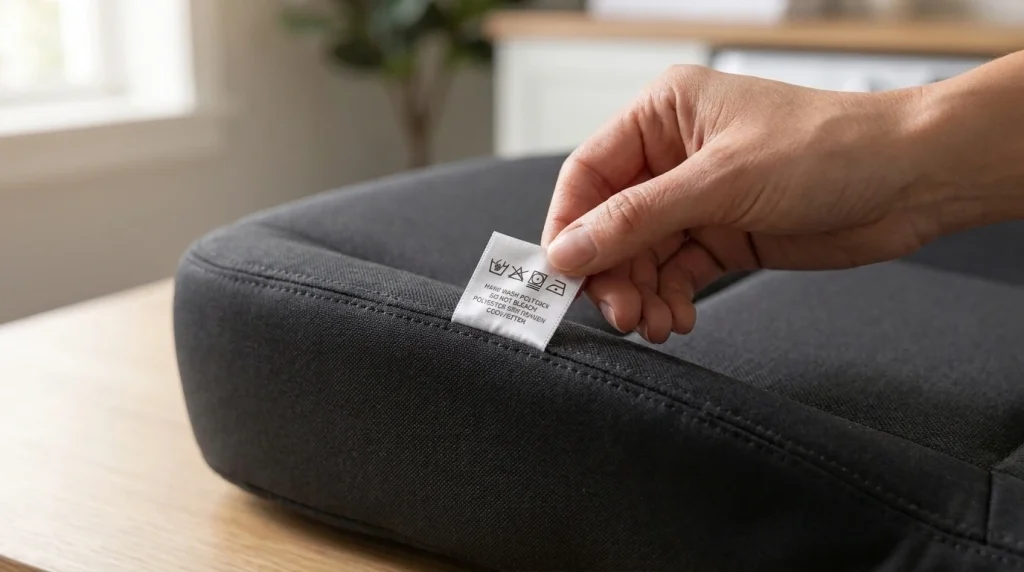
Start with the care label, usually sewn into a seam, inside a pocket, or on a backing flap. The label may allow machine washing, hand washing only, or spot cleaning only.
If the label is missing, look for the product listing or packaging from the maker. Do not assume a cover is machine washable just because it looks like ordinary fabric.
Material gives a useful second clue, but it never overrides a label. Neoprene and many polyester fabrics often tolerate gentle washing, while leather and suede usually do not.
Construction gives more clues. Covers with foam padding, waterproof backing, elastic straps, hooks, or zips need a gentler cycle than a plain fabric slip.
Heated and cooled seats add another check. Washing a cover with fans, heating pads, wiring, or control units can damage parts that water should never reach.
For those covers, spot-clean only unless the maker states a safe wash method in writing. Unplug any powered part before cleaning, and let it dry fully before use.
Use this table as a general starting point, as of 2026, then confirm against your own label.
| Material | Safest wash | Drying | Avoid |
|---|---|---|---|
| Polyester fabric | Gentle machine or hand wash, cool water | Air-dry | Hot dryer, bleach |
| Neoprene | Hand wash or gentle cycle, cool water | Air-dry flat, out of direct sun | Hot water, wringing, high heat |
| Leather and PU leather | Damp wipe and spot-clean only | Air-dry, then condition leather if the maker allows it | Soaking, machine washing, harsh cleaners |
| Suede and microfiber | Spot-clean with a soft brush and mild cleaner | Air-dry, then brush lightly | Soaking, stiff brushes, steam on suede |
| Mesh and cooling fabric | Gentle hand wash or gentle cycle, cool water | Air-dry | Rough agitation, fabric softener on mesh |
| Sheepskin and faux fur | Follow the label; many need hand washing or specialist cleaning | Air-dry, brush once dry | Hot dryer, heavy spinning |
Colour and print also affect the choice. Dark, bright, or printed covers can bleed or fade, so wash them separately the first time.
A simple test helps before a full wash. Dampen a hidden corner, blot it with a white cloth, and check for colour transfer after a few minutes.
If colour transfers, wash by hand in cool water and keep the cover away from light-coloured seats while damp. That care also helps when you compare different seat-cover designs, such as the Sprints car seat cover review, which focuses on fit and material rather than wash method alone.
Section takeaway: The label decides the method, material guides your caution, and powered or airbag-related covers need a manual check before any wash.
What Should I Use to Wash a Car Seat Cover Safely?
Use a mild, dye-free liquid laundry detergent for most washable fabric covers. A small amount cleans better than a large dose, and excess detergent leaves residue that attracts dirt.
For leather and PU leather, use a cleaner made for that material, or a damp cloth with plain water for light dirt. Test any cleaner on a hidden spot first.
For suede and microfiber, use a soft brush, a mild cleaner, and very little water. Work in small sections and let each section dry before you judge the result.
Gather these supplies before you remove the cover:
- A mild liquid detergent, with no bleach
- A soft sponge or microfibre cloth
- A soft-bristle brush for fabric and seams
- Cool water, in a basin or a gentle machine cycle
- Clean towels for blotting and drying
- A mesh laundry bag for machine washing, if the label allows it
- White vinegar or baking soda only for odour steps, and only where the label allows them
Avoid bleach, even on white covers, unless the maker states it is safe. Bleach can weaken fibres and yellow some fabrics.
Avoid fabric softener on mesh, cooling, and waterproof covers. Softener can coat fibres, reduce breathability, and weaken water resistance.
Avoid all-purpose household sprays, oven cleaners, and solvent-based stain removers on seat covers. Those products can damage coatings and stitching, and they can leave fumes in a closed car.
General car-care guidance from Edmunds also stresses checking fit and material care after cleaning, not just removing visible dirt. That check matters because a cover that looks clean can still sit wrong after washing.
Section takeaway: Mild detergent, cool water, and soft tools do most of the work, while bleach, softener, and harsh sprays cause most avoidable damage.
How Do I Wash a Car Seat Cover by Hand or in a Machine?
Remove the cover slowly, noting how each strap, hook, and zip fits. Take a quick photo of the fit before removal if the setup looks complex.
Shake the cover outdoors and vacuum loose dirt, crumbs, and pet hair first. Pre-cleaning stops grit from grinding into the fabric during washing.
How do I hand wash a car seat cover?
Hand washing gives you the most control, and it suits neoprene, mesh, and covers with padding or straps. Use cool water and work gently throughout.
- Fill a basin with cool water and add a small amount of mild detergent.
- Submerge the cover only if the label allows soaking, and keep soak time short, around 15 to 30 minutes.
- Press the fabric gently to push soapy water through dirty areas.
- Brush seams and stained spots lightly with a soft brush.
- Drain the basin, then rinse in clean cool water until the water runs clear.
- Press out water with clean towels instead of wringing the cover hard.
- Reshape the cover on a flat surface before drying.
Do not scrub one spot hard to chase a stain. Repeated gentle passes clean better and protect the weave.
Can I machine wash a car seat cover?
You can machine wash some covers, but only when the label allows it. The same label-first rule used for other cover types applies here, including the question of whether a steering wheel cover can be washed, where material and construction decide the answer.
Use a gentle or delicate cycle, cool water, and a mesh laundry bag. Close zips and fasten straps so hooks cannot snag other fabric.
- Turn the cover inside out if the maker allows it, or place it in a mesh bag.
- Select a gentle cycle, cool water, and a low spin speed.
- Use a small amount of mild detergent, with no bleach or softener.
- Wash the cover alone, or with similar soft items only.
- Remove it promptly when the cycle ends.
- Reshape it by hand before drying.
- Check seams, elastic, and backing for wear before refitting.
The parallel with general cover cleaning also helps here. A careful, label-first approach to how to clean a steering wheel cover properly uses the same core steps: test first, wash gently, and dry without high heat.
Section takeaway: Hand washing suits delicate covers, a gentle machine cycle suits labelled washable covers, and prompt removal plus reshaping protects fit in both cases.
How Do I Dry and Refit a Car Seat Cover Without Shrinking It?
Air-dry the cover flat or hung in shade, with good airflow around it. Direct sun and radiators can shrink fabric, stiffen leather, and fade colour.
Turn the cover once or twice while it dries. Turning helps both sides dry evenly and stops damp spots from holding a crease.
Do not use a high dryer setting, even to save time. If the label allows a dryer at all, use the lowest heat setting and remove the cover while it is still slightly damp.
Do not refit a damp cover and leave it in a closed, hot car. Trapped moisture can cause smells, mould, and stiffness in padding.
Check fit once the cover feels fully dry. Stretch it gently back into shape, then fit straps and hooks in the same order you noted during removal.
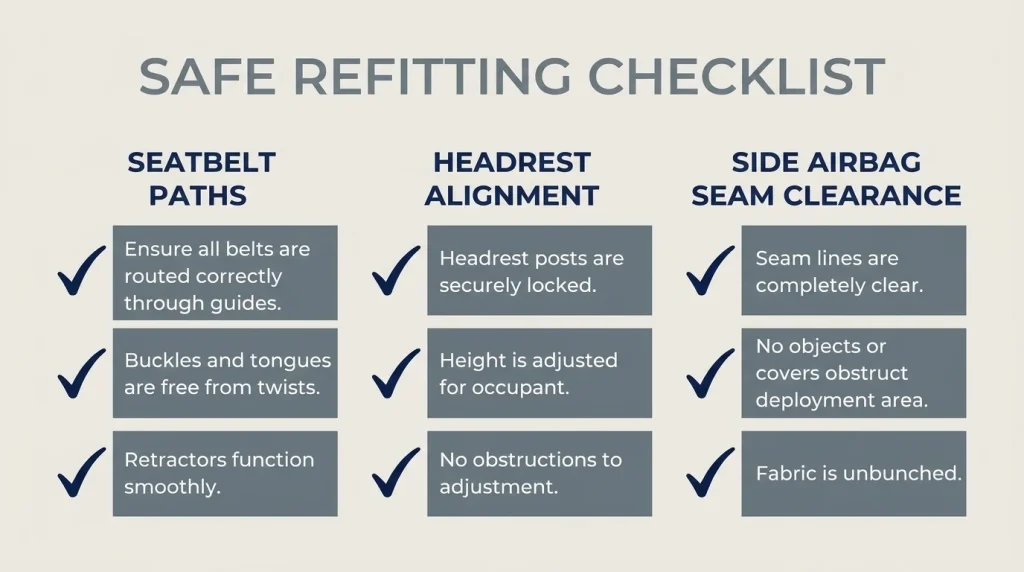
Check every safety point before driving. Seatbelt paths must stay clear, headrest posts must sit correctly, and side airbag seams must not sit under extra layers or tight straps.
Different designs fit differently after washing, so compare your refit against the maker’s fit guide. That step also matters when reading design reviews, such as the Astonish car seat cover review, where fit and material shape the overall result.
If the cover now fits tight, bunches, or slips, do not force it. Rewash is rarely the fix, and a poor fit can distract you or block a safety feature.
Section takeaway: Air-dry in shade, check the cover only when fully dry, and treat refit as a safety check for belts, headrests, and airbag seams.
How Do I Remove Stains and Smells Without Damaging the Material?
Act fast on fresh stains, but stay gentle. Blot the spill with a clean cloth, work from the outside edge inward, and avoid rubbing the stain deeper.
For food and drink stains on washable fabric, use cool water and a small amount of mild detergent first. Rinse well, then wash the cover by the label method if needed.
For grease, blot first, then use a mild detergent solution and a soft brush. Avoid harsh degreasers, which can strip colour and coatings.
For pet hair and mud, vacuum before washing and brush dried mud off outdoors. Wet mud spreads, while dry mud lifts off more cleanly.
For smells, air the cover outdoors in shade before trying any product. Fresh air removes many mild odours without chemicals.
For stubborn smells on washable fabric, a short soak in cool water with a small amount of baking soda can help, if the label allows soaking. Rinse fully, since residue can attract dirt and leave a chalky feel.
For leather and PU leather smells, wipe with a damp cloth and use a cleaner made for that material. Do not soak leather, and do not use vinegar on leather unless the maker states it is safe.
Odour care follows the same gentle logic as other cover cleaning. The steps for removing odors from a steering wheel cover show why airing, mild cleaning, and full drying matter more than strong fragrance sprays.
Avoid these common mistakes:
- Washing without checking the label first
- Using hot water or a hot dryer to speed up drying
- Adding bleach, softener, or a harsh household spray
- Wringing neoprene or padded covers hard
- Refitting a damp cover and closing up a hot car
- Covering a side airbag seam or seatbelt path with extra layers
- Using a strong scent spray to mask a smell instead of cleaning the cause
Section takeaway: Blot first, clean gently, rinse fully, and dry completely, because strong products and trapped moisture cause more lasting damage than most stains.
Frequently Asked Questions
Can I wash car seat covers in a washing machine?
Some covers allow gentle machine washing in cool water, while leather, suede, and powered covers usually do not. Always check the care label first, use a mesh bag, and air-dry the cover after washing.
Can I put car seat covers in the dryer?
Air drying is safest for most covers, since high heat can shrink fabric and crack leather or PU leather. If the label allows a dryer, use the lowest heat setting and remove the cover while slightly damp.
How often should I wash car seat covers?
Most everyday covers need washing every few months, or sooner after spills, pet trips, or heavy dust. Frequent light vacuuming and spot cleaning can stretch the time between full washes without harming the material.
What is the best cleaner for car seat covers?
A mild, dye-free liquid detergent suits most washable fabric covers, while leather needs a leather cleaner and suede needs a soft brush and minimal water. Avoid bleach, harsh degreasers, and solvent-based sprays unless the maker states they are safe.
How do I wash a neoprene car seat cover?
Hand wash neoprene in cool water with mild detergent, press out water with towels, and air-dry it flat in shade. Avoid hot water, hard wringing, and high dryer heat, which can warp the material and damage backing.
Can washing damage seat airbags?
Washing itself does not deploy an airbag, but a shrunken, bunched, or wrongly refitted cover can block a side airbag seam or seatbelt path. Check the owner’s manual, use only airbag-compatible covers, and refit straps and seams exactly as intended.
Final takeaway: Wash cool, wash gentle, dry in air, and refit with care. That routine keeps most seat covers clean, well-shaped, and safe to use, as of 2026.
For general car-care context, Consumer Reports offers broad guidance on cleaning and maintaining vehicle interiors, but your cover label and vehicle manual still come first.

Daniel Brooks is an automotive writer and product researcher focused on car accessories, car tech, maintenance, and practical driving guides. At Plug-in Car World, he helps drivers make smarter automotive decisions through honest reviews and research-driven content.
