
How to Choose a Car Seat for a Newborn: A Complete Parent’s Guide
Quick Answer
To choose a car seat for a newborn, select a rear-facing infant or convertible seat that accommodates your baby’s current weight and height. Check vehicle compatibility, newborn harness adjustment, installation options, and safety certification before purchasing. The seat must fit your vehicle and allow a snug, properly positioned harness.
What should you check before buying?
- Rear-facing design: Choose a seat approved for newborn use and keep your baby rear-facing within its limits.
- Newborn fit: Check minimum weight, height, harness positions, and approved infant inserts.
- Vehicle compatibility: Confirm that the seat fits your car’s back seat and installation system.
- Installation method: Look for clear instructions for seat-belt or lower-anchor installation.
- Safety history: Check manufacturing dates, recalls, expiration information, and crash history.
- Daily convenience: Consider cleaning, carrier weight, canopy coverage, and stroller compatibility.
How can you confirm the seat is suitable?
- Install the seat according to both manuals, check the recline indicator, and confirm that movement at the belt path stays within one inch.
- Secure your baby with a snug harness and chest clip at armpit level.
Bringing a newborn home is exciting, but choosing the right car seat can feel overwhelming.
There are different designs, installation systems, weight limits, and comfort features to consider. I want to make these choices easier by focusing on what matters most: a proper newborn fit and safe installation.
This guide explains how to compare car seats, avoid common purchasing mistakes, and understand whether additional accessories, including car seat covers, are worth considering.
What type of car seat does a newborn need?
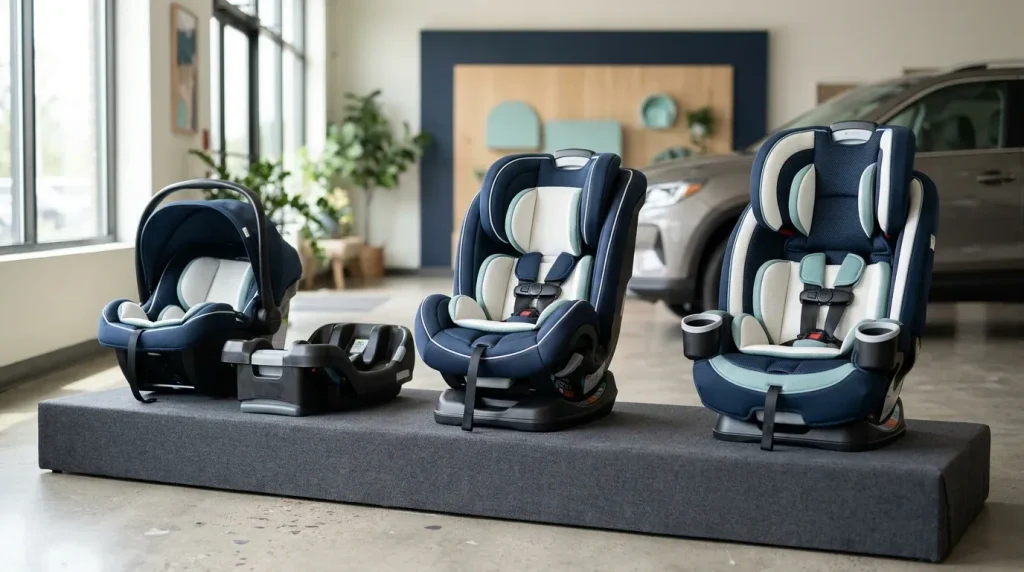
A newborn needs a rear-facing car seat specifically approved for the baby’s current size. Rear-facing seats support the head, neck, and spine during a collision.
There are three common types to consider when shopping.
1. Rear-facing infant car seats
An infant car seat is designed specifically for babies and can only be used in the rear-facing position.
Most models include a removable carrier and a separate vehicle base. This arrangement makes transferring the carrier between compatible stroller systems and the vehicle easier.
- Best for: Parents who want a removable carrier.
- Main advantage: Convenient transfers between compatible bases and strollers.
- Potential drawback: Babies eventually outgrow the seat’s height or weight limits.
2. Convertible car seats
A convertible car seat can accommodate a newborn in the rear-facing position and later switch to forward-facing use when the child meets the manufacturer’s requirements.
These seats generally remain installed in the vehicle rather than functioning as removable carriers.
- Best for: Families who prefer one seat that grows with their child.
- Main advantage: Higher rear-facing limits on many models.
- Potential drawback: Less convenient when transferring a sleeping baby.
3. All-in-one car seats
An all-in-one car seat can transition through rear-facing, forward-facing, and booster configurations, depending on the model.
It can provide several stages of use, but its larger dimensions may create installation challenges in smaller vehicles.
How do you choose the right newborn car seat?
The right car seat should fit your newborn, your vehicle, and your everyday travel needs. I recommend checking these important factors before comparing extra features.
1. Check the minimum weight and height limits
Every car seat has specific requirements for the smallest and largest child it can accommodate.
Newborns can differ considerably in size, so don’t assume every infant seat fits every baby from birth.
Check these details on the manufacturer’s label and instruction manual:
- Minimum permitted child weight.
- Maximum permitted child weight.
- Minimum and maximum height requirements, when specified.
- Required head clearance and harness positioning.
For example, some infant seats start at 4 pounds, while other models accommodate smaller babies under specific manufacturer conditions.
Premature or low-birth-weight babies may need additional medical guidance. Ask the baby’s healthcare team to assess whether the selected seat provides an appropriate fit.
2. Look for an adjustable newborn harness
A secure harness matters more than decorative padding or extra cushioning. The straps should fit your newborn’s body without leaving excessive slack.
For a rear-facing installation, the harness straps generally need to come through slots at or below the baby’s shoulders, following the manufacturer’s instructions.
Look for these practical features:
- Easy-to-adjust shoulder strap positions.
- A five-point harness.
- A buckle that fits correctly around a small baby.
- Clear instructions for newborn inserts.
- A simple tightening mechanism.
Remember that removable inserts are not interchangeable between brands. Use only padding supplied with or specifically approved for your exact seat model.
3. Make sure the car seat fits your vehicle
A car seat can meet every other requirement and still be unsuitable for your vehicle. Its dimensions, recline angle, and installation system must work with your back seat.
Before buying, check:
- Whether your vehicle has lower anchors.
- Whether the seat supports installation with your seat belt.
- Available space behind the front passenger or driver seat.
- Whether the vehicle seat provides a suitable installation angle.
- Whether the manufacturer’s vehicle compatibility guidance includes your car.
If possible, test the car seat inside your vehicle before purchasing. This is especially helpful when you drive a compact car or have multiple passengers in the back.
4. Compare installation systems
Most modern infant car seats offer installation using lower anchors or a vehicle seat belt. Some models support both methods.
Neither method should automatically be considered safer than the other when correctly used according to the manufacturer’s instructions.
| Feature | Lower anchors | Vehicle seat belt |
|---|---|---|
| Installation | Connects to designated vehicle anchors. | Uses the vehicle’s approved seat belt path. |
| Compatibility | Depends on anchor availability and vehicle instructions. | Depends on the seat belt system and seat instructions. |
| Convenience | Can simplify installation when accessible. | Useful when lower anchors aren’t available or appropriate. |
| Important check | Follow anchor weight limits and seat instructions. | Follow the vehicle’s belt-locking instructions. |
Use only one approved installation method for a particular installation unless the manufacturer explicitly permits both together.
Why is the recline angle important for newborns?
A newborn cannot control their head and neck as effectively as an older child. The correct semi-reclined position helps maintain an appropriate airway position while traveling.
Most infant car seats include a recline indicator, adjustment foot, or built-in leveling system.
When checking the recline:
- Follow the exact angle range in the seat manual.
- Check the indicator on a level surface where instructed.
- Use only manufacturer-approved adjustments.
- Recheck the angle after installing the seat.
Don’t use towels, cushions, or other objects to change the seat angle unless the manufacturer specifically permits that method.
What safety features should you look for?
Useful safety features help parents achieve a correct fit and installation. However, extra features don’t automatically make one car seat safer than another.
Five-point harness
A five-point harness secures the baby at the shoulders, hips, and between the legs. It should tighten evenly and remain flat against the body.
Side-impact protection
Some manufacturers include additional side-impact design features or energy-absorbing materials. Compare the specific seat’s construction and applicable safety standards rather than relying on marketing terms alone.
Anti-rebound features
Some rear-facing seats include an anti-rebound bar or stability feature. These components are designed to manage seat movement during certain crash conditions.
Check whether the feature is included, optional, or unavailable on your chosen model.
Recall registration
Register your car seat with its manufacturer after purchasing it. Registration helps the manufacturer contact you about recalls and important safety notices.
You can also check the official NHTSA car seat safety resource for recall information and installation guidance.
Should you buy a newborn car seat cover?
A car seat cover is an accessory designed to provide shade, weather protection, or an additional outer layer around a baby carrier. However, not every cover is suitable for use while driving.
This distinction matters because accessories can interfere with the harness, change the fit, or introduce extra material around the baby.
Understand the different types
- Canopy covers: Provide shade and some protection from wind.
- Weather covers: Offer additional protection against rain or cold weather.
- Car seat blankets: Provide warmth when placed over a properly secured harness.
- Decorative replacement covers: Change the appearance of the seat but may not be approved by its manufacturer.
What should you check before buying a cover?
Start with compatibility, not appearance. An attractive accessory isn’t useful if it interferes with the seat’s safety features.
Check these points:
- Whether the car seat manufacturer approves the accessory.
- Whether the cover stays away from the harness and buckle.
- Whether it allows proper ventilation.
- Whether it can be removed without disturbing the harness.
- Whether the material creates an overheating risk.
Avoid thick aftermarket inserts, padded liners, and accessories placed between your newborn and the seat unless the manufacturer specifically approves them.
For cold weather, buckle your baby into the seat first. You can then place a blanket over the harness without interfering with its fit.
Infant car seat vs convertible car seat: Which should you choose?
Both options can provide rear-facing protection when they meet your baby’s size requirements and are correctly installed. The main difference is convenience and how long the seat can accommodate your growing child.
| Comparison | Infant seat | Convertible seat |
|---|---|---|
| Newborn use | Yes, if size requirements are met. | Yes, if approved for newborn use. |
| Rear-facing use | Yes. | Yes. |
| Removable carrier | Usually available. | Generally unavailable. |
| Later forward-facing use | No. | Yes, when permitted by the manual. |
| Best suited for | Families wanting a portable carrier. | Families wanting a longer-use seat. |
My practical recommendation is to prioritize correct fit and installation over convenience. A properly fitted convertible seat can be a sensible choice if you don’t need a removable carrier.
How do you install a newborn car seat correctly?
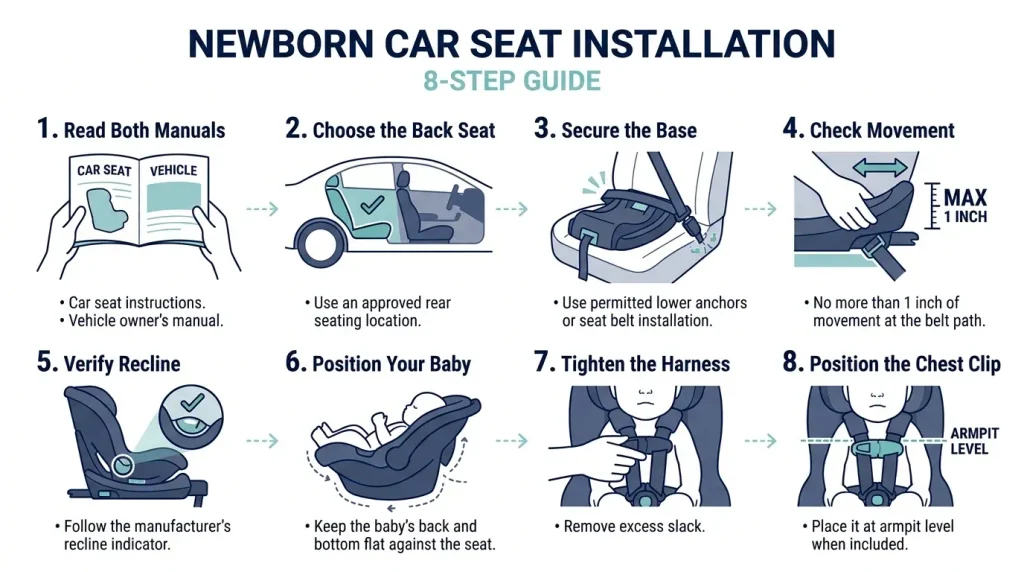
Correct installation is just as important as choosing the right model. Even a well-designed car seat cannot provide its intended protection when installed incorrectly.
Use this basic checklist before your first trip.
- Read both manuals: Review the car seat instructions and your vehicle owner’s manual.
- Choose the back seat: Position the seat in an approved rear seating location.
- Secure the base: Use the permitted lower anchors or seat belt installation method.
- Check movement: At the belt path, the installed seat should not move more than one inch side-to-side or front-to-back.
- Verify recline: Adjust the seat until its recline indicator meets the manufacturer’s requirements.
- Position your baby: Place the baby’s back and bottom flat against the seat.
- Tighten the harness: Remove excess slack without creating discomfort.
- Position the chest clip: Keep it at armpit level if the seat includes one.
The NHTSA rear-facing infant seat installation guide provides additional instructions and illustrations.
If you’re unsure about the installation, seek help from a qualified Child Passenger Safety Technician where available.
What mistakes should parents avoid when choosing a newborn car seat?
Some common purchasing and installation mistakes can affect how well a car seat protects a baby. Avoid these problems from the beginning.
- Buying based on appearance: Attractive colors and fabrics don’t guarantee a suitable newborn fit.
- Ignoring size limits: Always check the baby’s weight and height against the exact model requirements.
- Choosing an incompatible seat: Confirm that the seat fits your vehicle before purchasing.
- Adding unapproved padding: Extra cushions can interfere with the harness.
- Using thick winter clothing: Bulky coats can prevent the harness from fitting snugly.
- Buying an unknown used seat: Missing crash history, labels, or parts can make its safety impossible to confirm.
- Skipping recall registration: Register the seat to receive manufacturer safety notices.
For second-hand purchases, consult the NHTSA used car seat safety checklist. Avoid any seat with an unknown history or missing safety information.
Which newborn car seat features are worth paying for?
Not every premium feature deserves extra spending. I would focus on features that make correct installation and everyday use easier.
| Feature | Priority | Reason |
|---|---|---|
| Adjustable harness | Essential | Helps achieve an appropriate fit as your baby grows. |
| Recline indicator | Highly useful | Helps verify the permitted installation angle. |
| Machine-washable fabric | Useful | Makes routine cleaning easier. |
| Removable carrier | Optional | Makes transfers more convenient. |
| Premium fabric | Optional | Can improve comfort but doesn’t replace proper fit. |
As of 2026, current model specifications and applicable regulations should always be checked before purchasing. Product names and features can change between model years.
Newborn car seat recommendations to consider
If you’re ready to compare specific products, these established models provide useful starting points. Check the current model label, manual, availability, and vehicle compatibility before ordering.
🏆 NEWBORN-FRIENDLY FEATURES
Chicco KeyFit 30
Rear-facing infant carrier with a 4–30 lb weight range and a maximum height of 30 inches. It includes a newborn positioner for babies within the specified weight range, along with recline indicators and a stay-in-car base. Its installation guidance makes it a useful model to compare.
💰 LIGHTWEIGHT CARRIER OPTION
Evenflo LiteMax Sport
This rear-facing infant seat lists a 3–30 lb weight range and a 17–32 inch height range. Its listed carrier weight is approximately 8.17 lb. Check the current manual for newborn fit requirements and any special conditions for smaller infants.
These are product examples, not independent crash-test rankings. I would choose between them based on newborn fit, installation, vehicle compatibility, and the manufacturer’s current instructions rather than online ratings alone.
Frequently asked questions
1. Should a newborn always use a rear-facing car seat?
Yes. Newborns should travel in an appropriate rear-facing car seat from their first journey. Keep your child rear-facing until reaching the seat manufacturer’s maximum permitted rear-facing height or weight limit, following applicable local requirements.
2. Is an infant car seat better than a convertible car seat?
Neither type is automatically better for every family. An infant seat offers a removable carrier, while a convertible seat can remain installed and later accommodate forward-facing use. Choose the model that fits your baby and vehicle correctly.
3. Can I put a blanket under my newborn in a car seat?
Don’t place an ordinary blanket or extra cushion beneath your newborn unless the car seat manufacturer specifically permits it. Extra padding can change the harness fit. Instead, secure the harness properly and place a blanket over it when additional warmth is needed.
4. Are aftermarket car seat covers safe for newborns?
Not automatically. Aftermarket covers and liners may interfere with the harness, buckle, ventilation, or seat design. Use only accessories approved by the manufacturer for your exact model, and never place unapproved padding beneath your baby.
5. When should I replace a newborn car seat?
Replace or transition from the seat when your child reaches its specified height or weight limit, whichever comes first. Also follow the expiration date and manufacturer’s crash-replacement instructions. Check recalls and inspect the seat for damage regularly.
Final thoughts: Choose fit and safety before extra features
Choosing a car seat for a newborn doesn’t need to be complicated. Start with a rear-facing model that accommodates your baby’s size and fits securely in your vehicle.
Pay close attention to the harness, recline angle, installation instructions, and product history. These details matter more than fashionable fabrics or unnecessary accessories.
If you plan to purchase a car seat cover, check manufacturer compatibility before using it. A properly fitted harness and an approved installation should always come first.
Take time to practice installing the seat before your baby’s first journey. A little preparation can make those early trips much more reassuring.

Daniel Brooks is an automotive writer and product researcher focused on car accessories, car tech, maintenance, and practical driving guides. At Plug-in Car World, he helps drivers make smarter automotive decisions through honest reviews and research-driven content.
