
Can a Baby Sleep in a Car Seat? Safety Considerations
Quick Answer
Yes, a baby can fall asleep in a properly installed car seat while traveling. However, a car seat is not a safe place for routine sleep outside the vehicle. Once you reach your destination, transfer your baby to a firm, flat sleep surface on their back as soon as practical. This follows the American Academy of Pediatrics’ safe sleep guidance.
Important Safety Rules
- During car travel: Brief, natural naps can happen when the car seat is correctly installed and the baby is properly secured.
- After arriving: Move your sleeping baby to a crib, bassinet, or approved flat sleep space.
- Watch head position: A baby’s chin dropping toward their chest can interfere with breathing.
- Keep straps secure: Use the harness correctly whenever your baby is in the car seat.
- Take regular breaks: Plan stops during longer journeys, especially with newborns.
- Avoid extra padding: Never add unapproved pillows, cushions, or head supports.
The Safest Approach
- Use car seats for transportation and approved cribs or bassinets for routine sleep.
- Never leave a sleeping baby unattended in a car seat.
Can a baby sleep in a car seat without putting their safety at risk? It’s a common question, especially when a peaceful car ride sends a newborn straight to sleep.
I’ve always considered the distinction between travel safety and sleep safety essential. This guide explains why that difference matters and how to handle car seat naps, long journeys, and accessories.
In This Guide
- Is It Safe for a Baby to Sleep in a Car Seat While Driving?
- Why Is Sleeping in a Car Seat Outside the Car Unsafe?
- What Should You Do When Your Baby Falls Asleep?
- How Can You Keep a Sleeping Baby Safer During Car Travel?
- How Long Can a Baby Stay in a Car Seat?
- Can Car Seat Covers and Accessories Affect Sleep Safety?
- Frequently Asked Questions
Is It Safe for a Baby to Sleep in a Car Seat While Driving?
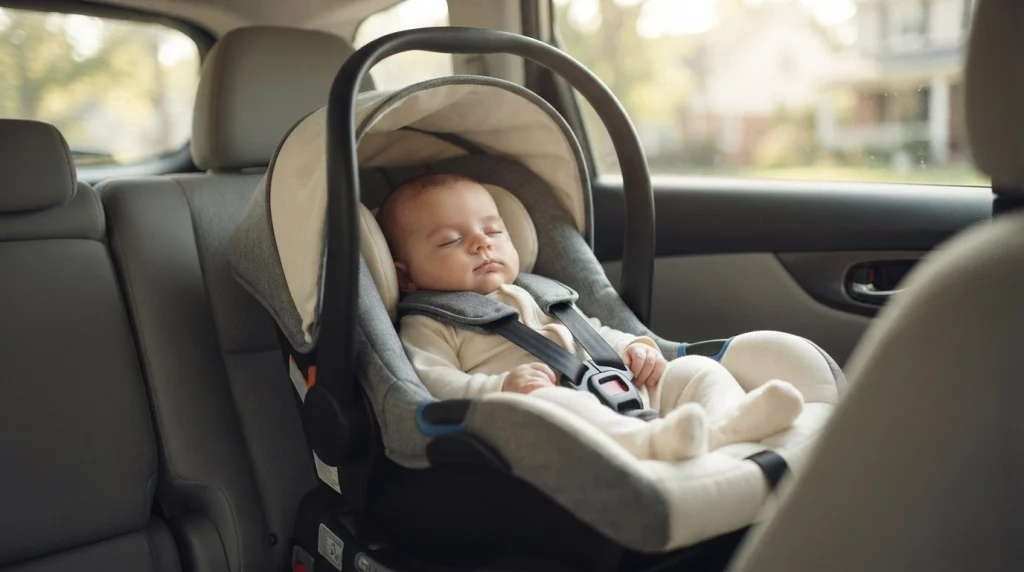
A baby can generally doze off during a car journey when properly secured in an appropriate, correctly installed car seat. However, this does not make the seat suitable for prolonged or routine sleep.
An infant car seat is a child restraint designed primarily to protect a baby during vehicle travel and crashes. Unlike a crib, it supports the child in a semi-reclined position rather than on a flat sleeping surface.
Why Babies Fall Asleep During Car Rides
The vehicle’s movement, steady background noise, and comfortable surroundings can encourage sleep. Many parents notice their babies becoming drowsy shortly after leaving home.
That response is normal. It doesn’t mean the car seat should replace a regular sleep environment.
Does Proper Installation Make Sleeping Safer?
Correct installation helps keep a baby’s body supported in the position intended by the car seat manufacturer. It also provides essential crash protection.
Several details work together:
- Rear-facing positioning: Helps protect a baby’s head, neck, and spine during a collision.
- Correct recline: Supports proper positioning and reduces the chance of the head falling forward.
- Snug harness: Keeps the baby’s body securely positioned.
- Appropriate seat size: Ensures the restraint fits the baby’s height and weight.
- Correct installation: Prevents excessive movement of the car seat at its belt path.
These safeguards matter while driving, but they don’t eliminate every sleep-related risk. A correctly installed car seat is still not an alternative to a crib.
Section Takeaway: Falling asleep during a properly secured car journey is different from being placed in a car seat specifically for sleep.
Why Is Sleeping in a Car Seat Outside the Car Unsafe?
Outside a vehicle, car seat sleeping can create breathing, positioning, and stability hazards. Young infants are especially vulnerable because they lack strong head and neck control.
What Is Positional Asphyxia?
Positional asphyxia occurs when body position restricts breathing. In an infant car seat, a baby’s head may slump forward, bringing the chin close to the chest.
This position can narrow the airway. A sleeping baby may struggle to reposition without help.
Babies younger than four months deserve particular attention because their neck muscles are still developing. The AAP specifically warns against routine sleep in sitting devices for this age group.
Why Can an Uninstalled Car Seat Be Risky?
A car seat sitting on a floor does not necessarily maintain the same angle as a correctly installed seat. Its position and stability may change when removed from the vehicle.
Placing a carrier on furniture creates additional hazards. It may tip over or fall from an elevated surface.
Avoid placing an occupied infant carrier on:
- Beds or soft mattresses
- Sofas and upholstered chairs
- Kitchen counters or dining tables
- Other raised or unstable surfaces
Even a carrier sitting on the floor isn’t an approved routine sleeping space. The safest choice remains a firm, flat, non-inclined surface designed for infant sleep.
Does a Harness Prevent Breathing Problems?
A properly fastened harness helps maintain the baby’s intended position, but it cannot guarantee an open airway. It also does not turn the car seat into a safe sleeping product.
Never loosen or partially unbuckle the harness to make a sleeping baby more comfortable. Loose straps can create additional positioning and entanglement hazards.
The AAP’s infant safe sleep recommendations advise moving sleeping infants out of sitting devices as soon as safe and practical.
Section Takeaway: A baby may appear comfortable in a car seat while still facing positional or airway risks. Use an appropriate flat sleep surface outside the vehicle.
What Should You Do When Your Baby Falls Asleep in a Car Seat?
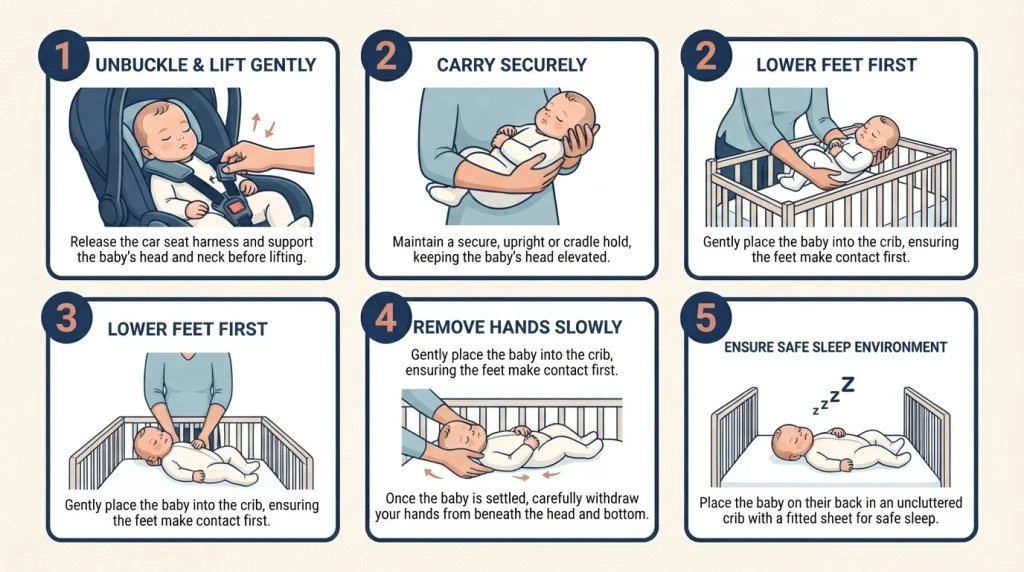
If your baby falls asleep during an ordinary drive, you generally don’t need to wake them immediately. Continue toward a safe stopping point while ensuring their position and harness remain appropriate.
Once the journey ends, transfer them to a suitable sleeping space rather than extending the nap inside the carrier.
How to Transfer a Sleeping Baby Safely
- Park securely: Stop the vehicle in a safe location before handling your baby.
- Prepare the sleep space: Use a firm, flat crib or bassinet mattress with a fitted sheet.
- Unbuckle carefully: Release the harness while supporting your baby’s head and neck.
- Lift gently: Keep your baby’s body supported while moving them out of the seat.
- Place baby on their back: Position them on the approved sleep surface.
- Keep the space clear: Remove pillows, loose blankets, toys, and sleep positioners.
Your baby might wake during the transfer. That’s inconvenient, but it is safer than leaving them sleeping in the carrier.
What If the Baby Falls Asleep Near Home?
Imagine arriving home after a 20-minute drive and finding your newborn peacefully asleep. Carrying the entire seat indoors may feel easier than disturbing the baby.
However, the safer decision is to move the baby into their crib or bassinet. A short, interrupted nap is preferable to using a sitting device for unattended sleep.
What If Your Baby’s Head Slumps Forward?
Stop the vehicle safely if your baby’s head falls forward or their position concerns you. Check their breathing and reposition them outside the moving vehicle.
Before continuing, verify the seat’s recline indicator and harness fit. Seek qualified installation help if the problem continues.
If your baby has difficulty breathing, becomes unresponsive, or develops blue or gray lips, seek emergency medical assistance immediately. Don’t continue driving while hoping the position will improve.
How Can You Keep a Sleeping Baby Safer During Car Travel?
Safe car travel begins before your baby falls asleep. Proper installation, correct restraint fit, and planned breaks help reduce avoidable risks.
1. Use a Rear-Facing Car Seat
Babies should ride rear-facing until they reach the seat manufacturer’s maximum permitted height or weight. Rear-facing restraints provide important protection for the head, neck, and spine.
Install the seat in an approved rear seating position. Never place a rear-facing car seat in front of an active frontal airbag.
2. Check the Recline Angle
Rear-facing infant seats have specific recline requirements. Many include a built-in level indicator, adjustment mechanism, or printed angle guide.
Follow your exact model’s instructions instead of guessing an angle. The appropriate setting may change as your baby grows.
The NHTSA rear-facing car seat installation guide explains how to check the harness, installation tightness, and recline.
3. Secure the Harness Correctly
A snug harness helps prevent unwanted movement and poor positioning. The straps should lie flat without twisting.
- Position rear-facing shoulder straps at or below the baby’s shoulders.
- Fasten the buckle and chest clip correctly.
- Keep the chest clip at armpit level.
- Tighten until you cannot pinch excess harness webbing at the shoulder.
- Avoid bulky jackets between the baby and the straps.
Never add padding beneath the harness simply to make the seat seem softer. Use only positioning accessories permitted by the seat manufacturer.
4. Monitor Your Baby During the Journey
A responsible passenger in the back seat can help observe the baby during longer trips. The driver should remain focused on the road.
Check for unusual positioning, overheating, and signs of discomfort during safe stops. A sleeping baby still needs appropriate supervision.
5. Plan Stops Before Starting
Regular breaks give your baby time outside the semi-reclined seat. They also create opportunities for feeding, diaper changes, and movement.
Plan your journey around the baby’s needs rather than a rigid arrival time.
Pro tip: Check both the car seat and vehicle manuals before traveling. A certified Child Passenger Safety Technician can help evaluate installation and fit.
Section Takeaway: Correct harness fit and recline support safe transportation, but they cannot replace appropriate sleep arrangements after the journey.
How Long Can a Baby Stay in a Car Seat?
There isn’t one universally established, risk-free duration that applies to every baby. Age, development, medical history, and positioning all affect the decision.
For ordinary long-distance travel, planning a break about every two hours is a practical starting point. Some infants require more frequent stops.
Is the Two-Hour Car Seat Rule Real?
Several UK child-health services recommend limiting continuous car seat time to around two hours. The American Academy of Pediatrics also encourages regular breaks during longer car journeys.
These recommendations should not be treated as proof that every minute before the limit is completely safe. A baby who slumps, struggles, or needs care should be attended to immediately.
The AAP’s guidance on lengthy car journeys with infants emphasizes suitable restraint use, supervision, and regular stops.
Do Newborns Need Shorter Trips?
Newborns have limited head control and can be more sensitive to positioning. Shorter travel periods and frequent checks are sensible precautions.
Premature babies or infants with respiratory, cardiac, or other medical concerns may need individualized recommendations. Discuss travel plans with their pediatrician before taking a long journey.
Car Seat Sleep vs. Safe Sleep Surfaces
The following comparison shows why the location and purpose of the seat matter.
| Situation | Sleep Guidance | Recommended Action |
|---|---|---|
| Properly installed car seat during travel | Incidental dozing can occur. | Maintain correct positioning and harness fit. |
| Car seat after arriving home | Not recommended for continued sleep. | Transfer baby to an approved flat sleep surface. |
| Car seat attached to a stroller | Not a routine sleep environment. | Move baby to a suitable sleep space when practical. |
| Long car journey | Extended continuous use needs breaks. | Plan regular stops and monitor positioning. |
| Approved crib or bassinet | Appropriate for routine infant sleep. | Place baby on their back on a firm, flat mattress. |
Section Takeaway: Time limits are planning tools, not guarantees of safety. Focus on your baby’s condition, appropriate breaks, and proper sleep arrangements.
Can Car Seat Covers and Accessories Affect Sleep Safety?
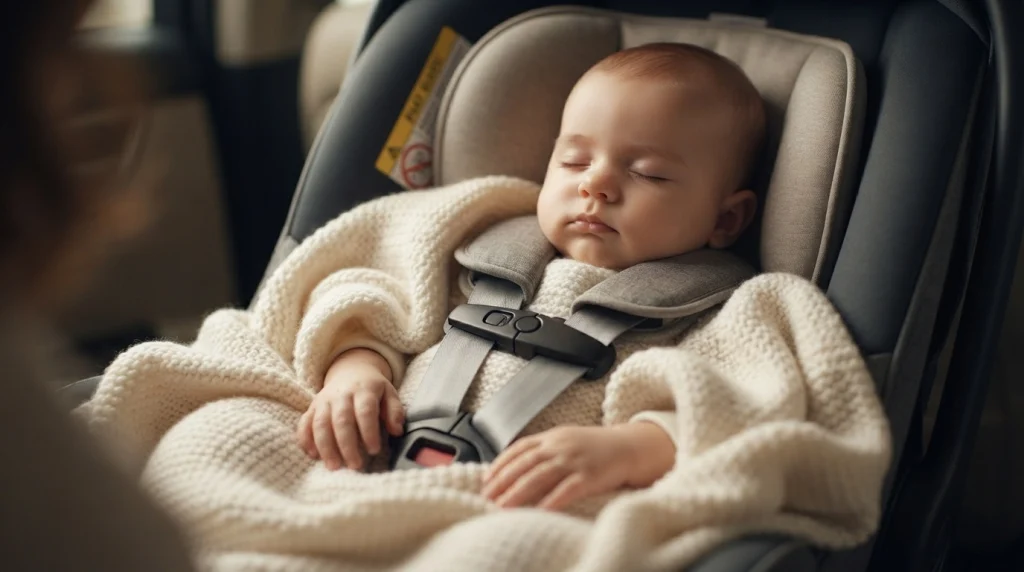
Yes, certain car seat covers and accessories can interfere with airflow, positioning, or restraint performance. Products marketed as comfortable or cozy are not automatically suitable for infant car seats.
Are Infant Car Seat Covers Safe?
A car seat cover may provide weather protection, but its design and placement matter. Avoid anything that blocks the baby’s face, traps heat, or interferes with the harness.
A properly designed, manufacturer-permitted cover should not add padding beneath the baby. It also should not create an enclosed space with restricted ventilation.
Follow the AAP’s winter car seat safety recommendations when choosing layers and covers.
What About Blankets and Head Supports?
Blankets can help maintain warmth when used correctly. Place them over an already secured harness without covering your baby’s face.
Extra head pillows and aftermarket inserts deserve greater caution. Unapproved padding may change the baby’s position or compromise harness fit.
- Blankets: Use over the secured straps, away from the face.
- Infant inserts: Use only those supplied or specifically approved by the car seat manufacturer.
- Head supports: Avoid unapproved cushions that change the baby’s head or neck position.
- Winter covers: Avoid designs that place thick material between the baby and harness.
- Canopies: Keep the baby’s face visible and maintain ventilation.
Can a Cover Cause Overheating?
A heavily insulated or enclosed car seat cover can trap warmth. Babies may become too hot inside a heated vehicle.
Use suitable clothing layers and monitor your baby’s temperature. Remove unnecessary coverings as the vehicle warms up.
Never assume an accessory makes sleeping in a parked carrier safer. Even manufacturer-approved travel accessories do not convert a car seat into an approved crib.
Section Takeaway: Choose accessories based on manufacturer compatibility and safety, not softness alone. Keep the airway clear and the harness properly fitted.
Frequently Asked Questions
1. Can a newborn sleep in a car seat for 30 minutes?
A newborn may fall asleep during a short car journey while properly secured in a correctly installed rear-facing seat. However, 30 minutes is not a guaranteed safe period for every infant. Check positioning and move the baby to an appropriate sleep surface after traveling.
2. Is it safe to let a baby finish a nap in a parked car seat?
No, a parked car seat should not be used as a regular sleeping space. After reaching your destination, transfer your baby to a firm, flat surface on their back. Never leave a baby alone in a parked vehicle, even briefly.
3. Can a baby sleep in a car seat overnight?
No. Infant car seats are not intended for overnight sleep. They position babies differently from approved flat sleeping surfaces and can create breathing or positioning risks. Use a crib, bassinet, or other compliant infant sleep product for overnight rest.
4. Should I wake my baby if their head falls forward?
If your baby’s head slumps forward while traveling, stop safely and check their breathing and position. Correct the underlying recline or harness problem before continuing. Get medical assistance immediately if your baby shows signs of breathing difficulty or unresponsiveness.
5. Can a baby sleep in a car seat attached to a stroller?
An infant carrier connected to a compatible stroller remains a sitting device, not an approved routine sleep surface. If your baby falls asleep, transfer them to a firm, flat sleeping space as soon as safe and practical. Follow both manufacturers’ instructions.
6. Does a car seat head pillow help prevent positional asphyxia?
Not necessarily. Unapproved head pillows can change a baby’s position and may interfere with the harness or airway. The safer approach is a correctly installed seat with its intended recline and manufacturer-approved components. Seek qualified advice if your baby repeatedly slumps.
7. Are car seat naps more dangerous for premature babies?
Premature infants may have additional breathing or positioning vulnerabilities. Their medical team may recommend specific travel precautions or assessment before discharge. Ask your pediatrician about suitable car seat use, journey duration, and monitoring rather than applying general advice alone.
Final Takeaway: A baby can fall asleep during a properly secured car journey, but the car seat should not become their regular sleeping place. Correct installation, regular breaks, and prompt transfers help keep travel and sleep safer.
Before your next trip, check your car seat’s recline, harness fit, and accessory compatibility. If something doesn’t look right, consult the manufacturer or a certified child passenger safety professional before driving.

Daniel Brooks is an automotive writer and product researcher focused on car accessories, car tech, maintenance, and practical driving guides. At Plug-in Car World, he helps drivers make smarter automotive decisions through honest reviews and research-driven content.
