
Car Seat Head Support Safety: What Parents Need to Know
Quick Answer
Car seat head support safety means keeping your head restraint at the right height and distance so it can limit head movement in a rear impact. A well-fitted, airbag-compatible car seat cover can protect your seats, but a thick, loose, or poorly cut cover can push your head forward, stop headrest adjustment, or cover a seat side airbag, so check fit and adjustment after every refit, using guidance from NHTSA and your owner’s manual.
The safe setup in short
- Height first: Set the top of the headrest level with the top of your head, or at least level with the top of your ears.
- Distance second: Keep the gap between the back of your head and the restraint small, without forcing your head forward.
- Adjustment third: Make sure the headrest still moves and locks after a seat cover goes on.
- Cover fit fourth: Use a cover with clear headrest cutouts, post openings, and straps that do not slip.
- Airbag check last: If your seat has a side airbag, use only a cover marked as compatible with that airbag.
Do this first
- Sit in your normal driving position, then adjust the headrest before you judge a cover.
- Refit and recheck the headrest after washing, swapping drivers, or moving the seat.
If your headrest feels like a comfort feature, this guide will change how you look at it. It is a safety part first, and a comfort part second.
I focus this guide on everyday checks you can do in minutes, not on workshop theory. You will learn how to set a headrest, how a seat cover can help or hurt it, and what to check before you buy.
In This Guide
- What Is Car Seat Head Support, and Why Does It Matter?
- How Do You Set a Headrest Correctly?
- How Can a Car Seat Cover Interfere With Head Support?
- What Should You Check Before Buying a Seat Cover for Head Support Safety?
- How Do You Fit a Seat Cover Without Blocking the Headrest or Airbags?
- When Should You Replace, Adjust, or Get Help With Head Support?
- Frequently Asked Questions
- Final Takeaway: Keep Head Support First, Cover Second
What Is Car Seat Head Support, and Why Does It Matter?
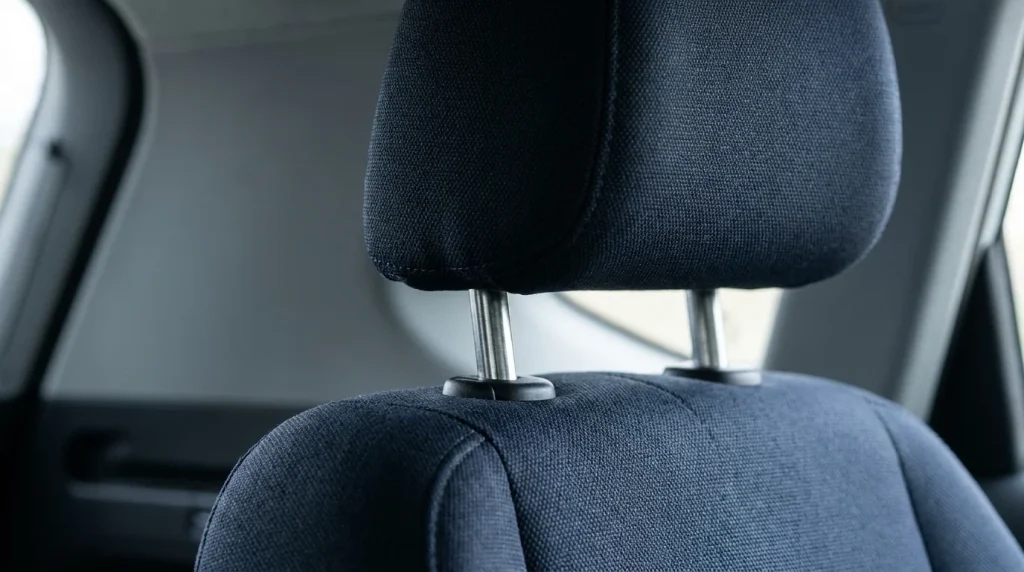
Definition: A car seat head restraint is the padded part at the top of a seatback that supports the back of your head. It is often called a headrest, but its safety job is to limit how far your head moves backward in a crash.
In a rear impact, your body moves forward first. Your head can then snap backward if nothing stops it.
That sudden movement can strain the neck. A correctly placed restraint reduces that travel and gives your head a surface to meet early.
- It is not a pillow: Comfort comes second to position and support.
- It is not optional: Removing it, lowering it too far, or tilting it away weakens its job.
- It works with the seatbelt: The belt holds your body, while the restraint helps control head movement.
Is a headrest the same as neck support?
No, the terms are close but not identical. A headrest is the fitted safety part, while a neck pillow is usually an add-on for comfort.
An add-on can feel soft on a long drive. It should never push your head forward or replace the fitted restraint.
What about children and smaller passengers?
Children need a child car seat or booster that fits their height and weight. That seat has its own head support rules and its own manual.
Do not add an unapproved insert behind a child’s head. Check the child seat manual first, and keep vehicle headrest rules separate from child seat rules.
Pro tip: For safety, airbag, or recall questions, check your vehicle’s owner’s manual and NHTSA’s recall lookup rather than relying on a cover listing alone.
Section takeaway: Head support is a safety position, not a comfort setting. Get the restraint right first, then choose a cover that preserves that position.
How Do You Set a Headrest Correctly?
Set the headrest after you set your seat and driving position. Your normal posture matters more than how you sit when you first climb in.
- Sit upright with your back against the seatback and your hands in your normal driving position.
- Raise or lower the headrest until its top sits level with the top of your head, or at least level with the top of your ears.
- Move the seatback, if needed, so the back of your head sits close to the restraint without touching it all the time.
- Press the adjustment button or lever, move the restraint, then release it and check that it locks.
- Lean back gently and confirm the restraint still feels firm, level, and centred behind your head.
Many drivers set the headrest too low. A low restraint can leave the head unsupported just when support matters most.
Others leave a wide gap by reclining too far. A smaller gap gives the head less distance to travel in a rear impact.
- Too low: The restraint sits behind the neck, not behind the head.
- Too far back: The head must travel further before it meets support.
- Tilted wrong: The pad meets the head at an angle instead of squarely behind it.
- Not locked: The restraint can slide during braking or a crash.
Active head restraints, found in some cars, move forward during a rear impact. Do not block their movement with a thick pad, a strap, or a cover pulled tight across the mechanism.
Check the setting again after someone else drives your car. Seat position, seatback angle, and headrest height often change together.
Section takeaway: Height, distance, and a firm lock matter more than softness. Recheck all three every time the seat position changes.
How Can a Car Seat Cover Interfere With Head Support?
A car seat cover can interfere in quiet ways. It can add thickness, block a post, stop adjustment, or shift during a drive.
- Blocked posts: A cover without post openings can trap the headrest or stop it from locking.
- Added thickness: Thick padding behind the head can push the head forward and change posture.
- Slipping fabric: A loose cover can bunch behind the headrest and create an uneven surface.
- Hidden airbag seam: A cover that spans a seat side airbag can delay or change how that airbag deploys.
- Stiff straps: Straps routed across the headrest area can stop tilt or height adjustment.
Thicker padding, including some cooling designs, can change head position if the cover sits behind the head. If you are comparing padded designs, this cooling car seat cover review shows how seat-cover construction varies, but it does not replace a fit check on your own seat.
Does extra padding help or hurt?
Extra padding helps only when it stays thin, firm, and flat behind the head. Soft, deep padding can feel good at first and still push the head forward.
As an illustrative check, place your hand behind your head after fitting a cover. If the cover forces a new head angle, it is too thick or badly placed for that seat.
| Feature | Safe choice | Risky choice | Check before driving |
|---|---|---|---|
| Headrest cutout | Clear openings for posts and adjustment | One flat sheet across the whole headrest | Move and lock the headrest through its range |
| Padding behind the head | Thin, firm, and flat | Deep, soft, or uneven padding | Sit normally and check your head angle |
| Side airbag area | Labelled airbag-compatible seam | Thick, sewn-over, or unlabelled side panel | Match the label to your seat’s airbag location |
| Fit and straps | Snug fit with straps clear of moving parts | Loose fabric that bunches or slides | Tug the cover and recheck the headrest |
| After washing | Refitted, smoothed, and rechecked | Refitted loosely and left unchecked | Reset headrest height after every refit |
Heat and sweat can tempt drivers to add layers for comfort. Comfort still needs to pass the same test: can the headrest move, lock, and meet the head squarely?
Section takeaway: A cover should disappear into the seat’s safety job. If it changes head position, blocks adjustment, or hides an airbag seam, it fails that test.
What Should You Check Before Buying a Seat Cover for Head Support Safety?
Buy for your exact seat, not for a generic seat shape. Headrest posts, seat width, and airbag placement vary by model and trim.
- Vehicle details: Note year, make, model, trim, and whether the headrest is fixed, adjustable, or active.
- Side airbags: Check your owner’s manual for seat-mounted side airbags before you choose any cover.
- Headrest design: Look for separate headrest covers, post cutouts, or a design made for your headrest type.
- Strap routing: Confirm straps sit below or beside moving parts, not across the headrest mechanism.
- Material and thickness: Choose a firm, breathable material that stays flat behind the head.
- Return policy: Keep the option to return a cover that blocks adjustment on your seat.
Fit varies by seat shape, so compare a specific review against your seat’s headrest posts before you buy. This Sprints car seat cover review can help you see how one seat-cover design is built, but your own fit check still decides the purchase.
As a general guide in 2026, many basic universal seat covers cost about $30 to $80. Custom-fit covers often cost about $100 to $250, depending on material and vehicle fit.
Treat those ranges as guides, not as fixed prices. Check current listings for your vehicle, and do not trade a clear airbag label for a lower price.
For independent buying context, you can also compare seat and safety guidance at Consumer Reports. Use it for research, then confirm airbag and fit details in your owner’s manual.
Which cover materials are easiest to keep safe?
Leather and PU leather stay fairly flat and wipe clean. They can feel firm, which helps keep head position stable.
Fabric and mesh breathe well and suit hot climates. They need a snug fit, or they can bunch behind the headrest.
Neoprene resists spills and grips well. It can add thickness, so check head position carefully after fitting it.
Section takeaway: The safest cover is the one made for your seat, your headrest, and your airbags. A good price never fixes a blocked adjustment or a hidden airbag seam.
How Do You Fit a Seat Cover Without Blocking the Headrest or Airbags?
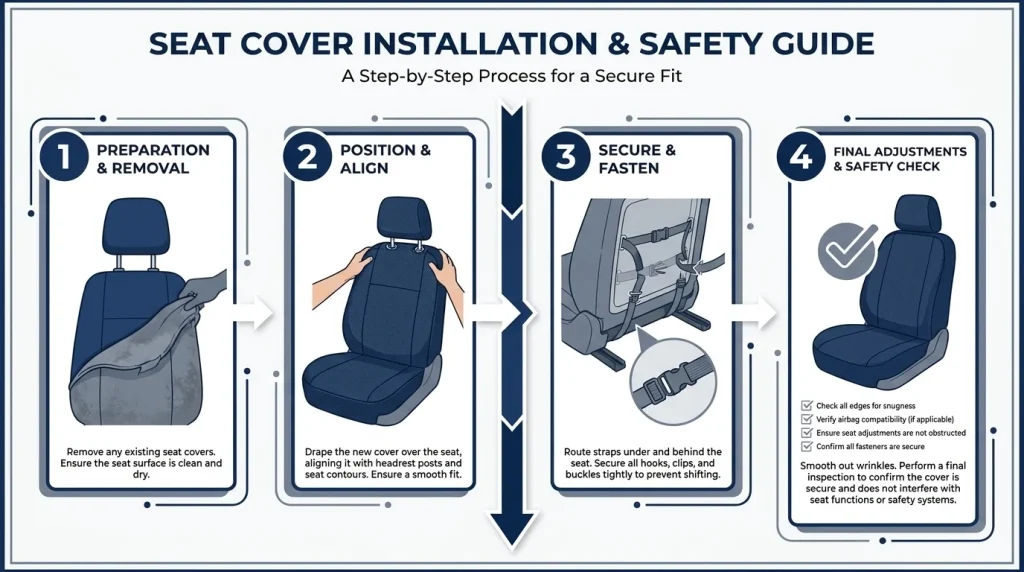
Fit the cover with the headrest removed or raised first, if your manual allows it. That step gives you clear access to posts, straps, and seams.
- Check your owner’s manual for headrest removal, seat airbags, and any cover warnings for your model.
- Remove or raise the headrest only as the manual describes, and keep small parts where they cannot fall into the seat.
- Slide the seat cover on, align its headrest openings with the posts, and smooth fabric across the seatback.
- Route straps and hooks clear of the headrest mechanism, seat controls, and side airbag area.
- Refit the headrest, move it through its height range, and confirm it locks at each step.
- Sit in your normal position, check head height and gap, then tighten or smooth the cover once more.
After fitting, recheck the cover from the side as well as from the front. A cover can look neat from the front and still bunch behind the headrest.
For another example of seat-cover construction, see this Astonish car seat cover review. Compare its construction to your seat, then run the same fit checks on your own car.
Vehicle-specific seat details can also be worth checking at Edmunds. That research helps you confirm trim and seat features before you order.
Pro tip: For any seat with a side airbag, follow the cover maker’s airbag-compatibility label and your owner’s manual, and do not cut or sew over an airbag seam.
- After fitting: Headrest moves, locks, and sits level with the top of your head.
- After a week: Straps stay tight, fabric stays flat, and no bunching appears behind the head.
- After washing: The cover goes back on the same way, and the headrest gets reset.
Section takeaway: Fitting is a safety check, not just a tidy-up. If the headrest cannot move and lock freely, stop and refit or return the cover.
When Should You Replace, Adjust, or Get Help With Head Support?
Replace or repair head support when it no longer holds position. A loose, cracked, or missing restraint needs attention before your next long drive.
- After a crash: Get the seat, seatbelt, and headrest checked, even if damage looks minor.
- Broken lock: A headrest that slides on its own should be inspected, not wedged into place.
- Damaged posts: Bent or cracked posts can change how the restraint moves in a crash.
- Airbag light: A warning light after fitting a cover needs a prompt check by a qualified technician.
- Slipping cover: A cover that keeps moving needs refitting, a better fit, or replacement.
Do not use tape, padding, or a strap as a fix for a broken headrest lock. Those fixes can hide a fault and change how the restraint behaves.
For model and safety context, you can also read vehicle coverage at Car and Driver. Use it for background, then follow your dealer’s or technician’s advice for your car.
How often should you recheck head support?
Recheck it after washing a cover, swapping drivers, moving the seat for cargo, or fitting a new cover. Each change can shift height, angle, or gap.
Make it part of a quick monthly check. Sit normally, confirm height and gap, tug the cover gently, and confirm the headrest still locks.
Section takeaway: Head support needs a quick recheck, not a one-time setup. Small changes in seat position can undo a good setting.
Frequently Asked Questions
Can a car seat cover make a headrest unsafe?
Yes, if it blocks adjustment, adds thick padding behind the head, or covers a seat side airbag. Choose an airbag-compatible, well-fitted cover and recheck headrest height and lock after fitting it.
How high should my headrest be?
As a general guide, set the top of the headrest level with the top of your head. If that height is not possible, aim at least for level with the top of your ears, then check your owner’s manual for your model.
Should my head touch the headrest while driving?
No, your head does not need to rest on it all the time. Keep the gap small in your normal driving position, so your head meets support quickly without forcing your neck forward.
Are neck pillows safe to use with a headrest?
A thin neck pillow can feel comfortable, but it should never push your head forward or replace the fitted restraint. Remove it if it changes head position, blocks adjustment, or makes the gap larger.
Can I use a seat cover on a seat with side airbags?
Only use a cover clearly marked as compatible with seat side airbags for your vehicle. Check the label, match it to the airbag location in your manual, and never cut, sew, or tape over an airbag seam.
What should I do if my headrest will not adjust?
First, remove the cover and check for trapped fabric, a stuck button, or a bent post. If it still will not move or lock, stop forcing it and get it inspected by a dealer or qualified technician.
Final Takeaway: Keep Head Support First, Cover Second
Head support works when height, distance, and lock all work together. A seat cover should protect your seats without changing any of those three points.
Before your next drive, sit normally, set the headrest, and check the cover. That two-minute check gives you comfort without giving up safety.

Daniel Brooks is an automotive writer and product researcher focused on car accessories, car tech, maintenance, and practical driving guides. At Plug-in Car World, he helps drivers make smarter automotive decisions through honest reviews and research-driven content.
