
Understanding Car Seat Lower Anchor Weight Limits: A Complete Safety Guide
Quick Answer
Understanding car seat lower anchor weight limits starts with one rule: the child and car seat generally must not exceed a combined weight of 65 pounds (29.5 kg) when using lower anchors. However, your car seat or vehicle may specify a lower limit. Once your child reaches that limit, switch to a permitted seat belt installation, as explained in the NHTSA lower anchor guidance.
Five Rules Every Parent Should Know
- Combined weight: Count both the child and the child restraint.
- Manufacturer limits: Follow the lower applicable limit in the car seat and vehicle instructions.
- Seat belt alternative: A correctly installed seat belt is just as safe as lower anchors.
- Top tether: Continue using it with a forward-facing harnessed seat whenever permitted.
- Regular checks: Recheck the limit as your child grows, especially before changing installation methods.
Safety reminder: The 65-pound figure is not permission to ignore a lower limit printed on your car seat.
Car seat lower anchor weight limits can confuse even careful parents. The number on a harness label isn’t always the number that determines whether you can use lower anchors.
I’ve put this guide together to make the installation rules easier to understand. We’ll cover weight calculations, manufacturer labels, seat belt switching, top tethers, and common mistakes.
In This Guide
What Are Car Seat Lower Anchors, and How Does LATCH Work?
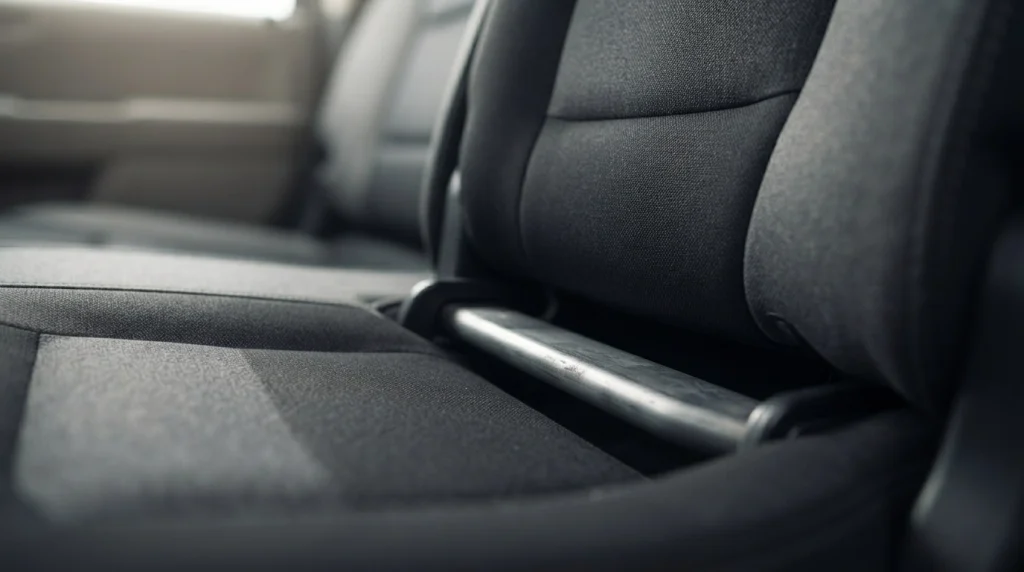
Lower anchors are metal attachment points built into certain vehicle seating positions. They let you secure a compatible child safety seat without using the vehicle seat belt as its main installation method.
In the United States, this installation system is called LATCH, meaning Lower Anchors and Tethers for Children.
Understanding the Parts of a LATCH System
Three components are important when identifying LATCH hardware:
- Lower anchors: Two metal bars located between the vehicle seat cushion and seatback.
- Lower anchor connectors: Hooks or other connectors attached to the child safety seat.
- Top tether: A strap that connects a compatible forward-facing car seat to a designated vehicle tether anchor.
The lower anchors and top tether have different jobs. Lower anchors secure the seat, while a top tether helps limit forward movement of a forward-facing child restraint.
The American Academy of Pediatrics’ LATCH guidance explains why the tether remains important even when a seat belt replaces the lower anchors.
Is LATCH Safer Than a Seat Belt?
No. When installed correctly, both methods provide effective protection.
LATCH was developed to simplify installation, but it doesn’t automatically guarantee a better fit. Some vehicles provide an easier installation using their seat belts.
The important factors include:
- Following both manufacturers’ installation instructions.
- Using an approved seating position.
- Keeping the installation tight at the designated belt path.
- Using the appropriate harness and tether configuration.
A familiar installation method isn’t always the best choice. Use whichever permitted method produces a secure, correct installation.
What Is the Car Seat Lower Anchor Weight Limit?
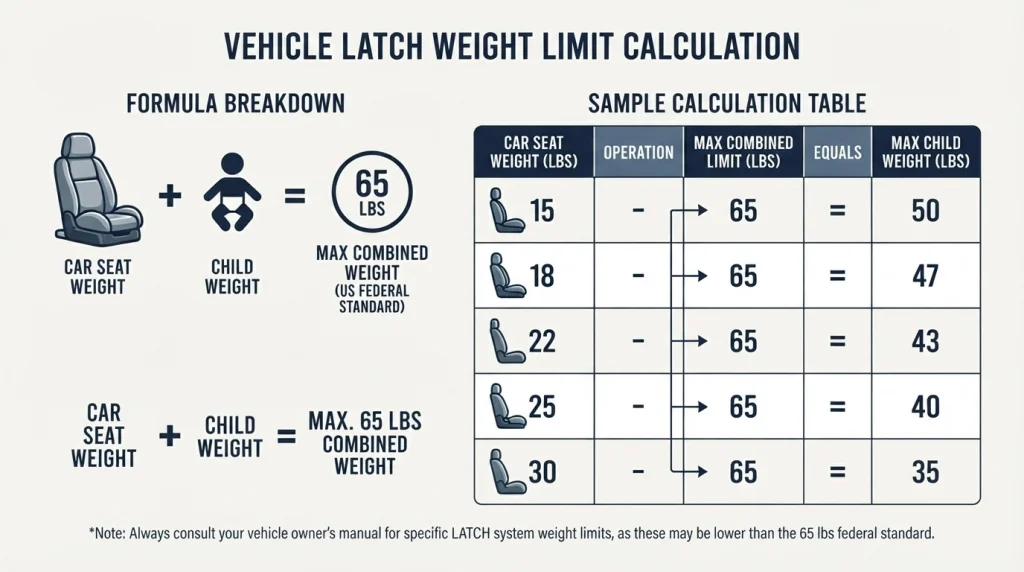
For typical U.S. harnessed child restraints, the lower anchor weight limit is based on a maximum combined weight of 65 pounds. That includes the child and the car seat.
This rule matters because lower anchors must handle forces from both during a crash.
How to Calculate the Weight Limit
When your car seat doesn’t provide a lower-anchor child-weight label, NHTSA gives this general calculation:
65 lb − Car Seat Weight = Maximum Child Weight for Lower Anchor Use
For example, suppose your child restraint weighs 25 pounds. Subtracting that from 65 pounds leaves a calculated child-weight limit of 40 pounds.
The following table illustrates how restraint weight changes the result.
| Car Seat Weight | Calculated Child Limit | Combined Weight |
|---|---|---|
| 15 lb | 50 lb | 65 lb |
| 20 lb | 45 lb | 65 lb |
| 25 lb | 40 lb | 65 lb |
| 30 lb | 35 lb | 65 lb |
Important: These are calculation examples, not approved limits for specific products. Manufacturer labels may provide lower, rounded limits, and vehicle restrictions still apply.
Why Do Heavier Car Seats Have Lower LATCH Limits?
A heavier restraint leaves less capacity within the combined-weight guideline. This becomes especially relevant with larger convertible and all-in-one models.
A seat that supports a 65-pound child in harness mode might require a seat belt installation much earlier. The harness weight rating and lower-anchor installation rating are separate limits.
Section Takeaway: Never assume a child may use lower anchors until reaching 65 pounds. Always account for the car seat’s weight and its specific instructions.
How Do You Find Your Car Seat’s Exact Lower Anchor Weight Limit?
Start with the car seat’s instruction label and manual. Then check the vehicle owner’s manual for additional restrictions.
These sources are more reliable than a general weight chart or an online comment about a different seat.
Check the Car Seat Label
Look along the side or back of the restraint, particularly near the lower-anchor installation diagram.
Common label information includes:
- The maximum child weight for lower-anchor installation.
- Different instructions for rear-facing and forward-facing use.
- Warnings about using lower anchors beyond a stated weight.
- Installation details for the model’s harness and tether.
Newer harnessed seats generally provide a maximum child weight for lower-anchor use. Don’t replace that number with your own calculation when a specific approved limit is available.
Review Both Owner’s Manuals
The vehicle and restraint must be compatible. A permitted connection on one car seat doesn’t establish compatibility with every vehicle.
Review the following before installation:
- Identify the exact car seat model and manufacturing information.
- Find its lower-anchor weight limit for the intended orientation.
- Check the vehicle manual for anchor locations and restrictions.
- Follow the most restrictive applicable instruction.
- Contact the manufacturer if the information remains unclear.
The Insurance Institute for Highway Safety’s LATCH explanation also addresses manufacturer labeling and the seat belt alternative.
What About Older Car Seats?
Older models may lack the clear lower-anchor weight labels found on newer restraints. That makes the original manuals especially important.
Check the seat’s expiration information, condition, recall status, and installation requirements before using it. Never assume an old seat remains appropriate simply because its connectors still attach.
For a 2026 safety check, confirm that the manufacturer’s instructions still apply to your exact model.
When Should You Switch From Lower Anchors to a Seat Belt?
Switch when your child reaches the applicable lower-anchor installation limit, even if the child still fits the harnessed car seat. The seat belt can secure the restraint when the manufacturer permits that method.
You generally don’t need to replace the entire car seat merely because its lower-anchor limit has been reached.
How to Change the Installation Method
The exact procedure depends on your restraint. Use this general checklist alongside its manual:
- Remove the lower-anchor connectors from the vehicle anchors.
- Store the connectors according to the car seat instructions.
- Route the vehicle seat belt through the correct belt path.
- Buckle and lock the seat belt using the approved method.
- Apply pressure to the restraint and remove slack.
- Check for no more than one inch of movement at the belt path.
- Attach and tighten the top tether for a forward-facing seat when permitted.
The belt-path check is important. Test movement where the belt passes through the restraint, rather than pulling hard at the top of the seat.
Follow the NHTSA car seat installation tips for more guidance on tightness, seat belt locking, and proper positioning.
Can You Use LATCH and a Seat Belt Together?
Generally, no. Using both installation methods simultaneously isn’t recommended unless the car seat and vehicle manufacturers explicitly permit the combination.
Adding another attachment doesn’t necessarily improve crash protection. It may change how the restraint performs.
Should the Top Tether Stay Connected?
Yes, for a forward-facing harnessed seat when the car seat and vehicle manufacturers permit tether use.
Switching from lower anchors to the vehicle seat belt doesn’t automatically mean disconnecting the top tether. Always check any applicable tether limits.
Pro tip: If you cannot obtain a secure seat belt installation, consult a certified Child Passenger Safety Technician before using that seating position.
Do Lower Anchor Weight Limits Differ Between Car Seat Types?
The combined-weight rule generally applies to lower-anchor installation of harnessed child restraints. However, the way a restraint uses its anchors changes between rear-facing, forward-facing, and booster modes.
Rear-Facing Infant Car Seats
Rear-facing infant carriers often attach to a separate base. When evaluating the combined weight, follow the manufacturer’s instructions for the complete installed restraint, including the base where applicable.
Check these details:
- The infant carrier and base model combination.
- The manufacturer’s stated lower-anchor child-weight limit.
- The correct recline angle.
- Proper engagement of the carrier with its base.
Many infants outgrow their infant restraint before lower-anchor weight becomes the main concern. Still, never assume that outcome for every model.
Forward-Facing Convertible Car Seats
Forward-facing convertible seats typically use a five-point harness and a top tether. The tether remains important when switching between approved installation methods.
The seat’s harness limit might be substantially higher than its lower-anchor limit. This difference is normal and doesn’t automatically require moving the child to a booster.
All-in-One Seats and Belt-Positioning Boosters
All-in-one restraints can have different rules in different operating modes. Always check the instructions for the mode you’re using.
In belt-positioning booster mode, the vehicle lap-and-shoulder belt restrains the child. Lower connectors on certain boosters primarily help position or secure the booster itself.
Consequently, the standard harnessed-seat lower-anchor calculation doesn’t necessarily apply in the same way. Britax’s explanation of LATCH and booster seats describes this distinction.
Vehicle and booster instructions still determine whether connectors may be used. Never assume every booster follows identical rules.
Section Takeaway: Installation rules depend on restraint mode, not just the product name. Check the instructions whenever a convertible or all-in-one seat changes modes.
What Common LATCH Installation Mistakes Should Parents Avoid?
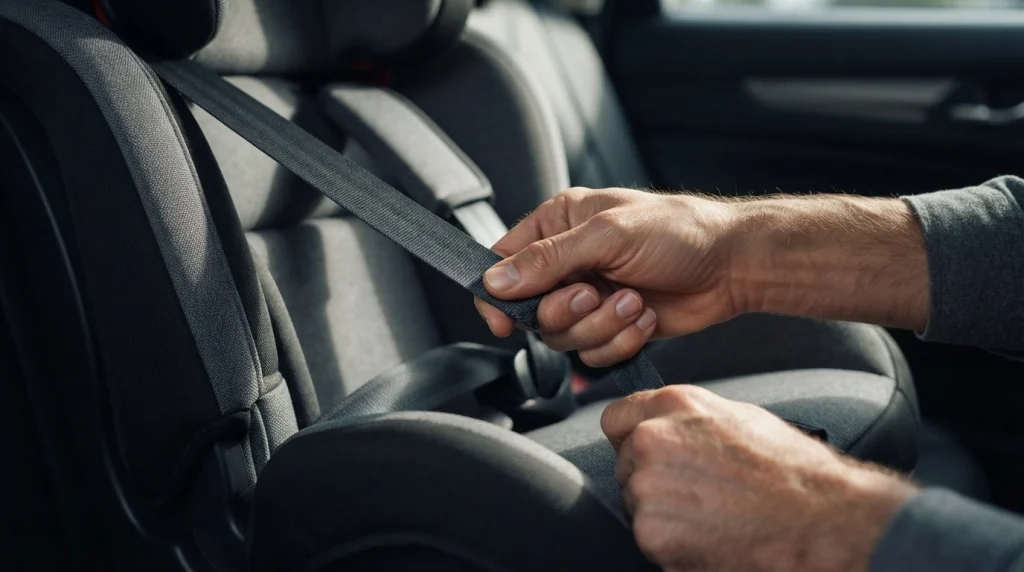
The biggest mistakes involve ignoring weight labels, using unapproved anchors, and confusing lower-anchor rules with tether requirements. Most are preventable with a careful installation review.
Using Lower Anchors After the Weight Limit
A child may remain within the harness limit while exceeding the permitted lower-anchor weight. Continuing the same installation can violate the manufacturer’s safety instructions.
Recheck the limit as your child grows. Don’t rely on the restraint’s overall advertised weight range.
Attaching to the Wrong Vehicle Hardware
Lower anchors can be difficult to see. Nearby seat hardware or cargo attachments may look similar but serve different purposes.
Use the designated anchor locations in the vehicle manual. Never attach a child restraint to an unapproved metal fitting.
Borrowing Anchors for the Center Seat
Some vehicles don’t have a dedicated pair of lower anchors in the center rear position. Using the inner anchors from two outboard positions is sometimes called anchor borrowing.
Only do this when both the vehicle and child restraint manufacturers permit it. Otherwise, consider an approved seat belt installation in that position.
Forgetting the Top Tether
A forward-facing seat may appear firmly installed without its tether, but the tether serves a separate safety function. It helps reduce forward head movement during a collision.
Follow the specified tether routing and anchor location. Don’t attach it to an ordinary cargo hook unless the vehicle manufacturer identifies that point as an approved tether anchor.
Adding Unapproved Seat Covers or Protectors
Some aftermarket products placed under or inside a child safety seat can change its fit or interfere with the harness. A decorative vehicle seat cover is not a child-restraint installation component.
Use protective mats, padding, harness accessories, or replacement covers only when approved for the specific restraint by its manufacturer.
A Practical Pre-Drive Checklist
Before driving, I recommend making these checks part of your regular routine:
- Confirm the selected installation method remains within its weight limit.
- Check tightness at the restraint’s belt path.
- Verify that every connector uses an approved anchor.
- Confirm the tether connection when required and permitted.
- Inspect harness positioning and chest clip height.
- Remove loose accessories that interfere with restraint operation.
For an uncertain installation, professional help is worthwhile. A certified child passenger safety technician can check compatibility and demonstrate the correct method.
Pro tip: Use the official car seat and vehicle manuals for safety decisions. If the instructions conflict or aren’t clear, ask the manufacturers before transporting your child.
Frequently Asked Questions
What happens if my child exceeds the lower anchor weight limit?
Stop using the lower anchors for that harnessed-seat installation. If your child still fits the restraint’s approved height and weight range, reinstall it using the vehicle seat belt according to both manuals. Continue using the top tether for forward-facing use when permitted.
Is the LATCH weight limit always 65 pounds?
No. The general U.S. guideline considers the combined weight of the child and restraint, not the child’s weight alone. A specific car seat may have a lower labeled child-weight limit. Vehicle restrictions can also affect which installation methods are permitted.
Can I use LATCH for a 50-pound child?
Possibly, but it depends on the restraint. A 15-pound car seat would produce a calculated combined weight of 65 pounds with that child. A heavier seat could exceed the general guideline. Follow the model’s actual lower-anchor label and vehicle instructions.
Does switching to the seat belt make a car seat less safe?
No. A correct seat belt installation can provide protection equivalent to a correct lower-anchor installation. What matters is using the proper belt path, locking and tightening the belt, and following the tether requirements for a forward-facing restraint.
Can I continue using the top tether after stopping lower-anchor use?
Usually, yes. NHTSA recommends using the top tether with a forward-facing child restraint when both manufacturers permit it. The tether has a different purpose from the lower anchors, so switching to the seat belt doesn’t automatically eliminate its use.
Do booster seats follow the same lower anchor weight limit?
Not necessarily. In belt-positioning booster mode, the vehicle seat belt restrains the child, while compatible lower connectors may secure the booster. That differs from a harnessed restraint. Follow the booster and vehicle manuals for the correct permitted configuration.
Where can I get help checking my car seat installation?
Contact the car seat manufacturer, your vehicle manufacturer, or a certified Child Passenger Safety Technician. In the United States, NHTSA provides information about locating car seat inspection stations. Bring both manuals so the technician can check the exact installation requirements.
Final Takeaway:
Understanding car seat lower anchor weight limits means recognizing that the child’s weight and restraint weight both matter. Check the manufacturer’s label, follow the lower applicable limit, and switch to an approved seat belt installation when necessary.
Review your car seat’s instructions today, especially if your child has recently gained weight. A few minutes spent checking the installation can help keep every ride safer.

Daniel Brooks is an automotive writer and product researcher focused on car accessories, car tech, maintenance, and practical driving guides. At Plug-in Car World, he helps drivers make smarter automotive decisions through honest reviews and research-driven content.
