Universal Car Cover Problems You Should Know Before It’s Too Late
⚡ Quick Answer
Universal car covers have 6 common problems: poor fit that leaves gaps, paint scratching from flapping fabric, blowing off in wind, trapping moisture that causes mold and rust, weak UV protection, and rough inner linings that abrade your clear coat. Knowing these issues upfront helps you avoid costly paint damage.
6 Universal Car Cover Problems at a Glance:
-
1
Poor fit — loose fabric bunches and leaves key areas exposed -
2
Paint scratching — trapped dust grinds against clear coat when wind moves the cover -
3
Wind blowing it off — poor fit creates gaps that let wind lift the cover -
4
Moisture trapping — non-breathable covers breed mold, mildew, and rust -
5
UV protection gaps — budget covers use thin fabric with low UV-block ratings -
6
Rough inner lining — cheap single-layer fabric acts like sandpaper on paint
Quick Fixes to Reduce Universal Cover Damage:
-
✓
Always wash the car before putting on any cover -
✓
Use a cable lock or wind straps to stop the cover blowing off -
✓
Choose a breathable, multi-layer cover with a soft inner lining
You pull back your car cover expecting to see a clean, protected finish. Instead, you find swirl marks you didn’t put there, moisture pooling under the fabric, or the cover crumpled on the ground after a night of wind. I’m Daniel Brooks, and in over a decade of covering cars, I’ve seen universal car covers cause the exact damage they’re supposed to prevent.
Universal car covers are affordable and convenient — but they come with real design flaws that most buyers don’t find out about until after the damage is done. Here’s everything you need to know about those problems, and exactly what to do about each one.
📌 Key Takeaways
-
→
Universal covers come in only 3-5 sizes, meaning most vehicles get a loose, imprecise fit that leaves gaps around mirrors and bumpers. -
→
A loose cover can scratch your paint every time the wind moves it — the cover you bought to protect your car can create swirl marks in the clear coat. -
→
Non-breathable universal covers trap moisture underneath, which leads to mold, mildew, and even rust forming on your paint and metal surfaces. -
→
Most of these problems are avoidable by choosing a breathable multi-layer cover with a soft inner lining and securing it properly every time.
The Poor Fit Problem: Why Universal Covers Leave Gaps
Universal car covers are mass-produced in just 3 to 5 sizes — sedan, compact, SUV, and truck. One cover is supposed to fit hundreds of different vehicle models. That’s the core problem, and everything else flows from it.
Because the cover is designed to fit the largest car in its category, it’s almost always too big for your specific vehicle. That means you get excess fabric that bunches, sags, and leaves exposed areas — especially around side mirrors, bumpers, antennas, and roof edges. According to CarCovers.com’s comparison guide, even a secured universal cover may provide little or no protection around the bottom of the car because the elastic hem can’t conform tightly to every vehicle’s unique body shape.
📋 Where Universal Car Covers Typically Leave Gaps
-
Side mirrors: Covers can’t wrap tightly around protruding mirrors, leaving the mirror housing and nearby paint exposed. -
Front and rear bumpers: Excess fabric bunches at both ends, creating pockets where debris, leaves, and moisture collect. -
Undercarriage hem: The elastic bottom rides up unevenly, leaving lower door panels and rocker panels without coverage. -
Roof racks and antennas: Aftermarket accessories create stress points that stretch and tear the cover fabric over time. -
Spoilers and body kits: Any aerodynamic add-on breaks the cover’s drape, creating an unsupported pocket that collects water.
You might think: “But the cover still covers most of the car, so it’s fine.” Here’s why that’s not always true. Those gap areas are often the spots most vulnerable to bird droppings, UV damage, and moisture entry. A cover that doesn’t seal properly at the bottom lets wind push rain, dust, and debris under the fabric — exactly what you’re trying to prevent.
⚠️ Warning
Never put a universal cover on a car with a spoiler, roof rack, or large aftermarket mirrors without checking the fit first. Those accessories create tension points that can rip the fabric within weeks.
The fit problem is the root cause of almost every other issue on this list. Fix the fit — or upgrade to a semi-custom cover — and you reduce all the other risks at the same time.
Do Universal Car Covers Scratch Paint? The Truth About Abrasion
Yes — a universal car cover can scratch your paint, and the mechanism is specific. The cover itself rarely scratches directly. What scratches your clear coat is the dust and grit trapped between the cover and your car’s surface when the loose fabric moves in the wind. In a 20 mph wind, a loose universal cover on a sedan creates repeated fabric impacts against the leading edge panels. That contact force is enough to grind tiny sand particles into your clear coat like fine sandpaper.
The inner lining makes this worse. Budget universal covers use a single layer of rough synthetic fabric with no soft contact layer. That fabric rubbing against your paint — even without trapped grit — causes micro-abrasion and swirl marks over time. A quality cover uses a microfiber or fleece inner lining that’s gentle enough to drape against the paint surface without causing friction damage.
💡 Key Insight
The #1 cause of cover-related scratches is putting a cover on a dirty car. Dust and silica particles on your paint become embedded abrasives when the cover moves. Always wash your car before covering it — this one step eliminates most paint scratch risk.
So if you’ve used a universal cover and noticed swirl marks or fine scratches you can’t explain, the cover is the most likely cause. The damage happens slowly over days and weeks, which is why most people don’t connect it to the cover until the paint looks genuinely dull.
✅ Tip
Run your hand along the inner lining of your cover before buying. It should feel like a soft fleece or microfiber cloth — never rough or scratchy. If it feels coarse against your palm, it will feel coarse against your paint.
Why Universal Car Covers Blow Off in the Wind — And How to Stop It
A universal cover blows off because its loose fit creates gaps at the hem where wind can push underneath. Once wind gets under the fabric, it creates a ballooning effect that lifts the entire cover off the car. This doesn’t just leave your car unprotected — it can send the cover flying into other vehicles or dragging across your own paint as it goes.
Poor fit, lightweight single-layer material, and no proper securing hardware are the 3 reasons universal covers fail in wind. Most budget covers come with only elastic hems, which stretch and lose tension over time. Without cable locks, wind straps, or grommets, the cover has nothing anchoring it down.
🔢 Step-by-Step: How to Stop Your Car Cover from Blowing Off
-
1
Use a cable lock under the car
Thread a cable lock through the cover’s hem grommets and under the chassis. This is the single most effective wind fix.
-
2
Add magnetic car cover weights
Soft magnetic weights clip to the hem and press down without touching paint. They suppress flapping in moderate winds.
-
3
Park facing into the wind
Your car’s aerodynamic nose reduces wind lift. Flat rear panels catch more air — don’t park with the rear facing the wind.
-
✓
Tuck the hem under the tires
On windy days, fold the cover’s front and rear hem under the front and rear tires. Simple, free, and very effective.
Even with all these fixes, a universal cover in sustained high winds is still less secure than a properly fitted custom cover. If you live in a windy region — the Midwest, coastal areas, or high-altitude locations — this problem alone may justify upgrading to a semi-custom or custom-fit option.
The Hidden Moisture and Mold Risk Under Your Universal Car Cover
This is the universal car cover problem that causes the most long-term damage — and the one most people don’t notice until it’s already serious. When a non-breathable cover sits on a car overnight, temperature drops cause condensation to form on the paint surface. With nowhere to go, that moisture sits trapped under the cover for hours or even days.
That trapped moisture promotes 3 serious problems: mold and mildew growth on the paint and rubber seals, surface rust where the clear coat is compromised, and paint bubbling from prolonged contact with standing water. According to Hagerty’s car cover guide, trapped moisture between a cover’s underside and your car’s paint is one of the two biggest risks of using any cover incorrectly.
✓ Signs Your Cover Is Trapping Moisture
-
✓
Condensation on your windows every morning after removing the cover -
✓
A musty or damp smell when you open the car door after removing the cover -
✓
Paint feeling damp or cool to the touch when you lift the cover -
✓
Dark patches or a powdery residue on your paint that wasn’t there before
The fix is choosing a breathable cover — not a fully waterproof one. A 100% waterproof plastic or vinyl cover blocks rain coming in, but it also blocks moisture from escaping. A breathable multi-layer cover lets condensation vapor pass through the fabric while still blocking rain. If you’re in a humid climate, lift and air out your cover at least once a week during wet seasons.
One more thing: never cover a wet car. Putting a cover on a wet vehicle traps liquid water underneath — far more moisture than condensation alone — and dramatically increases mold and rust risk.
UV Protection Gaps: Why Cheap Universal Covers Fall Short
Not all universal car covers actually block UV rays effectively. Budget covers use single-layer or thin 2-layer polyester taffeta fabric that provides basic sun blocking but offers limited UV protection for long-term outdoor storage. Research shows that UV exposure can cut a paint job’s lifespan by up to 50% in high-sun regions, with visible damage appearing in just 2 to 3 years in cars parked outside for more than 6 hours daily.
A quality UV-blocking car cover should have a reflective outer layer plus a minimum of 2-3 layers total. The outer layer reflects solar radiation, while inner layers trap any heat that does get through. Single-layer universal covers — common at most auto parts stores — absorb rather than reflect UV, acting more like a tarp than a protective shield.
This table shows how universal covers compare to custom covers on UV protection features:
If your car lives outdoors permanently, a budget universal cover is not a long-term UV solution — it delays damage without preventing it.
The Rough Inner Lining Problem That Most Buyers Miss
The inner lining is the only layer that ever touches your paint. It’s the most important layer of a car cover — and the one that budget universal covers consistently get wrong. Cheap covers use a single rough layer of nylon or low-grade polyester. Without a dedicated soft contact layer, that fabric acts like fine-grit sandpaper against your clear coat every time the cover shifts.
But here’s the thing. Even a slightly rough inner lining becomes dangerous when combined with the loose fit of a universal cover. A custom-fit cover with a rough lining is less harmful because the fabric barely moves. A universal cover with a rough lining — moving freely in wind all night — is one of the fastest ways to create swirl marks on a car you parked in perfect condition.
The right inner lining material is microfiber or fleece. Both materials are soft enough that even repeated contact doesn’t cause abrasion. They’re also static-resistant, which means they don’t attract dust particles that could then scratch the paint on contact.
✅ Tip
Before buying any car cover, check the product description for “fleece inner lining” or “microfiber inner layer.” If the listing doesn’t specifically mention the inner lining material — skip it. That silence is usually not a good sign.
Are Universal Car Covers Worth It? When They Work and When They Don’t
Universal car covers are not bad products — they’re the wrong product for the wrong situation. Used correctly and in the right context, they provide decent short-term protection. Used in the wrong conditions, they’re worse than no cover at all.
🎯 Is a Universal Car Cover Right For You?
If you are…
Short-term indoor storage, occasional use, or budget-limited
→ Universal cover is fine
If you are…
Long-term outdoor storage, windy area, or high-UV climate
→ Choose semi-custom or custom fit
If you are…
Covering a new car, high-value vehicle, or freshly detailed paint
→ Always go custom fit
If you do use a universal cover, choose one rated 4 stars or above with a verified multi-layer construction, breathable fabric, and a soft inner lining. One product that meets all these criteria is listed below.
Recommended Product
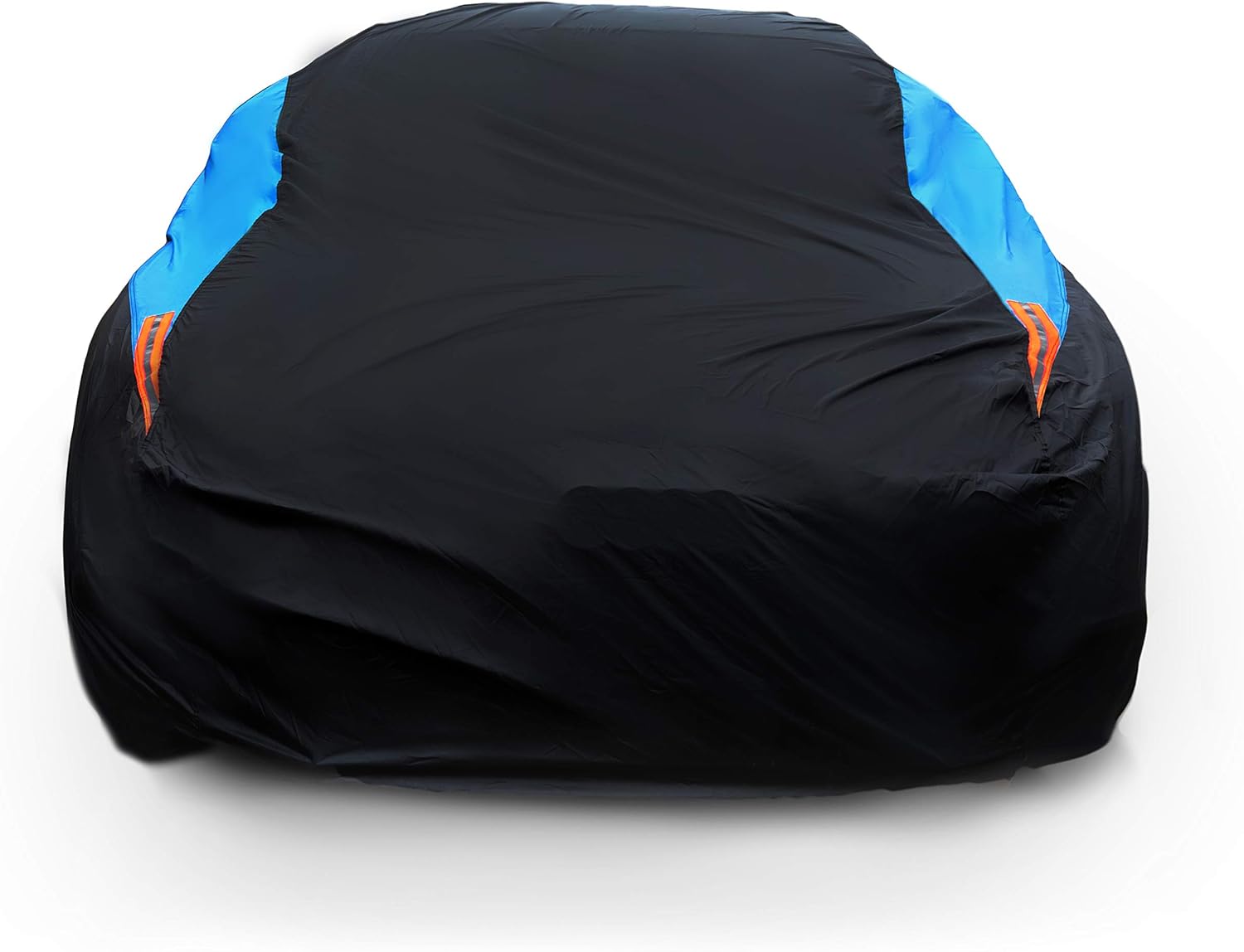
Favoto Sedan Car Cover Waterproof All Weather 6 Layers Heavy Duty
★★★★☆ 4.3 stars — 13,927 ratings on Amazon
A 6-layer universal sedan cover with a cotton inner lining and breathable construction — directly addresses the moisture trapping and inner lining abrasion problems described in this article.
As an Amazon Associate, we earn from qualifying purchases.
What Most People Get Wrong About Universal Car Covers
Most buyers assume that any car cover is better than no car cover. That’s not always true. A non-breathable universal cover on a dirty car in a windy area can cause more paint damage in 30 days than simple outdoor exposure would cause in 6 months.
The second big misconception is that “waterproof” means better protection. Fully waterproof covers that block all moisture vapor don’t let condensation escape. In humid climates or during rainy seasons, that trapped moisture actively causes rust and mold. A breathable water-resistant cover performs better than a 100% waterproof one for long-term outdoor use.
The third mistake is thinking that fitting is a minor detail. Because universal covers are designed to fit many vehicles, most car owners accept that the fit won’t be perfect. But the fit is the most critical performance factor. A cover that fits well — even if it’s not perfectly custom — protects far better, scratches less, and stays on in wind. Spending 10 minutes measuring your car and matching it to the correct cover size is one of the highest-value steps you can take.
Conclusion
Universal car covers work — but only when you choose the right type and use it correctly. The 6 problems covered here (poor fit, paint scratching, wind failure, moisture trapping, weak UV protection, and rough inner linings) are all avoidable with the right product and a few simple habits.
The biggest mistake is treating a car cover as a set-it-and-forget-it solution. It’s a maintenance tool — one that needs to be matched to your specific vehicle, secured properly, and used on a clean car to do its job safely.
Do this one thing right now: go check the inner lining of your current cover. Run your hand along it. If it feels rough against your skin, it’s feeling rough against your paint every windy night. That single fix — upgrading to a soft-lined, breathable cover that fits your car’s size — eliminates at least 4 of the 6 problems on this list.
Frequently Asked Questions
Do universal car covers scratch paint?
Yes, they can. The main cause is dust trapped between the cover and the paint surface. When the loose-fitting cover moves in wind, those particles grind against the clear coat and create swirl marks. Always wash your car before covering it, and choose a cover with a soft fleece or microfiber inner lining to reduce this risk.
Why does my car cover blow off in the wind?
Poor fit is the main reason. A universal cover that’s too large leaves gaps at the hem where wind gets underneath and creates a lifting effect. The fix is using a cable lock threaded under the chassis, adding magnetic hem weights, and parking with the car’s nose facing into the wind. Elastic hems alone are not enough in windy conditions.
Can a car cover cause rust?
Yes — a non-breathable car cover can cause rust. When moisture or condensation gets trapped under a fully waterproof cover with no ventilation, it sits on the paint surface for extended periods. Over time this weakens the clear coat, allows moisture to reach bare metal, and promotes rust formation. Choose a breathable cover, not a fully waterproof one.
Do car covers cause condensation under them?
Condensation forms on any car parked outside when temperatures drop overnight — a cover doesn’t cause it. But the cover determines whether that moisture can escape. A breathable multi-layer cover lets vapor pass through the fabric and dry out. A non-breathable cover traps it. Condensation under a breathable cover is normal and harmless. Under a waterproof cover, it’s a problem.
Are universal car covers worth it?
For short-term indoor storage or occasional use, yes — a quality universal cover provides good basic protection at a low price. For long-term outdoor storage, windy locations, or high-value vehicles, they’re not the best choice. Semi-custom covers offer a much better fit at only a slightly higher price and avoid most of the problems universal covers create.
How do I know if my car cover is causing damage?
Look for fine swirl marks or haze in the paint that wasn’t there before — this indicates abrasion from a rough or loose cover. Check for musty smells or window condensation each morning, which signals moisture trapping. If the cover is regularly on the ground or bunched up when you return to the car, wind-related paint contact damage is likely already occurring.
What should I look for instead of a universal car cover?
A semi-custom or contour-fit cover is the best upgrade from a universal cover. These covers are shaped for a vehicle category (like “compact SUV” or “mid-size sedan”) and offer a much closer fit without the full cost of a custom-made cover. Look for 4+ layers, a fleece or microfiber inner lining, breathable fabric, reinforced grommets, and included cable lock hardware.

Daniel Brooks is an automotive writer and product researcher focused on car accessories, car tech, maintenance, and practical driving guides. At Plug-in Car World, he helps drivers make smarter automotive decisions through honest reviews and research-driven content.