The Complete Guide to Solving Car Cover Problems (2026)
⚡ Quick Answer
Car cover problems — scratches, moisture, wind, and poor fit — all have direct fixes. Always cover a clean, dry car. Use a breathable cover with a soft inner lining. Secure it with tie-down straps. Choose a cover made for your specific use: indoor or outdoor. Each problem has a simple solution.
The 5 Most Common Car Cover Problems — And Their Fixes:
-
1
Scratches on paint — always wash the car and cover before use -
2
Moisture and rust — never cover a wet car; use a breathable cover -
3
Cover blowing off — use gust straps and a snug-fit cover -
4
Poor fit — choose a custom or semi-custom fit for your vehicle -
5
Wrong cover type — match indoor or outdoor covers to where you park
Before You Cover Your Car — Always Check:
-
✓
Car is clean and fully dry -
✓
Cover is also clean — no trapped dirt or debris -
✓
Cover is secured with straps — not just draped over
The Complete Guide to Solving Car Cover Problems
You bought a car cover to protect your paint. Now you’re finding swirl marks, moisture stains, or a cover that won’t stay put. I’m Daniel Brooks, and in over a decade of covering vehicle protection, I’ve seen these same car cover problems come up again and again. The good news: every one of them is fixable.
This guide covers every major car cover problem — scratches, moisture, wind, poor fit, and wrong cover type — with the exact fixes that work. You’ll also learn what most owners get completely wrong, so you stop causing the damage you were trying to prevent.
📌 Key Takeaways
-
→
Covering a dirty car is the #1 cause of paint scratches from car covers. -
→
100% waterproof plastic covers trap moisture and cause rust — always choose breathable materials. -
→
A loose cover flapping in wind causes more scratches than having no cover at all. -
→
Indoor and outdoor covers are completely different products — using the wrong type causes damage. -
→
Washing your car cover every 1–3 months keeps it from grinding accumulated dirt into your paint.
Why Is My Car Cover Scratching My Paint?
Scratches from car covers happen for one reason: debris trapped between the cover and your paint. It doesn’t matter how soft the inner lining is. If there’s grit underneath, that grit grinds into your clear coat every time the cover shifts.
Wind makes this much worse. Even a slight breeze moves a cover back and forth across your car’s surface. Dust and sand trapped under the fabric act like sandpaper. The result is a network of fine swirl marks that dull your paint over time.
⚠️ Warning
Never put a car cover on a dirty car. Even a light film of dust or road grime becomes an abrasive layer that damages your clear coat with every micro-movement of the cover.
How to Stop Your Car Cover From Scratching Paint
The fix is simple: always wash your car before covering it. Even a quick rinse removes surface dust. Also clean the cover itself — a dirty cover is just as damaging as a dirty car.
When removing the cover, lift it vertically rather than sliding it off. Dragging it across the surface is the other main way scratches happen. Roll the cover up from front to back as you remove it.
🔢 Step-by-Step: How to Apply a Car Cover Without Scratching Paint
-
1
Wash and fully dry your car
Even a quick rinse removes dust that would otherwise grind into your clear coat.
-
2
Check the cover is clean too
Shake out debris and check the inner lining before placing it on the car.
-
3
Roll the cover from the front
Drape it over the roof first, then pull toward the rear — never slide it side to side.
-
✓
Secure with straps underneath
A cover that doesn’t move can’t scratch. Straps are not optional — they’re essential.
So if you’ve been sliding covers on and off quickly — that’s where your swirl marks are coming from. The next section explains a different but equally common problem: moisture damage.
Why Is My Car Cover Trapping Moisture and Causing Rust?
Moisture under a car cover is the most dangerous problem because it’s invisible until the damage is done. When a wet cover sits against your paint, trapped condensation has nowhere to go. That creates a humid microclimate that promotes rust, mold, and paint discoloration.
The worst offenders are 100% waterproof plastic covers. They seal moisture in rather than letting it breathe out. Even a cover placed on a perfectly dry car can trap morning condensation once temperatures drop overnight.
What Causes Moisture Buildup Under a Car Cover?
📋 Main Causes of Moisture Damage Under Car Covers
-
Non-breathable material: Plastic or vinyl covers block airflow and trap condensation underneath. -
Covering a wet car: Putting a cover on after rain keeps the surface wet for hours or days. -
Pooled water on top: Water collecting in low spots acts as a heat lens in sun, damaging paint below. -
Ground condensation: Moisture rising from driveways can condense on the underside of covers in cool weather.
How to Fix Moisture Problems Under Your Car Cover
Switch to a breathable cover. The best outdoor covers use multi-layer breathable fabric — waterproof on the outside, breathable underneath. This lets trapped moisture escape while still blocking rain from getting in.
Never cover a wet car. Wait for the surface to fully dry first. If the cover gets wet while on the car, remove it on the next clear day and let both the car and cover dry completely before reusing.
✅ Tip
According to Hagerty’s car cover experts, pulling the cover up mid-way at the wheels and tucking it behind the front and rear valances creates airflow underneath — dramatically reducing condensation buildup during overnight storage.
The next problem — your cover blowing off entirely — is easier to solve than you think. But most owners are using the wrong approach.
Why Does My Car Cover Keep Blowing Off in the Wind?
A cover that blows off or flaps in wind is almost always a fit problem. Universal covers leave gaps around the hood, trunk, and mirrors. Those gaps catch the wind like a sail. Even a moderate breeze can yank a loose cover off completely.
A flapping cover is not just annoying. It drags grit across your paint at high speed every time it moves. This is one of the fastest ways to create swirl marks across your entire car’s surface.
How to Keep a Car Cover from Blowing Off
These 5 methods work from easiest to most secure — use more than one for the best results.
The most secure setup combines a custom-fit cover with gust straps. This removes the gap that catches wind and cinches what remains.
But wind isn’t always the root problem. Often the cover blowing off is a sign of a deeper issue — the wrong fit for your car. That leads us into the next major problem.
Why Does My Car Cover Fit Poorly — And How Do I Fix It?
Poor fit is the root cause of most car cover problems. A cover that’s too loose flaps and scratches. One that’s too tight rips around mirrors, antennae, or spoilers. Generic one-size-fits-all covers almost always fall into one of these categories.
The truth most sellers don’t emphasize: a cover sized for “compact sedans” can still vary by 10 or more inches in length between different models. That’s enough slack to cause real damage.
Custom vs. Universal Car Covers — Which Solves the Fit Problem?
| Feature | Universal Cover | Custom-Fit Cover ✓ Best |
|---|---|---|
| Mirror fit | Bunches or leaves gaps | ✓ Pockets built for your model |
| Wind resistance | Loose edges catch wind easily | ✓ Snug fit eliminates wind gaps |
| Scratch risk | High — flapping causes abrasion | ✓ Low — no movement on paint |
| Cost | $30–$80 | ✓ $80–$300+ (worth the investment) |
You might be thinking a universal cover is “good enough.” Here’s why it often isn’t: the gaps left around mirrors and bumpers are the exact points where wind lifts the cover. That loose fabric then drags across your paint repeatedly. A $60 universal cover can cause $500 in paint correction work.
🎯 Which Cover Is Right For You?
If you are…
On a tight budget with a common sedan
→ Semi-custom universal + gust straps
If you are…
In a windy area or parking long-term
→ Custom-fit cover built for your model
If you are…
Covering a sports car or collector vehicle
→ Custom-fit only — never universal
How to Choose the Right Car Cover to Avoid These Problems
Most car cover problems trace back to one mistake: choosing the wrong cover for the situation. Indoor covers are lightweight and breathable — great for garages, terrible outside. Outdoor covers are heavier and water-resistant — essential for exposed parking, but too stiff indoors where airflow is more important.
The Car Care Council, a nonprofit vehicle maintenance authority, recommends matching protection products to the specific threats your vehicle faces. For car covers, that means starting with where your car actually parks.
Indoor vs. Outdoor Car Cover — What’s the Real Difference?
The differences between indoor and outdoor covers go far beyond just thickness — matching these to your parking situation prevents most problems.
Using an indoor cover outdoors is one of the most common mistakes — it exposes your car to UV rays and water while also degrading the cover itself within weeks.
Recommended Product
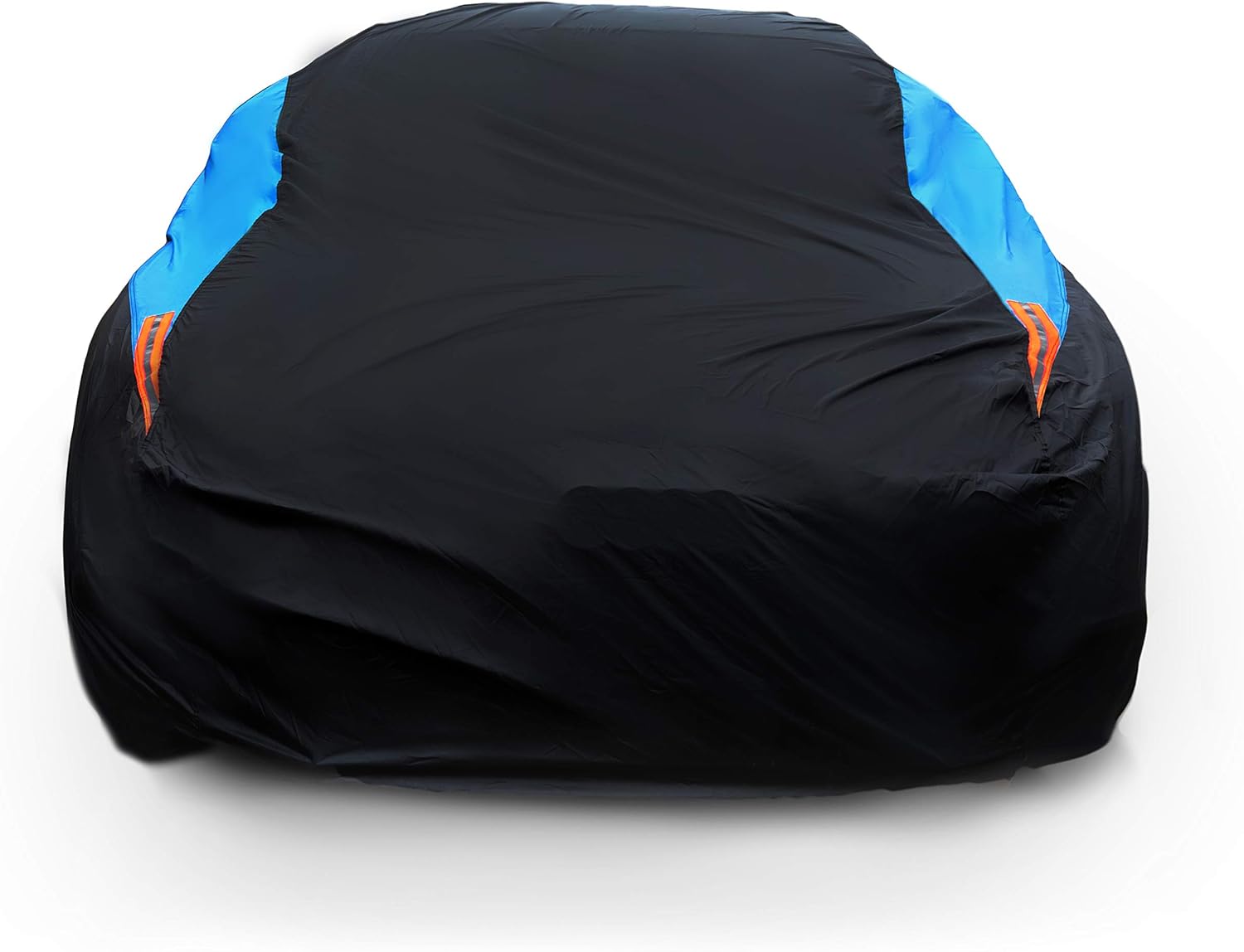
GUNHYI 16 Layers Car Cover Waterproof All Weather, Heavy Duty Outdoor Car Cover Universal Fit Sedan
★★★★☆ Highly rated on Amazon — 4.3 stars from 3,000+ reviews
16 layers of waterproof outdoor protection with breathable vents, soft cotton inner lining, 3 windproof straps, and a driver-door zipper — directly addresses the top 4 car cover problems in one product.
As an Amazon Associate, we earn from qualifying purchases.
How Often Should You Wash a Car Cover — And How to Do It Right?
A dirty car cover is one of the sneakiest sources of paint damage. Grit, bird droppings, and pollen build up in the lining over time. Once that happens, every removal and application grinds those particles against your paint.
Most owners wash their covers far too rarely — or never. Experts recommend washing every 1 to 3 months depending on your environment. In dusty or polluted areas, wash monthly.
How to Wash a Car Cover Without Damaging It
✓ Car Cover Washing Checklist
-
✓
Check the tag — most covers are machine washable on a gentle/delicate cycle with cold water -
✓
Use a bleach-free, fabric-softener-free detergent — softener destroys water resistance -
✓
Avoid top-loading machines with agitators — they tear the fabric -
✓
Never put the cover in a hot dryer — heat shrinks the fabric and changes its texture -
✓
Air dry over the car in sunlight — the easiest method that also checks the fit
Bird droppings deserve special attention. They’re acidic and can seep through cover fabric into your clear coat if left too long. Spot-clean droppings right away with a damp cloth and mild solution — don’t wait for your next full wash cycle.
Now that you know how to maintain a cover, the next section tackles the beliefs that get most owners into trouble in the first place.
What Most People Get Wrong About Car Covers
Most car cover damage isn’t caused by the cover itself. It’s caused by using the cover incorrectly — often based on beliefs that sound right but aren’t.
Here are the 3 most damaging misconceptions — and what’s actually true.
📋 3 Car Cover Myths That Cause Real Damage
-
Myth: “100% waterproof is better.” Wrong. Fully waterproof plastic covers trap condensation inside, creating exactly the rust and mold environment you’re trying to prevent. Breathable is always better than fully sealed. -
Myth: “My cover won’t scratch because it has a soft lining.” The lining isn’t the issue. Dirt trapped between the lining and your paint is. A soft cover on a dirty car is still an abrasive cover. -
Myth: “A car cover on a hot car is fine.” Covering a hot car stresses the cover’s material and can cause the paint to transfer onto the inner lining. Always wait for the car to cool down to ambient temperature first.
A car cover works best as a protective layer between clean surfaces. Its job is to keep what’s clean, clean — not to clean a dirty car or seal out all moisture. The moment you misuse it as either of those things, it becomes the problem.
How to Handle Seasonal Car Cover Problems
Seasonal conditions create specific car cover challenges that need specific fixes. Winter, summer, and high-wind seasons each stress your cover differently.
Winter Car Cover Problems and Fixes
In freezing temperatures, a wet cover can freeze directly to your car’s surface. Pulling it off can peel paint or damage rubber seals. Never force a frozen cover.
Instead, pour lukewarm (not hot) water along the edges to release the bond. Then lift the cover gently from the front. In snow-prone areas, a cover with a loose base hem prevents freeze-bonding by reducing direct contact at the bottom edges.
Summer Car Cover Problems and Fixes
Dark-colored covers absorb heat in summer. That heat builds under the cover and can raise interior temperatures significantly. In direct sun, this also stresses the cover material itself.
Use a light-colored or silver cover in summer. Reflective outer layers bounce solar radiation away rather than absorbing it. Breathable vents in the cover also prevent heat from building up underneath during hot days.
📋 Quick Summary
Seasonal car cover problems are almost always solved by matching cover type to conditions. Breathable covers with vents work year-round. Adding gust straps in winter and choosing light colors in summer handles the rest.
Conclusion
Every car cover problem has a direct fix. Scratches come from dirt — always clean both the car and cover first. Moisture comes from sealed covers or wet surfaces — choose breathable and wait for drying. Wind damage comes from poor fit — invest in a snug cover and secure it with straps.
The biggest takeaway: a car cover only protects when used correctly. Used incorrectly, it’s the source of the damage.
Right now, do one thing: check your car cover’s inner lining. If it feels gritty or dirty, wash it before you use it again. That one action prevents the most common cause of paint damage from car covers.
Frequently Asked Questions
Does a car cover scratch paint?
A car cover itself doesn’t scratch paint — but dirt and debris trapped between the cover and your paint do. Covering a dirty car, or using a dirty cover, creates an abrasive layer that grinds against your clear coat with every wind movement. Always ensure both are clean before covering.
Can I cover my car when it’s wet?
No. Covering a wet car traps moisture against the surface, which creates conditions for rust, mold, and paint discoloration. Always let the car dry fully before applying any cover. If the cover itself gets wet during use, remove it and allow both the cover and car to dry completely before reusing.
How do I stop my car cover from blowing away?
Use tie-down gust straps that cinch under the vehicle at the front, center, and rear. Cable locks through built-in grommets add extra security. The most effective long-term fix is switching to a custom-fit cover that hugs your vehicle’s exact shape, leaving no loose edges for wind to catch.
What is the best material for a car cover?
For outdoor use, multi-layer breathable polyester with a UV-treated outer layer and soft inner lining is the best choice. It resists water without sealing moisture inside. For indoor use, lightweight microfiber or satin provides gentle, scratch-free dust protection without the weight of outdoor materials.
How often should I wash my car cover?
Wash your car cover every 1 to 3 months. In dusty, polluted, or coastal environments, wash monthly. A dirty cover accumulates grit, bird dropping residue, and pollen in its lining — all of which become abrasive against your paint. Use a gentle cycle with cold water and a bleach-free detergent.
Do car covers cause rust?
Yes — if the wrong type is used. Non-breathable, fully waterproof covers trap condensation against the metal surface. That sustained moisture leads to rust at seams, around trim edges, and under the underbody. The solution is always a breathable cover with a water-resistant but not airtight outer layer.
Can I use an indoor cover outside?
No. Indoor covers are not UV-resistant or water-resistant. Using one outside exposes your car to sun and rain damage while also degrading the cover itself within weeks. Indoor covers used outdoors also lack the secure fit features needed to stay in place in wind. Always match the cover type to your parking environment.

Daniel Brooks is an automotive writer and product researcher focused on car accessories, car tech, maintenance, and practical driving guides. At Plug-in Car World, he helps drivers make smarter automotive decisions through honest reviews and research-driven content.