Why Is Dust Getting Under My Car Cover? Causes & Fixes
⚡ Quick Answer
Dust gets under your car cover because of three main causes: wind pumping air under a loose hem, fabric pores in breathable covers letting fine particles through, and poor fit leaving gaps around the body. No cover blocks 100% of dust — but the right cover, correctly fitted, keeps the problem under control.
Why dust gets under your car cover:
- Wrong size: A loose cover flaps in wind, letting dust pump underneath.
- Breathable fabric: Tightly-woven covers allow micro-airflow — and fine dust travels with it.
- Open seams: Cheap covers with weak stitching let dust in through seam gaps.
- Cover deterioration: Old covers shed their own inner lining as a white dust layer.
Quick fixes to try today:
-
✓
Use wind straps or a gust cable to seal the hem tight -
✓
Switch to a multi-layer cover with a soft cotton inner lining -
✓
Always cover a clean, dry car to prevent abrasive dust scratching
You wash the car, fit the cover, and walk away satisfied. Then you lift it two days later — and a fine layer of dust is sitting right on the paint. I’ve seen this frustrate car owners time and again, and the reason is almost never what they expect. I’m Daniel Brooks, and after years of covering everything from daily drivers to garage queens, I can tell you the answer comes down to physics, fabric, and fit. Here’s exactly what’s happening — and what to do about it.
📌 Key Takeaways
-
→
All breathable covers allow some micro-dust through — this is by design to prevent trapped moisture. -
→
Wind is the main driver — it pumps air (and dust) under loose hems in a “bellows effect.” -
→
A cover that deteriorates can shed its own inner lining, creating white dust directly on your paint. -
→
Multi-layer covers with elastic hems and wind straps cut dust infiltration by the largest margin.
Why Does Dust Get Under a Car Cover at All?
Dust gets under a car cover because air gets under a car cover. Those two things are inseparable. Every time the wind blows, it creates pressure differences around the car body — and that pressure difference pushes air (along with any dust particles riding it) in through every gap, seam, and loose hem it can find.
This is called the bellows effect. Think of a fireplace bellows — squeezed on one side, air blasts out the other. When your cover flaps in the breeze, it does the same thing: contracting and expanding, pumping outside air (and dust) underneath with each gust. A loose cover makes this problem 3 to 5 times worse than a properly fitted one.
So what does that mean for you? Even a decent car cover will let in some dust if the wind is blowing and the hem isn’t sealed tight. Understanding this is the first step to fixing it.
💡 Key Insight
No car cover blocks 100% of fine dust. A cover that truly sealed out every particle would also seal in moisture — and trapped moisture causes rust and mold far faster than dust does. The goal is reducing dust, not eliminating it entirely.
What Are the Main Reasons Dust Gets Under a Car Cover?
There are 4 distinct causes of dust infiltration under a car cover. They can act alone or combine. Knowing which one applies to your situation points you straight to the fix.
📋 The 4 Causes of Dust Getting Under Your Car Cover
-
Poor fit / wrong size: A cover too large for the car creates loose folds that catch wind. The hem lifts away from the vehicle body, leaving wide gaps for dust to pour through. -
Breathable fabric pores: Breathable covers are woven with microscopic pores to let moisture evaporate. Ultra-fine dust particles — often smaller than 10 microns — can ride airflow through those same pores. -
Weak or open seams: Budget covers stitch multiple fabric panels together. Those stitch holes are direct entry points. Dust rides wind pressure straight through, especially at the bottom hem seam. -
Cover deterioration: Older covers break down from UV exposure. Their inner lining sheds as a fine white or grey powder — that “dust” is the cover itself, deposited directly onto your paint.
You might be thinking “mine is a good cover though.” Here’s the thing: even a premium cover from a reputable brand lets in trace amounts of fine dust. The difference is scale. A quality multi-layer cover with a tight elastic hem and wind straps might let in a fraction of what a cheap universal cover allows.
The right question isn’t “how do I get zero dust?” It’s “how do I get as little dust as possible without trapping moisture?” Those two goals require opposite designs — which is exactly why every cover involves a trade-off.
Does a Breathable Car Cover Let Dust Through on Purpose?
Yes — and that’s actually the correct design choice. A breathable car cover is made from tightly woven multi-layer fabric with microscopic pores. Those pores exist to let water vapor escape. Without them, any morning dew, condensation, or humidity trapped under the cover would have nowhere to go — and sitting moisture corrodes paint, promotes mold, and accelerates rust.
The trade-off is that very fine dust particles can pass through those same pores when wind creates airflow. It’s a fundamental material science problem: the same pore size that lets moisture vapor out also allows fine particulate matter in. According to experts at Carcovers.com, a cover that is truly impenetrable to airflow puts your vehicle’s finish at risk of moisture damage — which is far more destructive than a light layer of fine dust.
So if you find a tiny amount of fine dust under your breathable cover after a windy day, that’s not necessarily a sign of a bad cover. It may mean the cover is doing its moisture-management job correctly. The fix for this specific cause is a multi-layer fabric, where each layer blocks progressively finer particles before they can reach the paint.
Breathable vs. Non-Breathable: Which Is Better for Dust?
This is the comparison most car owners need to make before buying. Here’s how they stack up side by side:
Understanding the trade-offs between breathable and non-breathable covers helps you choose the right option for your storage situation.
For most car owners — especially those parking outdoors — a quality breathable cover outperforms a non-breathable one in overall paint protection, even if it allows trace dust.
How Does a Loose-Fitting Car Cover Make Dust Worse?
A cover that’s too big for your car is the single biggest cause of heavy dust infiltration. Here’s what happens mechanically: when wind blows under a loose hem, it lifts the fabric away from the car body. That lifting motion creates a temporary gap — sometimes several inches wide — that sucks air (and dust) in like a bellows. The cover then slaps back down, trapping that dust inside.
This cycle repeats hundreds of times per hour on a windy day. Each pump brings in more airborne particles. By morning, a loose cover in a dusty area can leave more dust on the car than if you’d left it uncovered entirely.
The fix is straightforward: size down to a cover that fits snugly, or use the wind straps and elastic hem features on your existing cover. If yours doesn’t have those features, that’s a red flag. Every quality car cover should include an elastic hem that hugs the car body and at least 2 to 3 buckle straps underneath for windproofing.
⚠️ Warning
Never put a car cover on a dusty car. Any dust already on the paint becomes an abrasive between the cover fabric and your finish. Every time the cover moves — even slightly in wind — it grinds that dust into the clear coat, causing swirl marks and micro-scratches.
How to Stop Dust Getting Under Your Car Cover
There are 5 proven ways to reduce dust infiltration under a car cover. You don’t need to do all 5 — start with the ones that match your specific cause.
🔢 Step-by-Step: How to Keep Dust Out From Under Your Cover
-
1
Start with a clean, dry car
Wash and dry the vehicle before covering. Any existing dust becomes an abrasive the moment the cover moves.
-
2
Choose the correct size cover
Use a cover sized for your exact make and model. Custom-fit covers eliminate the loose-hem gap problem entirely.
-
3
Secure all wind straps and buckles
Tighten the underbody straps at the front, middle, and rear. This stops the bellows effect from pumping air under the hem.
-
4
Upgrade to a multi-layer cover with a soft inner lining
Each layer of fabric filters finer particles. A cotton or fleece inner lining also catches any dust that does get in before it touches paint.
-
5
Park in a sheltered position
Park beside a building or wall that blocks the prevailing wind direction. Less wind means less bellows effect, less dust pumped under the cover.
-
✓
Wash the cover every 4 to 6 weeks
Dust builds up on the inner fabric layer. A dirty inner lining becomes an abrasive that scratches the paint every time the cover shifts.
Can My Car Cover Itself Be Creating the Dust?
Yes — and this surprises most people. After 3 to 5 years of regular use, many car covers — especially budget polyester or non-woven fabric covers — begin to deteriorate from UV exposure. Their inner lining breaks down and sheds a fine white, grey, or brown powder directly onto the car’s surface.
If you notice the dust under your cover is a different color from normal road dust — or if it smears rather than brushes off — the cover itself is the source. This is a sign the cover has reached the end of its usable life. No amount of washing will fix a cover that’s actively disintegrating. It needs replacing before it scratches your paint further.
But here’s the thing: a deteriorating cover is also a safety problem, not just a cleanliness issue. As the inner fabric breaks down, it becomes abrasive. Every small wind movement — even in a garage — causes that gritty inner surface to rub against your clear coat. This creates swirl marks that can cost hundreds of dollars to correct by a professional detailer.
✅ Tip
Do a quick “rub test” on your car cover’s inner lining. Rub it firmly against a white paper towel. If grey or white residue transfers, the inner lining is breaking down. Replace the cover before using it again.
What Type of Car Cover Keeps Dust Out Best?
The best car cover for dust protection uses 3 specific design features together: multiple fabric layers, a soft inner lining, and a tight elastic hem with wind straps. No single feature on its own is enough — it’s the combination that makes the difference.
Indoor vs. Outdoor Covers for Dust
Indoor and outdoor covers have very different dust priorities. An indoor cover in a closed garage deals with dust that settles slowly from the air — a lighter, softer threat. An outdoor cover in a dusty environment faces wind-driven grit, sand, and fine particulate matter — an entirely different level of abrasive challenge.
✓ What to Look For in a Dust-Resistant Car Cover
-
✓
5 or more fabric layers — each layer filters progressively finer dust particles -
✓
Soft cotton or fleece inner lining — catches any particles that pass through outer layers -
✓
Elastic hem all the way around the base — no open gaps at ground level -
✓
Front, middle, and rear underbody straps with click-tight buckles -
✓
Custom-fit or size-chart sizing — not a “one size fits most” universal cover
Recommended Product
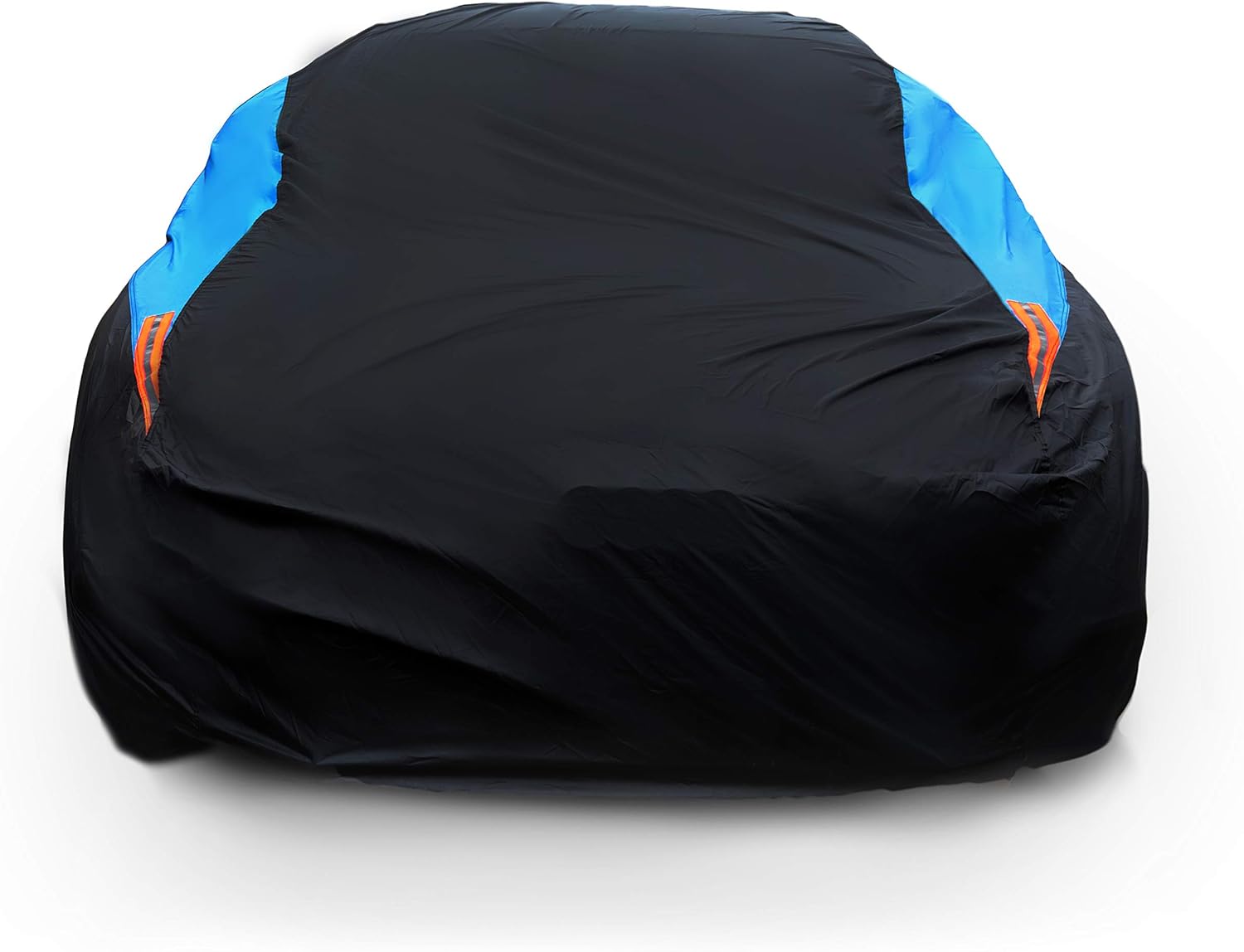
EzyShade 10-Layer Car Cover Waterproof All Weather — Full Exterior Covers for Automobiles Sedan Hatch SUV
★★★★★ Highly rated on Amazon
10 bond-pressed layers filter fine dust effectively, while the soft inner lining, full elastic hem, and 3 wind straps prevent the bellows effect that pumps dust under loose covers.
As an Amazon Associate, we earn from qualifying purchases.
What Most People Get Wrong About Car Covers and Dust
Myth 1: A 100% waterproof cover will also keep out all dust. This is one of the most common car cover mistakes. A truly waterproof cover has no breathability. That means moisture, condensation, and trapped humidity sit directly on your paint. Over weeks, that moisture causes far more damage than a trace amount of fine dust. Waterproof covers are only appropriate for very short-term use in an open outdoor environment, not for storage.
Myth 2: If dust got through, the cover is defective. Breathable car covers are engineered to allow micro-airflow. Detecting a fine layer of dust after a windy day doesn’t mean the cover failed — it means it’s working as designed. The question is whether the amount of dust is unusually heavy, which would indicate a fit or wind-sealing issue rather than a fabric defect.
Myth 3: You can put a cover on a slightly dusty car without harm. This is the leading cause of car cover-related paint damage. Even a thin layer of everyday dust contains silica, metal particles, and grit. When the cover fabric sits on that dust and then shifts even slightly in a breeze, it drags those abrasive particles across the clear coat. Always clean the car first. Always.
Is Dust Under a Car Cover Damaging My Paint?
Dust that sits still under a car cover does very little harm on its own. The damage happens the moment the cover moves across that dust. Wind, someone bumping the cover, or simply removing it carelessly — any of these create friction between the fabric, the dust particles, and your paint. Silica in common dust acts like fine sandpaper and creates swirl marks in the clear coat.
The risk is directly proportional to 3 things: how gritty the dust is, how much the cover moves, and how soft your car’s paint is. Softer paint finishes — common on Japanese and European vehicles — scratch more easily than harder paint. A gritty, dusty cover flapping in wind against soft paint is a recipe for paint correction work.
That said, a well-fitted cover that barely moves, on a freshly cleaned car, with a soft inner lining — that combination poses almost no scratch risk even if trace dust enters. The goal is controlling movement and minimizing abrasives, not chasing a 0% dust figure.
Conclusion
Dust under your car cover is almost always caused by one of 4 things: a loose fit letting wind pump air underneath, breathable fabric pores allowing fine particles through, weak seams on cheap covers, or the cover itself deteriorating. The fix is a correctly sized, multi-layer cover with a solid elastic hem, tight wind straps, and a soft inner lining. Start with the one simple action below — it costs nothing and makes the biggest difference right now.
Do this right now: Get under your car cover and tighten every wind strap and buckle until the hem sits snugly against the vehicle body at every point. This one step cuts dust infiltration immediately, before you buy anything new.
Frequently Asked Questions
Why does my car get dusty under the cover even in the garage?
Garage air still contains fine dust particles that settle slowly over time. If the cover shifts at all — even slightly from air movement — that airborne dust gets trapped underneath. A cover that deteriorates also sheds its own inner lining as fine powder directly onto the paint surface.
Is it normal for dust to get under a car cover?
Yes, a small amount of fine dust under a breathable car cover is completely normal. Breathable covers allow micro-airflow to prevent moisture buildup — and fine dust particles travel with that airflow. This is a design feature, not a defect. Heavy dust indicates a fit or wind-sealing problem.
Can a car cover scratch my car from dust?
Yes, if dust particles get trapped between the cover’s inner lining and the paint surface, any movement of the cover will drag those abrasive particles across the clear coat. This is why you should always cover a clean, dry car and choose a cover with a soft cotton or fleece inner lining to cushion the contact.
What is the white dust inside my car cover?
White or grey powder found on your car under the cover is most likely the inner lining of the cover breaking down from UV degradation. This happens with budget covers after 2 to 5 years of outdoor use. That powder is abrasive and can cause swirl marks. Replace the cover immediately.
How often should I wash my car cover?
Wash your car cover every 4 to 6 weeks if used outdoors, or every 6 to 8 weeks in a garage. A dirty inner lining accumulates dust and grit that scratches paint when the cover is put on or taken off. Hand-wash in cold water with mild soap and air-dry — never use a tumble dryer.
Does a tight car cover stop more dust getting in?
Yes, significantly. A snug-fitting cover with an elastic hem that contacts the car body around the full perimeter eliminates the main entry point for wind-driven dust. Pair it with underbody wind straps tightened at front, middle, and rear, and dust infiltration drops to the minimum level the fabric itself allows.
Are indoor car covers better than outdoor ones for dust protection?
Indoor car covers are typically made from softer, lighter fabrics like stretch satin or cotton that block fine garage dust effectively. They are not designed for wind resistance. Outdoor covers use heavier multi-layer fabrics that handle wind-driven grit. Use an indoor cover inside and an outdoor cover outside — never swap them.

Daniel Brooks is an automotive writer and product researcher focused on car accessories, car tech, maintenance, and practical driving guides. At Plug-in Car World, he helps drivers make smarter automotive decisions through honest reviews and research-driven content.