Ultimate Car Cover Troubleshooting Guide: Fix Every Problem Fast
⚡ Quick Answer
Most car cover problems — scratching, mold, blowing off, and poor fit — share one root cause: the wrong cover used the wrong way. Clean the car before covering it, choose a breathable multi-layer cover, secure it with straps, and never cover a wet vehicle.
Top car cover problems and their instant fixes:
-
1
Scratching paint → always wash car first; switch to a fleece-lined cover -
2
Blowing off → use gust straps + cable lock; get a custom-fit cover -
3
Mold or rust → never cover a wet car; use a breathable fabric only -
4
Poor fit → measure your vehicle; replace universal covers with semi-custom
Before you cover: quick checklist
-
✓
Car is clean and completely dry -
✓
Cover is breathable, not solid-plastic or fully waterproof -
✓
Straps or ties are secured before leaving the vehicle
You bought a car cover to protect your vehicle. Now it’s scratching the paint, trapping moisture, or flying off in the wind — exactly the problems it was supposed to prevent. Daniel Brooks has seen this pattern dozens of times, and it comes down to 3 fixable mistakes. This guide covers every major car cover problem, why it happens, and the exact steps to stop it for good.
📌 Key Takeaways
-
→
Scratches come from dirt, not from the cover itself — always wash before covering. -
→
100% waterproof covers trap moisture and cause more damage than no cover at all. -
→
Universal covers blow off because they don’t conform to your car’s shape — custom-fit solves this. -
→
Replace your cover when water soaks through the fabric instead of beading off the surface.
Why Is My Car Cover Scratching My Paint?
A car cover doesn’t scratch paint — trapped dirt does. Tiny particles of dust, grit, and road film get caught between the cover’s inner lining and your clear coat. Every time wind moves the cover, those particles grind across the surface like sandpaper.
The inner lining material makes the problem worse or better. Fabrics with raised fiber ends — like non-woven polypropylene — act as micro-abrasives even when clean. Smooth fabrics — like fleece or brushed stretch knit — lay flat against the paint and reduce friction significantly.
⚠️ Warning
Never install a car cover over a dusty or dirty vehicle. Even a light film of road dust becomes abrasive when trapped under a moving cover. One full day of wind movement on a dirty car can create visible swirl marks.
🔢 Step-by-Step: How to Stop Your Cover from Scratching Paint
-
1
Wash and dry the car completely
Remove all dust, grit, and bird droppings before the cover goes on. Dry with a microfiber towel — no water spots left on paint.
-
2
Check the cover’s inner lining material
Feel the inside of the cover. It must be soft and smooth — fleece, microfiber, or brushed fabric. Rough or scratchy = replace it.
-
3
Wash the cover itself every 4–6 weeks
A dirty cover traps grit in its fibers. Hand wash with mild detergent, rinse fully, air dry before reuse. Never put it in a dryer.
-
4
Remove the cover gently from front to back
Never drag or pull the cover across your paint. Roll it forward off the rear, keeping it lifted away from the surface.
-
✓
Switch to a semi-custom or custom-fit cover with a soft lining
A snug fit eliminates flapping. Pair it with a clean car every time, and scratching becomes nearly impossible.
You might think: “My cover says it’s soft — so why am I still getting swirls?” Here’s why. A cover can have soft outer fabric but a non-woven inner layer that acts like sandpaper. Always feel the inside surface before buying or reusing a cover.
The fix is simple: clean car + soft inner lining + snug fit = zero scratching. Next, let’s tackle the second most frustrating problem — your cover flying off in the wind.
Why Does My Car Cover Keep Blowing Off?
A car cover blows off because it doesn’t fit tightly enough and has no secondary anchor. Wind catches loose fabric at the hem, lifts it, and the cover becomes a sail. Universal covers are the biggest offenders — they’re cut in just 3 or 4 sizes to fit thousands of different car shapes.
The gap between the cover’s hem and your car’s body is the entry point for wind. Once wind gets under the cover, physics does the rest. A loose cover in 30 mph gusts can cause more paint damage than leaving the car uncovered — the flapping fabric acts exactly like a scouring pad.
🔢 Step-by-Step: 5 Ways to Keep Your Cover Secured
-
1
Install the cover front-to-back
Find the “FRONT” tag, secure the front end over the bumper first, then pull evenly toward the rear. This prevents bunching and gaps.
-
2
Fasten all built-in tie straps and buckles
Toss the strap under the car to the opposite side and clip it firmly. Most covers come with 4 straps — use all of them, every time.
-
3
Add wind gust straps for high-wind areas
Gust straps attach via gator clips to the front and rear hem. They pull the open areas tightly inward and cost under $15 for a set.
-
4
Thread a cable lock through the grommets
Loop the cable under the car through the cover’s grommets and secure with the lock. This stops both theft and wind lift at the same time.
-
✓
Upgrade to a custom-fit cover if problems persist
Custom covers have mirror pockets, spoiler allowances, and elastic hems molded to your exact car. Wind simply can’t find a gap to enter.
✅ Tip
Tuck the cover hem behind the front and rear valances after fitting the straps. This extra “tuck” creates a natural wind break and reduces the cover’s movement by around 80% in moderate gusts.
So if you’re in a consistently windy area, straps alone won’t cut it. A cable lock through the grommets is the most effective single upgrade you can make for under $20. Now let’s cover the problem that causes the most hidden, long-term damage.
Can a Car Cover Cause Rust or Mold?
Yes — but only if it’s used incorrectly. A car cover doesn’t create rust or mold on its own. It creates the conditions for them. Moisture trapped under a non-breathable cover, or a cover placed on a wet car, produces a warm and humid environment that accelerates both rust and mold growth.
The danger is invisible. From the outside, the car looks protected. Under the cover, moisture sits against the paint and metal for hours or days. Research published on car cover use confirms that trapped moisture can cause clear coat degradation and create conditions for microbial growth that discolors paint. According to car care experts at Hagerty, pooled water on top of a cover becomes nature’s magnifying glass in sunlight, causing paint discoloration even with a high-quality cover in place.
📋 What causes moisture damage under a car cover
-
Covering a wet car: Water can’t evaporate under a cover, so it stays trapped against the paint and metal seams. -
100% waterproof covers: They block rain from getting in — but also block moisture from escaping. Damp air under the cover has nowhere to go. -
Ground condensation: Moisture rises naturally from concrete driveways, especially overnight. It condenses on the underside of the car and the cover. -
Leaving a wet cover on the car: If rain soaks the cover, remove it as soon as possible and let both the car and cover dry fully before reapplying.
⚠️ Warning
If you uncover your car and smell mustiness, that’s active mold growth. Wash and fully dry both the car and the cover immediately. Inspect the paint and trim for discoloration caused by mold contact. Don’t re-cover until everything is bone dry.
The fix is straightforward. Always use a breathable, water-resistant cover — not a 100% waterproof one for daily outdoor use. Breathable covers let moisture vapor escape while still keeping rain off the surface. So if mold or rust appears, the cover material is the first thing to replace.
Why Doesn’t My Car Cover Fit Properly?
A poor-fitting car cover is almost always a universal cover problem. Universal covers are manufactured in just 3 or 4 generic sizes. Vehicles have thousands of variations in length, width, roof height, mirror profile, and bumper shape. The math simply doesn’t work in your favor.
But here’s what most people don’t realize. A cover that’s too loose is far more dangerous than a cover that’s slightly too snug. A loose cover flaps in wind, catches on mirrors, and drags across the paint when you remove it. A tight cover puts stress on the fabric but stays still — which means zero abrasion.
This table shows how cover fit type affects your protection level across the most common problems:
A $25 universal cover costs far more in paint correction fees than upgrading to a $100 semi-custom model. The math favors spending more upfront.
If you’re stuck with a universal cover right now, use gust straps at the front and rear hem to minimize movement. Tuck the excess fabric under the bumper edges. It’s not a permanent fix, but it reduces damage until you can upgrade.
What Is the Best Material for a Car Cover to Avoid Damage?
The best car cover material depends on where you park. Outdoor covers need to be water-resistant and breathable. Indoor covers need to be soft and dust-proof. Using an indoor cover outside — or an outdoor cover inside — causes exactly the problems you’re trying to prevent.
Here’s how common car cover materials compare for the most important performance factors:
A 6-layer cover with an aluminum UV layer and a soft cotton inner lining is the best all-around choice for daily outdoor use in most climates.
Recommended Product
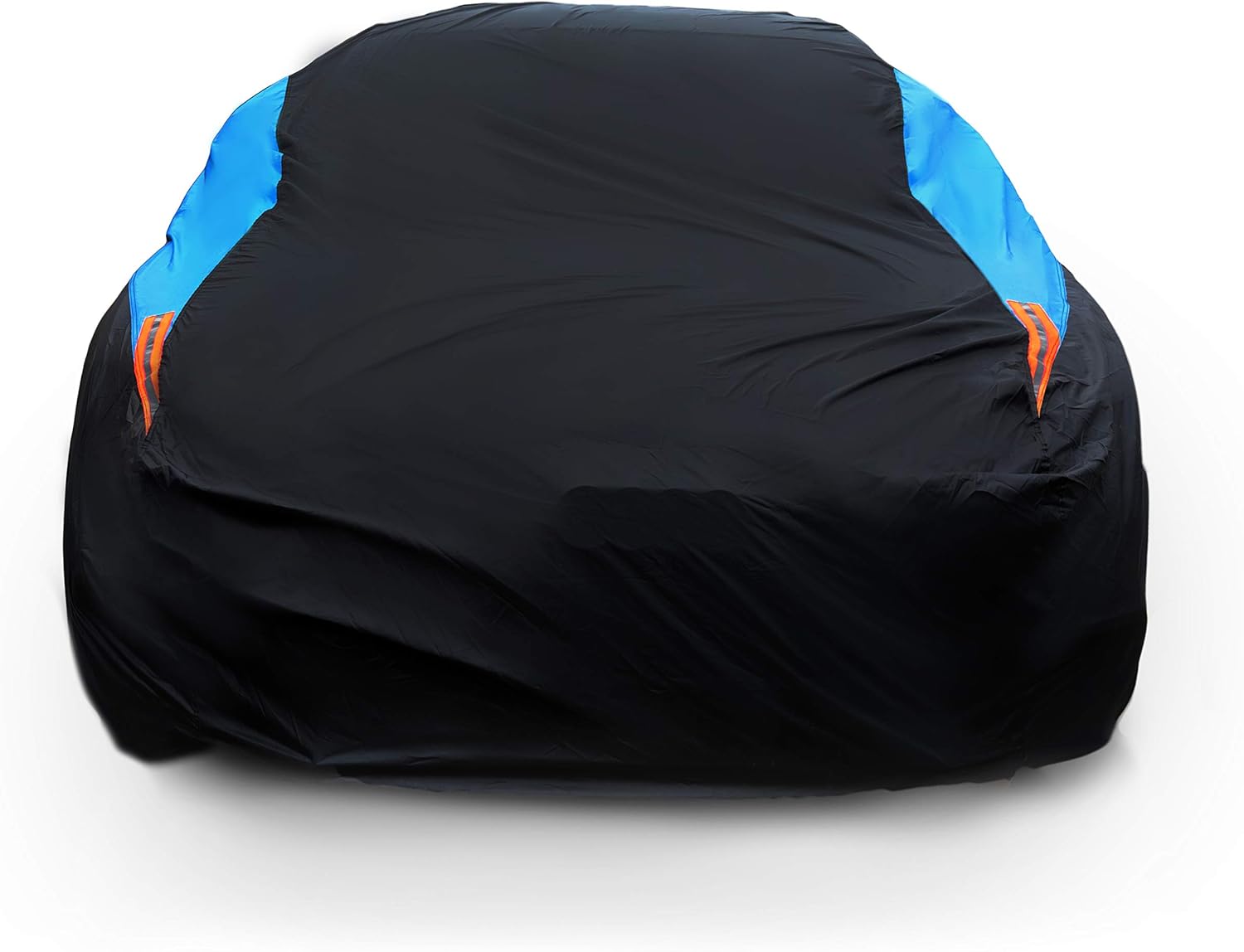
EzyShade 10-Layer Car Cover Waterproof All Weather
★★★★☆ Highly rated on Amazon
A 10-layer breathable cover with a soft inner lining and accurate size chart — addresses the 3 main causes of car cover damage: poor breathability, abrasive lining, and poor fit.
As an Amazon Associate, we earn from qualifying purchases.
If you’re shopping for a new cover, look for this specific combination: breathable multi-layer outer fabric + fleece or cotton inner lining + vehicle-specific size chart. That combination eliminates the 3 main damage causes in a single purchase.
How to Clean and Maintain Your Car Cover the Right Way
A dirty car cover is a scratching machine. Every particle of grit it picks up stays trapped in the fabric and transfers back to your paint the next time you put it on. Most people only wash their car — they forget the cover collects just as much contamination.
Wash your cover every 1–3 months depending on your environment. If you park under trees, near construction, or in a coastal area with salt air, wash it monthly. Use this process every time:
🔢 Step-by-Step: How to Wash a Car Cover Safely
-
1
Shake off loose debris first
Spread the cover flat outdoors and shake out loose dirt before washing. This stops large particles from clogging the fabric during washing.
-
2
Hand wash with cold water and mild soap
Use a soft brush or sponge and a mild car-safe detergent. Never use bleach, fabric softener, or strong detergents — they break down the water-resistant coating.
-
3
Rinse thoroughly — twice
Soap residue left in the fabric will transfer to your paint. Rinse until water runs clear, then rinse once more to be safe.
-
✓
Air dry completely before storing or reusing
Lay flat or drape over a railing in a shaded area. Never put a damp cover back on the car — it will trap moisture and create mold within 48 hours.
If your cover has a zipper, check it for debris every month. Grit in the zipper track scratches the car door when you open it. A quick spray of zipper lubricant keeps it running smoothly and prevents this common overlooked damage point.
When Should You Replace Your Car Cover?
Most car covers last 3–5 years with regular outdoor use. A cheap universal cover may fail in 12 months. Signs of cover failure are clear when you know what to look for. Don’t wait until the cover is visibly shredded — by then, it has likely already damaged your paint or allowed rust to start. Experts at CarCovers.com recommend checking these 5 failure signals regularly.
📋 5 signs your car cover needs replacing now
-
Water soaks in instead of beading off: Splash a small amount of water on the cover. If it absorbs instead of rolling off, the water-resistant coating is gone. -
Visible rips or holes: Any opening allows moisture, dust, and UV rays direct access to your paint — defeating the entire purpose. -
Car smells musty after uncovering: Active mold is already growing. Replace immediately and inspect paint for discoloration. -
Car looks dusty after removing the cover: The cover’s weave has degraded and particles are passing straight through the fabric layers. -
Inner lining feels rough or scratchy: The inner surface should always feel smooth. A rough lining is scratching your paint every single day.
Small rips under 1 inch can be patched with a fabric patch kit — most covers include one. But a cover with multiple tears, total coating failure, or a degraded inner lining can’t be repaired. Replace it.
What Most People Get Wrong About Car Covers
Myth 1: “A 100% waterproof cover is the best protection.” This is the most damaging misconception. A fully waterproof cover seals moisture in — it can’t escape. Breathable covers let water vapor move out while keeping rain off the surface. For daily outdoor use, breathable wins every time.
Myth 2: “Car covers cause scratches — so they’re not worth using.” The cover doesn’t scratch. The dirt between the cover and the car does. A quality cover used on a clean car with a soft inner lining carries virtually zero scratch risk. The risk comes from improper use, not the product itself.
Myth 3: “Any cover is better than no cover.” A cheap, ill-fitting plastic tarp is actively worse than leaving the car uncovered. It traps moisture, scratches paint with its rough interior, and blows around damaging the finish. The right cover, properly used, is outstanding protection. The wrong cover is a liability. According to CarCover.com, the risk of damage comes almost entirely from poor material choice and incorrect usage — not from car covers as a product category.
💡 Key Insight
A car cover is a tool, not a set-and-forget solution. Use it on a clean car, with a breathable multi-layer cover, secured with straps, and maintained every 4–6 weeks — and it will protect your vehicle better than almost anything else available at the price.
Conclusion
Every major car cover problem has one of 3 root causes: wrong material, wrong fit, or wrong usage. Fix those 3 things and your car cover becomes one of the most effective and affordable protection tools you own.
Use a breathable multi-layer cover with a soft inner lining, buy the right size for your vehicle, and always cover a clean and dry car. That combination eliminates scratching, mold, rust, and wind blow-off in one move.
Right now, before your next drive: go feel the inner lining of your cover. If it’s rough or scratchy, that’s what’s touching your paint every single day. That’s the one thing to fix today.
Frequently Asked Questions
Why does my car cover scratch my car’s paint?
The cover itself doesn’t scratch — trapped dirt and grit do. When dust particles get caught between the cover’s inner lining and the clear coat, wind movement grinds them against the paint. Always wash your car before covering it and choose a cover with a smooth fleece or microfiber inner lining.
Can a car cover cause rust?
Yes, if used incorrectly. Covering a wet car or using a non-breathable cover traps moisture against the metal and paint. This creates the humid conditions that accelerate rust, especially in seams and underbody areas. Always cover a dry car and use a breathable fabric cover for daily outdoor use.
Is it OK to put a car cover on a wet car?
No. Covering a wet car traps moisture with nowhere to evaporate. Within 24–48 hours, this creates conditions for mold, mildew, paint discoloration, and rust. If the car got wet while already covered, remove the cover and let both the car and cover dry fully before reapplying.
How do I stop my car cover from blowing off?
Use all 4 built-in tie-down straps every time, then add wind gust straps to the front and rear hem for extra security. Threading a cable lock through the grommets under the car stops both wind lift and theft. Long-term, upgrading to a custom-fit cover eliminates the problem at the source.
How often should I wash my car cover?
Wash the cover every 4–6 weeks under normal use, or monthly if you park near trees, construction, or saltwater. Use cold water and mild soap — never bleach or fabric softener, which break down the water-resistant coating. Air dry completely before reusing or storing.
Why is my car cover fading or deteriorating so fast?
Rapid fading or cracking usually means the cover lacks UV stabilizers in its outer layer. This is common in cheap single-layer covers. A quality outdoor cover should be UV-treated and rated for multi-season use. If the fabric cracks after 1 year, the material grade is too low for outdoor exposure.
How do I know if my car cover fits properly?
A well-fitting cover should hug the body contours with no excess fabric flapping at the sides or hem. Check that mirrors have clearance without fabric pulling tightly. If more than 4 inches of cover bunches up at the front or rear bumper, the cover is too large for your vehicle and needs replacing with a correctly sized model.

Daniel Brooks is an automotive writer and product researcher focused on car accessories, car tech, maintenance, and practical driving guides. At Plug-in Car World, he helps drivers make smarter automotive decisions through honest reviews and research-driven content.