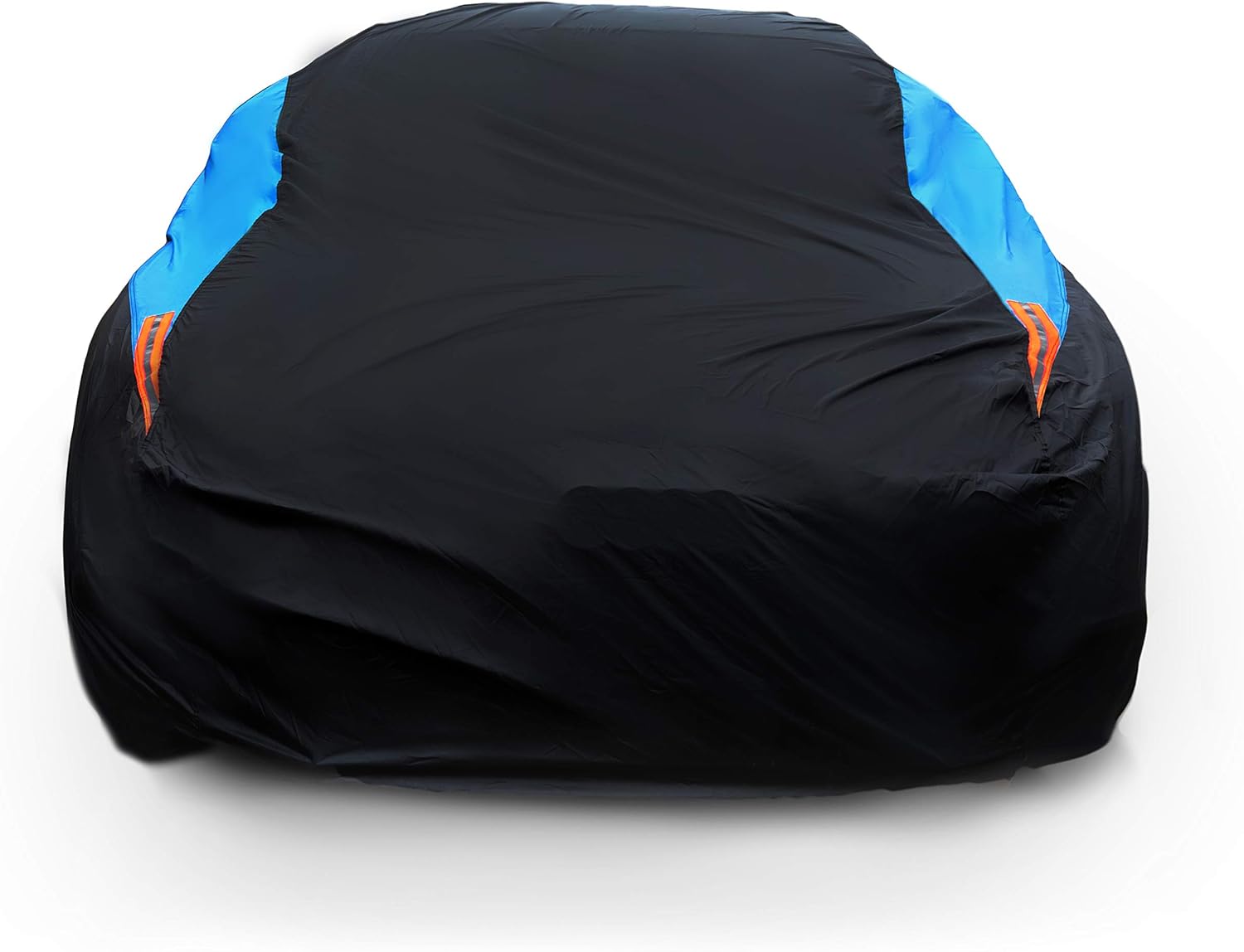
Is Your Car Cover Damaging Paint? What You Need to Know
⚡ Quick Answer
A car cover won’t damage your paint if you use it correctly. The real danger is trapped dirt — dust or debris caught between the cover and your paint acts like sandpaper. Always cover a clean car, use a cover with a soft inner lining, and make sure it fits snugly.
What puts your paint at risk:
- Dirty surface: Covering a dusty car grinds particles into the clear coat.
- Poor fit: A loose cover flaps in wind, causing friction and swirl marks.
- No breathability: Sealed covers trap moisture, leading to rust and mold.
3 rules to protect your paint:
-
✓
Wash the car before every cover application -
✓
Choose a cover with a soft microfiber or fleece inner lining -
✓
Use a breathable cover — never a sealed plastic sheet
You pull the cover off your car and squint at the paint. Did those marks come from the cover? It’s a fair worry — and more common than you think. I’m Michael, and after researching how car owners unintentionally harm their own finishes, one pattern keeps showing up: the cover isn’t the villain. The way it’s used is.
In this guide you’ll learn exactly when a car cover protects your paint and when it works against you — plus what to look for so you never end up buffing out avoidable scratches.
📌 Key Takeaways
-
→
Trapped dirt is the #1 cause of car cover scratches — not the cover material itself. -
→
Non-breathable covers trap moisture and can cause rust, mold, and clear coat failure over time. -
→
A loose-fitting cover flapping in wind creates friction that leaves swirl marks on clear coat. -
→
A quality cover used on a clean car is one of the best protections against UV damage, bird droppings, and tree sap.
Does a Car Cover Actually Damage Paint?
A car cover itself doesn’t damage paint. The damage comes from what’s between the cover and the surface — or from how the cover moves. According to proper car cover use guidelines, a high-quality cover on a clean car is one of the safest things you can do for your vehicle’s finish.
But here’s the thing. Even a soft, expensive cover can scratch your paint if there’s a single layer of dust on the surface. Grit trapped under any fabric acts like sandpaper the moment the cover shifts.
So the answer is: it depends entirely on your habits. The cover is neutral. Your process is what determines whether your paint stays pristine or ends up with micro-scratches and swirl marks.
💡 Key Insight
The irony of car covers: people buy them to protect their paint, then use them in ways that scratch it. The cover isn’t the problem. The dirty car underneath is.
How Does a Car Cover Scratch Paint?
There are 3 specific ways a car cover creates paint damage — and each one is completely avoidable once you know what to watch for.
1. Trapped Dirt and Debris
This is the most common cause. When you put a cover on a car with any dust, pollen, or grit on the surface, those particles get pressed against the clear coat. Every time the cover shifts — in the wind or when you remove it — those particles scrape across the paint.
The result is micro-scratches and swirl marks. You might not notice them right away. But after a few weeks of daily cover use, the paint loses its depth and starts looking dull.
2. A Loose or Ill-Fitting Cover
A cover that’s too loose has room to move. On windy days, that movement becomes constant friction. Even with a clean car underneath, a flapping cover creates enough abrasion to leave marks on the clear coat over time.
A cover that’s too tight creates a different problem. It puts pressure on body lines and edges, which stresses the paint at those contact points. Neither extreme is good.
3. Moisture Trapped Underneath
Non-breathable covers — especially cheap plastic or vinyl ones — seal moisture against your car. That condensation builds up underneath and over time weakens the clear coat, promotes rust on any exposed metal, and creates the perfect environment for mold.
This is especially dangerous in humid climates or if you cover a car that’s still wet after rain. The damage doesn’t show up overnight. It builds quietly over months.
⚠️ Warning
Never put a car cover on a wet car. Moisture sealed under a cover can’t escape and will cause rust and mold far faster than leaving the car uncovered.
What Type of Car Cover Is Safe for Paint?
Not all car covers are equal. The material, inner lining, and fit of a cover all determine whether it protects your paint or slowly damages it. Here’s what the differences mean in practice.
This table breaks down the most common car cover types and how each affects your paint.
The inner lining is the most important factor. A cover with a rough inner surface will always be riskier than one with soft fleece or microfiber, regardless of how expensive it is.
For indoor use, a soft polypropylene or microfiber-lined cover is all you need. For outdoor storage, look for a multi-layer cover with a soft inner lining, breathable fabric, and elastic hem or tie-down straps.
Recommended Product
Budge Lite Car Cover, Indoor Protection, Breathable Dustproof Cover, Fits Mid-Size Sedans up to 200 Inches, Gray
★★★★☆ Highly rated on Amazon
A breathable, non-abrasive polypropylene cover with a soft inner surface — exactly what a paint-safe cover should be for indoor and light outdoor use.
As an Amazon Associate, we earn from qualifying purchases.
How to Use a Car Cover Without Damaging Your Paint
The cover is only as good as the process around it. Follow these steps every time and you’ll get the protection without the scratches.
🔢 Step-by-Step: Safe Car Cover Application
-
1
Wash the car first — every single time
Even light dust is enough to scratch the clear coat. Don’t skip this step, ever.
-
2
Let the car dry completely
Covering a damp car traps moisture. Wait at least 30 minutes after washing.
-
3
Shake out and inspect the cover first
A dirty cover is just as dangerous as a dirty car. Check for debris before placing it.
-
4
Secure the cover snugly with straps
A cover that can’t move in wind can’t scratch your paint. Use the tie-down straps always.
-
✓
Remove gently — don’t drag the cover
Lift the cover off rather than pulling it across the surface. One careless removal can undo weeks of protection.
You should also wash the cover itself every 4 to 6 weeks. A cover that’s been sitting outside collects pollen, dust, and bird droppings. Each time you put a dirty cover on — even on a clean car — you’re grinding that material into the paint.
So if you care about UV damage to your car’s clear coat and want the cover to actually help rather than harm — keep both the car and the cover clean. That’s the whole system.
Should You Cover a Dirty Car? (The Answer Is No)
This is the single most important rule of car cover use. Covering a dirty car — even with light dust or pollen — is one of the fastest ways to scratch your paint without knowing it.
Here’s why. Pollen, dust, and fine grit have sharp edges at the microscopic level. When you lay a cover on top of them and they shift even a millimeter, they cut across the clear coat. The cover’s weight helps press them in. Wind makes it worse.
You might be thinking: “What if I’m just covering it for a few hours?” The answer is still no. It doesn’t take long for a moving cover to leave marks. Even a single windy afternoon can create swirl marks that need professional polishing to remove.
✅ Tip
If you can’t wash the car first, use a quick-detail spray and a clean microfiber cloth to wipe down the surface before covering. This removes light dust without a full wash.
The same rule applies when removing the cover. Never pull a cover across the paint surface. Lift it straight up or fold it back carefully. Dragging it even a few inches over a dusty roof panel leaves scratches every time.
When Should You Skip the Car Cover Entirely?
A car cover makes sense for storage. It’s harder to justify for daily use. Here’s how to decide whether your situation actually calls for one.
🎯 Is a Car Cover Right for Your Situation?
If you are…
Storing the car for 30+ days or all winter
→ Use a high-quality outdoor cover
If you are…
Driving 2–3 times per week with outdoor parking
→ Skip the cover — wash regularly instead
If you are…
Keeping a show car or classic in a garage
→ Use a soft indoor microfiber cover
If you drive your car every day or every other day, covering it each time creates more risk than benefit. You’d need to wash the car before every application — which most people won’t do consistently. In that case, regular washing and waxing will do more for your paint than a cover.
But here’s why covers still make sense for long-term storage: the protection they offer against UV rays, tree sap, and bird droppings over weeks or months far outweighs the small risk of a cover-related scratch — especially if you use one correctly.
What Most People Get Wrong About Car Covers
Myth 1: “Any car cover protects paint”
A cheap single-layer cover with no soft inner lining can be more abrasive than leaving your car uncovered. Rough fabrics rub directly against the clear coat. Material matters — a lot.
A quality cover has a microfiber or fleece lining specifically designed to avoid surface contact damage. Price isn’t the only signal, but covers under $30 for outdoor use almost never have adequate inner protection.
Myth 2: “A waterproof cover is better in all conditions”
Fully waterproof (non-breathable) covers trap moisture under them. That condensation has nowhere to go and sits against your paint and metal panels for hours. In humid climates, this leads to rust spots and mold on rubber seals faster than outdoor exposure would.
Breathable covers — which allow air to circulate while still blocking rain — are almost always the better choice. Look for the word “breathable” in the product description, not just “waterproof.”
Myth 3: “The cover is doing all the work — I don’t need to wash the car”
This is the most dangerous myth. The cover creates a sealed environment between itself and the paint. Any dirt inside that environment gets concentrated and pressed against the surface. Covering a car you haven’t washed in 2 weeks is worse than leaving it uncovered.
A cover is not a substitute for washing. It’s a supplement to washing.
Conclusion
Your car cover is not the enemy of your paint. Dirty surfaces, poor fit, and non-breathable materials are. A soft, breathable, well-fitted cover used on a clean car will protect your finish for years — from UV rays, tree sap, bird droppings, and debris.
The habit that matters most is simple: never cover a dirty car. That one rule removes 90% of the risk.
One thing to do right now: Go check your car cover’s inner lining. Run your hand across it. If it feels rough or scratchy, replace it before your next use.
Frequently Asked Questions
Can car covers scratch paint?
Yes, but only under specific conditions. Car covers scratch paint when dust or grit is trapped between the cover and the surface, when the cover fits loosely and flaps in wind, or when a rough-lined cover rubs directly on the clear coat. A soft, snug cover on a clean car won’t scratch paint.
What material car cover won’t scratch paint?
Covers with a microfiber or fleece inner lining are the safest for paint. These materials are soft enough that even slight movement won’t leave marks. Polypropylene covers with a non-abrasive inner surface are also safe. Avoid vinyl, plastic sheets, or any single-layer cover without a dedicated soft lining.
Should I use a car cover on a dirty car?
No. Putting a cover on a dirty car is one of the fastest ways to scratch the clear coat. Dust, pollen, and grit get pressed between the cover and paint and act like sandpaper when the cover moves. Always wash and dry the car before applying a cover, even for short-term use.
Are breathable car covers better for paint?
Yes. Breathable covers allow air to circulate under them, which prevents condensation from building up against your paint and metal panels. Non-breathable covers trap moisture, which leads to rust, mold on rubber seals, and clear coat degradation over time — especially in humid climates or when covering a damp car.
Can moisture trapped under a car cover cause rust?
Yes. A non-breathable cover sealed over a wet or damp car creates a humid environment with no airflow. That moisture sits against paint, rubber trim, and metal edges for hours at a time. Over weeks, this weakens the clear coat and accelerates rust formation, particularly around door edges and wheel arches.
Does a loose car cover damage paint?
Yes. A loose cover moves in wind, creating friction between the cover fabric and the paint surface. Even if the car was clean when you applied it, a flapping cover picks up outside dust and grinds it against the clear coat over time. Use tie-down straps or a cover with a fitted elastic hem to prevent this.
How often should I wash my car cover?
Wash your car cover every 4 to 6 weeks if you use it regularly outdoors. A cover collects pollen, dust, and bird droppings on its outer surface. That contamination transfers to your paint the next time you apply it — even if your car is clean. Most covers can be hand-washed or machine-washed on a gentle cycle.

Daniel Brooks is an automotive writer and product researcher focused on car accessories, car tech, maintenance, and practical driving guides. At Plug-in Car World, he helps drivers make smarter automotive decisions through honest reviews and research-driven content.