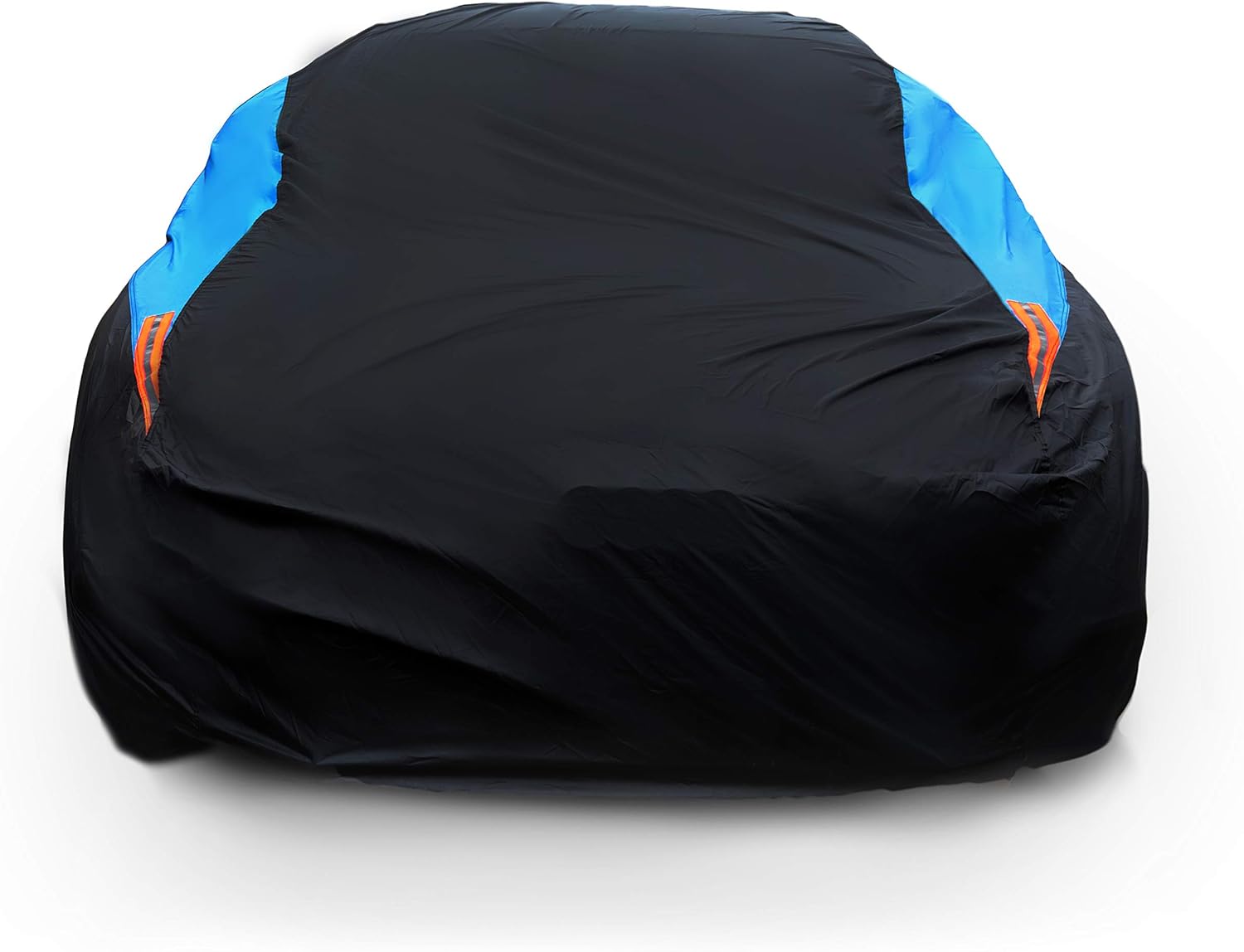
Common Truck Car Cover Problems & How to Fix Them
⚡ Quick Answer
The most common truck car cover problems are paint scratching from trapped dirt, moisture buildup under non-breathable covers, cover blow-off in wind, water leakage through worn seals, and UV degradation of cheap materials. Most problems come from poor fit, wrong material, or skipping basic prep — not from using a cover itself.
Top Truck Car Cover Problems at a Glance:
- Paint scratching: Dirt trapped under the cover rubs the clear coat every time wind moves it
- Moisture trapping: Waterproof-only covers block evaporation and cause condensation underneath
- Cover blow-off: Missing or loose wind straps let the cover lift and flap in gusts
- Water leakage: Worn seams or single-layer material lets rain seep onto paint
Fix These Problems Fast:
-
✓
Wash your truck before putting any cover on -
✓
Choose breathable, multi-layer fabric — not 100% waterproof -
✓
Use windproof straps — tighten them every time
You drape a cover over your truck to protect it. Then you lift it off one morning and find swirl marks in the paint — or water pooling under the fabric. It’s a gut punch. I’m Daniel Brooks, and after testing and writing about truck accessories for years, I’ve seen this happen more often than it should.
Most truck car cover problems aren’t random. They follow predictable patterns. And every single one of them is fixable. This guide covers the 7 most common problems, what causes each one, and the exact steps to stop them for good.
📌 Key Takeaways
-
→
Scratching is caused by dirt particles trapped between the cover and the paint — not by the cover material itself. -
→
100% waterproof covers trap ground moisture and condensation underneath, accelerating rust — breathable covers prevent this. -
→
Wind blow-off happens with universal-fit covers that have no straps or elastic hems — a proper strap system fixes this instantly. -
→
Multi-layer covers with cotton inner linings outperform single-layer covers on every problem — fit, protection, and longevity.
What Are the Most Common Truck Car Cover Problems?
Truck car cover problems fall into 6 clear categories. Most truck owners hit at least 2 of these within the first season of use. The root causes are almost always poor fit, wrong material choice, or skipping prep work before applying the cover.
Here’s what you need to know before diving into fixes.
📋 The 6 Most Common Truck Car Cover Problems
-
Paint Scratching: Dirt and debris get trapped between the cover and your clear coat. Every gust of wind drags those particles across the paint, creating micro-scratches and swirl marks. -
Moisture Trapping: Non-breathable covers seal in condensation and ground vapor. The trapped moisture sits on paint for hours and accelerates rust on older trucks. -
Cover Blow-Off: Universal covers without proper straps lift off in winds above 20 mph. A loose cover flapping against the paint does more damage than no cover at all. -
Water Leakage: Single-layer covers and covers with worn seams let rain seep through. Water pools in the truck bed or drips down the cab exterior. -
Poor Fit: Universal covers are sized for averages, not your exact truck. Gaps at the hood or tailgate let wind, rain, and debris sneak underneath. -
UV and Material Degradation: Cheap single-layer polypropylene covers crack and fade within 12 months of outdoor use, losing their protective properties fast.
Now that you know what you’re dealing with, let’s fix each one directly. The most damaging problem — and the most misunderstood — is scratching.
Why Does a Truck Cover Scratch the Paint?
A truck cover scratches the paint when dirt, sand, or brake dust is trapped between the fabric and the clear coat. The cover itself is rarely the culprit. Every time wind moves the cover — even slightly — those particles act like sandpaper dragged across your finish.
Wind loads as low as 10 mph are enough to cause sustained fabric movement against parked vehicles. A cover that billows, lifts, and re-contacts the paint dozens of times per hour will create swirl marks and micro-scratches over time — even on high-quality covers with soft inner linings.
⚠️ Warning
Never apply a truck cover to a dirty vehicle. Dust or grit on the surface turns the inside of your cover into an abrasive pad the moment any wind hits it. This is the #1 cause of avoidable paint damage from car covers.
Cold weather makes this worse. Non-woven polypropylene inner linings stiffen when temperatures drop below 40°F. A stiff inner lining has higher friction against the paint than a soft one. A cover that performs fine in summer can cause more visible scratch damage in winter without any change in how it’s used.
Researchers at MDPI studying automotive clearcoat scratch resistance confirm that even fine particulate contact causes measurable damage to clear coat systems over repeated cycles — exactly what trapped dirt under a moving cover does.
How to Stop a Truck Cover from Scratching Paint
🔢 Step-by-Step: Stop Cover Scratches for Good
-
1
Wash your truck before covering
Even a quick rinse removes the grit that causes scratches. This single step eliminates the most common cause of cover damage.
-
2
Choose a cover with a soft cotton or microfiber inner lining
Cotton and polyester inner linings are the least abrasive against clear coat. Avoid polypropylene inner surfaces — they’re the harshest on paint.
-
3
Secure the cover tightly with straps
A cover that can’t move can’t drag debris across the paint. Front, middle, and rear straps eliminate the problem completely.
-
✓
Clean the cover itself every 2 months
A dirty cover is a scratching machine. Hand-wash with mild detergent, rinse fully, and air dry — never put it in a dryer.
You might be thinking: “I have a soft cover, so I’m safe.” Here’s why that’s not guaranteed. A soft cover placed on a truck with even light road dust on it will still scratch. The softness of the lining matters less than the cleanliness of the surface underneath it.
Next up is the problem that quietly causes the most long-term damage to trucks — and it’s invisible until it’s too late.
Why Is My Truck Cover Blowing Off?
A truck cover blows off when the cover lacks a proper strap system, or when existing straps are loose or missing. Universal-fit covers are the main offenders — they’re cut for average dimensions, which leaves excess fabric that acts like a sail in wind. Winds above 20 mph will lift a loose cover and drag it off entirely.
A flapping cover is worse than no cover. It whips against your paint repeatedly, dragging whatever grit is under it across your truck’s surface until the wind finally carries it away completely.
How to Keep a Truck Cover from Blowing Off
📋 Wind Blow-Off Prevention Checklist
-
Use a cover with front, middle, and rear straps: Minimum 3 strap points keep the cover anchored even in gusts above 40 mph. Click-tight buckles are more reliable than velcro. -
Check for a full elastic hem: Covers with elastic sewn into the entire bottom hem grip the truck much better than covers with only front and rear elastic patches. -
Size the cover correctly: Excess fabric is the enemy. A cover that fits snugly has no loose panels to catch the wind. Measure your truck length and cab size before buying. -
Use a cable lock through the grommet holes: Many quality truck covers include grommet holes on each side for a security cable. A cable lock keeps the cover on the truck — and keeps it from being stolen.
✅ Tip
After tightening the straps, push down firmly on the center of the cover. It should feel snug and resist movement. If it shifts or lifts more than 2 inches, tighten everything again. Wind will find any slack.
The blow-off problem and the scratch problem are connected. A loose cover causes both. Fix the fit, secure the straps, and you solve two problems at once.
Why Is Moisture Building Up Under My Truck Cover?
Moisture builds up under a truck cover when the cover is fully waterproof and non-breathable. This is one of the most common — and most counterintuitive — truck cover problems. A waterproof cover seals out rain from above but traps moisture vapor that rises from the ground, from the engine, and from temperature changes during the night.
That trapped moisture has nowhere to go. It condenses on your paint and sits there for hours. Over weeks and months, this accelerates oxidation on bare metal edges, worsens existing rust spots, and can promote mold on rubber seals and trim pieces.
Can a Car Cover Cause Rust on My Truck?
Yes — but only the wrong type of cover used the wrong way. A non-breathable, 100% waterproof cover trapping moisture against the paint creates exactly the conditions rust needs: constant dampness with no airflow to dry it off.
The fix is a breathable cover. Breathable covers allow moisture vapor to escape through the fabric while still shedding liquid water from rain. This is the same principle as a Gore-Tex jacket — waterproof on the outside, breathable from the inside.
This table shows how breathable covers compare to fully waterproof covers on the issues that damage your truck most.
Consumer Reports notes that single-layer waterproof covers risk trapping moisture and scratching your vehicle — multi-layer breathable options avoid both issues. (Source: Consumer Reports)
So if you own a 100% waterproof cover and plan to use it for more than a few days at a time, switch it out. A breathable 6- to 10-layer cover protects just as well from rain while letting your truck breathe overnight.
Why Is My Truck Car Cover Leaking?
A truck car cover leaks when the outer fabric has worn thin, the seams are splitting, or the cover is a single-layer design that was never truly waterproof to begin with. Most cheap covers sold online advertise waterproofing, but use a single layer of thin polypropylene that breaks down within 6 to 12 months of outdoor exposure.
A second common cause is poor fit. A cover that’s too big gathers and pools rainwater in loose folds instead of shedding it off the sides. The pooled water finds every seam and works its way through.
✓ Truck Cover Leaking — Quick Diagnostic Checklist
-
✓
Feel the seams after rain — if they’re wet on the inside, the seam thread has worn through -
✓
Check for pooling fabric on the hood or roof — excess material collects water and creates pressure points -
✓
Look for thin or shiny patches on the outer surface — UV degradation thins the waterproof layer first -
✓
Spray the cover with a hose at low pressure — water should bead off. If it soaks in, the cover has lost its water resistance
A leaking cover can’t be repaired with sealant sprays long-term. If your cover is more than 18 months old and leaking through the fabric itself, replace it. The cost of repainting a hood from rust or water stains is far higher than a new cover.
That said, getting the right cover upfront is the real solution — which leads into the two choices that prevent the most problems.
How Do I Choose the Right Size Truck Cover?
Choosing the right size truck cover is the single most important decision for avoiding problems. Wrong sizing causes every other issue — poor fit creates gaps for wind and rain, excess fabric pools water, and loose panels scratch the paint. Trucks vary massively in dimensions based on cab style and bed length.
You need 2 measurements before buying any cover: total truck length (bumper to bumper) and cab length (front bumper to back of cab). Both matter. A cover sized only on total length can still fit the bed wrong if the cab-to-bed ratio is off for your specific model.
210″
Regular cab short bed (e.g., Tacoma)
232″
Crew cab short bed (e.g., F-150 SuperCrew)
250″
Crew cab long bed (e.g., Ram 1500 crew)
Measure your truck’s total length with a tape measure before you buy anything. Don’t rely on the manufacturer’s listed length — add 2 to 4 inches for front and rear bumpers if they extend past the factory spec. Most cover brands publish a size chart with exact truck models listed by year, make, and model. Always cross-check your measurement against that chart.
🎯 Which Fit Type Is Right for You?
If you are…
Daily driving and budget-conscious
→ Choose Universal Fit (measure carefully)
If you are…
Storing the truck outdoors in harsh weather
→ Choose Custom Fit or Semi-Custom
If you are…
Indoor storage only with a clean garage
→ Choose Lightweight Breathable Cover
Once you have the right size, the material determines whether that cover protects your truck or becomes the problem. Let’s look at what actually works.
What Type of Truck Cover Material Causes the Fewest Problems?
Multi-layer covers with PEVA or PE outer layers and soft cotton inner linings cause the fewest problems of any material combination available. The outer PEVA layer sheds water and blocks UV without becoming brittle. The cotton inner layer is the softest contact surface against your paint.
Single-layer polypropylene covers are the source of most cover problems. They’re stiff in cold weather, abrasive against paint, and they degrade under UV exposure within 12 months outdoors. They’re cheap for a reason.
This table compares the most common truck cover materials so you know exactly what you’re buying.
For outdoor truck storage, a 6- to 10-layer cover with a cotton inner lining is the minimum you should buy. Single-layer covers are a false economy.
Recommended Product
EzyShade 10-Layer Truck Cover Waterproof All Weather
★★★★½ 4.5 stars — Highly rated on Amazon
A 10-layer cover with PEVA outer protection and a soft cotton inner lining — the combination that solves the scratch, moisture, and wind problems simultaneously for pickup truck owners.
As an Amazon Associate, we earn from qualifying purchases.
Are Car Covers Actually Bad for Trucks?
No — car covers are not bad for trucks when used correctly. The problems people blame on covers are almost always caused by the wrong cover type, dirty application, or poor installation. A quality breathable cover used on a clean truck does exactly what it promises: protects paint, blocks UV, and keeps the truck cleaner between washes.
That said, using any cover incorrectly can cause damage. The key distinction is this: the cover isn’t the problem — the conditions under it are.
✅ Covers Are Good When…
-
+
Applied to a clean, dry truck -
+
The cover is breathable and multi-layer -
+
Straps are fully tightened each time
⚠️ Covers Cause Problems When…
-
−
Applied over dust, grit, or bird droppings -
−
The cover is 100% waterproof and non-breathable -
−
Cover is loose, wrong size, or cheap single-layer
Used correctly, a truck car cover is one of the best investments in protecting your paint and resale value. The problems are real — but they’re all preventable.
What Most People Get Wrong About Truck Car Covers
Myth 1: “A more waterproof cover is always better.” This is the most damaging belief in car cover ownership. A fully waterproof, non-breathable cover is actually worse for long-term paint protection than a breathable one. It traps condensation underneath and creates the wet, sealed environment that rust and mold need. Breathable covers shed rain while letting moisture vapor escape — that’s the combination you want.
Myth 2: “The cover scratched my paint.” The cover itself almost never causes scratches. What scratches the paint is dirt and grit that was already on the truck when the cover went on. The cover’s movement then drags that debris across the clear coat. Clean the truck first and the “scratching” disappears entirely.
Myth 3: “Any cover is better than no cover.” A loose, non-breathable, single-layer cover that blows off in the wind and traps moisture is worse than leaving the truck uncovered. It gives you the damage of a cover with none of the protection. A quality cover used correctly is far better than a cheap cover used carelessly.
💡 Key Insight
Every common truck cover problem — scratching, moisture, blow-off, leaking — comes back to one of three things: dirty truck, wrong material, or loose fit. Fix those three, and you eliminate 95% of cover problems permanently.
Conclusion
Truck car cover problems are frustrating — but every single one has a clear cause and a clear fix. Clean your truck before covering, choose a breathable multi-layer cover with a cotton inner lining, secure it properly with multiple straps, and size it correctly for your exact cab and bed configuration.
Do those four things and you won’t have cover problems. Your paint stays protected, moisture escapes, and the cover stays on the truck where it belongs.
One thing to do right now: Run your hand along the inside of your current truck cover. If it feels rough, stiff, or scratchy — not soft like a t-shirt — that cover is damaging your paint every time the wind blows. Replace it before the next time it rains.
Frequently Asked Questions
Do car covers scratch truck paint?
Car covers don’t scratch paint on their own — dirt and grit trapped under the cover do. When the cover moves in wind, those particles rub against the clear coat and create micro-scratches. Washing your truck before applying any cover eliminates this problem almost entirely.
Can a car cover cause rust on my truck?
Yes — but only non-breathable, 100% waterproof covers cause this. They trap ground vapor and condensation under the fabric, keeping the paint wet for hours at a time. A breathable multi-layer cover allows moisture to escape and does not promote rust.
How do I keep a truck car cover from blowing off?
Use a cover with at least 3 windproof straps — front, middle, and rear — plus a full elastic hem at the bottom. Click-tight buckle straps hold better than velcro. For very windy areas, run a security cable through the grommet holes under the truck for extra hold.
Why is my truck cover leaking water?
A leaking truck cover usually means the outer fabric has worn through its waterproof layer, the seams have split from UV damage and age, or the cover is the wrong size and pools water instead of shedding it. Single-layer covers begin leaking within 6 to 12 months of outdoor use.
What is the best truck cover material for outdoor use?
Multi-layer covers using PEVA or PE outer fabric bonded with a soft cotton inner lining perform best outdoors. The PEVA outer layer blocks UV and sheds rain without cracking. The cotton inner layer is the gentlest possible contact surface against your truck’s clear coat.
How do I stop moisture buildup under my truck cover?
Switch from a 100% waterproof cover to a breathable multi-layer cover. Breathable covers shed liquid rain from the outside while allowing water vapor to pass out from underneath. This stops condensation from forming and keeps the truck’s surface dry overnight.
Are universal-fit or custom-fit truck covers better?
Custom-fit covers produce fewer problems because they conform tightly to your truck’s exact shape — no excess fabric, no loose panels, no gaps at the hood or tailgate. Universal-fit covers work if sized correctly, but they have more excess material that catches wind and pools water on the roof.

Daniel Brooks is an automotive writer and product researcher focused on car accessories, car tech, maintenance, and practical driving guides. At Plug-in Car World, he helps drivers make smarter automotive decisions through honest reviews and research-driven content.