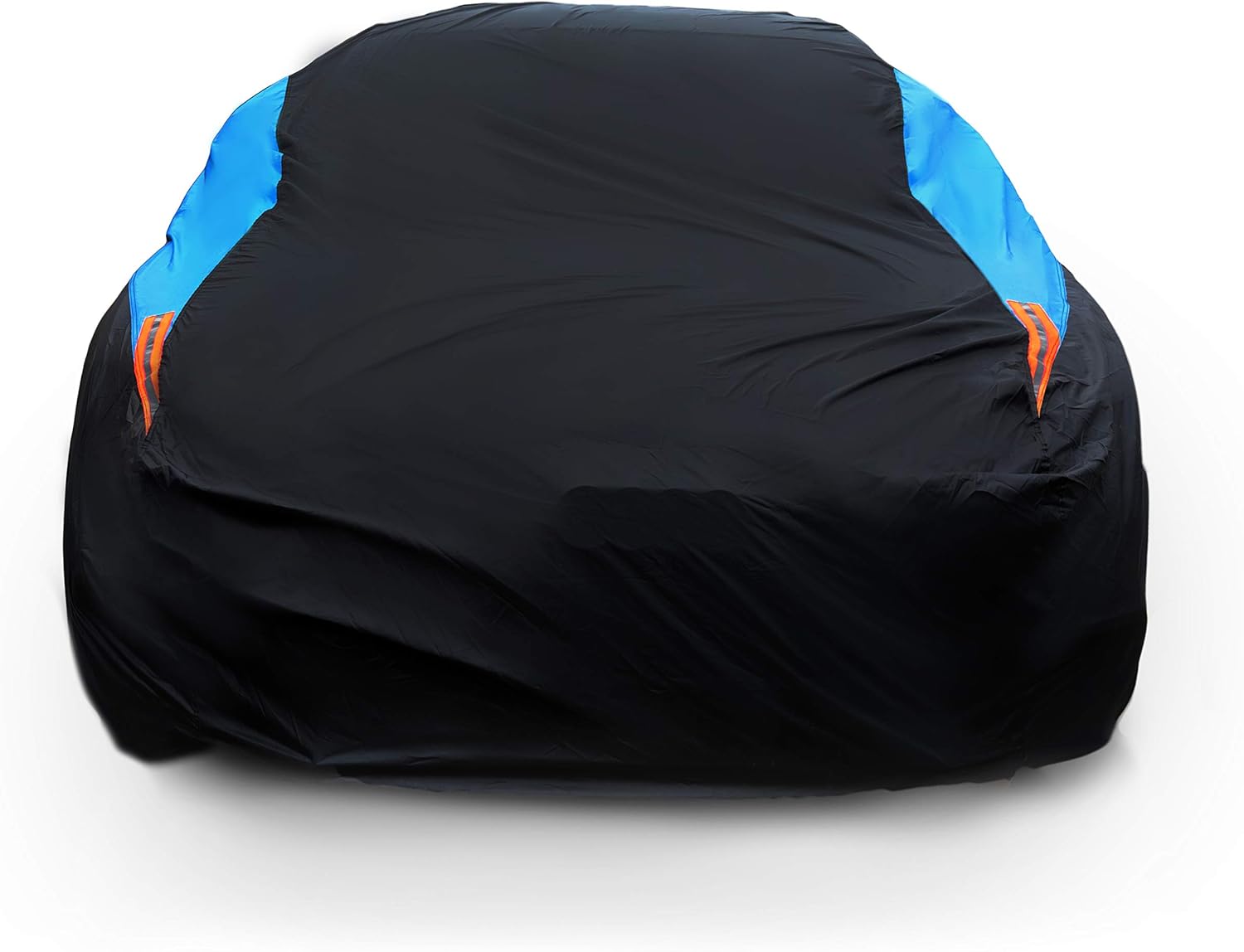
Why Does My Car Cover Trap Moisture? (And How to Fix It)
⚡ Quick Answer
Your car cover traps moisture because it lacks breathability. Non-breathable covers seal warm, humid air against your paint. When temperatures drop overnight, that air hits the dew point and condenses into water droplets — directly on your car’s surface, every single night.
Top reasons your car cover traps moisture:
- Non-breathable fabric: Sealed covers block moisture vapor from escaping outward.
- Covering a warm or wet car: Traps heat and surface water under the cover immediately.
- Temperature swings: Cool nights cause enclosed air to condense on paint and glass.
- High ambient humidity: Areas above 70% humidity worsen condensation buildup significantly.
How to stop your cover from trapping moisture:
-
✓
Switch to a breathable, water-resistant cover — not 100% waterproof -
✓
Always cover a dry, cool car — never cover right after driving -
✓
Lift the cover at least once a month to let trapped moisture escape
You lift your car cover and the paint is dripping wet. You bought a cover to protect your car — but it feels like it’s working against you. I’m Michael, and this is one of the most common car cover problems I see. The cover itself isn’t broken. The physics of moisture are.
The good news: once you understand exactly why this happens, the fix is simple. This guide walks through the real cause, what damage it can do, and exactly how to stop it from happening again.
📌 Key Takeaways
-
→
Non-breathable covers create a sealed greenhouse — moisture vapor has nowhere to go. -
→
Condensation forms every night when metal surfaces cool below the dew point inside the cover. -
→
Trapped moisture causes rust, paint bubbling, water spots, mold, and mildew over time. -
→
Breathable, water-resistant covers solve this — moisture vapor escapes while rain stays out.
Why Does a Car Cover Trap Moisture?
A car cover traps moisture when the fabric can’t allow water vapor to pass through it. The air under any cover contains humidity. When that humid air can’t escape, it collects against your paint as liquid water.
This happens for 4 specific reasons — and most car owners are only aware of one of them.
📋 The 4 reasons your car cover is trapping moisture:
-
Non-breathable fabric: Many covers — especially cheap ones or plastic tarps — have no micro-porous structure. They seal like a bag. Moisture vapor forms inside and stays there with nowhere to go. -
Covering a warm car: If you park and immediately throw the cover on, you trap engine heat and warm air under the fabric. That warm air holds far more moisture than cool air. As it cools overnight, it all deposits on your paint. -
Covering a wet car: Even a little surface water — from rain, dew, or a recent wash — becomes trapped under the cover. It can’t evaporate. The cover creates a humid microclimate directly against your clear coat. -
High ambient humidity: In coastal areas, humid climates, or during rainy seasons, the air under any cover starts with far more moisture to begin with. Even a decent cover can struggle when relative humidity stays above 70% for weeks.
You might think: “But my cover says it’s waterproof.” Here’s why that actually makes things worse. A 100% waterproof cover stops rain from getting in — but it also stops moisture vapor from getting out. Rain is an occasional threat. Condensation happens every single night.
Why Is There Condensation Under My Car Cover?
Condensation under a car cover forms when the metal surfaces of your car cool below the dew point of the trapped air. This isn’t a malfunction — it’s basic physics, and it happens on a cycle with every temperature drop.
Here’s the exact process. During the day, heat from the sun and your engine warms the air inside the cover. That warm air holds moisture — from humidity, any leftover surface water, or simply the ambient environment. At night, air temperatures fall. Metal cools faster than air. When your hood, roof, and body panels drop below the dew point temperature, the moisture in that trapped air becomes liquid — condensing directly on your paint and glass.
This cycle repeats every single night. Each cycle leaves water sitting against your clear coat for hours. If the cover can’t breathe, that water never evaporates — it just sits there until the next day raises the temperature, then the cycle starts again.
💡 Key Insight
A sealed car cover doesn’t trap moisture once — it traps it cyclically, every night, building up damage that looks unrelated to weather but is caused entirely by the cover’s lack of breathability.
So what does this mean for you? If your cover is non-breathable and you park outdoors, your car is getting a moisture bath on its paint every single night — even when it hasn’t rained. That’s the real danger.
What Damage Does Trapped Moisture Actually Cause?
Trapped moisture under a car cover causes 5 types of damage — and most of it is slow, invisible, and expensive to fix. The longer the moisture sits, the worse the outcome.
Here’s a breakdown of the specific damage trapped moisture causes and how it develops:
The most dangerous damage is rust under seams and trim — it’s invisible until it’s severe and costs hundreds of dollars to repair.
But here’s the thing. All of this is 100% preventable. The fix doesn’t require a new parking spot or a garage. It requires the right cover.
Breathable vs Waterproof Car Covers: Which Actually Protects Your Car?
Most people assume “waterproof” means maximum protection. For car covers, the opposite is often true. A fully waterproof cover is the most common reason car covers trap moisture.
Here’s the critical difference. A breathable cover uses a micro-porous membrane — pores large enough for moisture vapor to escape outward, but small enough to block incoming rain droplets. A waterproof cover has no such structure. It blocks everything in both directions — including the moisture vapor trying to get out.
This comparison shows the key differences between waterproof and breathable car covers for everyday use:
| Feature | 100% Waterproof | Breathable Water-Resistant ✓ Best |
|---|---|---|
| Blocks rain | Yes — fully | ✓ Yes — repels most rain |
| Allows moisture vapor out | No — traps it inside | ✓ Yes — escapes through pores |
| Condensation risk | High — forms every night | ✓ Low — vapor exits before pooling |
| Rust & mold risk | High with long-term use | ✓ Low — air circulation prevents it |
| Best for | Short-term storm protection only | ✓ Everyday and long-term storage |
For daily parking and long-term storage, a breathable, water-resistant cover consistently outperforms a fully waterproof one — the ability to breathe is what protects paint over time.
Premium breathable covers achieve 99.8% water resistance while still allowing vapor to escape. That’s not a compromise — it’s a smarter design. The fabric works in one direction: moisture vapor exits, liquid rain can’t enter.
⚠️ Warning
A plastic tarp is the worst option of all. It’s fully waterproof, has zero breathability, no soft inner lining, and will scratch your paint while trapping moisture. Never use a tarp as a car cover.
How to Stop Your Car Cover From Trapping Moisture
Stopping moisture buildup under your car cover comes down to 3 things: the right cover, the right conditions when you put it on, and a simple maintenance habit. All 3 matter.
🔢 Step-by-Step: How to Prevent Moisture Buildup Under Your Car Cover
-
1
Switch to a breathable, water-resistant cover
Look for covers with a micro-porous membrane or multi-layer breathable fabric — not 100% waterproof materials. This single change solves most moisture problems.
-
2
Always cover a cool, dry car
Let the car cool for at least 30 minutes after driving before covering it. Dry any surface water from rain or washing first. Never cover a wet car — ever.
-
3
Choose a custom-fit or properly sized cover
A loose cover flaps and creates pockets that pool water. A custom-fit cover hugs the car’s body, minimizing air pockets where condensation collects.
-
4
Lift the cover at least once a month
In winter or humid periods, lift the cover briefly to let any trapped moisture escape. Industry experts recommend doing this at minimum once per month during cold storage.
-
✓
Store and clean your cover dry
A damp cover folded into storage traps moisture in every fold. Clean it every 1–3 months and air-dry it fully before storing. Your car is now protected — not marinated.
For garage situations where condensation is especially bad, running a small fan on the floor to circulate air under the car can also help. Low airflow is a major factor when humidity spikes during temperature swings.
✅ Tip
In humid or coastal climates, always prioritize covers marketed as “breathable” over “waterproof.” You can also find covers with engineered vent panels that allow vapor to escape even if the main fabric is waterproof — look for grommeted vents near the bottom edge.
What Most People Get Wrong About Car Covers and Moisture
There are 3 widespread beliefs about car covers that lead owners straight toward moisture damage. Getting these wrong is exactly why so many people end up with rust and paint problems despite using a cover.
Wrong Belief #1: “Waterproof means maximum protection”
Waterproof sounds like the safest choice. But a fully waterproof cover with no breathability creates a sealed environment. Rain stays out — but condensation stays in, building up against your paint every single night. The most damaging moisture doesn’t fall from the sky. It forms inside the cover from temperature changes.
Wrong Belief #2: “My car is in the garage, so it doesn’t need a breathable cover”
Garages have humidity too — sometimes more than outside. A concrete floor releases moisture. Temperature swings happen at night. Cars in garages under non-breathable covers develop the same condensation problems. Indoor covers should still be breathable fabrics, not sealed materials.
Wrong Belief #3: “If the cover is on, the car is protected”
A cover on a wet car, a warm car, or a car under a non-breathable cover is not protecting anything. In those conditions, the cover is the source of damage. A cover only protects when the car is cool, dry, and the cover itself can breathe. Condition matters more than coverage.
Conclusion
Your car cover traps moisture because the fabric seals humidity inside instead of letting it escape. The fix is straightforward: switch to a breathable, water-resistant cover, always cover a dry and cool car, and lift the cover once a month to air things out.
The goal of a car cover is to protect your paint — not marinate it. A breathable cover does both jobs: keeps rain out and lets moisture vapor escape. That balance is what protects your car over months and years of storage.
One thing to do right now: Flip your current cover over and look at the material label. If it says “100% waterproof” with no mention of breathability or venting — that’s your problem. Start shopping for a breathable replacement today.
Frequently Asked Questions
Is it bad to put a car cover on a wet car?
Yes — covering a wet car is one of the fastest ways to cause paint damage. The water can’t evaporate under the cover, creating a permanently damp environment that leads to water spots, mold, and rust. Always dry the car fully before covering it.
Should car covers be breathable?
Yes — all quality outdoor car covers should be breathable. A breathable cover allows moisture vapor to escape while still repelling rain. Without breathability, condensation builds up inside the cover on every cold night, causing more damage than no cover at all.
Do car covers cause rust?
Non-breathable car covers can cause rust by trapping moisture against metal surfaces. Rust forms when moisture stays in contact with metal long enough — especially at seams, underbody areas, and around trim. A breathable cover prevents this by allowing trapped moisture to evaporate.
Can a waterproof car cover trap moisture?
Yes — 100% waterproof covers with no ventilation are the biggest cause of trapped moisture. They block rain from outside but also block moisture vapor from escaping inside. This creates a humid microclimate against your paint every time temperatures drop overnight.
Should I use a car cover in the rain?
You can use a breathable, water-resistant cover in the rain — that’s what it’s designed for. Never apply a cover while it’s actively raining, as you’ll trap water underneath. If your cover gets soaked while on the car, remove it and let both the car and cover dry fully before reapplying.
Does a car cover cause mold?
A non-breathable car cover can cause mold. Mold needs 3 things: moisture, warmth, and stagnant air — all 3 exist under a sealed, non-breathable cover. Breathable covers prevent this by promoting air circulation, which stops damp conditions from persisting long enough for mold to grow.
How often should I remove my car cover in winter?
Lift your car cover at least once a month in winter to allow any trapped moisture to escape. During periods of erratic temperatures — warm days followed by cold nights — lift it more often, as these swings create the most condensation. A quick 30-minute airing makes a real difference.

Daniel Brooks is an automotive writer and product researcher focused on car accessories, car tech, maintenance, and practical driving guides. At Plug-in Car World, he helps drivers make smarter automotive decisions through honest reviews and research-driven content.