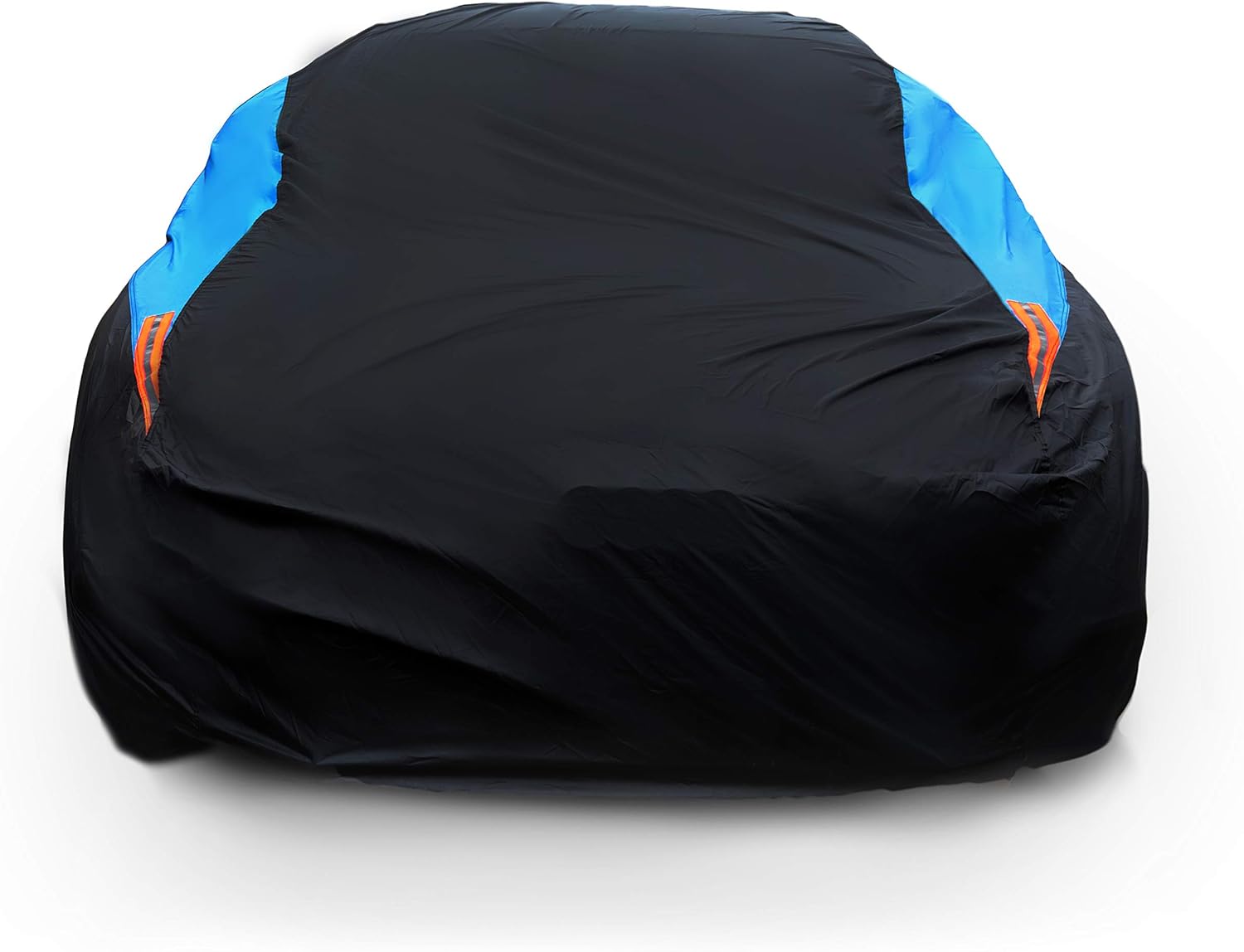
Convertible Car Cover Problems Explained (And How to Fix Them)
⚡ Quick Answer
Convertible car covers cause 5 main problems: paint scratching from trapped dirt, moisture buildup that leads to mold, wind flapping that abrades the clear coat, poor fit that tears soft top fabric, and rust from non-breathable covers sealing in condensation. Each problem is preventable with the right cover type and technique.
The 5 convertible car cover problems:
- Paint scratching: Trapped grit acts like sandpaper every time wind moves the cover.
- Moisture trapping: Non-breathable covers seal condensation against the paint, causing rust.
- Wind flapping: A loose cover rubs edges constantly, wearing down clear coat in weeks.
- Soft top damage: Rough inner linings scuff and weaken convertible fabric roofs directly.
- Mold growth: Moisture trapped under the cover creates a warm, humid environment for mildew.
Fix it fast:
-
✓
Always wash the car before covering it -
✓
Use only breathable covers with a soft fleece inner lining -
✓
Choose a custom-fit cover to stop wind flapping
You pull the cover off your convertible after a week outdoors and run your hand across the paint. It feels rough. Fine lines catch the light at every angle. The cover you bought to protect your car has scratched it instead.
I’m Daniel Brooks, and I’ve seen this happen to convertible owners more times than I can count. The problem isn’t the idea of a car cover — it’s that most covers work against the unique needs of a convertible.
In this guide, you’ll learn every major problem convertible car covers cause, exactly why each one happens, and how to avoid them all.
📌 Key Takeaways
-
→
Dirt trapped under a car cover causes most paint scratches — not the cover fabric itself. -
→
Non-breathable covers trap condensation and can cause rust in as little as 2 weeks of outdoor storage. -
→
Wind gusts of 10–20 mph are enough to make a loose cover abrade clear coat dozens of times per hour. -
→
A breathable, custom-fit cover with a fleece inner lining solves all 5 major problems at once.
Why Do Car Covers Cause Problems on Convertibles?
Convertibles face a unique set of risks with car covers because they have two vulnerable surfaces: soft top fabric above and painted bodywork all around. A standard car cover designed for a sedan can harm both at the same time.
Most car owners think a cover is passive protection. In reality, a cover interacts with your car every minute it’s on — through wind movement, temperature shifts, and moisture cycles. Each interaction creates a risk.
📋 The 5 root causes of convertible car cover problems
-
Dirty surface at time of covering: Dust and grit turn into abrasives the moment the cover moves against the paint. -
Non-breathable material: Waterproof-only covers trap moisture inside, creating a humid sauna under the fabric. -
Poor fit (too loose): A universal cover with loose sections flaps constantly in wind, rubbing paint at every contact point. -
Rough inner lining: Non-woven polypropylene linings act like micro-sandpaper against clear coat, especially when cold. -
Wrong cover type for use case: An indoor dust cover used outdoors saturates with rain. An outdoor cover in a garage blocks airflow and causes mold.
The convertible adds one more layer of risk. Its soft top fabric is porous and absorbs moisture more readily than a steel roof. Whatever a cover traps — humidity, grit, sap — sits directly against that fabric for hours.
Now let’s go through each problem in detail, starting with the one most owners discover too late.
How Does a Car Cover Scratch Convertible Paint?
A car cover scratches paint through one mechanism: abrasion. Tiny particles of dust, grit, road film, or pollen get trapped between the cover and the paint surface. Every time wind moves the cover, those particles grind against the clear coat. The result is swirl marks, micro-scratches, and a dull haze visible in direct light.
The inner lining material makes this worse or better. Covers with non-woven polypropylene linings have fiber ends that stand upright against the paint surface. Those raised fiber ends trap grit and hold it against the clear coat during every contact cycle — like pressing sandpaper flat then dragging it slowly.
Here’s the part that surprises most owners: the problem compounds in cold weather. Non-woven polypropylene stiffens in low temperatures, which increases the hardness of contact against paint. A cover that caused minimal damage in summer can leave visible scratches through winter.
⚠️ Warning
Never cover a dirty convertible. Even a thin film of road dust acts as an abrasive layer. The cover pressing down traps that grit against your clear coat. Every gust of wind turns it into one long grinding pass across your paint.
You might think: “My cover is the problem.” In most cases, it’s not the cover alone. It’s the combination of a dirty car, a rough inner lining, and wind movement. Fix all 3 and the scratching stops.
According to Covercraft’s support guide on car cover scratching, a clean car, a high-quality cover with a soft inner lining, and proper fit will prevent scratching entirely. The cover itself is not the enemy — dirt and poor materials are.
Next, there’s a slower form of damage that’s even harder to reverse — and most convertible owners never see it coming.
Does a Car Cover Trap Moisture and Cause Mold?
Yes — and it’s one of the most damaging convertible car cover problems because it’s invisible until the harm is done. A non-breathable waterproof cover keeps rain out, but it also keeps condensation in. As the car heats up during the day, moisture evaporates from the paint surface and the soft top. That vapor has nowhere to go. It builds up under the cover and re-condenses when temperatures drop at night.
The result is a warm, damp environment that sits against your paintwork and convertible fabric around the clock. Within 2 weeks, that environment is ideal for mold and mildew. Rust can begin forming at paint chips, seams, and exposed metal edges. The clear coat can weaken and develop oxidation spots.
Convertible soft tops face additional risk. Fabric tops — especially canvas — are porous. They absorb moisture readily. A damp cover sitting against a canvas top through several nights creates the exact conditions that grow mold inside the fabric weave.
✅ Tip
Choose a cover labeled “breathable waterproof.” This type sheds rain from outside but allows moisture vapor to escape from underneath. It’s the only outdoor cover type safe for a convertible stored for more than 48 hours.
According to CarCover.com’s detailed paint damage guide, non-breathable covers can weaken the clear coat over time, promote rust formation, and encourage mold growth — particularly in humid environments or when covering a car that’s still slightly wet.
One more thing: never cover a convertible right after rain. Dry both the car and the cover completely first. A wet cover on a wet car traps the moisture and speeds up every damage process described above.
But moisture isn’t the only silent threat. Wind turns even a good cover into a grinding machine — here’s how.
Why Does Wind Make Your Car Cover a Problem?
Wind is the engine that turns every other car cover problem into real paint damage. A cover that sits perfectly still causes almost no harm. But a cover that moves — even slightly — starts grinding grit into your clear coat with every gust.
Wind loads of just 10 to 20 mph are enough to cause sustained fabric movement across painted surfaces. The cover billows, lifts, and re-contacts the paint dozens of times per hour. At each contact point, trapped grit acts as an abrasive. Mirror pockets and loose edges are the highest-risk areas — they rub relentlessly against paint and soft top fabric alike.
10 mph
Minimum wind speed that causes cover movement against paint
2–3 yrs
Typical lifespan of a budget universal car cover outdoors
55+ mph
Wind gusts a properly anchored custom cover can hold through
Universal fit covers are the worst offenders. They’re designed to cover a range of car sizes, which means loose fabric on any car outside the middle of that range. That loose fabric is a wind sail.
A custom-fit cover eliminates wind gaps almost entirely. When the cover fits the car body snugly, there’s no space for wind to get under the fabric. The cover stays still instead of flapping, and the abrasion stops. Using a gust guard — a strap system that runs under the chassis — adds another layer of security in high-wind areas.
Wind damage to the soft top specifically is the next problem — and it often gets overlooked entirely.
Can a Car Cover Damage a Convertible Soft Top Directly?
Yes — and the mechanism is different from paint damage. Convertible soft tops, whether canvas or vinyl, face two direct threats from car covers: physical abrasion from rough cover material, and moisture entrapment that weakens the fabric from within.
According to a specialist soft top care guide, universal covers trap grit and moisture and can scuff soft top fabric through wind movement — sometimes within a single month of outdoor use. The recommendation is to avoid car covers entirely for daily use on convertibles, unless the cover is breathable, fitted, and soft-lined.
Here’s how the main cover types affect a convertible soft top differently:
Not all cover types pose the same level of risk to a convertible’s soft top fabric.
For most convertible owners using the car daily, a half cover (covering just the soft top roof) is the safest option — it protects the soft top from birds and sap without any of the moisture or paint risks of a full cover.
So the soft top faces real risk from the wrong cover. But the right cover, used the right way, causes none of these problems. Here’s exactly how to do it.
How to Use a Car Cover on a Convertible Without Causing Damage
Every problem covered above is avoidable. The key is following the right process every time you use the cover — not just when you first buy it.
🔢 Step-by-Step: Safe Convertible Cover Use
-
1
Wash the car and dry it completely
Any dust, grit, bird droppings, or road film left on the paint will become trapped abrasive material the moment the cover goes on.
-
2
Check the cover is clean too
Wash your cover every 1–3 months. Grime embeds in the inner lining and stays there — scratching the car every subsequent use even after washing the car itself.
-
3
Roll the cover on — never drag it
Roll it from both ends toward the middle, place it on the roof, then roll outward toward the front and rear. This stops the cover from sliding across the paint during installation.
-
4
Fasten all windproof straps and ties
Every unsecured loose section is a potential grind point. Secure front and rear straps tight enough to stop flapping but not so tight that the cover pulls against the paint.
-
✓
Air out the cover weekly
Remove the cover once a week on a sunny day. Let both the car and the cover breathe and dry fully before replacing. This breaks the moisture cycle that leads to mold.
For the cover itself, look for these 3 features before buying: a fleece or microfiber inner lining, a breathable waterproof outer layer, and a custom-fit or semi-custom sizing that matches your convertible’s shape.
Recommended Product
Kayme 6 Layers Car Cover Waterproof All Weather for Automobiles — Outdoor Full Cover Rain Sun UV Protection with Zipper Cotton, Universal Fit for Sedan/Coupe/Cabriolet (194–208 inch)
★★★★☆ 4.2 stars — Highly rated on Amazon
A 6-layer cover with a soft cotton inner lining and windproof straps that addresses the 3 main convertible cover problems — inner lining abrasion, wind flapping, and moisture buildup — at a mid-range price.
As an Amazon Associate, we earn from qualifying purchases.
Should You Use a Car Cover on a Convertible At All?
The honest answer is: it depends on why you’re using one and how long the car will sit. For daily drivers used regularly, specialists often advise skipping the cover entirely. Regular use keeps moisture from building up, and a freshly washed car doesn’t need cover protection for a few hours.
But the right cover is genuinely useful for storage situations, heavy bird activity, tree sap exposure, or extended outdoor parking over several days. The key is matching the cover type to the actual situation.
🎯 Which Option Is Right For You?
If you are…
Parking under trees or near birds daily
→ Use a breathable half cover (top only)
If you are…
Storing the convertible for weeks or months outdoors
→ Use a custom-fit, breathable waterproof full cover
If you are…
Storing the car in a garage between drives
→ Use a soft fleece indoor dust cover
If no cover fits your situation well, the alternatives worth considering are a carport, a breathable car bubble (like a Carcoon), or simply treating the soft top with a weatherproof sealant and parking away from trees. These approaches carry none of the cover-related damage risks.
Before we close, let’s tackle the beliefs that send most convertible owners in the wrong direction.
What Most People Get Wrong About Convertible Car Covers
Myth 1: “A waterproof cover gives the best protection.” This is the most common mistake. A fully waterproof (non-breathable) cover keeps rain out but locks condensation in. The moisture that forms under the cover overnight is trapped against your paint and soft top for hours. Breathable waterproof covers — which shed rain while allowing vapor to escape — are the correct choice for any outdoor use beyond a couple of hours.
Myth 2: “The cover is scratching my paint.” Not exactly. The cover isn’t an abrasive by itself. The dust and grit trapped between the cover and the paint are the abrasives. The cover is just the mechanism that presses them against your clear coat. Clean the car first and the scratching stops — regardless of cover quality.
💡 Key Insight
Most convertible car cover damage is caused by 3 things acting together: a dirty car, a loose-fitting cover, and wind. Eliminate any one of the 3 and the damage slows dramatically. Eliminate all 3 and a car cover becomes genuinely protective.
Myth 3: “Any cover is better than no cover.” Not true for convertibles. A cheap, non-breathable universal cover used outdoors for months can cause more damage than leaving the car uncovered — through paint scratching, mold growth on the soft top, and rust formation from trapped condensation. No cover is often the safer choice compared to the wrong cover.
Conclusion
Convertible car cover problems all trace back to 3 root causes: a dirty car at time of covering, a non-breathable or rough-lined cover, and poor fit that lets wind move the cover against paint and soft top fabric. Fix those 3 things and a car cover goes from a hazard to genuine protection.
The single most important upgrade you can make is switching from a non-breathable universal cover to a breathable, custom-fit cover with a fleece inner lining. That one change eliminates the scratch risk, the moisture risk, and most of the wind risk at once.
One thing to do right now: Before your next cover use, run your hand lightly over the car’s surface. If you feel any grit at all, wash the car first. That 20-minute wash prevents the scratching that takes hours to polish out later.
Frequently Asked Questions
Do car covers damage convertible tops?
Yes, the wrong cover can damage a convertible top directly. Universal covers with rough linings scuff soft top fabric through wind movement. Non-breathable covers trap moisture against the porous canvas or vinyl, creating ideal conditions for mold growth. A breathable, fitted cover with a soft inner lining poses very little risk to the soft top.
Can a car cover cause rust on a convertible?
Yes. A non-breathable waterproof cover traps condensation against the car’s surface. That moisture collects at paint chips, seams, and bare metal edges. Over 2–4 weeks of outdoor storage, this creates conditions for rust to form. Switching to a breathable cover that allows moisture vapor to escape prevents this entirely.
Should I use a car cover on my convertible?
For daily drivers, most specialists say no — especially with a universal cover. For extended outdoor storage or heavy bird/sap exposure, a breathable, custom-fit cover with a soft inner lining is worthwhile. The key is matching the right cover type to the specific situation, not using any cover by default.
How do I stop my car cover from flapping in the wind?
Use a custom-fit or semi-custom cover sized for your specific convertible — this eliminates most loose fabric that wind can catch. Fasten all included windproof straps at the front and rear. For high-wind areas, add a gust guard: a strap system that runs under the car’s chassis to anchor the cover from below.
Can a wet car cover cause mold on a convertible?
Yes. A wet cover placed on a convertible — even if the car itself is dry — traps moisture and heat underneath. Convertible soft tops are porous, so they absorb that humidity. Within a few days in warm conditions, mold and mildew can start growing in the fabric weave. Always ensure both the car and cover are completely dry before covering.
What type of car cover is safe for a soft top?
For outdoor use, choose a breathable waterproof cover with a fleece or microfiber inner lining and a custom or semi-custom fit. For garage storage, a soft fleece indoor dust cover is ideal. Avoid non-breathable covers and any cover with a polypropylene inner lining — these two cover types cause the most damage to soft top fabric.
What should I use instead of a car cover on a convertible?
For daily parking, treat the soft top with a weatherproof sealant and park away from trees. For longer storage, consider a carport, a breathable car bubble (like a Carcoon), or a semi-custom cover rather than a generic universal one. These alternatives carry none of the moisture-trapping or flapping risks of standard car covers.

Daniel Brooks is an automotive writer and product researcher focused on car accessories, car tech, maintenance, and practical driving guides. At Plug-in Car World, he helps drivers make smarter automotive decisions through honest reviews and research-driven content.