5 Unique Problems With EV Car Covers (And How to Fix Them)
⚡ Quick Answer
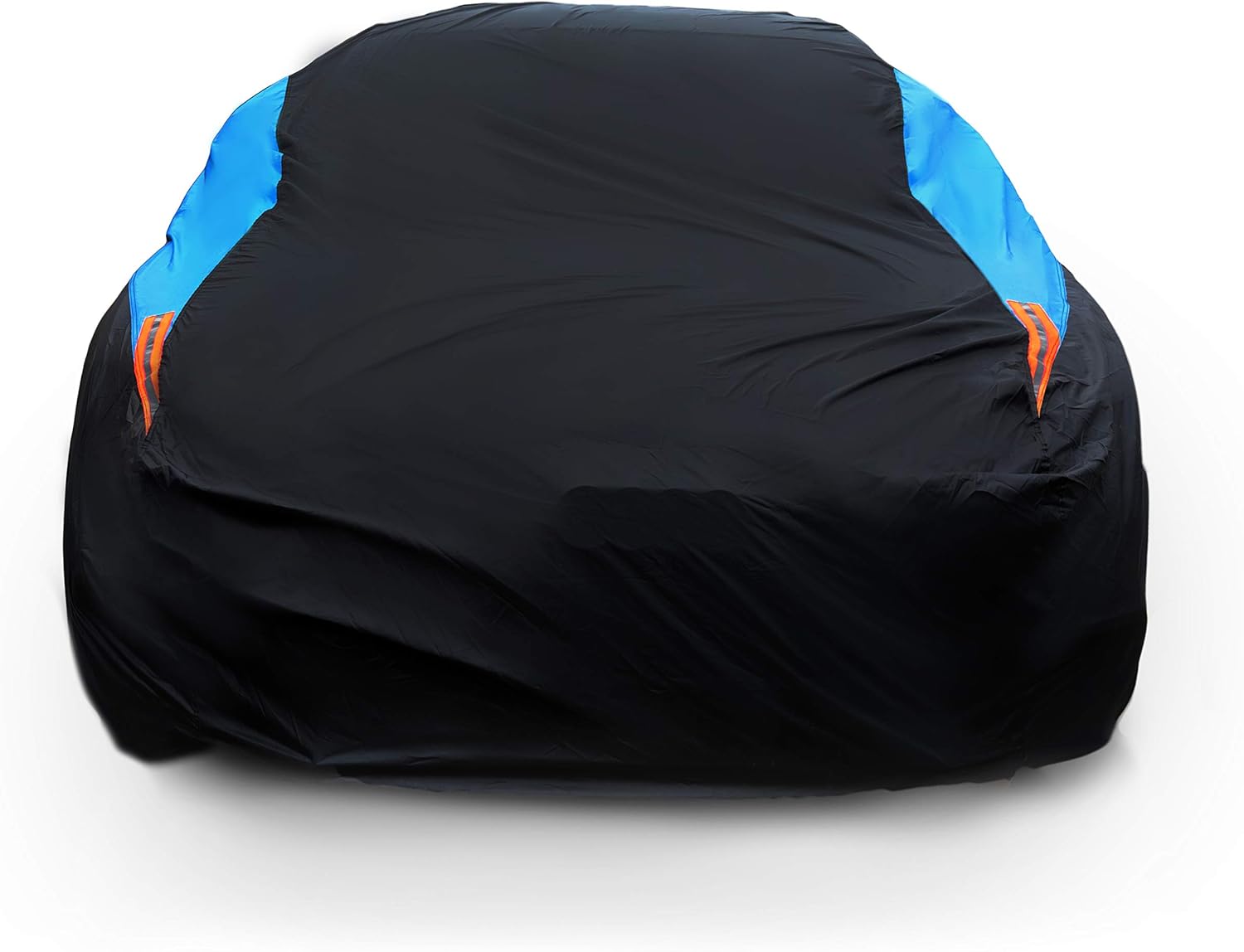
EV car covers have 5 problems gas-car covers don’t: blocking the charging port, trapping heat around the battery, preventing thermal venting, poor fit on aerodynamic body shapes, and covering cameras and sensors. A standard cover designed for gas cars can cause real damage to an electric vehicle if used without EV-specific features.
5 Unique EV Car Cover Problems at a Glance:
- Charging port access: Standard covers block the port — you can’t charge without removing it.
- Battery venting: EVs vent heat from the front grill — a cover can block this and cause overheating.
- Heat trapping: Non-breathable covers raise cabin and battery temperatures dangerously.
- Poor fit: EV aerodynamic shapes cause covers to flap, abrade paint, and slip off.
- Sensor coverage: Covers placed over cameras and radar sensors can block key safety systems.
What to do before buying an EV car cover:
-
✓
Confirm the cover has a charging port access flap -
✓
Choose multi-layer breathable fabric — not a waterproof tarp -
✓
Get a custom-fit cover made for your exact EV model
Unique Problems With EV Car Covers (And How to Fix Each One)
You pull your new EV into the driveway, drape your old car cover over it, and feel good about protecting a $45,000 investment. But that cover is quietly working against you. I’m Daniel Brooks, and after researching EV cover complaints across Tesla, Chevy Bolt, and Kia EV6 owner forums, the pattern is clear: most people don’t realize that electric vehicles need a completely different approach to car cover protection.
The problems aren't minor. A non-breathable cover can block battery ventilation, trap heat around your battery pack, and make it impossible to charge without removing the entire cover first. This guide covers every unique problem — and the fix for each one.
📌 Key Takeaways
-
→
Standard car covers are designed for gas vehicles and create 5 serious problems when used on EVs. -
→
Charging port access is the most common complaint — you need a cover with a dedicated port flap. -
→
Blocking front grill vents on models like the Chevy Bolt can damage the 12V battery and thermal management system. -
→
EV-specific covers with breathable fabric, port flaps, and custom fit solve all 5 problems at once.
The Charging Port Problem: Why You Can’t Use a Regular Cover and Still Charge
A regular car cover has no opening for a charging port — because gas cars don’t have one. On an EV, this means every time you park outside and want to charge overnight, you have to remove the entire cover first. Then you have to put it back on in the morning. That’s a real problem for anyone charging at home without a garage.
It gets worse. The charging port on most EVs sits behind a small door flush with the body panel. On a Tesla, it’s in the rear driver’s quarter panel. On a Chevy Bolt, it’s in the front left. On a Kia EV6, it’s rear right. A universal cover pulls flat across all of these — covering the port door completely and making it impossible to open without lifting the whole cover.
📋 Charging Port Problems EV Owners Report
-
Full cover removal required: Without a port flap, you must remove the entire cover every time you charge — defeating the cover’s purpose. -
Port door blocked: Tight covers press against the port door and prevent it from opening — especially on flush-handled EVs with integrated port doors. -
Ice and snow lock-out: In winter, a cover without a flap traps moisture around the port door. This freezes and jams the port shut — sometimes for hours. -
Wrong flap position: Some EV-branded covers include a port flap, but cut it on the wrong side for certain models — check the flap location matches your car before buying.
The fix is specific: you need a cover with a built-in, sealed flap that aligns exactly with your EV’s port location. According to Covercraft’s EV charging-compatible cover guide, some EVs like Tesla also need a secondary vent at the front wheels — not just a port flap. A single flap isn’t always enough.
⚠️ Warning
Never force the charging cable through an existing gap in a regular cover. This creates a pressure point where the cable bends sharply — and repeated pressure on that spot degrades the cable insulation over 6 to 12 months of nightly use.
Recommended Product
LZSTEC EV Charger Port Cover, Electric Car Charger Plug Cover, Outdoor Waterproof Winter Snow Rain UV All-Weather Protection, Magnetic Attachment
★★★★☆ 4.4 stars — Highly rated on Amazon
A dedicated charging port cover that magnetically seals around your EV’s charge port, keeping rain, snow, and ice out without needing to remove your full car cover.
As an Amazon Associate, we earn from qualifying purchases.
So if the charging port issue is solved with a flap — why does venting matter too? That’s the next problem, and it’s less obvious but just as serious.
Why EV Car Covers Must Breathe — The Battery Venting Problem
Electric vehicles actively manage battery temperature using cooling fans and airflow through the vehicle’s front grill area. On models like the Chevy Bolt, Mustang Mach-E, and some Teslas, the undercarriage or front end needs open airflow to vent heat — even when parked. A non-breathable car cover that wraps tightly around the front of the car cuts off that airflow entirely.
This isn’t just a comfort issue. EV forum owners on the Kia EV6 board report that blocking the front lower grill with a cover can drastically reduce 12V battery health and degrade the thermal management system for the main battery pack over time. The cooling fans continue to run when the car is parked — especially during charging — and they need somewhere to push that heat.
✅ Tip
When shopping for an EV cover, look for mesh grill inserts at the front. Covercraft’s custom EV covers, for example, include a front mesh grill panel specifically for EVs with sealed undercarriages. This lets the vent system breathe through the cover rather than against it.
The venting problem is worst during charging. When you plug in at night, your EV’s battery management system stays active. It runs cooling fans. It circulates coolant. It monitors cell temperatures. All of that generates heat — and that heat needs to escape. A fully sealed cover acts like a tent around the engine bay and undercarriage, holding all of that heat in.
You might be thinking: “My EV has built-in thermal management — won’t that handle it?” Here’s why that reasoning fails. The thermal management system is designed to work with normal ambient air around the vehicle. When you wrap the car in a non-breathable cover, you raise the ambient temperature around the battery pack by 10°F to 20°F before the cooling system even starts. It then has to work harder and longer just to reach the same endpoint — draining energy and increasing wear.
Heat Trapping Around the EV Battery — What Non-Breathable Covers Actually Do
Heat trapping is the most damaging problem a car cover can cause for an EV. A non-breathable waterproof tarp — the kind you’d buy at a hardware store — works by preventing all air exchange between the inside and outside. That’s great for keeping rain off. It’s terrible for an EV’s battery and panoramic glass roof.
On sunny days, the surface temperature under a dark non-breathable cover can reach 160°F to 180°F. That heat radiates down through the roof, into the cabin, and toward the battery pack housed in the floor. Lithium-ion battery cells degrade faster above 95°F. Long-term exposure to these temperatures — every sunny afternoon for months — measurably reduces battery capacity and range.
This table shows what happens to your EV’s interior and battery area under different cover types on a 90°F sunny day.
A breathable multi-layer cover consistently produces the lowest heat buildup. The reflective silver side also helps — which is why many EV-specific covers are double-sided (silver one side, dark the other).
According to the U.S. Department of Energy’s EV battery resource, controlling cabin and battery temperature is the biggest power drain on an EV after driving. A cover that amplifies heat instead of reducing it means your battery management system burns extra charge just trying to cool down — before you’ve driven a single mile.
So heat is a summer problem. But EV car covers create a second serious issue in winter too — and it’s tied to moisture, not just warmth.
Fit Problems From EV Body Design — Why Regular Covers Blow Off and Scratch Paint
Electric vehicles are built with extreme aerodynamics in mind. They have sloping rooflines, flush door handles, low front ends, wide panoramic glass roofs, and almost no vertical surfaces. A traditional car cover is designed around the boxy proportions of gas-powered vehicles — upright A-pillars, raised hoods, traditional door handles to grip against.
Put a universal cover on a Tesla Model 3 or a Hyundai Ioniq 6, and it can’t grip the body properly. There are no raised surfaces or protrusions to hold it. Wind catches under the edges, the cover flaps, and the inner lining — even if it’s soft — scrubs back and forth across the clear coat every time it moves. Over months, this creates micro-scratches and swirl marks that look like water damage but aren’t.
📋 EV Body Features That Cause Fit Problems
-
Flush door handles: Most EVs use retractable or flush handles. A cover has nothing to grip on the door surface — it slides freely in wind. -
Low sloping hood: EVs have no engine block under the hood, so the hood sits very low. Universal covers are patterned for a raised hood peak — they sag and pool on EV hoods. -
Panoramic glass roofs: Large glass panels span more surface area than standard roofs. A loose cover rubs this glass directly — and glass scratches far more easily than painted metal. -
Rear frunk and hatch profiles: EVs often have unusual rear proportions (hatchback or frunk shape). Universal covers bunch up at the rear and leave gaps that let dust and rain enter directly.
The fit problem is solved only by custom-fit covers made specifically for your EV model. These covers are laser-patterned to the exact dimensions of your car — not a rough category like “mid-size sedan.” They have elastic edges, internal ties, and fabric tension that keeps them locked to the body even in 40 mph wind gusts.
How a Cover Can Interfere With EV Cameras and Sensors
Modern EVs are covered in sensors. Tesla models have 8 cameras around the perimeter. Rivians have cameras integrated into the pillars and roof line. Hyundai Ioniq 5 and Kia EV6 models have radar sensors in the front bumper area. When you drape a cover over these cars, a poorly placed cover can sit directly on top of a camera lens or radar emitter — and leave it there for 8 to 12 hours.
This creates 2 real problems. First, a cover pressing on a flush-mounted camera lens leaves fabric impressions on the lens surface over time. Second, some EVs — particularly Teslas — have a Sentry Mode feature that uses cameras continuously while parked. A cover over the camera lenses defeats the security system entirely.
⚠️ Warning
If you use a cover and need Sentry Mode active, the cover will block all cameras — defeating the purpose. You need to choose between full paint protection and active camera surveillance. There’s no cover on the market that allows camera function while fully fitted.
The practical fix here is awareness. If you’re using a car cover in a low-risk area and your main goal is paint protection, sensor coverage isn’t a daily concern. But if you use your EV’s camera system for parking assistance or security, plan for a routine where you remove the cover when you need those systems active — and use the cover only for long-term storage or weather events.
This brings up the biggest misconception in the EV cover world — and it’s one most owners get completely wrong.
What Most People Get Wrong About EV Car Covers
Misconception 1: “A Waterproof Cover Is the Best Cover for an EV”
Waterproof sounds better. It isn’t. A 100% waterproof cover is also 100% airtight — meaning zero breathability. Moisture that gets trapped under the cover (from morning dew, rain splash, or humidity) can’t escape. It sits against the paint and glass for hours. This causes water spots, mold growth under the cover, and on panoramic glass roofs, it can accelerate micro-crack formation from repeated heat-cold-moisture cycles.
The right cover is water-resistant, not waterproof. Multi-layer breathable fabrics repel rain and dew from the outside while allowing trapped moisture to escape as vapor from the inside. That balance is what keeps an EV’s paint and glass genuinely protected.
Misconception 2: “Any EV Cover Works on Any Electric Car”
EV is not one body type. A Tesla Model Y is a crossover SUV. A Hyundai Ioniq 6 is a fastback sedan. A Rivian R1T is a pickup truck. A cover listed as an “EV cover” may fit one of these perfectly and the others not at all. Worse, port flap locations vary by model — what fits a Tesla won’t align on a Chevy Bolt.
Always buy by specific make, model, and year — not just “EV” or “electric vehicle” category. According to the U.S. Department of Energy’s EV winterizing guide, even charging connectors and port covers need to be model-specific for proper protection in cold weather.
Misconception 3: “EVs Don’t Need Car Covers — They’re Tougher Than Gas Cars”
EVs aren’t more weather-resistant in terms of their exterior. Their paint, glass, and trim are subject to the same UV degradation, bird drop etching, tree sap damage, and oxidation as any other vehicle. The battery management electronics are actually more sensitive to extreme heat and cold than a gas engine — not less. An uncovered EV parked outdoors in direct sun will see exactly the same paint and battery degradation as a covered-but-wrong-cover EV. The right cover addresses both risks simultaneously.
What to Look For in an EV-Safe Car Cover
Now that you know the 5 problems, here’s the exact checklist to use when evaluating any cover for your electric vehicle. Every item on this list corresponds to a real problem described above — skip none of them.
✓ EV Car Cover Buying Checklist
-
✓
Charging port flap: A dedicated access flap in the correct position for your EV model — not just a generic slot. -
✓
Breathable multi-layer fabric: At least 3 layers with micro-pore or mesh ventilation — never a single-layer waterproof tarp. -
✓
Front grill mesh insert: If your EV has a sealed undercarriage (Bolt, Mach-E, some Teslas), the cover must include a front mesh grill panel for thermal venting. -
✓
Soft non-abrasive inner lining: Fleece or soft knit only — never brushed polyester or hard weaves that scratch clear coat during wind movement. -
✓
Custom fit by model: Laser-patterned for your exact make, model, and year — not “fits most sedans” or “universal EV fit.” -
✓
Reflective outer layer option: A silver or light-colored outer layer dramatically reduces heat buildup in direct sun — a feature gas car covers rarely prioritize.
💡 Key Insight
The single best way to check if a cover is EV-safe is to ask the manufacturer one question: “Does this cover include a front grill vent panel and a charging port flap positioned for my exact model?” If they can’t answer both parts specifically — the cover isn’t designed for EVs, regardless of what the listing says.
Conclusion
EV car covers aren’t the same as gas car covers — and treating them the same way is how EV owners end up with scratched paint, blocked charging ports, and degraded batteries. The 5 unique problems are real, but every single one has a direct fix. You don’t need to avoid covers entirely.
The fix is simple: choose an EV-specific cover with a charging port flap, breathable multi-layer fabric, a front mesh grill vent, a soft inner lining, and a custom fit for your exact model. Get those 5 features right and your cover protects your investment instead of quietly damaging it.
One thing to do right now: Check your current cover or any cover you’re considering — does it have a charging port access flap in the correct location for your specific EV model? If you can’t confirm that in under 2 minutes by reading the product listing, skip that cover and find one where it’s clearly listed.
Frequently Asked Questions
Do you need a car cover for an electric vehicle?
Yes, EVs benefit from car covers just as much as gas vehicles — UV rays, bird droppings, tree sap, and weather damage paint and glass regardless of drivetrain. The difference is that you need an EV-specific cover with a charging port flap and breathable fabric. A standard cover can create more problems than it solves.
Can you charge an EV with a car cover on?
Only if the cover has a built-in charging port flap aligned with your car’s port location. Without a flap, you must remove the entire cover to access the port. EV-specific covers from brands like Covercraft include model-specific flaps so you can plug in without removing the cover at all.
What happens if you block the front grill vent on an EV with a car cover?
Blocking the front grill vent on EVs like the Chevy Bolt or Mustang Mach-E restricts airflow to the thermal management system. Over time, this reduces 12V battery health and degrades the main battery pack’s temperature regulation. EV covers designed for these models include mesh grill inserts to prevent this.
Do Tesla car covers have charging port flaps?
Official Tesla car covers and custom-fit EV covers from brands like Covercraft include charging port flaps positioned for Tesla’s rear driver-side port. Tesla models also require additional front wheel venting — beyond just a port flap — because of their unique sealed undercarriage design.
Are EV car covers different from regular car covers?
Yes — EV-specific covers include charging port access flaps, front grill mesh vent panels, and custom patterns for aerodynamic EV body shapes. A regular gas car cover has none of these features, which is why it creates heat, venting, and charging access problems when used on an electric vehicle.
Can a non-breathable car cover damage an EV’s paint?
Yes. A non-breathable cover traps moisture between the cover and paint surface. That moisture has nowhere to escape and sits against the clear coat for hours — causing water spots, promoting mold growth, and on panoramic glass roofs, accelerating micro-crack formation. Always choose a water-resistant, breathable multi-layer cover.
Why do EV car covers blow off more than regular car covers?
EV body designs — flush door handles, sloping rooflines, and low hoods — give covers nothing to grip. A cover patterned for a traditional gas car sags and flaps on an EV’s aerodynamic shape. The fix is a laser-patterned custom-fit cover made specifically for your EV model, which uses fabric tension and elastic edges to stay locked in place.

Daniel Brooks is an automotive writer and product researcher focused on car accessories, car tech, maintenance, and practical driving guides. At Plug-in Car World, he helps drivers make smarter automotive decisions through honest reviews and research-driven content.