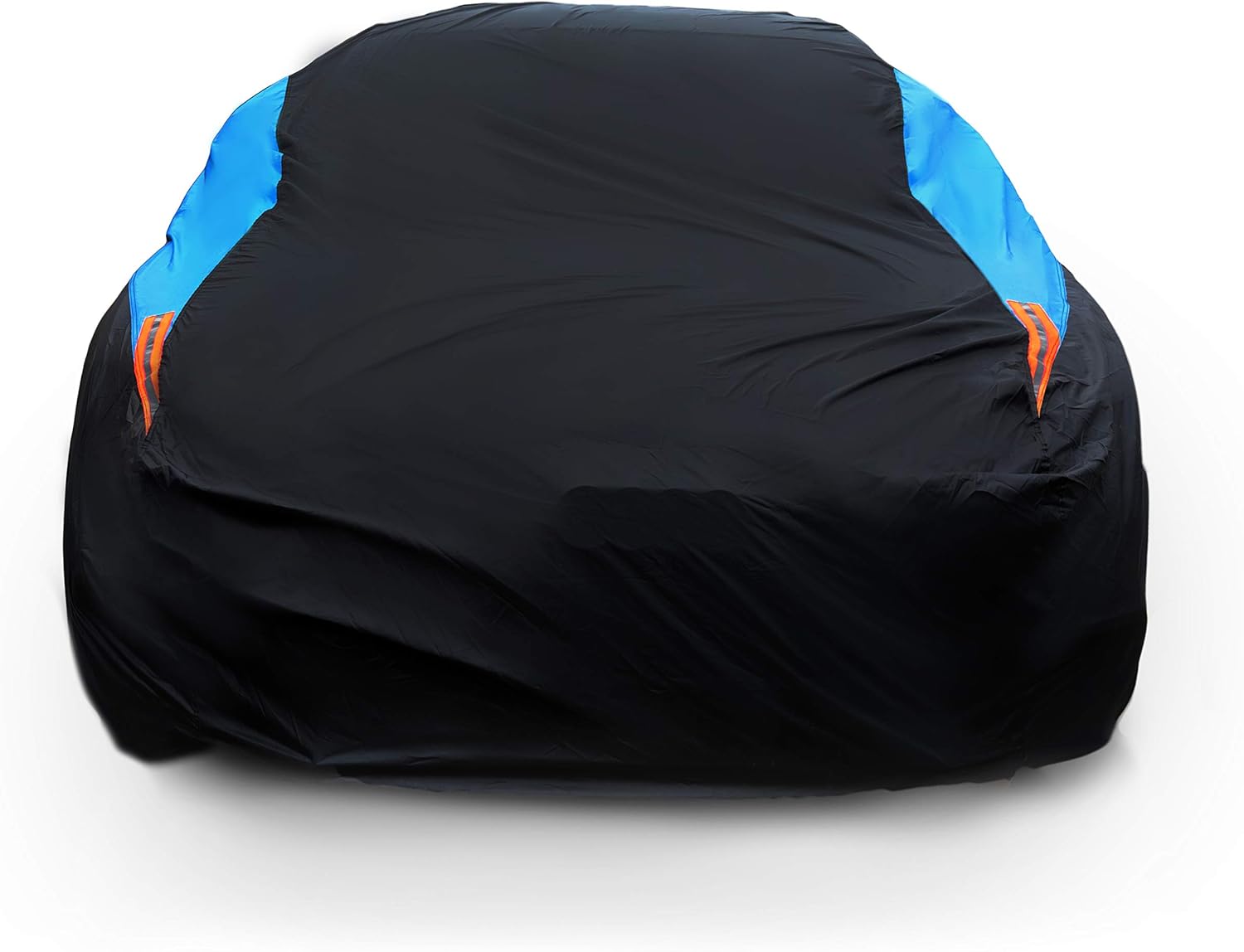
Custom Fit Car Cover Problems: What Goes Wrong and How to Fix It
You spent more money on a custom fit cover specifically to avoid the problems universal covers cause. Now the cover is scratching your paint, trapping moisture, or blowing off in a light breeze — and you’re wondering whether you wasted your money. You didn’t. But something in how the cover was chosen or used is working against you.
Custom fit covers are genuinely better than universal ones. The problems people experience with them almost always trace back to a specific, fixable cause. This guide covers every major issue, why it happens, and the exact fix for each.
Paint Scratches Under a Custom Fit Cover
This is the most reported problem — and the most misunderstood one. Most people assume the cover fabric is scratching the paint. The fabric rarely is. The real culprit is dust, sand, or fine debris trapped between the cover and the paint surface.
When a cover shifts even slightly in wind, those particles act like sandpaper against the clear coat. Custom fit covers reduce this movement compared to universal covers, but they don’t eliminate it entirely — especially if there’s wind or if the car wasn’t clean when covered.
Inner Lining Material Makes a Major Difference
Not all custom covers use the same inner fabric. Non-woven polypropylene linings — common in cheaper custom covers — trap grit in their fiber structure and drag it across the clear coat with every shift. Microfiber and soft fleece inner linings hold particles differently and release them more easily, causing far less abrasion.
If your current cover has a rough or scratchy inner surface when you rub it between your fingers, that fabric is already a risk to your paint — especially on dark-colored cars where swirl marks are most visible.
The Three Scratch Prevention Rules
- Always wash the car before covering — even if it looks clean to the naked eye.
- Choose a cover with a soft inner lining: microfiber or fleece, not spunbond polypropylene.
- Secure the cover so it doesn’t shift — use all straps, grommets, and under-body cables provided.
Moisture Trapped Under the Cover
This is the problem most car owners never see coming — and it causes the most expensive damage. A custom fit cover that hugs your car tightly but isn’t breathable creates a sealed environment. Temperature changes throughout the day cause condensation to form on the paint surface. Over weeks, this trapped moisture weakens the clear coat, causes paint to bubble, and accelerates rust at seams and trim edges.
It’s a particular risk when covering a car that was just washed, came in from rain, or sits outdoors during humidity swings between day and night. A Porsche forum thread documented paint starting to bubble after a single winter of garage storage under a non-breathable cover — and the car never went outside during that period.
When Condensation Risk Is Highest
| Situation | Risk Level | Reason |
|---|---|---|
| Covering a wet car | Very High | Moisture sealed against paint from the start |
| Garage storage with temperature swings | High | Warm air cools, condensation forms on paint |
| Humid outdoor climate (rain, coastal areas) | High | Moisture enters through any gap in a non-breathable cover |
| Dry garage, stable temperature | Low | Minimal temperature-driven condensation cycle |
The key takeaway: always let the car dry completely before covering it. If the cover gets wet while on the car outdoors, remove it as soon as weather allows and let both the car and the cover air dry before reapplying.
Cover Blowing Off or Shifting in Wind
A custom fit cover should resist wind better than a universal cover — that’s one of the main selling points. But “custom fit” describes the shape, not the securing system. A well-shaped cover with no under-body straps or grommets will still lift and shift in a sustained 20 mph wind, and when it does, the edge of the cover drags across your paint repeatedly.
Wind doesn’t just push a cover horizontally. It gets underneath the hem, lifts sections of fabric away from the car body, and then drops them back down with accumulated momentum. The contact isn’t gentle. At leading edges and mirror areas, repeated wind impact causes wear that looks like surface scuffing rather than scratches — but the damage is just as real.
How to Secure a Custom Fit Cover in Wind
- Under-body straps: Thread the strap under the vehicle and buckle it on each side. Most quality custom covers include these — use them every time.
- Grommet cable lock: A steel cable through the grommets and under the vehicle’s frame is the most secure option for high-wind areas or overnight outdoor parking.
- Parking direction: Park facing into the wind. The aerodynamic front end reduces the lifting force on the cover compared to a flat rear facing into the wind.
- Elastic hem check: Over time, the elastic hem loses tension. If the hem no longer grips firmly under the bumpers, the cover’s wind resistance has already dropped significantly.
Antenna and Mirror Damage
Custom covers are measured for your specific vehicle — but fabric weight and wind create stress points at anything that protrudes. Antennas, shark fin modules, and mirror housings absorb repeated pressure from cover movement, and the fabric wears through fastest at these points.
Antenna problems fall into two categories. A retractable mast antenna should be lowered before covering — pushing a cover over an extended antenna tears the antenna pocket or rips the fabric around it. Shark fin and fixed antennas are a trickier problem: the fabric pulls across the fin base every time the cover moves, and this is where most custom covers show early wear.
The Antenna Problem Most People Ignore
Some manufacturers supply a grommet for antenna pass-through rather than a sewn pocket. The reason is counterintuitive: antenna pockets can actually cause more damage than a properly installed grommet, because the pocket concentrates fabric weight and wind stress onto the antenna base in a way a reinforced grommet does not.
If your cover came with a grommet, use it correctly — mark the antenna position with chalk, install the grommet at that point, and thread the antenna through it. Don’t try to force the cover over a raised fixed antenna without reinforcement at that point.
What Most People Get Wrong About Custom Fit Car Covers
Wrong belief 1: A custom fit cover protects the paint regardless of car cleanliness. The fit of the cover determines how well it stays in place. Cleanliness determines whether anything abrasive is between the cover and the paint. A perfectly fitted cover on a dirty car scratches paint just as efficiently as a loose universal cover. Fit and cleanliness are both required — neither replaces the other.
Wrong belief 2: “Waterproof” means better protection. A fully waterproof, non-breathable cover traps every drop of condensation that forms under it. Breathable covers that allow moisture vapor to escape are better for paint than sealed waterproof materials in most storage situations. The exception is short-term outdoor protection during active rain — but for anything longer than a few hours, breathability matters more than complete waterproofing.
Wrong belief 3: Once fitted, a custom cover needs no maintenance. The cover itself gets dirty, and a dirty cover transfers grit to the paint on every install and removal. Wash the cover every 1–3 months depending on your environment. Use cold water and mild soap, and air dry it completely before folding. Never fold or store a damp cover — mold develops in 24–48 hours in a sealed storage bag.
Cover Wear and Longevity Problems
A quality custom fit cover should last 3–7 years. Most that fail early do so for one of three reasons: they’re stored damp, dragged across the car instead of lifted on and off, or left on the car for months without inspection.
Dragging is the most common cause of premature cover failure. When you pull a cover off by grabbing one end and sliding it off the roof, the underside drags across the paint and the fabric edge catches on every protrusion. The correct method is to fold the cover from both ends toward the center and lift it clear — it takes 30 extra seconds and extends the cover’s life by years.
Storage: The Overlooked Problem
Folding a cover while it’s damp and storing it in a boot bag is one of the most common reasons covers develop mold, lose breathability, and start emitting odors that transfer to the car’s paint. The storage bag should be breathable — not sealed — and the cover must be completely dry before it goes in. If your cover’s storage bag is airtight plastic, switch to a mesh or cotton bag for anything except transportation.
Choosing the Right Material for Your Situation
The problems described above are amplified or reduced depending on what the cover is made of. Here’s what each material choice means practically:
| Cover Material | Best For | Watch Out For |
|---|---|---|
| Soft fleece / microfiber (indoor) | Garage storage, dust protection | No weather resistance outdoors |
| Multi-layer polyester with soft lining | Outdoor all-weather, breathable | Heavier; takes longer to dry |
| Aluminum polyester (reflective) | Hot climates, UV and heat protection | Can be noisy in wind; check inner lining |
| Single-layer polypropylene | Budget short-term use | Tears earlier; rougher inner face risks scratches |
The material decision comes down to where the car lives. Indoor storage in a dry climate needs breathable softness, not weather resistance. Outdoor storage in a humid or windy environment needs multi-layer construction with a verified breathable membrane and soft inner lining — both properties together, not one without the other.
When a Custom Fit Cover Is the Wrong Tool Entirely
This is the question most people don’t ask, but should. Custom fit covers work best for cars that stay in one place for days at a time — weekend classics, stored vehicles, or cars that sit in exposed outdoor spots during extended periods away. For daily drivers used every day, the cumulative stress of covering and uncovering repeatedly, often in a hurry, causes more problems than it solves.
If you’re covering a car daily just to keep dust off in a garage, a simple indoor dust cover — or even a clean cotton sheet — causes less paint risk than a multi-layer outdoor cover being dragged on and off. Use the right tool for the actual situation.
If storing outdoors for 3+ days at a time → custom fit multi-layer outdoor cover with breathable membrane.
If storing in garage, dust only → soft indoor cover or microfiber dust cover.
If covering daily as a routine → reconsider; a clean garage and regular detailing may be safer for your paint.
Every custom fit car cover problem has a specific cause, and most causes connect back to one of three things: the cover material, how clean the car was when covered, or how the cover was secured and stored. Fix the weakest of those three in your situation, and the problems resolve. For verified guidance on vehicle paint protection standards and cover materials, see resources from the U.S. Department of Energy’s vehicle technology resources and industry-standard testing from organizations such as SAE International on automotive material performance.
Frequently Asked Questions
Can a custom fit car cover still scratch paint if it fits perfectly?
Yes — fit reduces movement but doesn’t eliminate the risk if dirt or debris is trapped between the cover and the paint. Always clean the car before applying the cover, and choose a cover with a soft inner lining. A perfect fit on a dusty car still causes micro-scratches over time.
How often should I wash my custom fit car cover?
Every 4–6 weeks for outdoor covers in dusty or polluted environments, and every 2–3 months for garage-kept covers. Always air dry completely before folding and storing. A dirty cover transfers grit to your paint on every installation, defeating the purpose of covering the car.
Is it safe to leave a custom fit cover on for weeks at a time?
For most quality outdoor covers, short-term extended use is fine if the cover is breathable and the car was clean and dry when covered. Inspect underneath every 2–4 weeks regardless. Leaving any cover on for months without checking risks hidden moisture damage, mold buildup, and pest intrusion.
Why does my custom fit cover still let water in at the seams?
No car cover is truly waterproof at every seam under heavy rain — and the best ones aren’t designed to be. A breathable outdoor cover allows some moisture vapor movement by design. If water is pooling under the cover during heavy rain, check that all hems are seated correctly under the bumpers and that no seams are torn or degraded.
How do I stop my custom fit cover from blowing off at night?
Use every securing feature the cover came with: under-body straps, buckle clips, and grommet cable locks if available. Park facing into the wind when possible. If the elastic hem has lost its grip over time, the cover will always shift regardless of straps — a degraded hem is a sign the cover needs replacement.

Daniel Brooks is an automotive writer and product researcher focused on car accessories, car tech, maintenance, and practical driving guides. At Plug-in Car World, he helps drivers make smarter automotive decisions through honest reviews and research-driven content.