Problems With Breathable Car Covers: What Nobody Tells You Before You Buy
⚡ Quick Answer
Breathable car covers have real problems: they still allow condensation to form underneath, they don’t stop heavy rain, they can scratch paint when dirty, and poor fit causes wind displacement. They’re better than waterproof covers for long-term storage — but they’re not perfect.
Common problems with breathable car covers:
- Condensation still forms: Moisture vapor can still pool before it evaporates through the fabric.
- Poor fit causes wind flapping: Loose covers rub the paint and blow off in storms.
- Not waterproof in heavy rain: Breathable materials let some rain through during downpours.
How to get the most from your cover:
-
✓
Always apply over a clean, dry car -
✓
Choose a snug fit — not universal if you can avoid it -
✓
Use wind straps in exposed or windy locations
You did your research. You bought a breathable car cover — not a waterproof one — because you read that waterproof covers trap moisture and damage paint. Smart move. But now you’re lifting the cover and finding condensation, maybe even mold, or scratches you can’t explain. I’m Daniel Brooks, and after testing dozens of covers for plugincarworld.com, I can tell you: breathable covers are better than waterproof ones — but they still have real problems most sellers won’t mention. This guide covers every one of them.
📌 Key Takeaways
-
→
Breathable covers reduce condensation damage — but they don’t eliminate it completely. -
→
A dirty cover placed on a car will scratch the paint — regardless of material type. -
→
Most breathable covers are water-resistant, not waterproof — they leak in sustained heavy rain. -
→
Universal-fit covers cause more problems than semi-custom or custom-fit covers every time.
What Are the Real Problems With Breathable Car Covers?
Breathable car covers are the right choice for long-term storage — but they come with a specific set of weaknesses. Understanding each one helps you decide whether your cover is working correctly or failing.
Here are the 6 most common problems owners run into:
📋 6 Real Problems With Breathable Car Covers
-
Condensation still forms underneath: Breathable fabric slows moisture escape — it doesn’t stop condensation from forming first. On cold nights, moisture pools against your paint before evaporation begins. -
Rain leaks through in heavy downpours: Breathable fabric has microscopic pores. Those pores repel light rain. But in sustained heavy rain, water pressure forces droplets through the material. -
Paint scratches from abrasion: Even soft covers scratch paint when dirt or grit gets trapped between the fabric and your car. Wind causes the cover to rub constantly. -
Wind displacement and flapping: A loose-fitting breathable cover acts like a sail. Wind lifts it, shifts it, and flaps it against the car — causing friction damage on every panel. -
Mold and mildew can still grow: A breathable cover placed over a wet car or left in high-humidity conditions creates a moist microclimate. Mold grows in humidity above 60% — even under a breathable cover. -
Seam failure from poor fit: Covers stretched too tightly over your car weaken at the seams. Water then enters directly through the seam lines — defeating the cover’s purpose entirely.
So what’s causing each of these problems at a deeper level? The next section explains the biggest one.
Why Does Moisture Still Get Under a Breathable Car Cover?
Breathable covers allow moisture vapor to escape — but condensation forms before evaporation begins. That’s the critical gap most buyers don’t understand. When warm, humid air hits your cold car surface, tiny water droplets form instantly. A breathable cover speeds up their evaporation, but it can’t stop them from forming in the first place.
Think of it this way. Your car sits outside overnight. The temperature drops. Your car’s metal surface cools faster than the air around it. Warm, humid air contacts the cold surface and releases moisture. That moisture pools under the cover. Then, as the day warms up, a breathable cover allows that moisture to exit through the fabric. A waterproof cover traps it. But either way — the moisture formed.
The difference is time. Under a breathable cover, moisture evaporates within hours. Under a waterproof cover, it stays for days. According to Coverstore’s breathable cover guide, extended moisture contact causes rust to form in microscopic scratches you can’t even see. This is why a breathable cover is far better for long-term storage — but it doesn’t make moisture a non-issue.
💡 Key Insight
Even breathable car covers trap moisture for a period of time before evaporation occurs. The longer moisture sits — even briefly — the greater the risk of rust in existing paint chips or scratches. A breathable cover reduces this window. It doesn’t eliminate it.
There’s one more cause that most people miss. Indoor storage with unconditioned air — like a garage with high humidity — creates the same condensation problem. Breathable covers help here too, but they still leave moisture present for some hours. So if your covered car smells musty, moisture is getting in — and staying in too long.
Can a Breathable Car Cover Scratch Your Car’s Paint?
Yes — and this surprises most people. “Breathable” doesn’t mean “scratch-proof.” The fabric itself is usually non-abrasive. The problem is what gets trapped between the cover and your paint: dirt, grit, dust, tree debris, and sand.
Here’s how it happens. Wind blows fine particles under the cover’s edges. Those particles sit between the soft fabric and your clear coat. Then wind causes the cover to move — even slightly. Now that grit acts like sandpaper. After a week in a windy location, you’ll see fine swirl marks or surface scratches across your hood and roof.
⚠️ Warning
Never put a cover on a dirty car. Even a single layer of dust between the cover and paint becomes abrasive over time. Always wash and dry your car before covering it — every single time.
Universal-fit covers make this worse. They’re larger than your car. Extra fabric pools and shifts constantly in the wind. More movement means more abrasion. A snug, semi-custom or custom-fit cover stays in place and causes far less friction damage.
You might be thinking: “But the interior lining is soft fleece — that can’t scratch.” Here’s why that logic breaks down: it’s not the lining touching the paint when the cover shifts in wind. It’s whatever grit collected on the lining after weeks of use. Clean your cover regularly. Even breathable covers need maintenance.
Do Breathable Car Covers Work in Heavy Rain?
This is where breathable covers disappoint the most. They work well in light rain and drizzle. They struggle in sustained heavy rain. The science explains why. Breathable cover materials contain microscopic pores — small enough to block most water droplets, but not small enough to withstand the pressure of heavy, continuous rainfall.
As water pressure builds on the cover’s surface during a storm, some water forces through those pores. The seams are especially vulnerable. Even double-stitched seams can allow water entry during an all-night rainstorm. The result: your car’s hood and roof are damp when you remove the cover after heavy rain.
Here’s a useful comparison between breathable and waterproof covers in different conditions:
This table shows how breathable and waterproof covers perform across real-world scenarios to help you understand where each type excels and fails.
Breathable covers win in most long-term storage scenarios. Waterproof covers have the edge only in extreme, sustained rain or snow-melt situations.
According to Eastwood’s car cover guide, picking the wrong cover type for your climate causes more damage than using no cover at all. That’s how significant the mismatch problem is.
What Problems Do Breathable Car Covers Have in Winter?
Winter is where breathable covers face their toughest test. Cold temperatures slow evaporation dramatically. Moisture that would normally escape a breathable cover in a few hours can now sit for 12 to 24 hours before evaporating. That’s a long time for moisture to contact your paint and metal.
There’s a second, more serious winter problem: freezing. If rain soaks through the cover — or condensation forms and temperatures drop below 0°C (32°F) — the cover can freeze directly to your car’s surface. Pulling a frozen cover off your car is one of the fastest ways to damage your paint, seals, and mirrors.
🔢 Step-by-Step: How to Protect Your Car in Winter With a Breathable Cover
-
1
Wash and dry your car first
Remove all dirt, salt residue, and moisture before applying the cover. Covering a damp car in winter guarantees freezing problems.
-
2
Check the forecast before covering
If rain is forecast followed by freezing overnight temperatures, skip the cover or use it only after the rain passes.
-
3
Never force off a frozen cover
If the cover is frozen to your car, let it thaw naturally. Forcing it pulls paint, seals, and rubber trim off with it.
-
✓
Use a multi-layer cover with a soft inner lining
A cover with a cotton or fleece inner layer adds a buffer between ice and your paint surface — reducing direct contact damage.
One final winter note: don’t store a wet cover in a bag. Fold it dry. A cover stored wet grows mold in days — and that mold transfers directly to your car’s finish next time you use it.
What Most People Get Wrong About Breathable Car Covers
Most car cover buyers carry 3 major misconceptions that lead to damage, disappointment, and wasted money. Here’s what the research actually shows.
Myth 1: “Breathable means waterproof”
It doesn’t. Breathable car covers are water-resistant — meaning they block light rain. They are not waterproof. The word “breathable” describes the fabric’s ability to allow moisture vapor to pass through. That same property is what limits how much rain pressure the fabric can block. You can’t have both maximum waterproofing and full breathability from the same material — it’s a physical trade-off.
Myth 2: “A breathable cover means I never get condensation”
Wrong. Condensation forms on your car’s cold surface regardless of the cover type. A breathable cover allows that condensation to evaporate faster — but it still forms. If you check under a breathable cover on a cold morning, you’ll often find a light damp film on the car. That’s normal. The cover is doing its job by letting it evaporate through — but the condensation still happened.
Myth 3: “Any breathable cover will do”
Cover quality varies enormously. A cheap single-layer “breathable” cover may allow more rain penetration than a high-quality multi-layer breathable cover. The number of fabric layers, the tightness of the weave, and the inner lining material all determine how well condensation evaporates and how much rain is blocked. According to The Cover Shop’s material science breakdown, quality breathable covers use microscopic pores sized to repel liquid water molecules while still passing water vapor — a balance cheap covers rarely achieve.
✅ Tip
When buying a breathable cover, look for multi-layer non-woven fabric with a soft inner lining, double-stitched seams, and a size chart that matches your specific vehicle. These 3 features alone eliminate most of the problems listed in this article.
How to Fix the Most Common Breathable Car Cover Problems
Every problem in this article has a fix. None of them require buying a completely different cover. Most require small habit changes or a one-time upgrade.
✓ Breathable Car Cover Problem-Fix Checklist
-
✓
Condensation problem: Always put the cover on a dry car. Remove the cover during sunny dry days so the car airs out completely. -
✓
Rain leaking through: Upgrade to a multi-layer cover with a tighter weave for outdoor parking. Single-layer breathable covers aren’t built for heavy outdoor rain. -
✓
Paint scratches: Wash your car before every application. Clean your cover with mild soap every 2 months. Never drag the cover off — lift it. -
✓
Wind flapping: Use tie-down straps or a gust strap under the car. Choose a semi-custom or custom-fit cover — not universal. -
✓
Mold under the cover: Remove the cover on dry sunny days weekly. Store the cover dry — never fold it wet. Check the underside monthly. -
✓
Winter freezing: Watch the forecast. Remove the cover before rain + freeze cycles. Never force a frozen cover off your car.
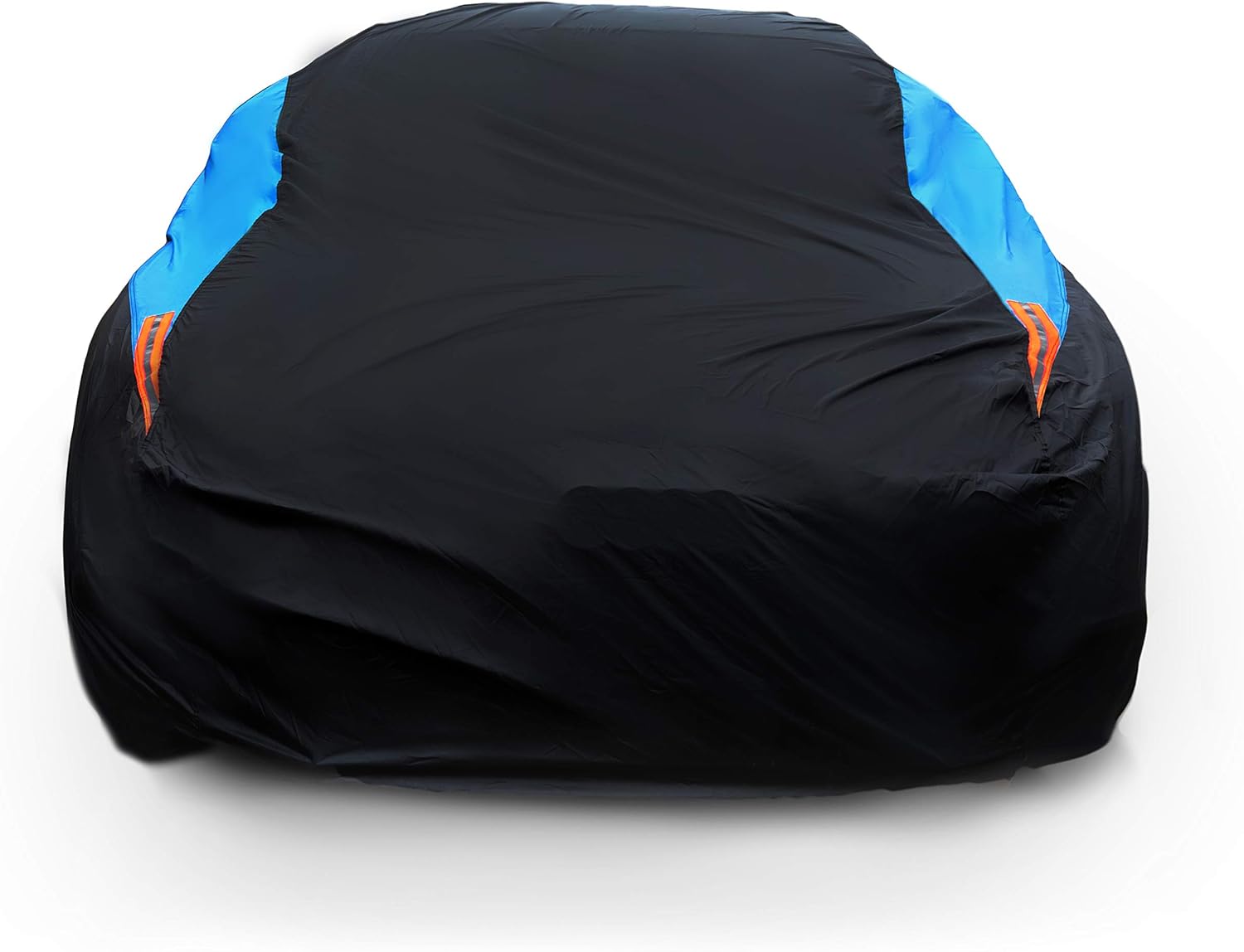
If your current cover keeps failing at rain protection despite good habits, a 10-layer multi-layer cover designed with both breathability and heavy-duty weather resistance is worth the upgrade. Here’s one that genuinely performs in real outdoor conditions:
Recommended Product
EzyShade 10-Layer Car Cover Waterproof All Weather — See Vehicle Size-Chart for Accurate Fit
★★★★☆ Highly rated on Amazon
A strong upgrade for outdoor parking — 10 layers of bond-pressed material with a soft inner lining and wind straps solve the rain leakage, wind flapping, and abrasion problems that plague thin single-layer breathable covers.
As an Amazon Associate, we earn from qualifying purchases.
Conclusion
Breathable car covers are the right choice for long-term storage — but they’re not flawless. Condensation still forms, heavy rain can get through, wind causes abrasion, and mold will grow if you put the cover on a wet car. Every one of those problems has a fix.
The biggest single improvement you can make: stop using a universal-fit cover. Switching to a semi-custom or custom-fit cover eliminates the wind flapping and paint abrasion problems immediately.
Do this right now: check whether your current cover fits your car’s exact make, model, and year. If you’re using a universal cover, that’s your starting point for improvement.
Frequently Asked Questions
Are breathable car covers waterproof?
No. Breathable car covers are water-resistant, not waterproof. They block light rain and drizzle effectively. In heavy, sustained rain, water pressure forces droplets through the breathable fabric‘s microscopic pores. If you park outdoors in a rainy climate, look for a multi-layer cover with tighter weave construction for better protection.
Do breathable car covers prevent mold?
Breathable covers reduce mold risk by allowing moisture to evaporate faster — but they don’t prevent mold entirely. If you cover a wet car, park in a very humid location, or store the cover while damp, mold will still grow. The key prevention habit is always covering a clean, dry car and storing the cover dry after each use.
How do you keep a car cover from blowing off?
Use tie-down straps that run under the vehicle, buckle clips at the front and rear, or a gust strap that threads under the car’s belly. The most effective fix is switching to a semi-custom or custom-fit cover. A snug-fitting cover catches far less wind than a loose universal-fit cover and stays in place without extra hardware.
Should I use a breathable or waterproof car cover for outdoor parking?
For outdoor long-term parking — more than 3 days at a time — breathable is better. Waterproof covers trap moisture from condensation and ground humidity, causing rust and paint damage from underneath. Breathable covers let that moisture escape. The exception is extreme rain climates, where a multi-layer water-resistant breathable cover is the best compromise.
How long do breathable car covers last?
A quality multi-layer breathable car cover lasts 3 to 5 years with proper care. Cheap single-layer covers often fail within 12 to 18 months of outdoor use. Extend your cover’s life by cleaning it every 2 months with mild soap, storing it dry and folded, and avoiding sun exposure when not on the car. UV breaks down breathable fabrics faster than any other factor.
Are breathable car covers good for outdoor use?
Yes — for most outdoor situations, breathable covers outperform waterproof covers because they manage condensation and ground moisture far better. The key is using a quality multi-layer version and ensuring a snug fit. Thin single-layer breathable covers are better suited to indoor or light-outdoor use, not exposed full-time outdoor parking.
What problems do breathable car covers have in winter?
In winter, breathable covers face 3 main problems: slower evaporation in cold air means moisture sits against the paint longer; rain followed by freezing temperatures can cause the cover to freeze to the car’s surface; and road salt residue trapped under the cover accelerates corrosion on metal panels. Always apply over a clean, dry car and remove before freeze cycles.

Daniel Brooks is an automotive writer and product researcher focused on car accessories, car tech, maintenance, and practical driving guides. At Plug-in Car World, he helps drivers make smarter automotive decisions through honest reviews and research-driven content.