Tesla Car Cover Problems and How to Fix Them
⚡ Quick Answer
Most Tesla car cover problems come down to one cause: the cover wasn’t built for a charging EV. Blocked air intakes, jammed charge ports, and trapped moisture are the top complaints, and nearly all of them are fixed by switching to a cover with a properly placed vent and a wide charge-port flap.
Most Common Tesla Cover Complaints
- Blocked air intake: Cover mesh sits over the wrong vent, so preconditioning sounds strained.
- Charge port jam: The flap is too small or too stiff to reach the cable while parked.
- Liner breakdown: Cheap inner fleece crumbles into white dust within months.
Fast Fixes Owners Use
-
✓
Buy a Tesla-specific cover, not a generic sedan size -
✓
Check vent placement against your exact Model 3, Y, S, or X -
✓
Remove the cover weekly so moisture doesn’t get trapped
Daniel Brooks here. I’ve pulled a stretched, sagging cover off more than one Tesla, only to find a faint ring of moisture on the hood underneath. That’s the moment most owners realize their car cover is causing the exact damage it was supposed to prevent.
Tesla’s paint is famously soft, and its clear coat is thinner than what you’ll find on most other vehicles. That makes the right cover more important than it would be on a typical gas car, and it also means a bad-fit cover does more harm, faster.
Below are the real problems Tesla owners run into, why they happen, and the exact fix for each one.
📌 Key Takeaways
-
→
Generic covers rarely match Tesla’s intake and charge port locations. -
→
Tesla’s clear coat is thinner than average, so trapped grit scratches faster. -
→
Trapped moisture under a sealed cover causes more damage than no cover at all. -
→
Cheap liner fabric breaks down into dust within months of daily outdoor use.
Why Do Car Covers Cause Problems on a Tesla Specifically?
A Tesla isn’t shaped or built like a normal car, and that’s exactly where most cover problems start. The front intake, the charge port, the flush door handles, and the slim antenna fin all sit in places a “universal sedan” cover was never designed around.
Tesla’s paint adds a second layer to the problem. Industry detailers and Tesla-focused shops consistently describe Tesla’s clear coat as offering a beautiful high-gloss finish while being softer and more vulnerable to scratches than what’s used on many other luxury vehicles. So when a cover rubs, sags, or traps grit, the damage shows up faster than it would on a typical car.
So if you’re shopping for a cover, the model-specific fit matters more here than on almost any other vehicle on the road.
Problem 1: The Cover Blocks the Front Air Intake
This is the single most reported issue. Real owner reviews of mass-market covers describe the front mesh vent sitting too high, leaving the car’s intake mostly covered. One owner noted the cabin preconditioning system started sounding like it was “overworking to suck in air” with the cover on, and that the noise disappeared the moment the cover came off.
⚠️ Warning
Don’t run remote preconditioning or Climate-on-the-go with a cover that blocks the intake. The system strains to draw air, and over months that extra load adds unnecessary wear.
The fix: Buy a cover that lists vent placement by your exact Tesla model and year, not a generic “fits most sedans” size. If you already own a cover and aren’t sure the vent lines up, park the car, fit the cover, and check the mesh panel against the intake in daylight before you rely on it overnight.
Problem 2: You Can’t Reach the Charge Port Without Removing the Whole Cover
A surprising number of budget covers ship with a charge port flap that’s too small or poorly placed. Owners report the zipper or flap doesn’t line up well enough to plug in a cable without peeling back half the cover first, which defeats the point of covering the car overnight while it charges.
Here’s what separates a charge-port flap that actually works from one that doesn’t:
If your current cover fails on more than one row here, it’s worth replacing rather than fighting with it daily.
Problem 3: The Liner Crumbles Into Dust Within Months
Several owner reviews of budget covers describe a near-identical pattern: the cover looks good out of the box, but within a few months the inner liner starts shedding fine white or grey dust onto the paint and the owner’s hands every time the cover is removed. That dust is the lining material itself breaking down.
You might be thinking a thin liner can’t matter that much. Here’s why it does: a degrading liner doesn’t just look messy, it leaves abrasive fibers resting directly against soft Tesla paint every time wind makes the cover shift.
✅ Tip
Before buying, check reviews specifically for the word “liner” or “dust.” That’s the fastest way to spot a cover that won’t hold up past one season.
Problem 4: Wind Flapping Causes Surface Scratches
A loose cover doesn’t just look untidy in a storm. It rubs back and forth across the paint thousands of times in a single windy night. Since Tesla’s clear coat runs thinner than average, this is exactly the kind of repeated light friction that produces fine swirl marks.
So if you live somewhere with regular wind, gust resistance matters as much as waterproofing.
📋 What Actually Stops Wind Flapping
-
Click-tight buckle straps: Hold the cover taut at the front, middle, and rear instead of relying on elastic alone. -
Mirror pockets: Keep fabric from snapping loose around the side mirrors in gusts. -
Elastic hem at both bumpers: Cinches the cover snug instead of leaving a flapping edge.
Problem 5: Trapped Moisture and Sun Damage
A cover that isn’t breathable can trap condensation underneath it overnight, which is worse for paint than leaving the car uncovered. And on the flip side, a non-UV-rated cover left in direct sun all day still allows real damage; ultraviolet exposure is rated by intensity using the same UV Index the National Weather Service issues as a next-day forecast of skin- and surface-damaging UV radiation at solar noon, and that exposure builds up on parked cars the same way it does on skin.
So if you park outdoors daily, look for two things together: a breathable multi-layer shell and a UV-reflective outer coating, not just one or the other.
What Most People Get Wrong About Tesla Car Covers
Misconception 1: “Any car cover labeled for sedans will fit a Model 3 or Model Y close enough.” In reality, Tesla’s intake, charge port, and flush handles sit in different spots than on a gas sedan, so a true universal-fit cover usually misses at least one of them.
Misconception 2: “A thicker cover is always safer for the paint.” A thick cover with a poor-quality liner can still scratch paint if the inner fabric breaks down or the fit is loose enough to shift in wind.
Misconception 3: “Covering the car protects it from everything.” A cover with no charge-port access or no vent clearance can create new problems, like component strain or trapped humidity, that didn’t exist before you bought it.
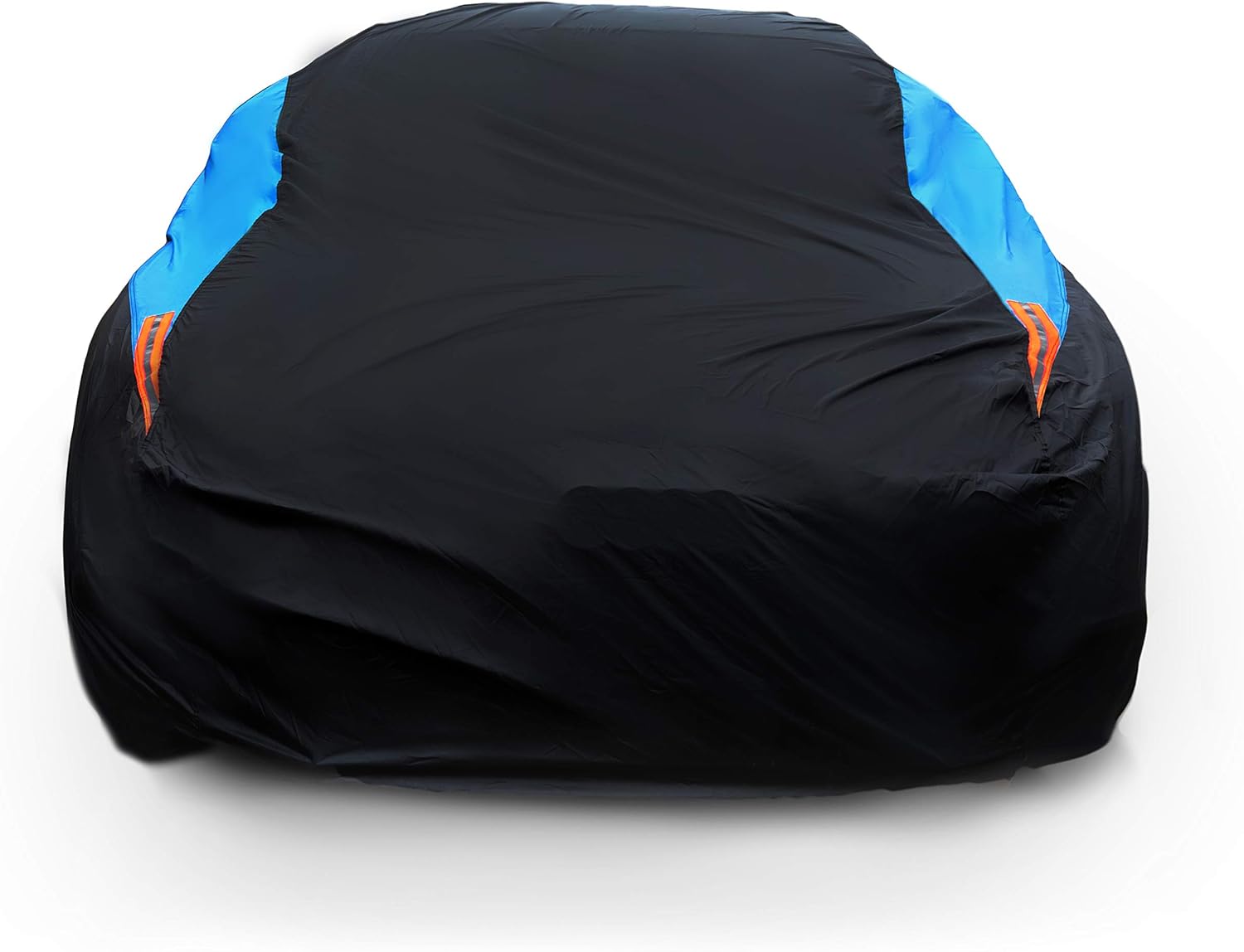
EzyShade 10-Layer Car Cover, Waterproof All Weather (See Vehicle Size Chart for Fit)
★★★★☆ Highly rated on Amazon
This one directly addresses two of the problems above: it ships with a built-in antenna protection kit and click-tight buckle straps at the front, middle, and rear to stop wind flapping, plus a reflective outer layer for UV exposure.
As an Amazon Associate, we earn from qualifying purchases.
Note: EzyShade sells by a vehicle size chart rather than a Tesla-named SKU. Match your exact Model 3, Y, S, or X dimensions on their size chart before ordering, since picking the wrong size brings back the same vent and charge-port misalignment problems described above.
Conclusion
Almost every Tesla car cover complaint traces back to one root cause: a cover that wasn’t measured against Tesla’s specific intake, charge port, and panel layout. Fix the fit and the fabric quality, and the flapping, scratching, and moisture problems disappear with it.
One thing to do right now: Go measure your cover’s vent and charge-port flap against your actual Tesla, in daylight, before you trust it tonight.
Frequently Asked Questions
Can I leave a car cover on my Tesla while it’s charging?
Yes, as long as the cover has a charge-port flap that’s wide enough to reach the cable without removing the whole cover. A flap that’s too small or poorly placed makes daily charging frustrating fast.
Will a car cover scratch my Tesla’s paint?
A loose, low-quality, or ill-fitting cover can scratch paint through wind friction or a crumbling liner. A snug, breathable cover with a soft inner layer and secure straps protects paint instead of damaging it.
Why does my Tesla sound strained when preconditioning with the cover on?
That noise usually means the cover’s vent mesh doesn’t line up with the car’s front air intake, forcing the system to pull air through too small a gap. Switching to a model-specific cover with correctly placed venting fixes this.
How often should I remove a Tesla car cover?
Remove it at least once a week, even with a breathable cover, so trapped moisture can air out and you can check for early signs of liner wear or shifting straps.
Does a universal sedan cover fit a Tesla Model 3 or Model Y?
It can drape over the car, but it rarely lines up with the intake, charge port, or antenna fin correctly. A Tesla-specific or measured-fit cover avoids the most common complaints owners report.
Why is the liner inside my car cover turning to dust?
Low-grade fleece or non-woven liner fabric breaks down under UV exposure and friction, shedding fine fibers. This is a material-quality issue, not normal wear, and it’s a sign to replace the cover.
Do Tesla car covers protect against UV damage?
Only if the cover has a UV-reflective outer layer. A standard fabric cover blocks debris but still allows heat and some UV exposure to reach the paint underneath over time.

Daniel Brooks is an automotive writer and product researcher focused on car accessories, car tech, maintenance, and practical driving guides. At Plug-in Car World, he helps drivers make smarter automotive decisions through honest reviews and research-driven content.