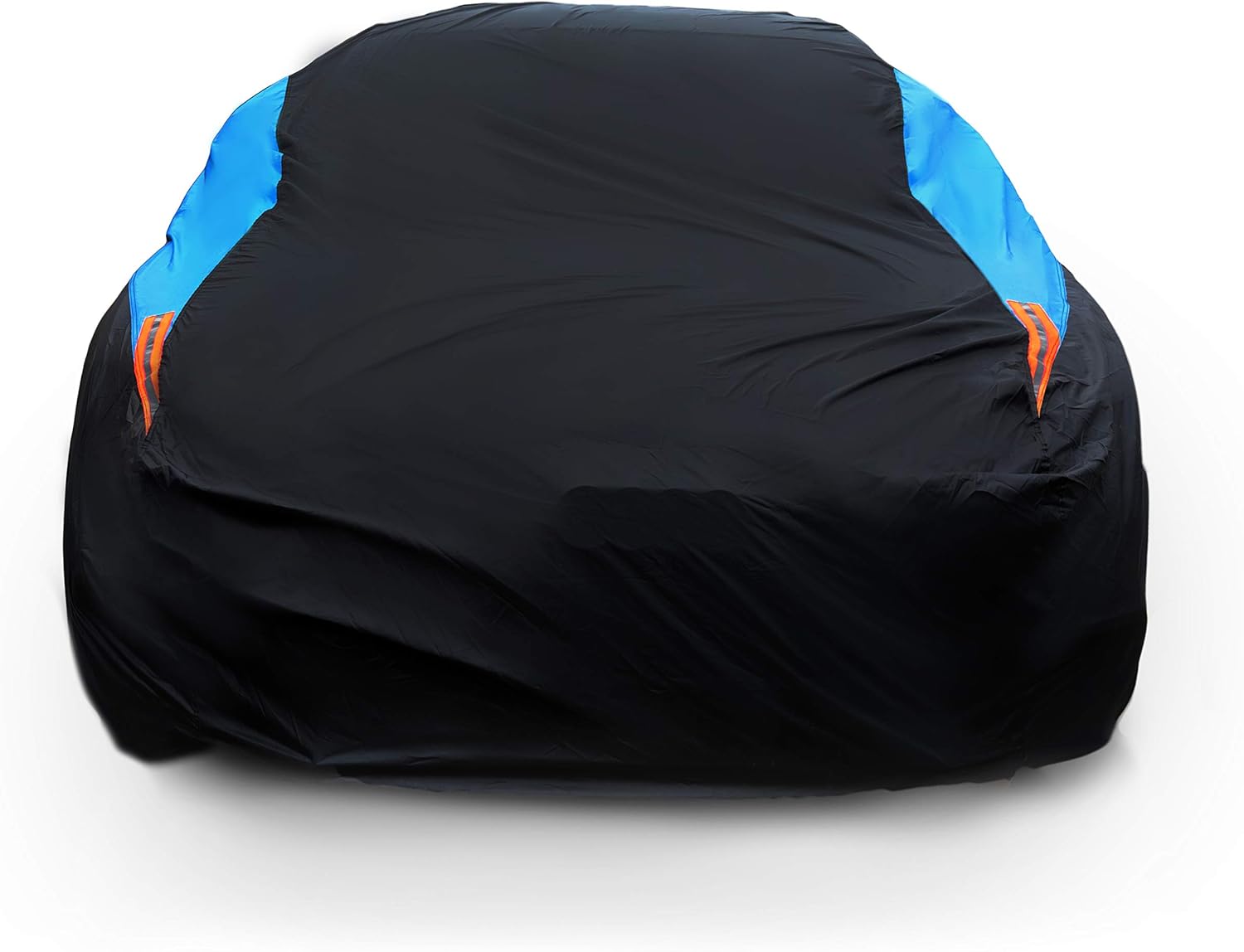
How to Stop a Car Cover From Scratching Paint (The Right Way)
⚡ Quick Answer
A car cover scratches paint when dirt gets trapped underneath it — not because of the cover itself. Always wash your car before covering it, choose a cover with a soft fleece or satin inner lining, and roll the cover on instead of dragging it. Do these 3 things and your paint stays safe.
Steps to stop your car cover from scratching paint:
-
1
Wash the car before every cover application — no exceptions. -
2
Choose a cover with a fleece, flannel, or satin inner lining. -
3
Roll the cover from roof down — never drag it across the paint. -
4
Use a snug-fitting cover so it can’t flap in the wind.
Mistakes that guarantee scratches:
-
✓
Covering a dirty or dusty car is the #1 scratch cause. -
✓
Using a rough canvas or plastic cover with no soft lining. -
✓
Letting a loose cover flap in the wind for hours or days.
You spent the weekend washing and waxing your car. Then you covered it — the right thing to do. But when you pull the cover off a week later, you spot swirl marks across the hood. Daniel Brooks has seen this happen to hundreds of car owners, and the fix is simpler than most expect. The real culprit is almost never the cover itself. It’s what’s trapped underneath it. This guide covers exactly why car covers scratch paint, how to stop it permanently, and what to look for in a cover that truly protects.
📌 Key Takeaways
-
→
Dust causes 90% of all car cover scratches — not the fabric itself. -
→
Fleece and satin linings are the safest inner materials for car paint. -
→
Custom-fit covers don’t flap in wind, which eliminates friction-based scratches. -
→
Rolling technique when installing removes most application-related scratch risk.
Why Does a Car Cover Scratch Paint?
A car cover scratches paint because dust particles get trapped between the cover’s inner lining and your clear coat. When the cover moves — even slightly — those dust particles act like sandpaper against your finish.
Hard silica particles found in everyday road dust are sharp enough to cut through a clear coat in one session. You might not see the damage at first. But sunlight reveals the micro-scratches and swirl marks within days.
Here’s why that matters. The cover doesn’t have to move much. Even gentle wind gusts of 10 to 20 mph cause sustained fabric movement against your paint. Each lift and re-contact of the cover pushes dust into your clear coat over and over.
But here’s the thing. It’s not only outdoor covers that do this. Garage dust builds up just as fast. An indoor cover on a dirty garage car will cause the same swirl marks as an outdoor cover in a storm.
⚠️ Warning
Never cover a car that has visible dust, bird droppings, or grit on its surface. Even a “light” layer of dust causes micro-scratches when the cover moves. This is the single most common cause of cover-related paint damage.
So if you want to know the real answer to why car covers scratch paint — it’s trapped debris, poor cover fit, and rough inner lining material. Fix those 3 things and you fix the problem completely.
What Type of Car Cover Won’t Scratch Paint?
The inner lining is the only layer of the cover that ever touches your paint. So the outer layers don’t matter for scratch prevention — only the inner lining does. Choose a cover with fleece, flannel, or satin on the inside and you’re safe.
Here’s what the research shows. A 7-layer cover with a rough non-woven polypropylene inner lining will scratch your car. A 3-layer cover with a soft fleece inner lining won’t. The number of layers tells you nothing about scratch safety.
This table shows which inner lining materials are safe and which cause damage to your clear coat.
If you can’t feel the inner lining of a cover before buying, check the product description for “fleece lining,” “soft non-abrasive interior,” or “satin finish.” If a cover doesn’t mention its inner material — skip it.
You might be thinking the outer material matters too. It does — but only for weather protection, not scratching. The outer layer never touches your paint. Focus your attention on what’s inside the cover.
Recommended Product
Budge Indoor Stretch Car Cover, Premium Dustproof Protection with Soft Fleece Lining
★★★★☆ Highly rated on Amazon
A completely non-abrasive inner lining that won’t scratch even the most sensitive paint jobs — ideal for garage and long-term storage use where soft protection matters most.
As an Amazon Associate, we earn from qualifying purchases.
Should You Wash the Car Before Putting a Cover On?
Yes — always. Covering a dirty car is the #1 cause of car cover scratches. Even light dust on your paint becomes an abrasive when trapped under fabric that moves. Washing first removes the particles that cause damage.
Think of it this way. Dust particles are mostly silica crystals. They’re angular and hard. When pressed between your cover and your clear coat by wind movement or during installation, they work exactly like wet-and-dry sandpaper.
According to Consumer Reports car care experts, rinsing all surfaces thoroughly before any contact with fabric is essential to prevent scratching — the same principle applies directly to car covers.
What if the Car Gets Dusty Overnight While Covered?
Dust settles on top of the cover — not underneath it. That’s fine. The issue is dust that was already on the paint when you applied the cover.
If your car is garaged and clean when covered, you don’t need to wash it every time you remove and reapply the cover. But if the car has been outside or parked in a dusty space, wash it first.
✅ Tip
If you can’t wash before covering, use a clean microfiber duster to gently remove loose surface dust first. Never wipe dry paint with a cloth — always use a proper California-style duster or compressed air.
One more thing: wash your cover too. Covers collect dust, grit, and pollen over time. A dirty cover applied to a clean car defeats the whole purpose. Most car covers can be washed in a front-loading washing machine on a gentle cycle.
How to Put a Car Cover On Without Scratching Paint
The way you apply your car cover matters as much as what the cover is made of. Dragging or sliding the cover across your paint — even a clean paint surface — creates friction. The rolling method eliminates that risk.
Most scratches during application happen on the hood, roof, and trunk — exactly where people start pulling the cover into position. These high, flat surfaces get the most contact time when someone tugs the cover sideways.
🔢 Step-by-Step: How to Apply a Car Cover Without Scratching
-
1
Wash and dry the car first
Make sure the surface is completely clean and dry before the cover touches the paint.
-
2
Fold the cover accordion-style
Fold it from both ends toward the middle so it sits in a neat bundle before you place it on the roof.
-
3
Place the bundle on the roof center
Gently set the folded cover on the center of the roof — don’t slide it, just place it.
-
4
Roll it forward and backward
Let gravity unroll the cover toward the front and rear simultaneously — never drag sideways.
-
5
Slide the mirror pockets on first
Position the cover by locating the mirror pockets — this anchors the cover and prevents shifting.
-
✓
Secure with straps or elastic hem
Use the built-in straps or elastic hem to keep the cover tight — a snug cover can’t flap and scratch.
Removing the cover is just as important. Before you pull it off, pat down the top of the cover to knock loose any debris sitting on it. Then fold it off from front and rear — don’t pull from one corner.
Think of it this way: put it on in 6 careful steps, and you’ll never need to polish scratches off your hood again. Rush it in 30 seconds, and you’ll spend hours fixing swirl marks.
Does Cover Fit Affect Whether It Scratches?
Yes — cover fit is one of the most underrated factors in scratch prevention. A loose-fitting cover flaps in the wind constantly. Every flap is a fabric-to-paint contact point, dragging whatever grit the fabric has collected across your clear coat.
A snug custom-fit cover contours to the car’s body. Wind can’t get underneath it to cause movement. The fabric stays in near-contact with the body and shifts with the car’s surface rather than against it.
Custom-Fit vs. Universal Cover: Which Is Safer for Paint?
| Feature | Universal Cover | Custom-Fit Cover ✓ Best |
|---|---|---|
| Wind resistance | Loose — flaps freely | ✓ Stays locked to body |
| Friction risk | High — constant movement | ✓ Minimal friction |
| Mirror fit | Often bunches at mirrors | ✓ Dedicated pockets |
| Cost | Lower ($20–$60) | ✓ Higher ($80–$200+) |
| Paint scratch risk | Higher | ✓ Much lower |
For daily-use covers in windy areas, a custom-fit cover pays for itself by preventing costly paint correction work down the road.
You might be thinking a semi-custom cover is a good middle ground. It is — far better than a universal cover. Just confirm it has mirror pockets and an elastic hem that grips the lower body of the car.
Indoor vs. Outdoor Car Covers: Which Is Safer for Paint?
Indoor and outdoor car covers protect paint in different ways. For scratch prevention specifically, indoor covers have a big advantage — they use softer, lighter fabrics like satin, flannel, and stretch fleece that pose almost zero abrasion risk.
Outdoor covers must be tougher. They need to resist UV rays, rain, bird droppings, and wind. This means denser outer materials — but a good outdoor cover will still have a soft fleece inner lining that protects your paint from the inside.
📋 Choosing Between Indoor and Outdoor Car Cover for Paint Safety
-
Garage-stored car: Always use an indoor cover. Satin and fleece materials are the gentlest on paint and will not cause any abrasion. -
Outdoor car (weather protection needed): Choose a multi-layer outdoor cover with a confirmed fleece inner lining and a snug semi-custom or custom fit. -
Windy outdoor location: Add a cable lock or use a cover with tie-down straps. A flapping outdoor cover does more damage than no cover at all. -
Short-term use only: Even a universal cover with a basic lining is fine for one-off protection. The risk rises with daily use and wind exposure.
The bottom line: both types can be safe if the inner lining is right and the car is clean when covered. Indoor covers are simpler to get right. Outdoor covers require more attention to fit and lining material.
What Most People Get Wrong About Car Cover Scratches
Most car owners blame the cover when they see swirl marks. The cover is rarely the direct cause. Understanding what actually creates the damage lets you fix it for good — not just switch covers and repeat the same mistake.
💡 Key Insight
The inner lining is the only layer of a car cover that contacts your paint. A 7-layer cover with a rough inner face will scratch your car. A 3-layer cover with a soft fleece lining won’t. Focus on what’s inside — not the total layer count.
Misconception 1: “More Layers Means More Paint Protection”
More layers add weather protection. They don’t add scratch protection. The only layer that touches your clear coat is the innermost one. A thick 10-layer cover with a rough inner material will scratch paint faster than a 2-layer flannel cover.
Misconception 2: “Garage Cars Don’t Need Washing Before Covering”
Garages accumulate dust faster than most car owners expect. Brake dust, wood dust, and general airborne particles settle constantly. A light layer of garage dust plus a cover that moves even slightly will create swirl marks. Wash or dust the car every time before covering — even indoors.
Misconception 3: “A Canvas Cover Is Tough — So It Protects Better”
Canvas covers are tough on the outside. That toughness translates to scratch risk when it’s the inner material. Canvas against paint is like dragging a coarse cloth across your hood. Always check the inner lining — never judge a cover by its outer durability alone.
Extra Steps That Further Protect Your Paint Under a Cover
Once you’ve got the right cover and the right technique, a few extra steps give your clear coat maximum protection. These are optional but worth doing if your car has a fresh detail, new paint, or is a collector vehicle.
Waxing your car before covering it adds a slick barrier between the paint and any fabric movement. Wax fills microscopic surface pores and creates a smooth surface that makes it harder for abrasive particles to grip. Apply a coat of carnauba wax before covering and refresh it every 3 months.
Ceramic coating takes this further. A professionally applied ceramic coating creates a hard 9H-rated layer over your clear coat. Even a dirty cover on a ceramic-coated car has a far harder time causing scratches than the same cover on bare paint. If you park outdoors daily, ceramic coating is worth the investment.
✓ Car Cover Scratch Prevention Checklist
-
✓
Car is washed and dried before every cover application -
✓
Cover has a confirmed fleece, satin, or flannel inner lining -
✓
Rolling technique used — cover not dragged across paint -
✓
Cover fits snugly — no excess fabric flapping in wind -
✓
Cover itself is washed every 1–3 months to remove embedded grit -
✓
Wax or ceramic coating applied for added protection layer
For more guidance on car paint care best practices, Consumer Reports’ car washing and paint care guide is an excellent resource from a trusted, independent testing authority.
For cover-specific guidance on fit and materials, Covercraft’s official support article on cover scratch prevention provides detailed material specifications from one of the industry’s most respected manufacturers.
Conclusion
A car cover only scratches paint when it’s used incorrectly. Wash the car first, choose a fleece-lined cover, roll it on carefully, and keep it fitted snugly — those 4 steps make car cover scratches almost impossible.
The cover material matters, but the inner lining matters far more than the number of outer layers. Focus there first, and you’ll protect your paint instead of damaging it.
Right now, do this one thing: check the inner lining of the cover you already own. If it feels rough or scratchy against your hand, replace it before you cover your car again.
Frequently Asked Questions
Do car covers scratch paint?
Yes — if used incorrectly. A cover on a dirty car scratches paint because trapped dust particles rub against the clear coat with every movement. With a clean car, soft inner lining, and proper technique, a car cover will not scratch paint at all.
What is the best material for a car cover to not scratch paint?
Fleece, satin, and flannel inner linings are the safest for paint. These materials are non-abrasive and won’t trap or press grit into the clear coat. Avoid canvas, rough nylon, or any cover that doesn’t specify a soft inner lining.
Can I put a cover on a dirty car?
No. Covering a dirty car is the leading cause of car cover scratches. Dust and grit on the paint become trapped abrasives under the cover. Always wash and dry the car completely — or at minimum dust it with a clean microfiber duster — before covering.
Does a car cover cause swirl marks?
Yes, it can — if the cover moves in wind over a car with dust on the paint. Swirl marks form when fine abrasive particles are dragged in circular patterns across the clear coat. The fix is cleaning both the car and the cover, and ensuring the cover fits snugly.
How do you remove a car cover without scratching the paint?
Pat the top of the cover to knock off surface debris before pulling it off. Then fold it off from both ends toward the middle — never drag it from one corner. The removal step causes as many scratches as the application if done carelessly.
How often should I wash my car cover?
Wash your car cover every 1 to 3 months depending on use. A dirty cover traps grit in its lining fibers and transfers that grit to your paint on every subsequent use. Most covers can be machine washed on a gentle cycle with mild detergent.
Will a car cover scratch a new car’s paint?
Not if used correctly. New car paint has a clear coat that’s just as vulnerable as any other finish. The same rules apply: clean car, soft fleece inner lining, rolling technique, and snug fit. A well-chosen cover used properly will protect new paint — not scratch it.

Daniel Brooks is an automotive writer and product researcher focused on car accessories, car tech, maintenance, and practical driving guides. At Plug-in Car World, he helps drivers make smarter automotive decisions through honest reviews and research-driven content.