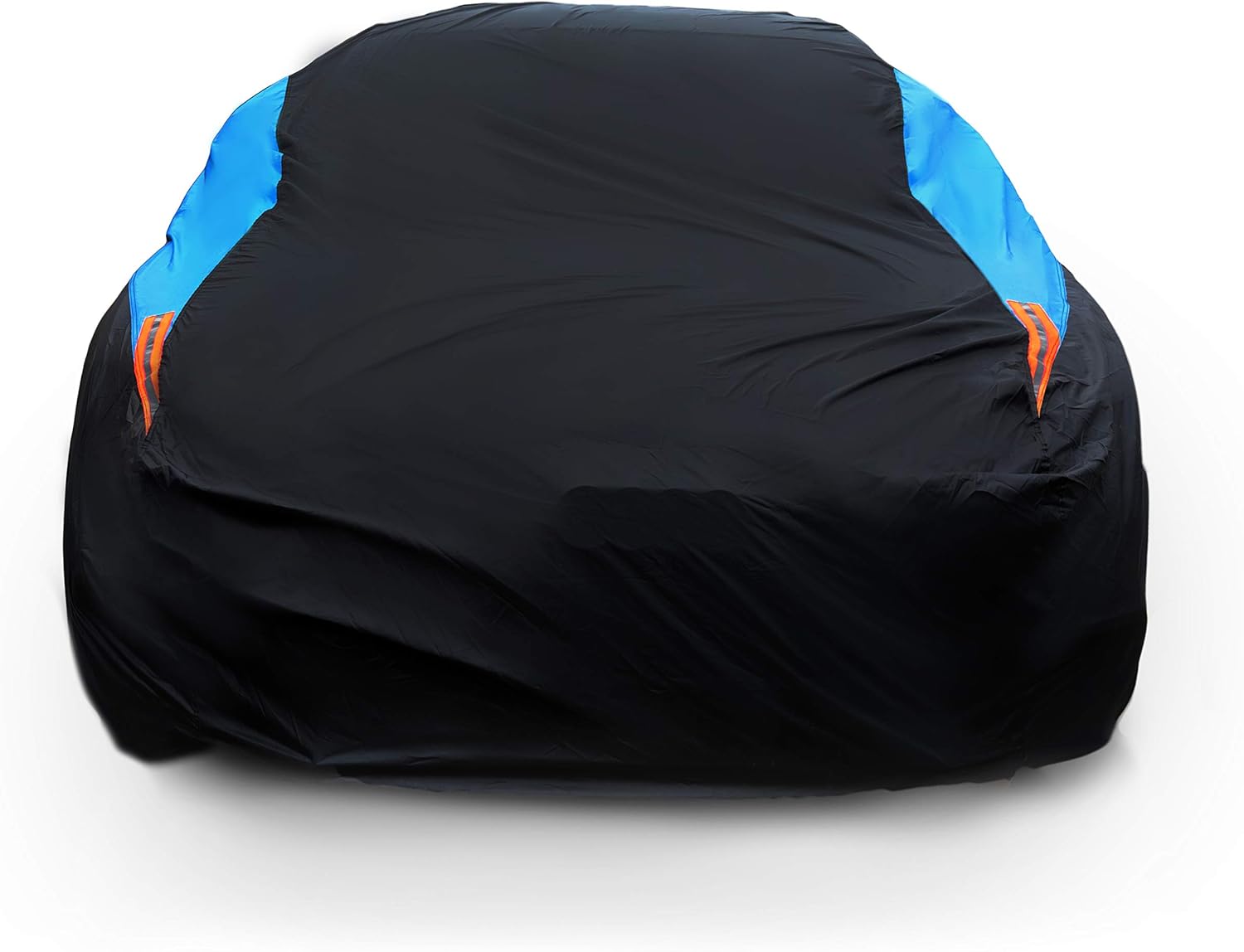
Car Cover Rubbing Paint: Common Reasons and Fixes
⚡ Quick Answer
A car cover rubs paint because dirt or debris gets trapped between the cover and the surface, then grinds against the clear coat when the cover moves. The cover itself isn’t the problem — dirty paint, a loose fit, and rough inner lining are the 3 real culprits. Fix all 3 and your cover protects instead of damages.
Top reasons a car cover rubs paint:
- Dirty car surface: Dust trapped under the cover acts like sandpaper on your paint.
- Poor fit: A loose cover flaps in wind and drags particles across the clear coat.
- Abrasive lining: Single-layer or cheap covers contact paint without a soft barrier.
How to stop it immediately:
-
✓
Always wash the car before covering it -
✓
Use a snug-fitting cover with a soft microfiber or fleece inner lining -
✓
Secure the cover with straps to prevent wind movement
You pull off your car cover and notice swirl marks on the hood that weren’t there before. Your heart sinks. The cover you bought to protect your paint is the thing damaging it. I’m Michael, and after years of covering cars correctly and incorrectly, I can tell you — this problem is 100% fixable once you know exactly why it’s happening.
A car cover rubbing paint isn’t a random accident. It follows a clear pattern with 3 root causes, and each one has a direct fix. This guide covers every reason, every solution, and what to do right now if you’ve already noticed scratches.
📌 Key Takeaways
-
→
The cover doesn’t scratch paint — trapped dirt and debris underneath it does. -
→
Wind movement is the trigger that turns trapped dust into paint-grinding friction. -
→
Micro-scratches and swirl marks are the most common result of cover friction damage. -
→
A quality cover with soft fleece lining, used on a clean car, will protect — not damage — paint.
Why Is My Car Cover Rubbing Paint? The 3 Real Causes
A car cover rubs paint when friction occurs between the cover material and the car’s clear coat. This friction always has a source — and it’s almost never the cover alone. Understanding the exact cause is the first step to fixing it.
Here are the 3 root causes, in order of how often they lead to paint damage.
Cause 1 — Trapped Dirt and Debris Under the Cover
This is the number one reason car covers damage paint. When you cover a dirty car, dust, sand, and grit sit between the cover and the paint surface. Every time the cover shifts — even slightly — those particles grind against the clear coat.
Think of it like rubbing fine sandpaper against your hood. Small movements repeated over hours create micro-scratches. Those scratches scatter light and make your paint look dull and flat.
⚠️ Warning
Never put a cover on a dirty car. Even a light layer of dust is enough to cause swirl marks if the cover moves in wind overnight. This is the single most common mistake car cover users make.
Cause 2 — A Loose or Ill-Fitting Cover
A cover that’s too big flaps and slides in wind. Every time it moves, the inner surface drags across the paint with whatever debris it has collected. This creates friction across a large area of the car — not just one spot.
Universal-fit covers are the most common offenders. They’re designed for a range of vehicles, which means they fit none of them perfectly. A cover that sags, bunches, or hangs loose at the edges will move constantly outdoors.
But here’s the thing — even a cover that’s too tight causes problems. A cover stretched too snugly puts pressure on paint edges, door handles, and panel lines, which can stress the clear coat over time.
Cause 3 — Rough or Single-Layer Cover Material
Cheap car covers use a single layer of coarse material that contacts the paint directly. Even without trapped dirt, this rough fabric can abrade the clear coat during application and removal.
Quality covers use a multi-layer construction. The outer layer handles weather. The inner layer — made from microfiber, fleece, or soft cotton — sits against the paint and creates a gentle barrier. If your cover lacks this soft inner lining, it’s working against your paint every day.
📋 Common sources of car cover paint damage
-
Dust on paint: Most common cause — cover any dusty car and friction will create swirls. -
Wind: Turns a stationary cover into a moving abrasive that grinds debris into the clear coat. -
Dirty cover: A cover with collected grit on its inner surface scratches paint even on a clean car. -
Cover seams: Hard stitching at seam lines contacts paint directly and leaves linear marks over time. -
Careless application: Dragging a cover across the car rather than unrolling it creates instant scratch risk.
Now that you know exactly what’s causing the damage, the next section gives you the direct fix for each one.
How to Stop a Car Cover From Rubbing and Scratching Paint
Each cause has a specific fix. Apply all 3 together and your car cover will protect the paint — not damage it. Here’s exactly what to do.
🔢 Step-by-Step: How to Use a Car Cover Without Damaging Paint
-
1
Wash the car first — every single time
Never cover a dirty car. Wash, dry completely, then cover. This removes all abrasive particles.
-
2
Unroll — don’t drag — the cover onto the car
Start at the front or rear and unroll the cover forward. Dragging creates instant friction scratches.
-
3
Use the windproof straps or tie-down cables
Secure the cover underneath the car. A fixed cover can’t flap or slide, even in strong wind.
-
4
Wash the cover itself every few weeks
A dirty cover inner lining is just as dangerous as a dirty car. Machine wash on a gentle cycle.
-
✓
Inspect the cover lining regularly
If the inner lining feels rough or has embedded grit, wash it or replace the cover before using it again.
These 4 steps eliminate the cause of friction at the source. No more trapped debris, no more movement, no more abrasion.
Does the Type of Car Cover Material Matter for Paint Safety?
Yes — cover material is the second most important factor after cleanliness. The inner lining that touches your paint determines how much friction risk you carry every day. Not all covers are built the same way.
The table below compares the most common inner lining materials so you can see exactly which offers the best paint protection.
This table shows how different inner lining materials compare for paint safety, breathability, and real-world use.
If your current cover uses a single-layer or plastic-type lining, replacing it with a fleece-lined version is the fastest way to stop friction damage.
Multi-layer covers also help in another key way. The outer layer absorbs weather and debris. The inner lining floats against the paint gently. That separation of function is what makes quality covers safe for long-term use.
✅ Tip
Before buying a car cover, run your fingers along the inner lining. It should feel as soft as a fleece blanket. If it feels scratchy or stiff, it will damage your clear coat over time — no matter how clean the car is.
Up next — the one factor most car cover guides ignore: fit. A perfect cover with the wrong fit still damages paint.
Does a Loose-Fitting Car Cover Cause More Paint Damage?
Yes — and it’s one of the most underrated causes of cover-related scratches. A loose cover doesn’t stay still. Wind gets underneath it and lifts the fabric, causing it to flap and slide across the paint repeatedly throughout the night.
Each movement drags the inner fabric — and anything it has collected — across your clear coat. Owners often wake up to find linear marks, scuffs, or concentrated scratching around the hood, roof, and trunk lid where the cover moves most.
Custom-Fit vs Universal-Fit Covers: Which Is Safer for Paint?
Custom-fit covers are tailored to your specific make and model. They follow the car’s body lines closely, which removes the slack that causes movement. Universal covers are sized to fit a range of vehicles — which means excess material that flaps freely.
| Feature | Universal-Fit Cover | Custom-Fit Cover ✓ Best |
|---|---|---|
| Fit precision | Approximate — slack at edges | ✓ Follows body lines exactly |
| Wind movement risk | High — excess fabric flaps | ✓ Minimal — snug contour fit |
| Paint friction risk | Moderate to high | ✓ Low when used correctly |
| Cost | Lower upfront cost | ✓ Higher — but prevents costly repainting |
You might be thinking a universal cover with straps solves the loose-fit problem. It helps — but straps only anchor the cover at the bottom. The top and sides can still shift. A custom-fit cover holds every panel in place and reduces friction zones to near zero.
Can a Car Cover Cause Swirl Marks and Micro-Scratches?
Yes — and this is the most common type of damage car covers cause. Swirl marks are circular or arc-shaped micro-scratches on the clear coat. They show up most clearly in direct sunlight or under garage lighting. They make paint look hazy instead of glossy.
Swirl marks from car covers form when the cover’s inner surface moves in repeated small arcs across the paint — exactly the motion wind creates. The individual scratch is too small to feel with a finger. But thousands of them together dull the entire finish.
How to Fix Swirl Marks Already Caused by a Car Cover
If you’ve already noticed swirls or light scratches, they’re repairable. The clear coat is damaged — but the base coat and color layer beneath it are usually fine. Here’s what to do.
📋 How to repair swirl marks from car cover friction
-
Light swirls (surface only): Use a dual-action polisher with a light finishing compound and foam pad. This removes 80% of typical cover swirls in one pass. -
Deep scratches (catch your fingernail): Need a cutting compound first, followed by polish and a final sealant to protect the repaired clear coat. -
After polishing: Apply a paint sealant or ceramic coating to protect the clear coat from future friction. -
Professional detailer: For widespread damage across the hood, roof, and trunk, a full machine polish by a detailer restores finish better than hand correction.
So if you’re dealing with swirl marks right now — start with a light polish before jumping to a cutting compound. Most cover-related swirls respond well to a single polishing session with a machine polisher.
What Type of Car Cover Is Safe for Paint? How to Choose the Right One
The right car cover doesn’t rub paint. It protects it. Choosing correctly means matching the cover to your parking situation and checking 3 key features: inner lining softness, fit precision, and breathability.
💡 Key Insight
A breathable cover is just as important as a soft lining. Waterproof covers that trap moisture cause a different kind of paint damage — rust, mildew, and paint lifting from the inside out. For most daily parking situations, a breathable multi-layer cover with a fleece lining outperforms fully waterproof covers.
🎯 Which Cover Is Right For You?
If you park…
Indoors in a garage with low dust
→ Soft satin or microfiber indoor cover
If you park…
Outdoors exposed to weather and wind
→ Multi-layer outdoor cover with fleece lining + straps
If you park…
Under trees or in high pollen areas
→ Breathable outdoor cover + wash car more often before covering
Always check for these 3 features before buying any cover: soft fleece or microfiber inner lining, windproof securing straps, and a snug elastic hem. Those 3 features alone eliminate most car cover paint damage.
What Most People Get Wrong About Car Covers and Paint Damage
Most car cover guides leave people with 3 wrong beliefs. Each one leads to mistakes that cause the exact damage owners are trying to avoid.
📋 3 common misconceptions about car covers and paint
-
Myth: “The cover material is what scratches paint.” The cover itself rarely scratches a clean car with a quality lining. The scratching comes from dirt particles trapped between the cover and paint, not the fabric itself. -
Myth: “If the cover is waterproof, it’s the best choice.” Fully waterproof covers trap moisture between the cover and paint. That moisture causes rust, paint bubbling, and mildew — worse damage than light scratches. Breathable covers are usually safer for paint health. -
Myth: “An outdoor cover is fine for indoors too.” Outdoor covers are heavier and stiffer. Used indoors where there’s no wind to worry about, a lighter satin or stretch cover is gentler on paint and much easier to apply without dragging.
Correcting these 3 beliefs alone will change how you use a car cover — and the results your paint sees.
Recommended Product
Recommended Product
Coverado Car Cover Waterproof All Weather, Soft Cotton Lined, with Zipper Door — Universal Fit Sedan (170″–190″)
★★★★☆ Highly rated on Amazon
This cover solves the friction problem directly: the inner soft cotton lining protects the clear coat, windproof straps prevent movement in wind, and the multi-layer construction keeps weather out without trapping moisture against the paint.
As an Amazon Associate, we earn from qualifying purchases.
Conclusion
A car cover rubbing paint comes down to 3 things: a dirty car surface, a loose or poor-fitting cover, and a rough inner lining. Fix all 3 and a cover becomes the best protection you can give your paint — not a threat to it.
The fix isn’t expensive or complicated. Wash the car before covering, secure the cover with straps, and use a cover with a soft fleece or microfiber lining. That combination eliminates friction at the source.
Right now — before you cover your car next time — run your hand along the cover’s inner lining. If it doesn’t feel as soft as a fleece blanket, that’s your starting point for a fix.
Frequently Asked Questions
Do car covers scratch paint?
Yes — but only when used improperly. The cover itself doesn’t scratch paint. Dirt and debris trapped between the cover and the clear coat are what cause scratches. A quality fleece-lined cover used on a clean car will protect paint, not damage it.
How do I stop my car cover from scratching the paint?
Always wash and dry the car before covering it. Secure the cover with windproof straps to prevent movement. Use a cover with a soft fleece or microfiber inner lining. Wash the cover itself every 3–4 weeks to remove collected grit from the lining.
Is it bad to cover your car every day?
Daily covering is fine if you follow the correct process. The risk increases when the car is covered dirty, when the cover is applied carelessly by dragging, or when the cover is left unsecured in windy conditions. Daily use with proper technique won’t damage paint.
What is the best car cover material to avoid scratching?
Microfiber fleece is the safest inner lining material for paint. Soft cotton is also very good. Both create a gentle barrier between the cover and the clear coat. Avoid single-layer covers, plastic covers, and any cover with a rough or stiff inner surface.
Can a waterproof car cover damage paint?
Yes. Fully waterproof covers trap moisture between the cover and the paint. That trapped moisture causes rust, mildew, and paint bubbling over time. For most parking situations, a breathable multi-layer cover with weather resistance is safer for long-term paint health than a fully sealed waterproof cover.
Will a car cover cause swirl marks on my car?
It can — if the car is dirty, the cover is loose, or the lining is rough. Wind moves the cover in small circular arcs across the paint, which creates the swirl pattern. Fix the fit and cleanliness and swirls stop forming. Existing swirls can be removed with a dual-action polisher and light finishing compound.
Should I use a car cover if I park outdoors?
Yes — a quality outdoor cover with windproof straps and a soft inner lining is worth using for outdoor parking. It protects paint from UV damage, bird droppings, tree sap, and hail. The key is choosing a cover designed for outdoor use, securing it properly, and always covering a clean car.

Daniel Brooks is an automotive writer and product researcher focused on car accessories, car tech, maintenance, and practical driving guides. At Plug-in Car World, he helps drivers make smarter automotive decisions through honest reviews and research-driven content.