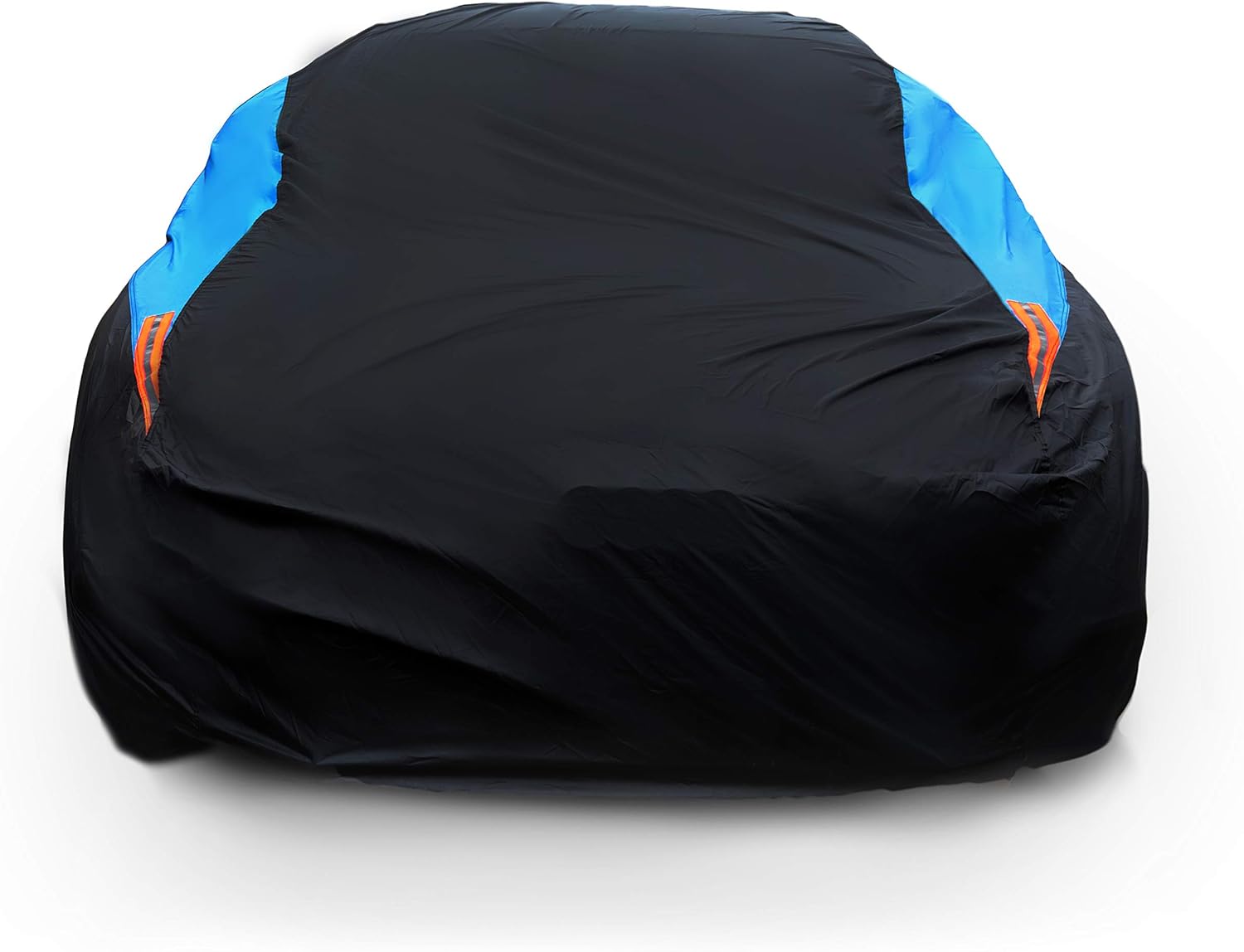
Why Does My Car Cover Scratch Paint? Causes and Solutions
⚡ Quick Answer
A car cover scratches paint because dirt and dust get trapped between the cover and the clear coat. When the cover moves — from wind or during removal — those tiny particles grind into the surface like sandpaper. The cover itself is rarely the culprit. Trapped debris always is.
Top reasons your car cover is scratching the paint:
- Covering a dirty car: Dust and grit under the cover act like sandpaper on clear coat.
- Rough inner lining: Non-woven polypropylene linings abrade paint even when clean.
- Wind movement: A loose cover flapping in wind runs friction cycles across your finish constantly.
- Poor fit: A universal cover that slides around creates far more abrasion than a snug one.
How to stop your car cover from scratching the paint:
-
✓
Always wash the car before putting on the cover -
✓
Choose a cover with a soft fleece or satin inner lining -
✓
Use a custom-fit cover secured against wind movement
Why Does My Car Cover Scratch Paint? Causes and Solutions
You bought a car cover to protect your paint — and now you’re finding swirl marks and scratches you didn’t have before. It’s infuriating. I’m Daniel Brooks, and after testing and researching car cover damage extensively, I can tell you the good news: the cover itself is almost never the real problem. The real culprit is almost always something you can fix today. Here’s exactly what’s happening and how to stop it.
📌 Key Takeaways
-
→
Dirt is the true culprit — particles trapped between the cover and clear coat cause micro-scratches, not the cover fabric itself. -
→
Inner lining material matters — non-woven polypropylene acts like sandpaper; fleece or satin linings lay flat and protect the clear coat. -
→
Wind movement multiplies damage — a loose cover can run hundreds of friction passes across your paint in a single breezy night. -
→
Fixing all 4 causes — clean car, soft lining, proper fit, and secure anchoring — eliminates scratch risk almost entirely.
Why Does a Car Cover Scratch Paint?
The car cover itself doesn’t scratch your paint. What scratches your paint is the dust, sand, and grit that sits between the cover and your car’s surface. Every time the cover moves — when you put it on, take it off, or when wind pushes it across the hood — those particles grind into the clear coat like sandpaper.
Your car’s clear coat is the thin outer layer that gives your paint its shine. It protects the color layer underneath from UV rays, moisture, and oxidation. But it’s not tough. Any friction with solid particles — even microscopic dust — creates swirl marks and micro-scratches that scatter light and make your finish look dull.
Here’s the surprising part: even covers marketed as “non-scratch” can cause this damage. That’s because the cover’s inner lining isn’t the only problem. The dust between the lining and your car is the real abrasive agent. A soft fleece lining sliding over a dusty car still scratches it.
⚠️ Warning
Never put a car cover on a dirty car. Even dust that looks invisible can act like an abrasive when compressed between a moving cover and your clear coat. Always wash the car first.
The 4 Main Causes of Car Cover Scratches
Four specific problems cause almost every case of car cover paint damage. Understanding each one makes it easy to fix them.
📋 4 Causes of Car Cover Paint Damage
-
Covering a dirty car: Dust, pollen, and grit on the paint surface get trapped under the cover. Every movement of the cover grinds those particles into the clear coat. -
Abrasive inner lining: Cheap covers use non-woven polypropylene on the inside. This material has fiber ends that stand perpendicular to the surface, acting like micro-sandpaper against your clear coat even when the car is clean. -
Wind movement: A cover that flaps in the wind rubs continuously against your paint. Each gust creates a friction pass across the clear coat, loading up swirl marks overnight without you ever touching it. -
Poor fit: A universal cover that’s too large slides around on the paint instead of staying still. Every extra inch of loose fabric is more surface area rubbing against your finish.
You might be thinking “my cover is labeled non-scratch, so shouldn’t I be safe?” Here’s why that label isn’t enough: even a fleece-lined cover can scratch your paint if the car was dusty before you put it on. The lining can only protect you from the cover’s own material. It can’t protect you from the debris you trapped underneath it.
So if your car cover is scratching paint, at least one of these 4 things is happening. Most car owners dealing with this problem are making all 4 mistakes at once.
Does Car Cover Material Matter for Paint Protection?
Yes — the inner lining material is the most important factor in whether your cover damages your paint. The outer layers of a car cover protect against weather. But the inner layer is what touches your clear coat. Get it wrong and the cover is working against you every single day.
Which Inner Lining Materials Are Safe?
Smooth-surface fabrics lay flat against the paint instead of abrading it. Fleece is the gold standard. Brushed satin and stretch knit linings also work well. These fabrics have fiber ends that lie parallel to the paint surface. They glide without grabbing particles and pressing them into the clear coat.
Which Inner Lining Materials Cause Scratches?
Non-woven polypropylene (PP) is the main offender. It’s cheap, so it shows up in most covers sold in the $30–$80 range. Spunbond polyester behaves the same way. Both materials have raised fiber ends that act like tiny brushes scraping across your clear coat with every contact cycle.
Cold weather makes this worse. Non-woven PP stiffens when temperatures drop below 40°F (4°C), which increases the hardness of each contact point against your paint. A cover that seemed fine in summer can cause visible damage through winter.
This table shows how common inner lining materials compare for paint safety.
When shopping for a new cover, flip it over and feel the inner surface. If it feels rough or scratchy against your palm, it will feel the same against your clear coat.
The fix here is straightforward: choose a cover with a fleece or soft cotton inner lining. These are not rare — many covers in the $50–$150 range include them. You just need to check the specs before you buy.
How to Use a Car Cover Without Scratching the Paint
Fixing how you use your car cover stops scratch damage immediately — even if you keep the same cover. Most paint damage from car covers comes from application mistakes, not from the cover itself being defective.
🔢 Step-by-Step: How to Apply a Car Cover Safely
-
1
Wash the car first
Remove all dust, pollen, bird droppings, and grime before covering. This is the single most important step.
-
2
Let the car dry completely
A wet car under a cover traps moisture. This can cause rust, mold, and paint adhesion problems over time.
-
3
Place the cover from the center outward
Start at the roof and unfold toward the front and rear. Don’t drag the cover across the hood or trunk.
-
4
Secure all tie-downs and straps
Use all anchor straps provided. A cover that can’t move in wind can’t grind particles into your paint.
-
✓
Also clean the cover regularly
A dirty cover can carry particles that scratch on the next use. Follow the cover’s washing instructions every few weeks.
One more thing most people skip: when removing the cover, lift it straight up rather than pulling it sideways across the panels. Sliding the cover off is the same as dragging a slightly gritty cloth across your paint.
✅ Tip
If you cover your car daily, use a spray detailer to lightly clean the surface before each application rather than doing a full wash every time. This removes the dust that would otherwise get trapped under the cover.
Does Car Cover Fit Affect Paint Damage?
A poor fit is one of the most overlooked causes of car cover scratches. A cover that’s too large doesn’t stay still. It shifts, flaps, and drags — turning every gust of wind into a cleaning stroke across your finish. So if your cover keeps scratching paint, the fit may be the hidden reason.
Universal car covers are sized for broad ranges — “fits cars up to 180 inches” — which means the same cover is meant to fit a compact hatchback and a full-size sedan. For many vehicles, this results in several extra inches of loose fabric around the hood, doors, and trunk.
Custom-fit covers are shaped for your exact make and model. They contour to the body lines and leave very little excess material. Less excess means less movement. Less movement means less friction on the paint. According to detailing professionals, a snug custom-fit cover running on a clean car has near-zero scratch risk in still conditions.
💡 Key Insight
A loose universal cover in windy conditions can make hundreds of abrasive passes across your paint in a single night. A properly anchored, well-fitted cover can sit on a clean car for months without causing a single scratch.
What’s the Best Car Cover That Won’t Scratch Paint?
The best car cover for paint protection has 3 things: a soft fleece or cotton inner lining, a snug fit for your specific vehicle, and secure tie-down straps. No car cover is truly “scratch-proof” — but covers with those 3 features come very close when used on a clean car.
For outdoor use, you also need breathable fabric. A non-breathable cover traps moisture under it, which can damage your paint, promote rust, and grow mold on the clear coat surface over time. Look for covers with multi-layer construction that combines waterproofing on the outside with breathability and softness on the inside.
Here’s how to evaluate any cover before buying it.
📋 What to check before buying a car cover
-
Inner lining: Listed as fleece, cotton, or soft-touch fabric. Never buy if the inner material isn’t specified. -
Fit type: Custom-fit is best. Semi-fit is acceptable. Universal-fit means more sliding, more scratch risk. -
Tie-down straps: Essential for outdoor use. Front and rear elastic hems plus wind straps keep the cover still in gusts. -
Breathability: Look for “breathable” in the description. This prevents moisture from getting trapped under the cover. -
Indoor vs outdoor rating: An indoor cover used outside will degrade fast and may become abrasive as material breaks down.
Recommended Product
Kayme 6 Layers Car Cover Waterproof All Weather for Automobiles, Outdoor Full Cover Sun Rain UV Protection with Zipper Cotton
★★★★☆ Highly rated on Amazon
This multi-layer cover includes a soft cotton inner lining, windproof straps, and a driver-side zipper — the 3 features most important for protecting your clear coat from scratch damage.
As an Amazon Associate, we earn from qualifying purchases.
What Most People Get Wrong About Car Cover Scratches
Myth 1: “My cover is labeled non-scratch, so it’s safe”
That label refers to the cover material itself — not to what happens when dust gets trapped underneath it. No matter how soft the lining is, any debris between the cover and your paint becomes an abrasive. A non-scratch cover used on a dusty car still scratches.
Myth 2: “A more expensive cover means zero risk of paint damage”
Price buys you better materials and fit — but not immunity from user error. A $300 custom-fit cover with a perfect fleece lining will absolutely scratch your paint if you put it on a car coated in pollen. The technique matters as much as the product.
Myth 3: “The scratches must be from the wind, not the cover”
Wind causes scratches indirectly, not directly. Wind moves the cover. The cover presses debris against your paint. Securing the cover against wind movement — with straps, elastic hems, and tie-downs — removes this risk almost entirely. The wind is only a problem if the cover can move freely.
How to Fix Swirl Marks Already Left by a Car Cover
If your car cover has already left swirl marks or micro-scratches, you can address them — but it takes removing a thin layer of clear coat. This is done with a machine polisher and a cutting or polishing compound. The process exposes a fresh, flat layer of clear coat that reflects light evenly, making the finish look new again.
The catch: polishing removes a small amount of clear coat permanently. According to Consumer Reports’ car care guidance, professional buffing at a detailing shop typically costs $100–$200 and produces much cleaner results than DIY attempts for most car owners. If the swirls are light, a quality swirl-remover product used by hand can reduce their visibility without machine polishing.
The more you polish, the thinner your clear coat becomes. So the real fix is stopping the scratches at the source, not repeatedly polishing them away.
📋 Quick Summary
Light swirl marks can be reduced with a hand-applied swirl remover. Deeper micro-scratches need machine polishing with a cutting compound. Either way, fix the root cause first — or the scratches will return as soon as you put the cover back on.
Conclusion
Your car cover is scratching the paint because of trapped dirt, a rough inner lining, wind movement, or a loose fit — or all 4 at once. The fix starts with one simple habit: never put a cover on a car that isn’t clean. From there, upgrade to a fleece-lined, snug-fitting cover with proper anchoring, and the problem disappears.
Car covers are still worth using. When used correctly on a clean car with a quality cover, they protect your paint from UV damage, bird droppings, tree sap, and weather far better than leaving it exposed. The goal isn’t to stop using a cover. It’s to use it right.
One thing to do right now: Go outside and lift a corner of your car cover. Run your finger lightly across the car surface underneath it. If you feel grit or dust, remove the cover immediately and wash the car before putting it back on.
Frequently Asked Questions
Do car covers scratch paint?
Yes, car covers can scratch paint — but not because of the cover fabric itself. The main cause is dust and debris trapped between the cover and the clear coat. When the cover moves in wind or during removal, those particles grind into the surface. Using a cover on a clean car with a soft inner lining removes this risk entirely.
Should I put a car cover on a dirty car?
No. Covering a dirty car is the single biggest cause of car cover paint damage. Even invisible dust particles become abrasive when compressed and moved against your clear coat. Always wash the car first. The one exception is if your car is garaged, fully waxed, and covered in very clean conditions — even then, a quick wipe-down is safer.
What car cover material won’t scratch paint?
Covers with a soft fleece, cotton, or brushed satin inner lining are the safest for paint. These materials have flat fiber structures that lay against the surface instead of abrading it. Avoid covers with non-woven polypropylene or spunbond polyester linings — both have raised fibers that act like sandpaper against your clear coat, especially in cold weather.
Is it OK to leave a car cover on all the time?
Leaving a cover on long-term is fine if you use the right cover for the environment. Outdoor covers must be breathable to prevent moisture buildup, which can cause rust and mold. For daily use, the more often you put the cover on and take it off, the more friction cycles your paint goes through. Limit use to extended storage or severe weather when possible.
Can a cheap car cover damage paint?
Yes. Budget covers under $40 almost always use non-woven polypropylene inner linings, which are abrasive against clear coat. They also tend to be poor-fitting universal sizes that move more in wind. The combination of abrasive material and loose fit creates high scratch risk. A quality cover with a fleece lining doesn’t have to be expensive — many solid options exist in the $60–$100 range.
How do I remove swirl marks left by a car cover?
Light swirl marks can be reduced with a hand-applied swirl remover or paint correction polish. Deeper micro-scratches require machine polishing with a cutting compound to level the clear coat surface. A professional detailing shop charges about $100–$200 for this service. Note that each polish removes a thin layer of clear coat permanently, so stopping the scratches at source is far better than repeating this process.
Do I need to wash my car cover regularly?
Yes. A dirty car cover carries particles embedded in its lining that will scratch your paint the next time you use it — even if the car was clean when you applied it. Wash your cover every 4–6 weeks if used regularly, or whenever it looks visibly dusty or stained. Follow the manufacturer’s instructions; most covers are machine-washable on a gentle cycle without detergent additives.

Daniel Brooks is an automotive writer and product researcher focused on car accessories, car tech, maintenance, and practical driving guides. At Plug-in Car World, he helps drivers make smarter automotive decisions through honest reviews and research-driven content.