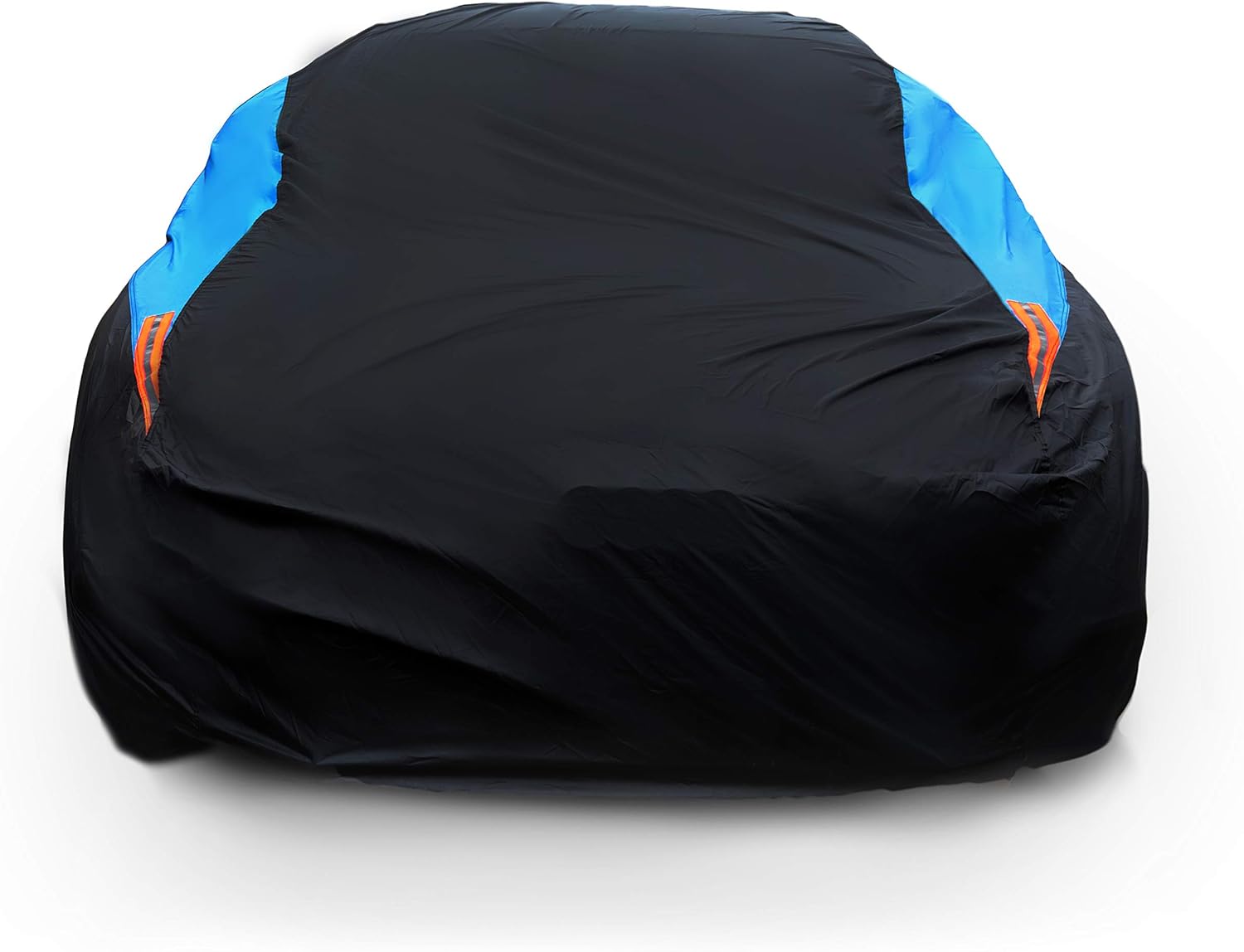
Common Indoor Car Cover Problems (And How to Fix Every One)
⚡ Quick Answer
The most common indoor car cover problems are paint scratches from trapped dust, moisture buildup under non-breathable covers, covering a dirty car, a poor fit that lets the cover shift, and using a waterproof outdoor cover inside a garage. Every one of these is fixable with the right cover and the right habits.
The 5 most common indoor car cover problems:
- Paint scratches: Trapped dust grinds against clear coat when the cover moves.
- Moisture buildup: Non-breathable covers trap condensation, causing rust and mold.
- Covering a dirty car: Grime under the cover acts like sandpaper on paint.
- Wrong fit: Loose covers flap and rub; tight covers pull and stretch.
- Wrong cover type: A waterproof outdoor cover used indoors blocks airflow and traps heat.
Fix these problems fast:
-
✓
Always clean your car before putting the cover on -
✓
Choose a breathable indoor cover with a soft microfiber lining -
✓
Wash your cover every 1–3 months to remove built-up grit
You stored your car in the garage, covered it carefully, and came back weeks later expecting a showroom finish. Instead, you found swirl marks, damp patches under the fabric, or a cover that had shifted off to one side. Daniel Brooks has spent years researching car protection, and the truth is this — most indoor car cover damage is entirely preventable once you know what causes it.
The indoor car cover problems people face come down to 5 predictable mistakes. This guide breaks down each one, explains why it happens, and tells you exactly how to fix it.
📌 Key Takeaways
-
→
Indoor covers can scratch your paint even in a clean garage — trapped dust particles are the main cause. -
→
Non-breathable covers trap moisture underneath, which can cause rust and mold in as little as 2 weeks. -
→
The best indoor cover materials are microfiber, satin, and flannel — all soft, breathable, and gentle on clear coat. -
→
Cleaning your cover every 1–3 months stops grit buildup from turning it into a paint-scratching tool.
Problem 1 — Do Indoor Car Covers Scratch Paint?
Yes, indoor car covers can scratch paint — and it happens more often than most car owners expect. The problem is not the cover itself. It’s the microscopic dust and grit particles that settle on the car’s surface before the cover goes on, or that collect on the inside of the cover over time.
When the cover moves — even just a tiny shift from someone walking past — those particles grind against the clear coat. The result is swirl marks and micro-scratches that dull the finish. A detailing professional with 9 years of experience noted that swirl marks from car covers are one of the most common paint damage requests they handle.
Why Scratches Happen Under Indoor Covers
Even in a sealed garage, dust settles constantly. On a calm day, a car can collect a visible dust layer within 48 hours. That fine layer of particles between the cover and the paint is the problem.
But here’s the thing most people miss — it’s not only the car’s surface that matters. A dirty cover is just as dangerous. Once grit builds up on the inside of the cover fabric, every removal and application grinds that debris across your paint. That’s how an indoor cover causes more damage than no cover at all.
How to Stop Your Indoor Cover from Scratching Paint
🔢 Step-by-Step: Scratch-Free Cover Application
-
1
Wipe down the car first
Use a clean microfiber cloth or feather duster to remove all visible dust before the cover touches the paint.
-
2
Inspect the cover’s inner lining
Shake out the cover and check the inner surface for embedded grit or debris before each use.
-
3
Apply from front to rear in one motion
Avoid sliding the cover side to side across the roof or hood — always roll it front to back in a single pass.
-
✓
Choose a cover with a soft inner lining
Microfiber, satin, or flannel inner linings create a safe barrier between the fabric and your clear coat.
So if you’re already seeing swirl marks, the cover isn’t necessarily the wrong choice. The application method likely is. Fixing your routine eliminates the damage completely.
Recommended Product
Budge Lite Car Cover, Indoor Protection, Breathable Dustproof Cover, Fits Mid-Size Sedans up to 200 Inches, Gray, Size 3
★★★★☆ Highly rated on Amazon
A breathable polypropylene indoor cover with a soft, non-abrasive surface and full elastic hem — exactly what you need to avoid the moisture and scratch problems covered in this article.
As an Amazon Associate, we earn from qualifying purchases.
Problem 2 — Why Does Moisture Build Up Under My Car Cover?
Moisture builds up under a car cover when the cover can’t breathe. Garages are not airtight — temperature swings between day and night cause condensation to form on every cool surface, including your car’s bodywork. If the cover fabric can’t allow that moisture to evaporate, it gets trapped directly against the paint and metal.
The result is rust spots on exposed metal, mold or mildew on the underside of the cover, water marks on the clear coat, and in severe cases, paint lifting around lower body panels. Cars near coastal areas face this risk every single day due to salt-carrying moisture in the air.
The Breathable vs. Waterproof Cover Mistake
This is the most common misunderstanding in car cover selection. Many buyers assume “waterproof” means better protection. Indoors, the opposite is true. A fully waterproof cover blocks all airflow. Any condensation that forms underneath has nowhere to go.
A breathable cover — made from materials like knitted polyester, satin, or polypropylene — lets air flow through the fabric. Moisture evaporates before it can collect. That’s the feature you need indoors, not waterproofing.
⚠️ Warning
Never cover a wet car. If the car or the cover is damp, moisture gets sealed in immediately. Even one overnight trapping of moisture can start rust formation on unprotected metal edges within days.
This table shows the key difference between breathable and non-breathable indoor covers, so you can see exactly why material choice matters so much.
Always look for the word “breathable” on the product label when buying an indoor car cover. Waterproof and breathable are not the same thing.
Now that you understand the moisture problem, let’s look at the mistake that actually makes scratching almost guaranteed — covering a car that isn’t clean.
Problem 3 — What Happens If You Cover a Dirty Car?
Covering a dirty car is one of the fastest ways to damage paint with an indoor cover. When dust, grit, or road film sits on the surface and the cover is placed on top, those particles get pressed directly against the clear coat. Even gentle airflow through the garage is enough to cause the cover to flex slightly, grinding those particles back and forth against the paint.
Think of it like wrapping sandpaper around your car. The cover itself may be ultra-soft — but it can’t protect paint from debris that’s already sitting on the surface. A quick microfiber wipe or rinse before covering removes this risk entirely.
✅ Tip
You don’t need a full wash every time. A light wipe with a damp microfiber cloth to remove loose dust takes under 2 minutes and eliminates 90% of the scratch risk from covering a car indoors.
The same principle applies if your car was recently driven in rain or through road spray. Covering a wet or dirty car is the leading cause of paintwork damage from indoor covers — not the cover material itself.
Problem 4 — Is My Car Cover the Wrong Size?
A poor fit is one of the most overlooked indoor car cover problems. Car owners often buy a universal-size cover to save money, only to find it either bunches up at the sides or stretches so tight it pulls on mirrors and bumpers. Both extremes cause damage.
A loose cover flaps when air moves through the garage. That repeated contact between the cover’s fabric edge and the paint creates friction marks along the body lines where the material rubs. A cover that’s too tight creates pressure points at protruding areas — mirrors, door handles, antenna bases — and can leave permanent impressions or stress marks on paint.
Signs Your Cover Is Too Loose or Too Tight
Use this table to diagnose a fit problem before it causes lasting paint damage.
Custom-fit covers cost more but eliminate fit problems entirely — they’re built to your exact make and model, with no gaps or stress points.
You might be thinking a universal cover saves enough money to be worth the compromise. Here’s why that math rarely works out — even one season of a loose cover rubbing a paint edge can require professional polishing that costs 3–5 times more than a well-fitted cover.
Problem 5 — Are You Using an Outdoor Cover Indoors?
Using an outdoor cover inside a garage is a surprisingly common mistake. Outdoor covers are built for weather resistance — they’re heavier, thicker, and often coated to block rain and UV exposure. That same coating blocks airflow completely, which makes them the worst possible choice for enclosed indoor storage.
Indoors, you need airflow more than water resistance. An outdoor cover used indoors turns your garage into a sealed humid chamber around the car, accelerating exactly the moisture problems described in Problem 2.
📋 Signs you have the wrong cover type for indoor use
-
Heavy and stiff fabric: Outdoor covers use thick multi-layer materials that are hard to fold and don’t drape smoothly. -
Moisture found underneath: If you’re seeing condensation under the cover, the material isn’t breathing. -
Scratchy inner surface: Outdoor covers often have rougher inner linings that scratch paint with any movement. -
No “indoor” label: Covers made for indoor use will specifically state breathable, satin, microfiber, or flannel material.
The good news is that an outdoor cover rated for both indoor and outdoor use does exist — look for covers labeled “all-weather breathable.” These work in a garage but still handle light outdoor exposure when needed.
What’s the Best Material for an Indoor Car Cover?
The right indoor car cover material solves 3 problems at once — it stays soft against the paint, it breathes to let moisture out, and it’s light enough to apply without dragging across the bodywork. Most quality indoor covers use one of 4 materials. You can learn more about choosing the right car cover material for your specific storage conditions.
Each material below has different strengths — pick based on how long your car sits and how delicate the paint finish is.
Avoid vinyl or coated nylon for indoor use — both block airflow and are far too abrasive for enclosed storage.
Covercraft, one of the oldest and most trusted names in custom vehicle protection, recommends breathable, precision-fit indoor cover materials for all garage and storage applications — noting that even a clean garage exposes paint to dust, moisture swings, and accidental contact.
How Often Should You Wash Your Indoor Car Cover?
Most car owners wash their car but never wash the cover. That’s a mistake. An indoor cover collects dust, garage grime, and skin oils from handling. Once enough particles build up on the inner surface, the cover starts scratching the very paint it’s supposed to protect.
The standard recommendation is to wash your indoor car cover every 1–3 months depending on how dusty your garage is. If you live in a dry, high-pollen environment, wash it closer to every 4 weeks during spring.
✓ Indoor Car Cover Washing Checklist
-
✓
Use cold water and mild detergent only — hot water can shrink the fabric and damage soft linings -
✓
Skip fabric softener — it coats the fibers and reduces breathability over time -
✓
Air dry completely — never fold or store a damp cover, or mold will develop in the folds -
✓
Inspect the inner lining after washing for embedded grit or fabric pilling before reusing
A clean cover is not just about hygiene. It’s the single most overlooked step that turns a decent cover into a safe one. Store the dry cover in its storage bag — not loose on a garage shelf where it collects more dust.
What Most People Get Wrong About Indoor Car Covers
Three widespread beliefs about indoor car covers cause most of the damage people experience. Correcting them changes how you choose and use a cover for the better.
💡 Key Insight
A “waterproof” label on a car cover is a warning sign for indoor use — not a selling point. Waterproof means non-breathable, which means trapped moisture, which means rust and mold risk under your cover every single night.
Misconception 1: A garage protects your car from moisture. It doesn’t. Temperature drops overnight cause condensation on every surface — including your car’s metal panels. Without a breathable cover, that moisture sits trapped against paint and chrome all night. Metal starts to show corrosion much faster than most owners expect.
Misconception 2: Any soft cover is safe for paint. Softness matters — but cleanliness matters more. A clean rough cover causes less damage than a soft, grit-covered cover. The inner surface condition is what determines whether the cover scratches paint, not the material type alone.
Misconception 3: You only need a cover for long-term storage. Even cars driven daily benefit from a garage cover. Dust accumulates every 48 hours. Moisture forms every night. A cover used regularly, cleaned often, and applied properly preserves paint condition far better than leaving the car uncovered — even in a spotless garage.
Conclusion
Every common indoor car cover problem — scratches, moisture, poor fit, wrong cover type — has a clear fix. Choose a breathable cover with a soft microfiber, satin, or flannel lining. Clean your car before every application. Wash the cover every 1–3 months. And never use a waterproof outdoor cover inside a garage.
These 4 habits eliminate nearly every issue covered in this article. Most paint damage from indoor covers doesn’t come from the cover — it comes from skipping one of these steps.
One thing to do right now: Pull out your current indoor cover, turn it inside out, and run your hand across the inner lining. If you feel grit or resistance, that cover needs a wash before it touches your paint again. Takes 2 minutes to check, and it could save your clear coat.
Frequently Asked Questions
Do indoor car covers scratch paint?
Yes, indoor car covers can scratch paint — but only when used incorrectly. The cause is almost always dust or grit trapped between the cover and the clear coat. Always wipe the car clean before covering it, choose a cover with a soft microfiber or satin lining, and wash the cover every 1–3 months to prevent grit buildup on the inner surface.
Can a car cover cause rust?
Yes. A non-breathable cover traps condensation against metal surfaces and chrome trim. That trapped moisture creates a humid sealed environment where rust can form within days. Always choose a breathable indoor cover that allows airflow and never cover a car that is still wet from rain or washing.
Should I use a car cover in my garage?
Yes, a garage cover is worth using even if your car sits indoors. Garages are not dust-free or moisture-free. Dust settles within 48 hours, and overnight temperature drops cause condensation every night. A breathable indoor cover protects paint from dust accumulation, moisture, and accidental contact from garage activity.
Is a waterproof cover safe to use indoors?
No. A fully waterproof cover is one of the worst choices for indoor use. Waterproof materials block all airflow, which traps condensation under the cover every night. Indoors, you need breathability — not water resistance. Save waterproof covers for outdoor parking and use a breathable satin or microfiber cover in your garage.
How often should I wash my indoor car cover?
Wash your indoor car cover every 1–3 months. In dusty or high-pollen environments, wash it every 4 weeks. Use cold water and mild detergent, skip fabric softener, and air dry completely before folding. A dirty cover scratches paint just as effectively as having no cover at all.
What is the best material for an indoor car cover?
The best indoor car cover materials are microfiber, satin, and flannel. All 3 are soft enough to protect clear coat, breathable enough to allow moisture to escape, and light enough to apply without dragging across the paint. Polypropylene is a good budget option. Avoid vinyl or coated nylon — both trap moisture and are too abrasive for garage use.
Why does my car cover keep sliding off indoors?
A cover that slides off is too large for the vehicle. Universal-fit covers often lack the snug fit needed to stay in place, even without wind. The elastic hem should grip the lower edge of the car firmly at all 4 corners. If it doesn’t, size down or look for a semi-custom or custom-fit cover built for your exact make and model.

Daniel Brooks is an automotive writer and product researcher focused on car accessories, car tech, maintenance, and practical driving guides. At Plug-in Car World, he helps drivers make smarter automotive decisions through honest reviews and research-driven content.