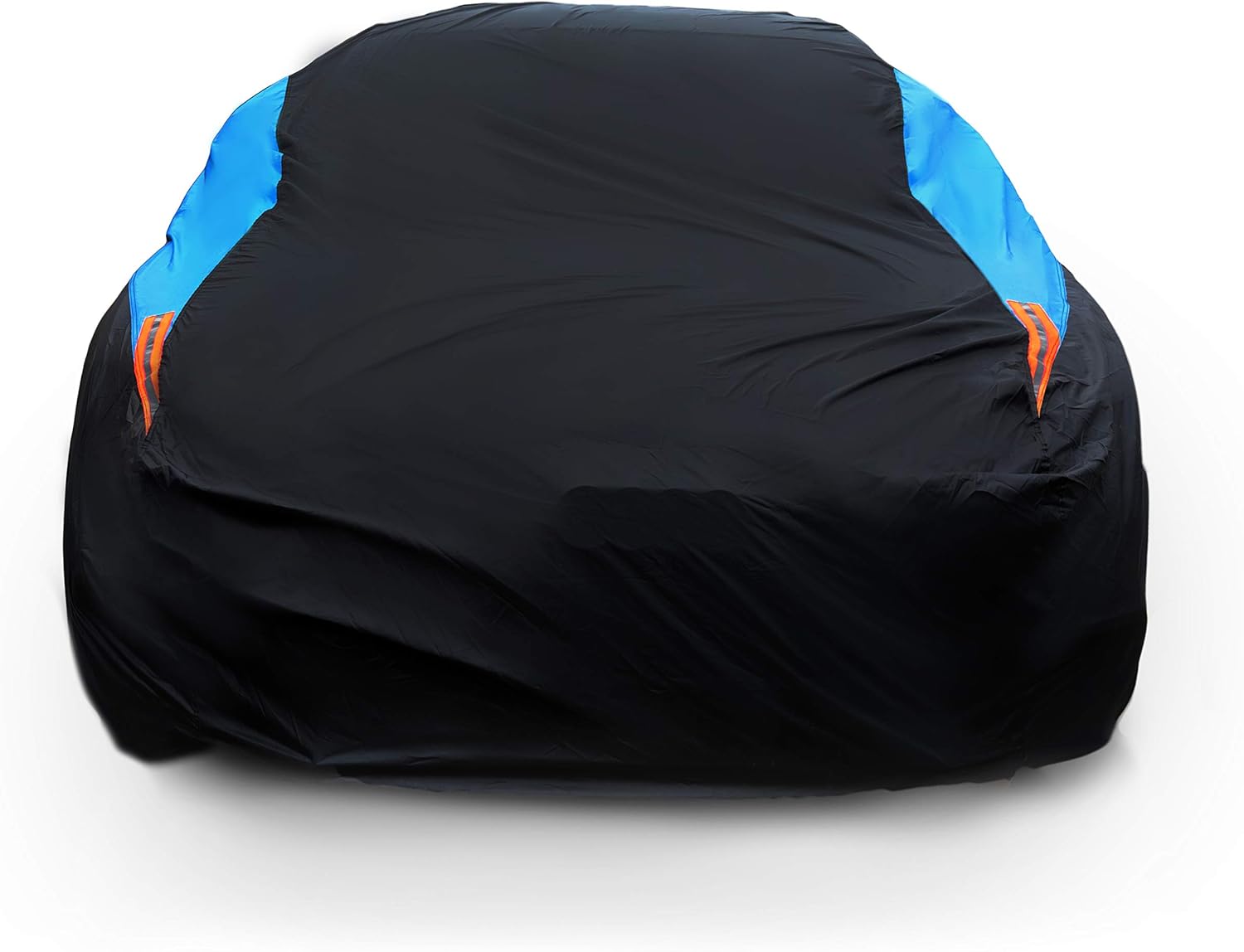
How to Prevent Swirl Marks From a Car Cover (The Complete Guide)
⚡ Quick Answer
A car cover causes swirl marks when it drags trapped dirt across the clear coat — not simply by existing. Always wash your car before covering it, choose a cover with a soft fleece or microfiber inner lining, and use the roll-on technique instead of dragging the cover over the paint.
Steps to prevent swirl marks from your car cover:
-
1
Wash and dry the car thoroughly before putting the cover on -
2
Use only a cover with a soft fleece or microfiber inner lining -
3
Roll the cover on from the roof outward — never drag it side to side -
4
Keep the cover itself clean — wash it regularly to remove trapped grit
Common mistakes that create swirl marks:
-
✓
Covering a dusty car without washing it first -
✓
Using a cheap cover with a rough non-woven inner layer -
✓
Sliding the cover off in one pull instead of folding it back
You pulled the cover off your freshly detailed car — and there they are. Fine, circular scratches glowing across the hood in the morning sun. You bought that cover to protect the paint. Now it’s the one causing the damage. I’m Michael, and after years of testing car care products and techniques, I can tell you this happens to thousands of car owners every year — and every single case is preventable.
The car cover itself is rarely the villain. The dirt trapped between the cover and your paint is. In this guide, I’ll show you exactly how to stop swirl marks before they start, how to choose the right cover lining, and the one application technique that changes everything.
📌 Key Takeaways
-
→
Dirt is the real cause — swirl marks come from grit trapped between the cover and clear coat, not the cover itself. -
→
The inner lining is everything — a cover with a rough non-woven polypropylene lining will scratch even a clean car over time. -
→
Always wash before covering — even a lightly dusty car can develop swirl marks within a few weeks of cover use. -
→
The roll-on technique prevents dragging by positioning the cover on the roof first and unrolling it toward both ends.
Why Does a Car Cover Cause Swirl Marks?
A car cover causes swirl marks through one mechanism: friction from contaminated material dragging across your clear coat. When the cover moves — from wind, from you adjusting it, or during removal — any dirt trapped in the lining acts like ultra-fine sandpaper. Each pass cuts a tiny groove into the clear coat. Hundreds of passes create the circular scratch pattern you see in sunlight.
There are 3 sources of that contamination. First, dirt on the car at the time you covered it. Second, grit that accumulated on the cover itself from previous use. Third, a rough inner lining material that scratches the paint even with no dirt present, simply through the fiber-to-paint contact during wind movement.
⚠️ Warning
Swirl marks concentrate on flat horizontal surfaces — the hood, roof, and trunk. These are where the cover applies the most surface pressure and where wind creates the most sliding movement. Dark paint makes the damage visible far earlier than silver or white.
So what does that mean for you? It means covering your car correctly is just as important as choosing the right cover. Even a premium fleece-lined cover will cause damage if you put it on a dusty car. Both variables — the cover’s lining and the car’s surface — need to be controlled.
What Type of Car Cover Inner Lining Won’t Scratch Paint?
The inner lining is the only part of a car cover that touches your paint. It’s the single most important specification to check before buying. A soft, dense inner lining cushions micro-debris and glides without abrasion. A rough lining drags it directly across the clear coat.
Here’s a comparison of the most common lining materials and how they behave against paint:
This table shows how common car cover inner lining materials compare in terms of paint safety and swirl mark risk.
Fleece and microfiber linings trap debris away from the paint surface instead of dragging it across. Choose either of these when paint protection is your priority.
You might be thinking a well-known brand guarantees a safe lining. Here’s why that’s not reliable: many budget covers sold under reputable brand names on Amazon use non-woven polypropylene as the inner layer. It feels soft when you press it with your palm, but its fiber ends still make direct hard contact with the clear coat during wind movement — and over weeks of use, that creates swirl marks even on a clean car.
Always check the product listing for the words “fleece lining,” “microfiber inner layer,” or “soft non-abrasive lining.” If the listing doesn’t mention the inner material at all — that’s a warning sign.
Should You Wash Your Car Before Putting a Cover On?
Yes — every single time. Covering a dirty car is the fastest route to swirl marks. Even light dust sitting on the clear coat becomes abrasive the moment the cover presses down and shifts. A thin film of garage dust left on the hood for a week under a cover is enough to create visible marring on dark paint.
This applies even to garage-stored cars. Many owners assume their garaged vehicle stays clean enough between covers. But airborne dust settles constantly indoors, and a “clean-looking” car still carries enough surface contamination to cause micro-scratches within days of being covered.
✅ Tip
If you can’t do a full wash before covering, spray a quality quick detailer onto each panel and blot it with a fresh microfiber towel before putting the cover on. This lifts surface dust safely without needing water, and it lubricates any remaining grit so it doesn’t grind into the clear coat.
But here’s the thing — washing technique matters just as much as washing frequency. A rushed wash with a dirty mitt or a chamois can introduce swirl marks before the cover even goes on. Use two buckets (one with soapy water, one with clean rinse water), use a deep-pile microfiber wash mitt, and rinse top to bottom.
After washing, dry completely with a plush microfiber drying towel before covering. A damp surface trapped under a cover creates humidity that can produce water spots and, in some cases, paint staining.
How to Put On and Remove a Car Cover Without Causing Swirl Marks
The application and removal technique is where most swirl mark damage from car covers actually happens. Dragging a cover across the hood, yanking it off from one end, or letting it billow and settle unevenly — each of these creates the exact friction that scratches paint. The roll-on method eliminates that friction completely.
🔢 Step-by-Step: The Roll-On Method for Swirl-Free Cover Application
-
1
Fold the cover in half lengthwise, then roll it into a long tube
Place the rolled cover on the car’s roof with the lining side facing down and mirror pockets aligned.
-
2
Unroll toward the front and rear simultaneously
Two people — one at each end — makes this faster and reduces pressure on any single panel.
-
3
Fit the mirror pockets first before adjusting the hem
Mirror pockets anchor the cover and prevent it from shifting sideways during adjustment.
-
4
Remove by rolling back toward the center — never pulling from one end
Roll the cover from both ends back to the roof, then lift it straight up and off the vehicle.
-
✓
Store the cover in its bag immediately after removal
Keeping it clean between uses prevents grit from building up on the lining for next time.
The key principle in this method is zero lateral sliding. The cover never gets dragged across any panel — it’s lifted and unrolled. Every swirl mark from cover use is caused by lateral motion. Eliminate the motion, eliminate the damage.
How Often Should You Wash Your Car Cover?
Wash your car cover every 4 to 6 weeks if the car is stored outdoors, or every 2 to 3 months for indoor use. The cover’s inner lining traps grit, dust, pollen, and bird dropping residue over time. Once that contamination builds up in the lining fibers, every application and removal drags those particles across your paint — regardless of how carefully you cover the car.
Check the manufacturer’s care instructions before washing. Most fleece-lined and microfiber covers can be machine-washed on a gentle cold cycle with a mild detergent. Never use fabric softener — it coats the fibers and reduces their ability to release trapped particles, making them more likely to drag debris across the paint.
How to Wash a Car Cover Without Damaging the Lining
Shake the cover out first to dislodge loose dirt before loading it into the machine. Use cold water and a gentle, fragrance-free detergent. Wash it alone — not with other laundry — to prevent lint or debris from other items embedding into the lining.
Air dry the cover completely before folding it or storing it in its bag. Storing a damp cover leads to mildew growth in the lining, which causes a persistent smell and can stain light-colored paint over time.
Does Waxing or Ceramic Coating Help Protect Paint Under a Car Cover?
Yes — and significantly. A layer of wax, paint sealant, or ceramic coating creates a sacrificial barrier between your clear coat and any abrasive contact. When a covered car cover still allows some micro-movement, that barrier absorbs the friction instead of the paint itself. The clear coat underneath stays intact longer.
Carnauba wax provides 2 to 3 months of protection per application. A synthetic paint sealant lasts 6 to 12 months. A professionally applied ceramic coating lasts 2 to 5 years and provides the hardest surface layer available for consumer use — making it the strongest defense for a car that’s regularly covered outdoors.
3 mo
Carnauba wax protection
12 mo
Paint sealant protection
5 yr
Ceramic coating protection
So if you use a car cover regularly, combine that habit with a paint protection layer applied to a clean, decontaminated surface. The cover protects against dust, UV, and weather. The coating protects the paint from the cover. Both together give you long-term swirl-free storage.
According to the paint care experts at Cars.com, wax and protective coatings are the most effective long-term strategy for keeping a car’s clear coat free of micro-scratches — especially on darker paint colors where swirl marks show earliest.
What to Do If Wind Moves the Cover While the Car Is Parked
Wind is one of the biggest causes of car cover swirl marks outdoors. When the wind pushes a cover laterally, it drags the lining across the paint repeatedly over hours. A cover left in 20 mph winds overnight performs dozens of abrasion passes across the same panels — even if the car was spotlessly clean when covered.
The fix is a properly fitted cover with tie-down straps or an integrated cable lock through the wheels. A secure cover with a snug elastic hem moves with the wind instead of sliding across the paint. If you park outdoors in a windy area regularly, this is not optional — it’s the difference between paint that lasts and paint that degrades under the cover.
📋 Car cover features that reduce wind damage
-
Front and rear elastic hems: Draw tightly under the bumpers and hold the cover’s position in gusts. -
Windproof security straps: Cross under the car at 3 anchor points and prevent lateral cover movement. -
Cable lock grommets: Thread a cable through the grommets and around a wheel for maximum hold in severe wind. -
Custom semi-fit design: Covers shaped to your vehicle’s body lines shift far less than universal-fit covers in the same wind speed.
A universal-fit cover is better than no cover, but it flaps more than a semi-custom or custom fit. So if swirl prevention is your top priority, invest in a cover shaped closer to your vehicle’s profile — less gap means less movement.
What Most People Get Wrong About Car Cover Swirl Marks
Misconception 1: “My cover is soft, so it won’t scratch.” Softness to the touch is not the same as paint safety. Many covers feel silky when you press them with a clean hand but have fiber structures that create micro-abrasion at the point of clear coat contact during lateral movement. The material’s behavior under sustained friction — not how it feels in your hand — is what determines whether it scratches paint.
Misconception 2: “As long as the car looks clean, I can cover it.” Visual cleanliness is misleading. A car parked overnight in a garage will accumulate enough airborne dust to cause swirl marks when covered. You can’t reliably judge surface contamination by eye. Wipe the paint with a white microfiber cloth — if the cloth picks up grey residue, the car needs a wipe-down or wash before covering.
Misconception 3: “Indoor storage means I don’t need to worry about swirl marks from a cover.” Garage environments are actually where car cover swirl marks are most commonly discovered. Dust, wood particles, spray residue, and humidity all accumulate on both the car and the cover inside a garage. The cover shifts every time a door opens, creating abrasion passes across the paint. Indoor use requires the same care routine as outdoor use.
According to The Art of Cleanliness car cover guide, the inner lining material is the most overlooked factor in car cover selection — and cheap no-name covers on online marketplaces rarely disclose whether their liner is abrasive. Always check the listing for explicit lining specifications before buying.
How to Tell If Your Swirl Marks Are From the Car Cover
Inspect your paint in direct sunlight or at a low angle with a strong flashlight. Swirl marks appear as fine arc-shaped scratches that are invisible in flat, ambient light but become clearly defined in raking light. The pattern tells you a lot about the source.
Car cover swirl marks distribute evenly across the horizontal surfaces that carry the most cover weight and movement — the hood center, roof, and trunk lid. If the scratches concentrate in a consistent pattern across those 3 areas and are relatively uniform in depth, the cover is almost certainly responsible.
💡 Key Insight
Washing swirl marks appear in random curved patterns because the wash mitt changes direction. Cover swirl marks appear in consistent directional arcs matching the wind direction or cover removal motion. Compare the scratch angle to the direction you typically remove the cover — they’ll match.
Once you’ve confirmed the source, you can remove existing swirl marks with a machine polish using a dual-action polisher and a finishing compound. This removes a thin layer of clear coat to reveal the unmarked paint below. Then re-establish a protective wax or coating layer before resuming cover use.
Recommended Product
Budge Indoor Stretch Car Cover, Luxury Indoor Protection, Soft Inner Lining, Breathable, Dustproof
★★★★☆ Highly rated on Amazon
The fleece inner lining is completely non-abrasive and conforms to the body without sliding — the safest indoor cover option for preventing swirl marks on freshly detailed or ceramic-coated vehicles.
As an Amazon Associate, we earn from qualifying purchases.
Conclusion
Preventing swirl marks from a car cover comes down to 3 things: a clean car, a soft-lined cover, and a technique that eliminates lateral friction. None of these require expensive equipment. They just require consistency. The cover is never the problem on its own — it’s always the combination of a contaminated surface, a rough lining, or a dragging motion that creates the damage.
Apply a fresh coat of wax or sealant before your next cover use, and check your cover’s inner lining material today. That one change makes more difference than any other single step.
One thing to do right now: Grab a clean white microfiber cloth and wipe one panel of your car. If the cloth picks up grey dust — wash the car before covering it today. Takes 30 seconds and prevents weeks of paint damage.
Frequently Asked Questions
Can a car cover cause swirl marks on a black car?
Yes — black paint shows swirl marks more readily than any other color because dark surfaces scatter light unevenly across micro-scratches. A car cover can absolutely create swirl marks on black paint, especially if the car is dusty before covering or the inner lining is rough. Use a fleece-lined cover and always clean the car first.
Is it safe to use a car cover every day?
Daily use is safe when done correctly. Clean the car before each application, keep the cover clean, and use the roll-on technique every time. Daily cover use on a properly cleaned car with a soft-lined cover is safer for the paint than leaving it uncovered in direct sun, dust, and bird traffic.
What is the best car cover material to avoid scratches?
Fleece-lined and microfiber-lined car covers cause the least paint damage. Fleece fibers are dense and soft, which means they absorb debris instead of dragging it. Avoid covers with non-woven polypropylene or bare polyester inner layers — both make direct hard contact with the clear coat and scratch it over time.
Do car covers scratch paint in the garage?
Yes — garage storage does not eliminate the risk. Dust, wood particles, and spray residue accumulate in garages and on both the car and the cover. Every time the garage door opens, airflow shifts the cover and creates abrasion. Use the same clean-car and soft-liner protocols indoors as you would outdoors.
How do I remove swirl marks left by a car cover?
Use a dual-action polisher with a finishing compound to remove swirl marks from car cover damage. Apply the compound to a foam finishing pad and work in straight overlapping passes. After correction, apply a wax or paint sealant to protect the fresh surface. Light swirl marks can also be reduced with a hand-applied swirl remover product.
Should you put a car cover on a wet car?
No — covering a wet car traps moisture between the cover and the paint. This creates conditions for water spotting, mildew growth on the cover lining, and in some cases mineral staining on the clear coat. Always dry the car completely with a plush microfiber towel before covering it.
Does ceramic coating protect against car cover swirl marks?
A ceramic coating significantly reduces swirl mark risk from car covers by creating a hard, slick sacrificial layer over the clear coat. The coating absorbs minor abrasion that would otherwise cut into the paint. It doesn’t make cover misuse safe — you still need a soft lining and a clean surface — but it raises the threshold before damage occurs.

Daniel Brooks is an automotive writer and product researcher focused on car accessories, car tech, maintenance, and practical driving guides. At Plug-in Car World, he helps drivers make smarter automotive decisions through honest reviews and research-driven content.