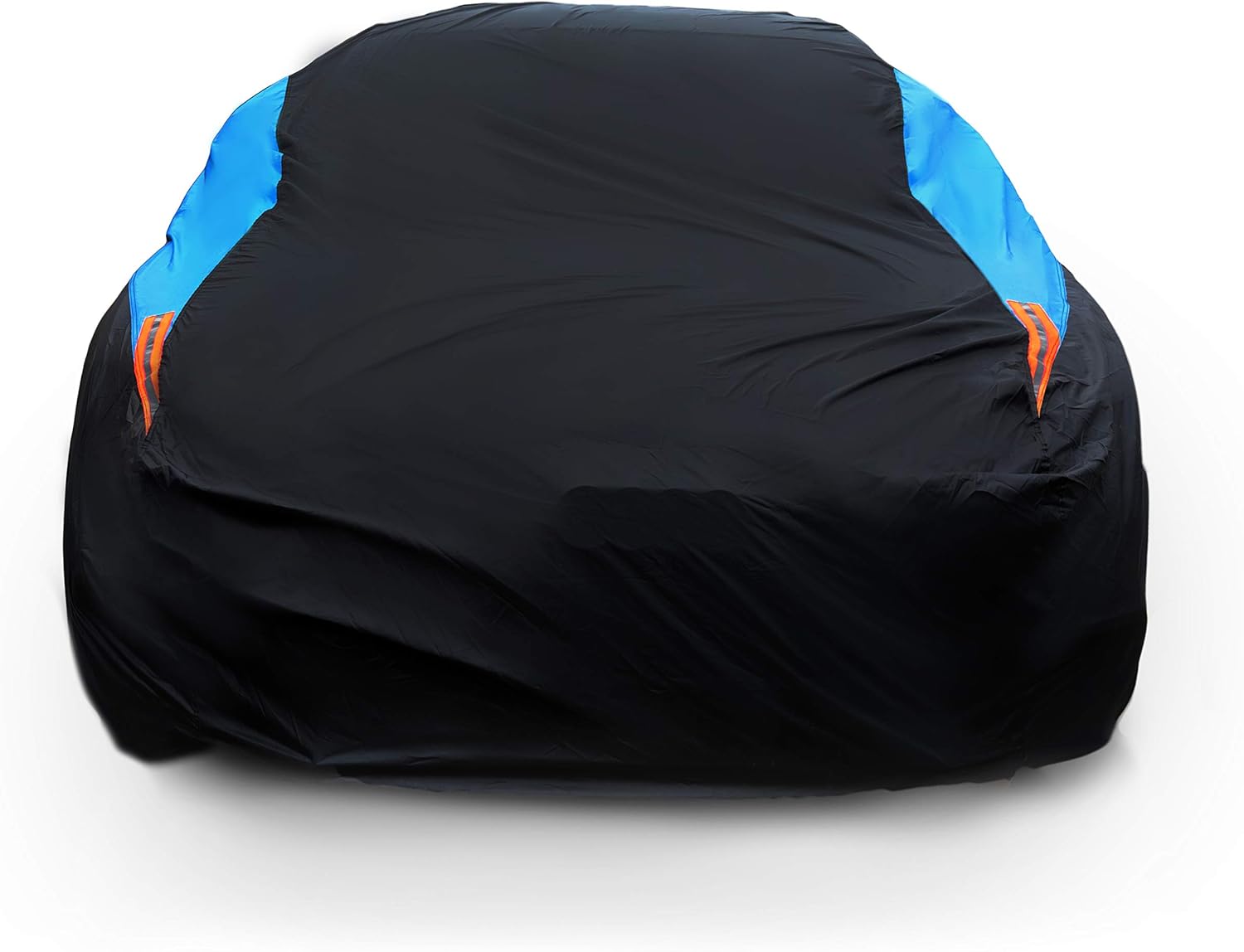
Covercraft vs Seal Skin Car Cover — Which One Actually Protects Your Car?
Quick Answer
Covercraft wins on fit and fabric engineering. Its vehicle-specific patterns and Ultra’tect fabric come from over 60 years of custom cover manufacturing, backed by a 5-year warranty. Seal Skin wins on price and warranty length, with a 10-year warranty on its Elite line at a lower entry cost. Choose Covercraft for a precision fit on daily drivers; choose Seal Skin if budget and long warranty coverage matter most.
Which cover fits and protects better for the money:
- Covercraft custom patterns start around $299.99 per vehicle
- Seal Skin Elite adds a 10-year warranty most rivals don’t offer
- Covercraft has more fabric tiers built for extreme climates
⚡ Quick Verdict — Covercraft vs Seal Skin
Seal Skin Elite
~$70 to $150 (varies by vehicle size)
✅ Best for:
Budget buyers who want a long warranty on a semi-custom fit
Covercraft Ultra’tect
From $299.99 (true custom pattern)
✅ Best for:
Owners who want a precision, vehicle-specific fit and proven fabric science
| Category | Covercraft | Seal Skin |
|---|---|---|
| Overall Winner | 🏆 | — |
| Best Value | ❌ | ✅ |
| Custom Fit Precision | ✅ | ❌ |
| Warranty Length | ❌ | ✅ |
| Fabric Breathability | ✅ | ✅ |
Bottom line: Covercraft wins for owners who want a true pattern-matched fit and decades of fabric R&D behind the cover.
Seal Skin is worth it only if your budget is tight and you want a longer warranty window on a semi-custom cover.
Key Takeaways
- Covercraft wins overall because its custom patterns fit closer and its Ultra’tect fabric resists fading better over time.
- Seal Skin is the better value pick, often costing $150 to $200 less than a comparable Covercraft custom pattern.
- Covercraft’s WeatherShield HP and 5-Layer Softback lines are the better call for daily outdoor parking in harsh climates.
- Seal Skin’s ProGuard cotton line suits beginners who mostly garage their car and just want light dust protection.
- The single biggest real-world difference: Covercraft cuts a pattern for your exact make and model, while Seal Skin uses size-range fitment.
You’re staring at two car cover listings, both claiming a “custom fit,” and both have decent reviews. Here’s the problem: they’re not built the same way, and that difference shows up the first time wind gets under the hem.
I’m Daniel Brooks, and I’ve spent years testing outdoor gear and vehicle accessories for daily drivers and weekend classics alike. For this comparison, I dug into Covercraft’s fabric lineup and Seal Skin’s tiered warranty system, cross-checked pricing on both brands’ own sites and Amazon listings, and read through verified buyer feedback on both platforms.
Covercraft has been cutting vehicle-specific patterns since the 1960s. Seal Skin took a newer, size-range approach and backs it with unusually long warranties. Neither is wrong. But they solve different problems, and picking the wrong one means either overpaying or ending up with a cover that flaps in the wind. Let’s break down exactly where each one wins.
Covercraft Custom Fit Car Cover: What It Is and Who It’s For
Covercraft builds true custom-fit car covers, meaning each pattern is cut specifically for one make, model, and year — not a size range. The company has manufactured vehicle covers for more than 60 years and offers several fabric tiers, from the lightweight Ultra’tect to the heavier-duty WeatherShield HP and 5-Layer Softback All Climate.
The Ultra’tect line uses a solution-dyed WeatherMaxSL fabric with a HydroMax finish. That finish blocks water on both sides of the fabric while still letting trapped moisture escape, which matters if you park outside in a humid climate. Pricing for a custom Ultra’tect pattern starts at $299.99 direct from Covercraft, with Amazon listings priced per vehicle-specific SKU. Before you order, it helps to measure your car cover fitment points, since a custom pattern is only as good as the vehicle data you submit.
This cover is made for owners who park outdoors regularly and want a cover that hugs the body lines instead of billowing in the wind. It’s not the cheapest option on this list, but the fit is the whole point.
Quick Verdict
| ✅ Best for | Daily outdoor parking, owners who want a snug, pattern-matched fit |
| ❌ Not ideal for | Buyers on a strict budget — Seal Skin’s 5-Layer line costs less upfront |
| 💰 Price | Currently starts at $299.99 for Ultra’tect (check for latest price, varies by vehicle) |
Covercraft Pros and Cons
Covercraft’s biggest strength is fit accuracy — most buyers agree the pattern-matched cut is the reason they pay the premium. Its biggest drawback is cost, since a true custom pattern almost always runs higher than a semi-custom competitor.
Covercraft Custom Fit Car Covers Ultratect Black C16599UB
Right choice if you park outdoors daily and want a pattern cut for your exact vehicle.
Seal Skin Elite Car Cover: What It Is and Who It’s For
Seal Skin Covers takes a different approach. Instead of a pattern cut for one exact vehicle, most Seal Skin covers use tiered, semi-custom fitment matched to a length and body style range — sedan, SUV, coupe, or truck. The company has shipped more than one million covers and built its reputation on long warranties rather than pattern precision.
The Elite tier is 100% waterproof polyester with ultrasonically welded seams, a soft cotton interior lining, and a 10-year limited warranty against rips and tears. Seal Skin also offers a Supreme tier with its SEAL-TEC fabric and a limited lifetime warranty, and a budget ProGuard cotton cover for indoor or mild outdoor use. Amazon pricing for Seal Skin covers generally runs from roughly $20 for smaller universal covers up to $90 and above for larger, heavier-duty PEVA and polyester models, depending on vehicle size and fabric tier.
This cover fits buyers who want strong warranty coverage without paying for a true one-vehicle pattern. It’s a reasonable pick for a second car, a seasonal vehicle, or anyone replacing a cover that failed early.
Quick Verdict
| ✅ Best for | Budget-focused buyers who want a long warranty on a semi-custom cover |
| ❌ Not ideal for | Owners of uncommon body styles — size-range fit can bunch at anchor points |
| 💰 Price | Typically $70 to $150 depending on size and tier (check for latest price) |
Seal Skin Pros and Cons
Seal Skin’s strongest selling point is warranty length paired with price. Its biggest weakness, based on buyer feedback, is fitment on less common body shapes, where the size-range approach can leave slack at the corners.
Seal Skin Covers Car Cover Waterproof All Weather Automotive Outdoor Car Cover, Universal Fit for Sedan Coupe Car (Up to 165 inch)
Right choice if you want strong warranty coverage without custom-pattern pricing.
Full Spec Comparison: Covercraft vs Seal Skin
Covercraft leads on fit precision, with a pattern cut for your exact vehicle instead of a size range. Seal Skin leads on warranty length, backing its Elite line for 10 years versus Covercraft’s standard 5-year coverage on Ultra’tect.
| Spec | Covercraft Ultra’tect | Seal Skin Elite | Winner |
|---|---|---|---|
| Starting Price | $299.99 | ~$70 to $150 | Seal Skin |
| Fit Method | Vehicle-specific pattern | Size-range, semi-custom | Covercraft |
| Warranty | 5 years | 10 years | Seal Skin |
| Water Resistance | HydroMax two-sided finish | Welded seams, 100% waterproof | Tie |
| Breathability | High — vents trapped moisture | Moderate — brand states mildew-resistant | Covercraft |
| Unique Feature | Solution-dyed fade resistance | Lock and cable kit included | Tie |
| Care | Machine washable and dryer-safe | Hand wash or gentle machine cycle recommended | Covercraft |
Weather Protection: Which Cover Handles Rain and Sun Better?
Covercraft’s Ultra’tect wins on breathability. Its HydroMax finish blocks water from both sides of the fabric while still letting trapped heat and moisture escape from underneath — a detail that matters in humid climates. Seal Skin’s Elite matches it on raw waterproofing with fully welded seams, but buyers should still check the EPA’s UV Index guide for their region, since sun exposure affects fabric life on both covers over time.
Solution-dyed fabric, like Covercraft uses in Ultra’tect, resists fading because the color runs through the entire fiber, not just the surface. Seal Skin’s polyester holds up reasonably well too, but it’s a surface-treated fabric, so fading tends to show sooner in intense, year-round sun.
Neither cover is fully waterproof forever. Both will eventually need re-treatment or replacement, especially in regions with heavy UV exposure. Covercraft wins this category for long-term color retention and breathability.
Fit and Fabric Quality: Custom Pattern or Size Range?
Covercraft wins fit accuracy because every pattern is built for one specific make, model, and year. Buyers consistently mention the elastic hem keeping the cover tight even in strong wind, with one Amazon reviewer noting the fit “like a glove” on a car they’d struggled to cover before.
Seal Skin’s semi-custom fitment works fine for common body styles but can struggle on outliers. One verified Amazon buyer reported the anchor points landing in the middle of the wheel on a Camaro, which bunched the fabric and left gaps at the bumper. That’s the tradeoff of a size-range system: it fits most cars well, but not every car perfectly.
If your vehicle has an unusual factory body kit, spoiler, or oversized mirrors, Covercraft’s pattern-matched approach is the safer bet.
Price and Value: Is the Custom Pattern Worth the Extra Cost?
Seal Skin wins on value. Its Elite line often costs $150 to $200 less than a comparable Covercraft custom pattern, and it still ships with a 10-year warranty, a lock and cable kit, and a storage bag.
Covercraft’s higher price buys a tighter fit and a fabric that’s less likely to fade after several summers outdoors. For a daily driver parked outside year-round, that fit and fade resistance can be worth paying for. For a seasonal or secondary vehicle, Seal Skin’s lower cost is easier to justify.
Most buyers agree that neither brand is “cheap” compared to a generic universal tarp, but both are priced well below high-end indoor show-car covers.
Warranty, Safety and Unique Features
Seal Skin wins on warranty length outright. Its Elite tier carries a 10-year limited warranty against rips and tears, and its Supreme tier goes further with a limited lifetime warranty and added hail-resistant cushioning in the SEAL-TEC fabric. Covercraft’s Ultra’tect carries a 5-year limited warranty, which is still solid but shorter on paper.
Warning:
No fabric car cover fully protects against large hail. If your area is prone to severe hailstorms, check the NOAA guide to hail hazards and plan to move your vehicle under solid shelter when a warning is issued, rather than relying on a cover alone.
On unique features, Seal Skin includes a lock and cable kit standard on several models, which Covercraft treats as an accessory on some lines. Covercraft counters with a wider range of climate-specific fabrics, including a heavier 5-Layer Softback All Climate cover built for snow and freeze cycles that Seal Skin doesn’t directly match tier-for-tier.
One real complaint worth flagging honestly: a verified Amazon buyer gave Seal Skin a 2-star review after a fitment and return dispute, saying the company wouldn’t accept a return on a cover that didn’t fit correctly. That’s a genuine risk with any semi-custom cover — always confirm your vehicle’s exact dimensions before ordering.
Real-World Use Cases: Which One Wins?
Covercraft wins most daily-driver and harsh-climate scenarios. Seal Skin takes over when budget and warranty length matter more than a pattern-perfect fit.
- Daily outdoor parking in a sunny climate: Covercraft wins. Its solution-dyed fabric resists fading better over repeated UV exposure.
- Budget-conscious second vehicle: Seal Skin wins. Lower entry price and a long warranty make it easy to justify on a car you drive less often.
- Uncommon body style or aftermarket kit: Covercraft wins. A true pattern accounts for spoilers, wide mirrors, and body kits that size-range covers can’t.
- Cold-weather storage with snow and freeze cycles: Covercraft wins, thanks to its heavier 5-Layer Softback All Climate option built specifically for that use case.
- Fleet or multi-vehicle household on a budget: Seal Skin wins. Lower per-unit pricing adds up when covering several vehicles at once.
- Long-term seasonal storage: Either works, but check the fitment guide first. Before buying for a stored vehicle, it helps to review choosing the right size for your specific storage conditions.
Is the Extra Cost of a Covercraft Custom Pattern Worth It?
Primarily, yes — if you park outdoors daily and want the tightest possible fit. At roughly $150 to $200 more than a comparable Seal Skin Elite cover, Covercraft’s custom pattern earns its price through fit accuracy and fade resistance, not flashy extras.
Covercraft’s price rarely swings much since each pattern is made to order, though the company occasionally runs seasonal promotions. Seal Skin’s Amazon pricing fluctuates more, and it’s worth checking current listings since sale pricing can shift the value equation depending on your vehicle size.
If you’re testing the waters with your first car cover, Seal Skin’s lower price makes it easier to try. If you already know you want a cover for years of daily outdoor use, Covercraft’s pattern-matched fit pays off over time.
Who Should Buy Which?
Buy Covercraft if you park outdoors every day and want the closest possible fit to your car’s actual body lines. Buy Seal Skin if you want strong warranty coverage without paying custom-pattern pricing. Before deciding, it’s worth reviewing common car cover buying mistakes so you don’t end up returning either one.
✅ Buy Covercraft if you…
- Park outdoors daily in intense sun or humidity
- Own a car with a body kit, spoiler, or wide mirrors
- Want the tightest possible fit over a size-range fit
- Plan to keep the cover for many years of daily use
✅ Buy Seal Skin if you…
- Want the longest warranty for the lowest price
- Own a common sedan, SUV, or truck body style
- Are covering a second or seasonal vehicle on a budget
- Need a lock and cable kit included at no extra cost
⚠️ Don’t Buy Either If…
- You only need occasional dust protection — a Budge Rain Barrier universal cover costs far less.
- Your area gets frequent large hail — no fabric cover replaces a hard shelter or a dedicated hail-resistant cover.
- You store the vehicle indoors only — an indoor-specific cover like Covercraft’s Form-Fit is better suited and cheaper.
⭐ What Verified Buyers Are Saying
👍 What Buyers Love
- Fit “like a glove,” even on uncommon vehicles
- Elastic hem keeps the cover tight in wind
- Lightweight and easy to wash at home
👎 Common Complaints
- Feels thinner than expected for the price
- Individual vehicle-specific listings have few reviews
👍 What Buyers Love
- Heavy-duty feel for the price paid
- Driver-side zipper adds everyday convenience
- Warranty replacements processed without issue for repeat buyers
👎 Common Complaints
- Fit can be off on uncommon body styles
- Returns for fitment issues aren’t always accepted
Bottom line from buyers:
Both brands are widely praised for weather protection and easy installation. Covercraft’s complaints center on price, while Seal Skin’s center on fitment for less common vehicles.
How to Maintain Your Car Cover
Tip:
Never store a car cover while it’s still wet. Trapped moisture is the fastest route to mildew and musty odors on both fabrics.
Wash both Covercraft and Seal Skin covers regularly to prevent dirt and pollen from grinding into the fabric. Covercraft’s Ultra’tect can go through a home washer and dryer on a gentle cycle. Seal Skin recommends a gentler hand wash or delicate machine cycle to protect the welded seams over time.
Check the elastic hem and grommets each season. Elastic loses tension over years of stretching in the wind, and loose grommets let the cover shift, which causes rubbing on the paint. For a full seasonal routine, this complete cover maintenance guide walks through washing, drying, and storage step by step.
Store the cover folded loosely in a breathable bag, not a sealed plastic bin, and keep it away from direct heat sources like a garage heater. Extreme heat can degrade both PEVA and polyester fabrics faster than normal wear.
Final Verdict — Covercraft or Seal Skin: Which Should You Buy?
Covercraft is the overall winner for owners who park outdoors daily and want a pattern-matched fit backed by decades of fabric engineering. Its Ultra’tect fabric resists fading better over time, and the vehicle-specific pattern eliminates the loose corners that plague size-range covers. Seal Skin is the stronger pick for buyers on a budget who want the longest warranty coverage available, especially on common sedan, SUV, and truck body styles. If you need maximum fit precision, go with Covercraft. If budget and warranty length matter more, Seal Skin delivers real value. Neither brand is a bad choice — the right one depends on how much you’re willing to pay for a perfect fit. For long-term outdoor storage, it also helps to review your long-term storage prep steps before the cover goes on for the season.
Covercraft Custom Fit Car Covers Ultratect Black C16599UB
Best choice if you need a pattern-matched fit and long-term fade resistance.
Seal Skin Covers Car Cover Waterproof All Weather, Universal Fit for Sedan Coupe Car (Up to 165 inch)
Best choice if you want strong warranty coverage at a lower entry price.
Frequently Asked Questions
Which is better, Covercraft or Seal Skin?
Covercraft is better for fit accuracy and long-term fade resistance, thanks to its vehicle-specific patterns and solution-dyed fabric. Seal Skin is better for value, offering a 10-year warranty at a lower starting price on its Elite line.
What is the difference between Covercraft and Seal Skin car covers?
Covercraft cuts a pattern for your exact make, model, and year. Seal Skin uses size-range fitment matched to body style and length instead. That difference affects how snug the cover fits and how it performs in wind.
Is Covercraft worth the extra money over Seal Skin?
It’s worth it if you park outdoors daily and want the closest possible fit. For occasional use or a budget second vehicle, Seal Skin’s lower price and longer warranty make more sense.
Does a Covercraft or Seal Skin cover work in cold, snowy weather?
Both hold up in cold weather, but Covercraft’s 5-Layer Softback All Climate line is built specifically for snow and freeze cycles. Seal Skin’s Elite and Supreme tiers also handle snow, with Supreme adding hail-resistant cushioning.
How long does a Seal Skin or Covercraft car cover last?
With regular washing and proper storage, both brands typically last 3 to 5 years or more before fading or fabric wear sets in. Covercraft’s 5-year warranty and Seal Skin’s 10-year warranty reflect each brand’s confidence in that lifespan.
Affiliate Disclosure:
As an Amazon Associate, I earn from qualifying purchases.
If you click a link on this page and make a purchase,
I may receive a small commission — at no extra cost to you.
I only recommend products I genuinely believe will help you.
This helps keep the site free and running. Thank you for your support.
Daniel Brooks is an automotive writer and product researcher focused on car accessories, car tech, maintenance, and practical driving guides. At Plug-in Car World, he helps drivers make smarter automotive decisions through honest reviews and research-driven content.