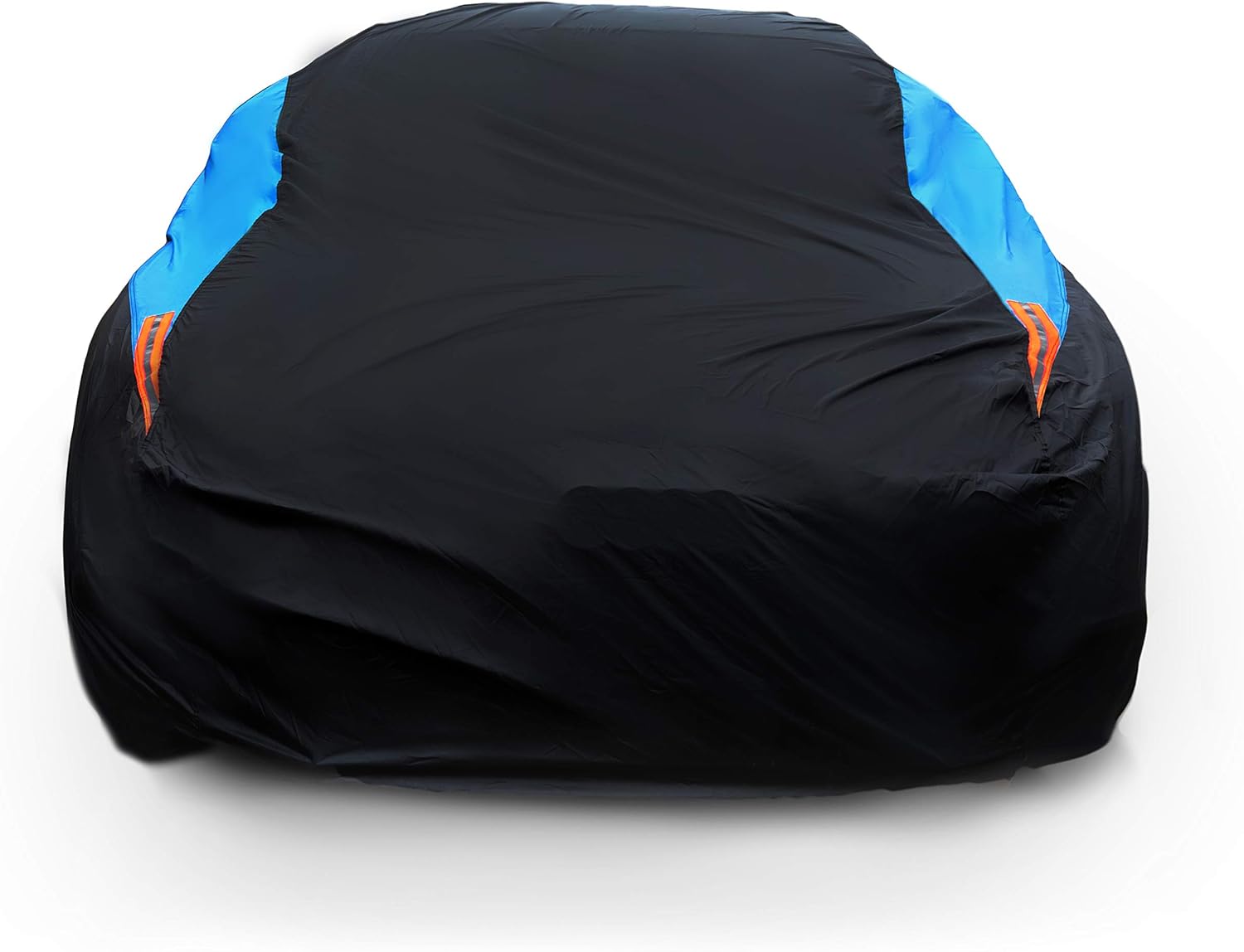
15 Car Cover Buying Mistakes to Avoid (and What to Do Instead)
⚡ Quick Answer
The biggest car cover buying mistakes are choosing the wrong size, ignoring breathability, and buying an indoor cover for outdoor use. A poor-fitting, non-breathable, or wrong-climate cover can scratch your paint, trap moisture, and cause rust — doing more damage than no cover at all.
Top car cover buying mistakes to avoid:
- Wrong size: A loose cover flaps in wind and scratches paint like sandpaper.
- Buying “waterproof” only: Non-breathable covers trap moisture and cause rust.
- Using an indoor cover outdoors: Light covers degrade fast in harsh weather.
- Skipping tie-down straps: Wind turns a loose cover into a paint-scraping hazard.
Before you buy — always check:
-
✓
Measure your car length before picking a size -
✓
Choose material based on indoor vs outdoor storage -
✓
Confirm it has tie-down straps and a soft inner lining
You spent real money on your car. Now you’re spending more money on a cover to protect it — and somehow, the cover itself might be the thing that damages it. That’s the painful reality many car owners face after buying the wrong car cover.
I’m Daniel Brooks, and after years of researching vehicle protection products, I’ve seen the same 15 mistakes repeated by buyers again and again. A car cover sounds simple. It’s not. One wrong choice — material, fit, or type — and you’re trapping moisture, scraping paint, or watching a $40 cover fly off your car in the first storm.
This guide walks through every mistake, why it happens, and exactly what to do instead.
📌 Key Takeaways
-
→
A loose-fitting cover moves in the wind and can scratch your paint worse than no cover at all. -
→
Breathability matters more than waterproofing — a cover that can’t breathe traps moisture and causes rust. -
→
Indoor and outdoor covers are built differently — using one for the wrong environment shortens its life dramatically. -
→
Cheap single-layer covers tear within months and offer almost no real UV or moisture protection. -
→
Covering a dirty or wet car grinds debris into the paint — always clean and dry before covering.
Mistake #1: Buying the Wrong Size
The most common mistake is picking a “medium” or “large” without measuring your car first. A cover that’s too big flaps in the wind. It drags across your paint like sandpaper. It also lets dust and debris enter from below.
Measure your car from bumper to bumper before buying anything. Compare that number to the cover’s listed length range. Many quality brands now offer vehicle-specific size charts — use them. The goal is a snug fit with no excess fabric bunching.
⚠️ Warning
A cover that’s even 6 inches too long can cause paint scratches within days. Wind moves loose fabric across the finish constantly — even gentle breezes cause friction damage over time.
If you have a vintage or specialty vehicle, invest in a custom-fit cover. Custom covers take 2–4 weeks to arrive but provide a near-perfect fit. For standard vehicles, a contour-fit (semi-custom) cover gives excellent protection at a lower cost.
Mistake #2: Choosing Waterproof Over Breathable
Most buyers think “waterproof” is the best feature a car cover can have. It’s actually one of the most misunderstood features. A completely waterproof, non-breathable cover seals moisture in — it doesn’t keep it out.
Here’s what happens: your car sits outside, the temperature drops at night, and condensation forms under the cover. With no airflow, that moisture stays trapped against your paint and metal surfaces for hours. Over weeks, this creates the perfect conditions for rust, mold, and mildew — the 3 silent killers of car paint.
Choose a cover that’s water-resistant and breathable. These allow rain to bead off the surface while letting trapped moisture escape. The AAA vehicle protection guide confirms that moisture management is one of the top factors in preserving paint and metal surfaces long term.
Mistake #3: Using an Indoor Cover Outdoors
Indoor car covers are built for garages. They’re light, soft, and excellent at keeping dust off your paint. But put one outside in the rain, wind, or sun — and it will degrade within weeks.
Outdoor covers are built differently. They use heavy-duty, multi-layer fabrics with UV-resistant coatings, reinforced seams, and windproof straps. They’re designed to take constant punishment from the elements without breaking down.
The good news? Most outdoor covers work fine indoors too. If you’re unsure which environment your car will be in, always buy the outdoor-rated version. It gives you flexibility without sacrificing protection.
Mistake #4: Picking Price Over Material Quality
A $20 car cover from a discount store sounds like a deal. In practice, it’s money thrown away. Cheap covers use thin, single-layer fabric that tears in wind, allows UV through, and often has a rough inner surface that scratches paint every time you put it on or take it off.
For outdoor use, look for covers with at least 4–6 layers. Each layer serves a different purpose: outer weatherproof layer, UV-reflective aluminum layer, waterproof barrier, and soft inner cotton lining that protects paint. A quality cover costs $60–$150 and lasts 3–5 years. A cheap one lasts 3–6 months.
💡 Key Insight
The inner lining is the most important layer. A rough inner surface acts like sandpaper every time the cover shifts. Always look for a soft cotton or fleece inner lining — it’s what stands between the cover and your clear coat.
Mistake #5: Not Matching the Cover to Your Climate
A cover that works perfectly in Arizona will fail fast in the Pacific Northwest. Climate shapes every decision about car cover materials, layers, and features. Most buyers ignore this completely.
In hot, sunny climates, UV protection is the top priority. Look for a reflective aluminum layer and light-colored fabric — silver reflects heat best. In wet, humid regions, breathability and water resistance are critical. In snowy areas, you need a heavy-duty multi-layer cover that won’t crack or stiffen in freezing temperatures.
📋 Cover Choice by Climate
-
Hot / Sunny (Southwest, California): Silver or light-colored multi-layer cover with aluminum UV layer and strong breathability. -
Wet / Humid (Pacific Northwest, Southeast): Breathable water-resistant fabric — never fully sealed waterproof. -
Cold / Snow (Midwest, Northeast): Heavy-duty cover with heat-welded seams and elastic hem — resists freezing and cracking. -
Coastal / Salt Air (within 1 mile of ocean): Marine-grade fabric like Sunbrella that resists salt damage and UV simultaneously.
Mistake #6: Skipping Tie-Down Straps
Wind is one of the biggest threats to an unsecured car cover. A cover without straps will blow off in the first storm — and worse, it can drag across the paint as it flaps before leaving. That friction causes real scratches on your clear coat.
Every outdoor cover should come with tie-down straps, undercarriage buckles, and an elastic hem. These 3 features together keep the cover locked in place. If a cover you’re considering doesn’t have all 3, skip it — no matter how good the material is.
You might be thinking: “My car is in a sheltered driveway, straps aren’t needed.” Here’s why that’s wrong — wind gusts are unpredictable. Even a brief 20 mph gust can send an unsecured cover scraping across your hood. One incident causes scratches that cost $200–$500 to correct.
Mistake #7: Covering a Dirty or Wet Car
This mistake turns your car cover into a sandpaper wrap. Any grit, dirt, or debris on your car’s surface gets pressed against the paint when you apply the cover. Every time the cover shifts — from wind, from you walking by — that trapped dirt grinds into the clear coat.
Always wash and fully dry your car before putting the cover on. If a full wash isn’t possible, at least dust the surface with a microfiber cloth first. And never cover a wet car — trapped moisture under a cover creates the perfect environment for rust and mildew within 24–48 hours.
✅ Tip
Keep a clean microfiber cloth in your car. Before covering, do a quick 60-second wipe of the roof, hood, and trunk. This removes loose dust and prevents grit from being trapped against the paint.
Mistake #8: Ignoring the Inner Lining Material
Most buyers look at the outer layer — water resistance, UV protection, color. Almost no one checks the inner lining. That’s a big mistake, because the inner lining is the only part that touches your paint.
A rough or synthetic inner lining scratches your clear coat every single time you put on or remove the cover. Over months, this causes micro-scratches that dull the finish. A soft cotton or fleece lining is the correct choice — it protects the paint rather than damaging it.
So if you find a cover at a budget price, read the description carefully. If it doesn’t explicitly mention a soft or cotton inner lining, assume the lining is rough and move on to a better option.
Mistake #9: Buying Universal When You Need Custom
Universal covers fit a broad range of vehicles — which means they don’t fit any vehicle perfectly. For most daily drivers, a contour-fit or semi-custom cover works well. But if you own a classic car, a sports car with a low body, a convertible, or a vehicle with a roof rack or large spoiler, a universal cover will leave gaps and bunching that reduce protection significantly.
Custom-fit covers are made to the exact measurements of your specific year, make, and model. They include mirror pockets, antenna cutouts, and a snug wrap that won’t move. They cost more and take 2–4 weeks to ship, but for a specialty or high-value vehicle, they’re the correct choice.
Mistake #10: Forgetting About Hail Protection
Standard car covers offer almost no protection against hail. A regular cover sits flat against the car’s surface. Hailstones hit it and that force transfers directly to the metal beneath. Only multi-layer covers with thick padded layers or specialized hail covers with air cushion technology provide real hail protection.
If you live in a hail-prone area — anywhere from Texas to Kansas to Colorado — look specifically for a cover rated for hail or ding protection. These covers use thick EVA padding or inflatable air gaps that absorb impact. A standard cover in a hail storm is no cover at all.
Mistake #11: Leaving a Cover on a Hot Engine
Covering a car immediately after driving traps heat under the cover. Your engine, exhaust, and brakes are all still radiating heat. A cover placed over a hot car can damage the cover material — especially cheaper synthetic fabrics — and in rare cases, trap enough heat to affect paint near the hood.
Wait at least 15–30 minutes after driving before applying any car cover. This is especially important in summer months when engine temperatures run highest. It also protects the cover’s lifespan, since heat degrades synthetic fabrics faster than UV exposure.
Mistake #12: Never Washing the Cover
Your car cover gets dirty — just like your car. Dirt, bird droppings, tree sap, and pollutants build up in the fabric over time. That buildup then transfers back to your car’s surface. A dirty cover defeats its own purpose.
Most covers can be hand-washed with mild soap and a soft brush while still on the car, then rinsed and air-dried. Some allow gentle machine washing on a cold cycle — always check the care label. Never machine-wash a multi-layer cover; the agitation tears the inner layers apart. The Coverstore car cover guide recommends cleaning your cover every 4–6 weeks during regular outdoor use.
Mistake #13: Choosing the Wrong Color for Your Climate
Cover color isn’t just aesthetic — it directly affects how much heat builds up under the cover. Dark covers absorb heat from the sun and raise the temperature inside the cover. In hot climates, this can cause interior fading and damage dashboard plastics faster than an uncovered car.
Light-colored and silver covers reflect solar energy. Silver is the most effective color for heat reflection. If you live in a consistently warm or sunny climate, always choose a silver or light gray cover. In cooler climates, color matters less — choose based on material quality instead.
Mistake #14: Ignoring Warranty and Return Policy
A quality outdoor car cover should come with at least a 4-year warranty. Many premium brands offer 6-year warranties. A cover with no warranty — or a 90-day warranty — is telling you exactly what the manufacturer thinks of its own product’s durability.
Return policy matters too, especially if you’re buying online. You can’t physically test the fit before purchase. Always buy from a seller with at least a 30-day return window. This is your safety net if the size, material, or fit doesn’t match what was described.
✓ Warranty Checklist Before You Buy
-
✓
Minimum 4-year manufacturer warranty for outdoor covers -
✓
30-day return window with online purchases for fit verification -
✓
Fit guarantee or size chart from the manufacturer -
✓
Customer service contact available — not just an online form
Mistake #15: Not Using the Cover Consistently
A car cover in the trunk helps no one. Many buyers purchase a quality cover, use it for the first week, then stop because it feels inconvenient. This is the final and most preventable mistake.
Consistent use is what delivers long-term protection. UV damage, bird dropping acid, tree sap, and dust accumulation happen every single day your car is exposed. One uncovered week under a tree can cause paint damage that takes hours of detailing to fix. Lightweight covers exist specifically for daily use — they fold to the size of a sleeping bag and take under 2 minutes to apply or remove.
Build the habit. Every time you park, cover it. Your paint and resale value will reflect years of consistent protection.
Recommended Product
EzyShade 10-Layer Car Cover Waterproof All Weather — Full Exterior Covers for Automobiles
★★★★½ Highly rated on Amazon
A 10-layer all-weather cover with a soft cotton lining, windproof buckle straps, driver-side zipper, mirror pockets, and UV-reflective aluminum layer — avoiding nearly every mistake on this list in a single purchase.
As an Amazon Associate, we earn from qualifying purchases.
What Most People Get Wrong About Car Covers
Myth: A car cover always protects against scratches
The truth is the opposite can be true. A cover with a rough inner lining, poor fit, or applied over a dirty car will scratch your paint. The cover itself becomes the source of damage. This is why material quality — especially the inner lining — matters more than any other single feature.
Myth: If your car is in a garage, you don’t need a cover
Garage-kept cars still collect dust, get nicked by doors, get brushed by clothing, and sometimes get curious pets on the hood. An indoor cover keeps the car clean between drives and adds a layer of protection against all the everyday risks that happen inside a garage. Most car enthusiasts cover their garage vehicles too.
Myth: Car covers cause rust
A breathable car cover does not cause rust. The only scenario where rust can develop is when a wet car is covered with a non-breathable cover, trapping moisture for extended periods. The solution is simple: dry the car first, and always choose a breathable cover over a sealed waterproof one.
Conclusion
A car cover is one of the simplest investments you can make to protect your vehicle’s paint, finish, and resale value. But the wrong cover — wrong size, wrong material, wrong climate rating — can actually make things worse.
Avoid these 15 mistakes, and you’ll buy a cover that does exactly what it should: keep your car clean, dry, and protected for years. The right cover is out there for every car, every climate, and every budget.
One thing to do right now: Grab a measuring tape and note your car’s bumper-to-bumper length. That single number eliminates the most common — and most damaging — buying mistake immediately.
Frequently Asked Questions
What should I look for when buying a car cover?
Look for the right size for your vehicle, a soft inner cotton lining, at least 4 layers for outdoor use, breathable water-resistant fabric (not sealed waterproof), windproof tie-down straps, and UV protection. Always match the cover to your climate and storage environment — indoor vs outdoor.
Do car covers scratch paint?
A car cover can scratch paint if it has a rough inner lining, is applied over a dirty surface, or is poorly fitted and moves in the wind. A quality cover with a soft cotton or fleece lining, correctly fitted to a clean car, will not scratch paint — it protects it. Inner lining quality is the most important factor.
Is it bad to leave a car cover on all the time?
For outdoor storage, keeping a car covered full-time is fine if the cover is breathable. Sealed waterproof covers left on for days can trap moisture and cause mildew. Remove and air the cover at least once a week, wash your car periodically, and always ensure the car is dry before re-covering.
What is the best material for a car cover?
For outdoor use, multi-layer polypropylene or polyester blends with an aluminum UV layer and soft cotton inner lining perform best. For indoor use, cotton flannel or microfiber is ideal — soft, breathable, and dust-resistant. The best material always depends on where your car is stored and your local climate.
Should I get a custom or universal car cover?
For standard vehicles, a contour-fit (semi-custom) universal cover provides excellent protection at a lower price and faster delivery. For classic cars, sports cars, convertibles, or vehicles with unique features like spoilers or roof racks, a custom-fit cover is worth the extra cost and 2–4 week wait time.
Can a car cover cause rust?
A breathable car cover will not cause rust. Rust can develop when a wet car is covered with a non-breathable, fully sealed waterproof cover, trapping moisture against metal surfaces for extended periods. Always dry your car before covering, and choose breathable water-resistant fabric over fully waterproof sealed material.
How do I know what size car cover to buy?
Measure your car from the front bumper to the rear bumper. Compare that number to the length range listed on the cover’s size chart. Most quality brands now offer vehicle-specific size charts — find your exact make, model, and year. A cover should fit snugly with no excess fabric hanging or bunching on either end.

Daniel Brooks is an automotive writer and product researcher focused on car accessories, car tech, maintenance, and practical driving guides. At Plug-in Car World, he helps drivers make smarter automotive decisions through honest reviews and research-driven content.