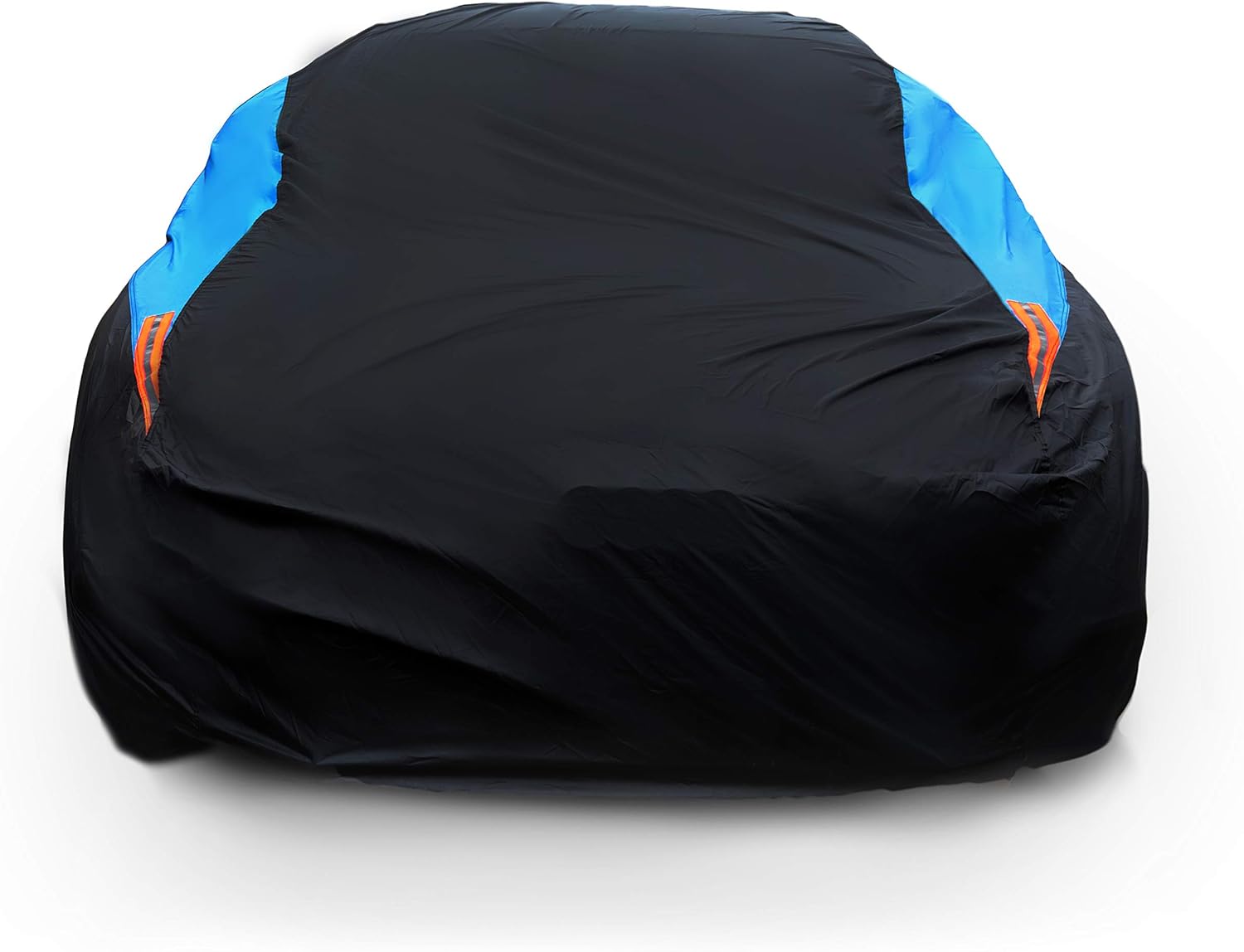
How to Choose the Right Car Cover Size Fast
⚡ Quick Answer
The right car cover size comes from three real measurements — length, width, and height — not your car’s model name. Measure bumper to bumper, mirror to mirror, and ground to roofline, then match those numbers to the maker’s size chart instead of a generic “sedan” or “SUV” label.
How to measure your car for a cover
-
1
Measure length from the front bumper tip to the rear bumper tip. -
2
Measure width at the widest point, mirror to mirror. -
3
Measure height from the ground to the highest roof point.
Mistakes that ruin the fit
-
✓
Don’t buy by “sedan” or “SUV” alone — trims vary by inches. -
✓
Don’t skip roof racks, spoilers, or lifted suspension in your numbers. -
✓
Don’t round down — a snug cover beats a stretched one.
Daniel Brooks has watched plenty of car covers fail the same way. The owner buys a “universal sedan” cover online, wrestles it onto the car, and it flaps loose at the corners by the first windy night. Within a month, grit trapped under that loose fabric starts scratching the clear coat it was supposed to protect.
That’s the real cost of guessing on cover size. A cover that’s too tight strains at the seams and drags on your paint. One that’s too loose lets in dust, moisture, and wind — and wind is what tears covers apart. Getting the size right isn’t fussy; it’s the one step that decides whether your cover protects your car or damages it.
Below, we’ll walk through exactly how to measure your vehicle, how to read a sizing chart, and which cover style fits your situation best.
📌 Key Takeaways
-
→
Three measurements matter: length, width, and height — never the car’s trim name alone. -
→
A loose cover causes more paint damage than a snug one because it flaps and traps grit. -
→
Custom-fit covers cost more but track your exact body lines, unlike universal covers. -
→
Roof racks, spoilers, and lift kits change your true dimensions — measure with them on.
Why Car Cover Size Actually Matters
A cover’s whole job is to sit close enough to your car that wind can’t get under it, yet loose enough that it doesn’t rub the paint raw. That balance only happens with the right size.
Outdoor covers face constant wind pressure. If a cover has more than a few inches of slack at the bumpers, that fabric lifts, drops, and drags with every gust. Over months, this abrasive motion wears through clear coat the same way sandpaper does. Excess material that creates turbulent airflow lifts the cover’s edges, draws in dust, and creates abrasive contact points against the paint.
You might be thinking a slightly loose cover is the safer bet. It isn’t. A cover that’s too tight can also fail — covers stretched beyond their intended dimensions develop stress fractures in the stitching over time. The goal is snug, not stretched, and not baggy.
7 min
Typical time to measure a car correctly
3
Core measurements you need: length, width, height
4–6 in
Max slack before flapping becomes a real problem
How to Measure Your Car for a Cover, Step by Step
Skip the sizing chart guesswork and take these three measurements yourself. You’ll need a tape measure, a helper, and about seven minutes.
🔢 Step-by-Step: Measuring for a Car Cover
-
1
Measure total length
Run the tape from the very front of the front bumper to the very back of the rear bumper, in a straight line.
-
2
Measure total width
Measure left to right across the widest part of the car, including tires but not side mirrors.
-
3
Measure total height
Measure the tallest point of the car from the ground up, including roof racks or other accessories.
-
✓
Round up and check the chart
Round each number up to the nearest inch, then match it to the manufacturer’s size chart — not a generic body-style label.
Here’s why that matters: two cars in the same class can differ by several inches. A 2022 Honda Accord LX and a 2022 Accord Touring can vary by more than 3 inches in overall length due to bumper design, yet retailers often lump both into the same “medium sedan” category. That gap is exactly where a bad fit starts.
⚠️ Warning
Always measure with roof racks, spoilers, tow hitches, or lift kits attached. These add real inches, and a cover sized without them will pull tight and stress at the seams.
Universal vs. Semi-Custom vs. Custom-Fit: Which Size Category Fits You?
Once you have your measurements, you’ll choose between three fit categories. Each trades cost against precision, so the right pick depends on how and where you park.
This table compares the three main car cover fit types side by side.
| Fit Type | How It’s Sized | Best For |
|---|---|---|
| Universal | Length ranges (e.g., 186–193 in) | Occasional indoor use, tight budgets |
| Semi-custom | Body-style specific with elastic hems | Daily outdoor parking, moderate wind |
| Custom-fit | Exact year, make, and model pattern | Long-term outdoor storage, collector cars |
Custom-fit covers cost more, but they follow your car’s exact body lines instead of a size range.
Universal covers are less expensive and follow a one-size-fits-all approach, typically split into a few categories like sedan, hatchback, SUV, and truck. That works fine for a car kept mostly in the garage. But if your car lives outside, that same looseness becomes a liability.
So what does this mean for you? If you park outdoors daily, spend the extra money on a semi-custom or custom-fit cover. If your car mostly sits in a garage and just needs dust protection, a well-measured universal cover is enough.
Does Indoor or Outdoor Parking Change the Size You Need?
Yes — and this is where a lot of buyers get tripped up. The size number stays the same, but how snug that size needs to fit changes with where the car lives.
Indoor covers exist mainly to block dust and light scratches, so a little extra slack barely matters. An outdoor cover needs a more secure fit to handle wind and weather, while an indoor cover doesn’t need that same level of tightness. That’s why some buyers who size correctly still end up disappointed — they bought an indoor-style loose fit for a car that lives in the driveway.
📋 Fit Priorities by Parking Situation
-
Outdoor, windy area: Choose a snug, size-accurate cover with elastic hems and tie-down straps. -
Rainy climate: Size the cover to extend low enough to block splashback near the wheels. -
Snowy climate: Size up slightly to accommodate the extra bulk of a heavier winter-rated fabric. -
Garage/indoor: A correctly sized universal cover is enough; tightness matters less here.
UV exposure is a major, well-documented risk factor for surface damage over time, which is another reason outdoor cars benefit from a properly sized, UV-resistant cover rather than a loose indoor-style one.
Recommended Product
EzyShade 10-Layer Car Cover, Waterproof All Weather (Sized by Vehicle Chart)
★★★★☆ 4.3 out of 5 stars on Amazon
Worth a look because it’s sold against a specific vehicle size chart rather than a vague “sedan” label, which lines up directly with the measure-first approach in this guide.
As an Amazon Associate, we earn from qualifying purchases.
What Most People Get Wrong About Car Cover Sizing
Even careful car owners fall into a few predictable traps. Here are the three that come up most often.
✅ What Actually Works
-
+
Measuring your own car, every time, even after past purchases -
+
Matching fit tightness to indoor vs. outdoor use -
+
Checking for mirror and antenna pockets before buying
⚠️ Common Mistakes
-
−
Buying by model name instead of real dimensions -
−
Assuming “bigger is safer” and buying oversized -
−
Ignoring roof racks, spoilers, or lift height
The “bigger is safer” myth is the most damaging one. Buying an oversized cover thinking it offers more protection often causes flapping and, in turn, paint damage — the exact opposite of what buyers expect. Precise sizing beats generous sizing every time.
Conclusion
Choosing the right car cover size comes down to real numbers, not guesswork. Measure length, width, and height with any racks or add-ons attached, then match those numbers to an actual size chart. Match the fit tightness to where your car actually parks — snug for outdoor, more relaxed for indoor. Do this once, and your cover will protect your paint instead of scratching it.
One thing to do right now: grab a tape measure and record your car’s length, width, and height before you shop for a cover.
Frequently Asked Questions
How do I know what size car cover to buy?
Measure your car’s length, width, and height yourself, then compare those numbers to the manufacturer’s size chart. Don’t rely on your car’s body-style label alone, since trims within the same class can differ by several inches.
Is it better to size up or size down on a car cover?
Size down slightly rather than up. A snug cover holds its shape in wind, while an oversized one flaps, traps debris, and can scratch the paint it’s meant to protect.
What’s the difference between universal and custom car cover sizing?
Universal covers use broad length ranges that fit several models loosely. Custom-fit covers are cut to your exact year, make, and model, so they track your car’s body lines instead of a generic range.
Do I need a different size for indoor vs. outdoor car covers?
The dimensions stay the same, but outdoor covers need a tighter, more secure fit to resist wind. Indoor covers can sit a little looser since they mainly block dust and light scratches.
Should I include roof racks or a spoiler when measuring for a cover?
Yes. Measure height including roof racks and length including spoilers or aftermarket bumpers. Leaving these out is one of the most common reasons a “correctly sized” cover ends up too tight.
How much does the wrong size car cover damage a car?
A poorly sized cover can wear through clear coat within months, since a loose cover flaps and grinds trapped grit against the paint, while an overly tight one stresses seams and can tear.
Can I use a car cover from a different model as long as it’s close in size?
Only if the length, width, and height match within an inch or two. “Close” body styles can still differ enough in bumper shape or roofline to leave gaps or create excess slack.
Sources: UV-A/UV-B transmission research, National Center for Biotechnology Information · Car Care Council, vehicle maintenance guidance

Daniel Brooks is an automotive writer and product researcher focused on car accessories, car tech, maintenance, and practical driving guides. At Plug-in Car World, he helps drivers make smarter automotive decisions through honest reviews and research-driven content.