How to Measure Your Car for the Perfect Cover
⚡ Quick Answer
Measuring your car for a cover takes three numbers: length (bumper to bumper), width (widest point), and height (ground to roofline). Grab a tape measure, park on flat ground, and round each number up to the next inch so the cover slips on and off easily.
3 Measurements You Need
-
1
Length: front bumper tip to rear bumper tip -
2
Width: widest point, side to side -
3
Height: ground to the highest fixed point
Mistakes That Ruin a Fit
-
✓
Don’t measure over the curves of the hood or roof -
✓
Don’t forget roof racks, spoilers, or a spare tire -
✓
Don’t round down when a number falls between sizes
Daniel Brooks has watched it happen dozens of times: someone unboxes a new car cover, throws it over the hood, and finds it’s fighting the mirrors or dragging on the driveway like a bedsheet. A generic “fits most sedans” cover often doesn’t fit your sedan. Maybe your trim has a roof rack, a rear spoiler, or oversized tires that a standard size chart never accounted for.
The good news is that getting it right only takes a tape measure and about ten minutes. This guide walks through exactly which measurements matter, the tools that make it easy, and the mistakes that send most covers back for an exchange.
📌 Key Takeaways
-
→
Length, width, and height are the three core numbers every cover size chart asks for. -
→
Always measure in a straight line, never over the contours of the car’s body. -
→
Round every measurement up, not down, so the cover slides on without stress on the seams. -
→
Custom-fit covers need extra measurements like wheelbase; universal covers just need length, width, and height.
What Tools Do You Need to Measure a Car for a Cover?
You need a soft or retractable tape measure, a flat driveway, and about ten minutes. A metal tape measure works for straight runs, while a soft fabric tape is easier if you also want to note contour points for a custom cover.
Park the car on level ground first. Close every door, the trunk, and the hood so nothing throws off the numbers. If your mirrors fold in, decide now whether you’ll cover the car with them extended or tucked in, since that changes your width measurement.
✅ Tip
Working alone? Tape one end of the measuring tape to the bumper with painter’s tape so it doesn’t slip while you walk the length of the car.
How Do You Measure the Length of Your Car?
Length is the most important number on the size chart. Measure in a straight line from the furthest point on the front bumper to the furthest point on the rear bumper, including any spare tire, bumper guard, or rear-mounted rack.
Stand at the nose of the car and hold the tape at the tip of the bumper. Walk the tape straight back along the side of the vehicle to the rear bumper, keeping it taut and parallel to the ground rather than draped over the hood and roof.
⚠️ Warning
Measuring over the hood and roof instead of straight along the side adds several inches and will give you the wrong size.
How Do You Measure the Width and Height of Your Car?
Width is measured at the widest point of the car, side to side. Most guides include mirrors in this number since a cover has to clear them; check your chosen brand’s instructions, since a few exclude mirrors and use separate mirror pockets instead.
Height runs from the ground to the highest fixed point on the car. That’s usually the roofline, but a roof rack, cargo box, or shark-fin antenna can be taller. Stop just short of the ground on your height number if you want a little airflow gap under the hem.
Here’s how the three core measurements compare for a typical sedan versus a mid-size SUV, to show how much the target numbers can shift by body style.
Ranges are general references, not a substitute for measuring your specific car. Treat these as a sanity check on your own numbers, not a final answer.
Do You Need Extra Measurements for a Custom-Fit Cover?
Yes. Custom and semi-custom covers use a few extra numbers to get pockets and seams to line up exactly, while universal covers only need length, width, and height.
🔢 Extra Measurements for Custom Fit
-
1
Wheelbase
Center of the front wheel to the center of the rear wheel, used to line up wheel pockets.
-
2
Mirror position
Distance from the roofline to the mirror, so the mirror pocket sits in the right place.
-
✓
Add-on features
Spoiler height and length, or a brush guard, so the cover clears every accessory.
If your car has a rear spoiler that rises above the trunk line, measure its height and length separately and mention it when ordering a custom cover. The same goes for a brush guard on a truck or Jeep, which should be folded into your overall length number.
How Do You Use Your Measurements to Pick a Size?
Compare your three numbers against the manufacturer’s size chart and pick the size that covers your largest dimension, even if it means sizing up on the other two.
✅ Do
-
+
Round each measurement up to the next inch -
+
Choose the larger size if you fall between two -
+
Re-check the chart after any accessory changes
⚠️ Don’t
-
−
Round down to save a size on the chart -
−
Trust a “fits most” label without checking dimensions -
−
Forget to remeasure after adding a roof box or rack
A cover that’s slightly too big is far safer than one that’s too small. Extra fabric can be cinched down with straps, while a cover that’s too tight puts stress on the seams and can damage mirrors or antennas over time.
Why Does an Accurate Fit Actually Matter?
Fit matters because a loose cover moves. When wind gets underneath a baggy cover, it flaps and rubs trapped dust and grit against the paint like sandpaper, which is one of the most common ways covers end up causing the scratches they were bought to prevent.
The sun is the other reason fit matters so much for outdoor storage. Left unprotected, ultraviolet rays can dull a paint job’s shine in just a few seasons, and a snug-fitting cover is one of the simplest ways to block that exposure. A cover that fits well stays put and keeps that UV barrier consistent, while a loose one can shift in the wind and expose panels anyway.
A perfectly measured cover isn’t about looks. It’s the difference between a barrier that protects your paint and one that damages it.
Recommended Product
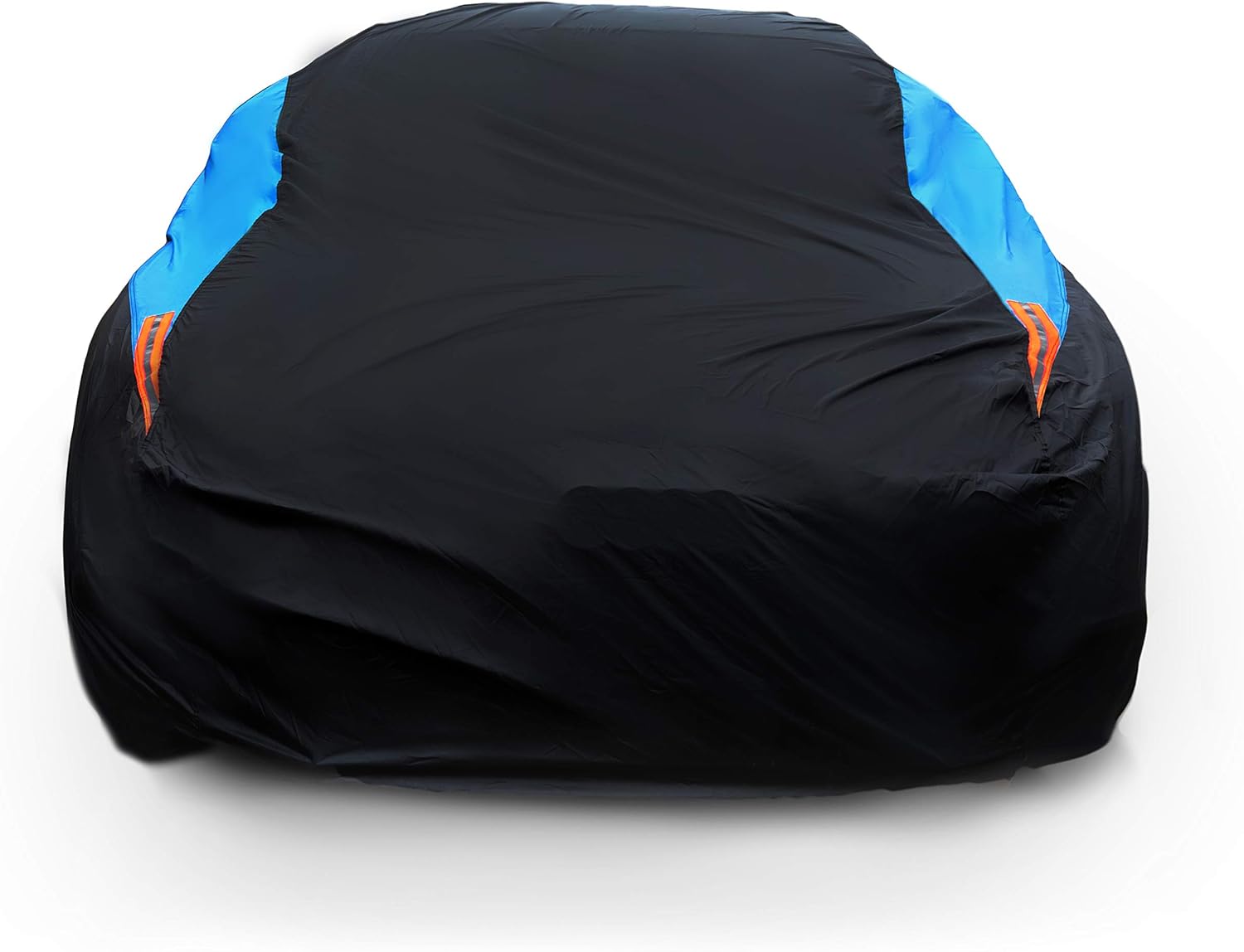
EzyShade 10-Layer Car Cover Waterproof All Weather — See Vehicle Size-Chart for Accurate Fit
★★★★☆ 4.3 out of 5, Best Seller in Full Exterior Covers on Amazon
Once you have your length, width, and height, this cover’s detailed size chart makes it easy to match your numbers to the right letter size, and it backs the fit with a Great Fit Guarantee.
As an Amazon Associate, we earn from qualifying purchases.
What Most People Get Wrong About Measuring for a Car Cover
“My make and model dropdown is close enough.” Manufacturer databases are a starting point, not a guarantee. Aftermarket wheels, a lift kit, or a factory option package can shift your real dimensions enough to matter.
“Bigger is always safer.” A cover that’s several sizes too large defeats the purpose. Excess fabric pools at the ends, catches wind, and drags on the ground where it picks up moisture.
“I can eyeball it.” Guessing measurements is the single biggest reason covers get returned. Ten minutes with a tape measure prevents almost every fit complaint.
Conclusion
Measuring for a car cover comes down to three numbers: length, width, and height, taken in straight lines with the car parked and closed up. Round up, account for roof racks or spoilers, and match your numbers against the size chart rather than the model name alone.
One thing to do right now: grab a tape measure and record your car’s length before you do anything else. It’s the number every size chart weighs most heavily, and it takes less than a minute.
Frequently Asked Questions
How do I measure my car for a cover?
Measure length from the front bumper tip to the rear bumper tip, width at the widest point side to side, and height from the ground to the highest fixed point. Keep the tape straight, not over the curves, and round each number up to the next inch.
Should a car cover include the mirrors in the width measurement?
It depends on the brand. Some ask for width including mirrors since the cover stretches over them, while others exclude mirrors and use separate mirror pockets instead. Check the specific manufacturer’s instructions before measuring.
What happens if a car cover is too small?
A too-small cover stresses the seams and can pull tight against mirrors, antennas, or trim, sometimes damaging them. It may also leave parts of the vehicle exposed to rain and UV rays.
What happens if a car cover is too big?
An oversized cover can flap in the wind, drag on the ground, and trap moisture and dust underneath. Loose fabric rubbing against the paint in the wind is one of the most common causes of surface scratches.
Do I need different measurements for a custom-fit cover versus a universal cover?
Yes. Universal and semi-custom covers only need length, width, and height. Custom-fit covers also use wheelbase and mirror position so the pockets and seams line up exactly with your vehicle.
Should I measure with the car’s mirrors folded in or extended?
Measure however you plan to store the car day to day. If you always fold the mirrors in before covering it, measure that way; if you leave them extended, include that width in your measurement instead.
Do roof racks and spoilers change my measurements?
Yes. A roof rack or cargo box becomes your new highest point for the height measurement, and a spoiler that rises above the trunk line should be measured separately and added to your length.

Daniel Brooks is an automotive writer and product researcher focused on car accessories, car tech, maintenance, and practical driving guides. At Plug-in Car World, he helps drivers make smarter automotive decisions through honest reviews and research-driven content.