
What Is the Safest Type of Steering Wheel Cover? Safety Guide
Quick Answer
The safest type of steering wheel cover is a custom-fit, lace-up wrap or a low-profile cover made from high-friction materials like perforated leather, Alcantara, or textured silicone. Unlike loose universal slip-on covers, tightly secured styles eliminate dangerous wheel slippage during sudden maneuvers.
Why Steering Wheel Cover Safety Matters
A steering wheel cover is one of the most common interior modifications for a vehicle. While many drivers install them to improve grip, protect worn material, or enhance comfort against extreme temperatures, safety is rarely treated as the top priority.
The primary safety hazard of any steering wheel cover is unexpected slippage. If a cover rotates independently around the steering wheel core while you are attempting an evasive maneuver, you can lose directional control instantly. Therefore, the safest cover is defined not just by its texture, but entirely by how securely it attaches to the steering wheel frame.
Comparing Steering Wheel Cover Mount Types
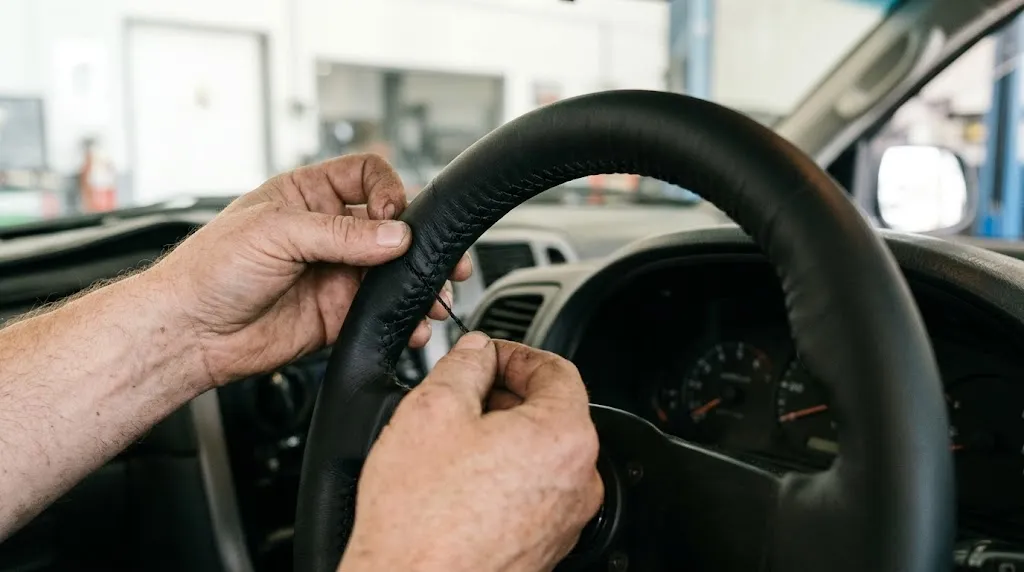
The attachment method dictates whether a cover remains stable under high-stress steering inputs. The mechanical design of the cover determines its safety tier on the road.
| Cover Mount Type | Stability & Grip | Safety Risk Level |
|---|---|---|
| Lace-Up / Custom-Fit Wraps | Fixed tightly via stitching; zero independent rotation. | Lowest Risk (Safest) |
| Textured Silicone / Rubber Slips | High friction lining, but relies purely on elasticity. | Moderate Risk |
| Loose Universal Fur / Fabric Covers | Prone to bunching, shifting, and hand slipping. | High Risk (Unsafe) |
Understanding how these options compare helps explain why structural attachment is just as critical as the surface material you touch.
Safest Material Options for Control and Grip
Once a secure fit is guaranteed, the material composition determines how well your hands maintain traction under various driving conditions, such as summer heat or wet palms.
Perforated Genuine Leather
Perforated leather offers balanced traction while allowing airflow to reduce palm sweating. It provides a firm, reliable tactile connection to the steering wheel frame without adding excessive thickness.
Alcantara and High-Grade Suede
Popular in performance applications, Alcantara provides exceptional micro-friction. It prevents hands from sliding even during dynamic steering movements, though it requires regular maintenance to preserve its texture.
Textured Silicone
Silicone covers grip the steering wheel rim tightly due to their inner rubberized texture. However, drivers should select low-profile versions to avoid making the steering wheel feel overly bulky.
Warning
Avoid thick, plush, furry, or loose-fitting universal steering wheel covers. These materials can bunch up under your palms during tight turns, preventing smooth steering recovery.
Key Factors That Compromise Steering Safety
Even the highest-quality cover can become dangerous if selected or installed incorrectly. Several practical variables influence daily driving safety:
- Incorrect Diameter: A cover that is too large will slip around the rim, while an overly tight generic cover can warp or tear during installation.
- Bulkiness: Overly padded covers increase the outer diameter of the steering wheel, which can negatively alter grip ergonomics for drivers with smaller hands.
- Environmental Wear: Over time, constant exposure to sunlight degrades interior adhesives and rubber backings, causing older covers to loosen unexpectedly.
How to Install a Steering Wheel Cover Safely

Proper installation ensures the cover remains rigid and stable under pressure. Follow these steps to maximize security:
- Measure Your Steering Wheel: Confirm the exact outer diameter and grip thickness of your steering wheel before purchasing a cover.
- Warm the Material: If installing a tight rubber or leather core cover, let it sit in warm sunlight or near room temperature for 30 minutes to increase flexibility.
- Center and Align: Start fitting the cover from the top center of the wheel, working evenly down both sides.
- Lock into Place: Ensure the inner lining grips the wheel tightly all the way around before driving. For lace-up models, pull each stitch firmly to eliminate slack.
Related Product
Lace-Up Genuine Leather Steering Wheel Wraps
A tight, custom-stitched leather wrap ensures a secure, slip-free grip that enhances vehicle control.
As an Amazon Associate, we earn from qualifying purchases.
Frequently Asked Questions
Are universal steering wheel covers safe?
Universal slip-on covers carry a higher risk of shifting if they do not match your exact steering wheel diameter. Tight, custom-fit or lace-up options provide much higher stability.
Do steering wheel covers interfere with airbags?
Standard steering wheel covers wrap around the outer rim and do not obstruct the center horn pad or driver airbag deployment zone. However, ensure no accessories block the steering hub.
How can I stop my steering wheel cover from sliding?
If a cover slips, it lacks proper tension. Replacing it with a snug, lace-up style or a model featuring a specialized anti-slip rubber inner lining will eliminate movement.
Is Alcantara safe for daily driving?
Yes, Alcantara offers exceptional friction and prevents hand slippage. It is widely used in motorsport applications for its superior tactile feedback.
How often should a steering wheel cover be replaced?
Inspect your cover annually. If the material begins to crack, stretch out, or rotate independently during steering inputs, replace it immediately.
Can I use a steering wheel cover in extreme hot and cold weather?
Yes, but choose breathable materials like perforated leather or Alcantara to prevent the surface from becoming excessively hot in summer or freezing in winter.
Conclusion
Prioritizing safety when choosing a steering wheel cover means looking past decorative trends and focusing on structural stability. Selecting a tight, custom-fit wrap or a high-friction material ensures your hands maintain total control over the vehicle in any driving condition.

Daniel Brooks is an automotive writer and product researcher focused on car accessories, car tech, maintenance, and practical driving guides. At Plug-in Car World, he helps drivers make smarter automotive decisions through honest reviews and research-driven content.
