
How Tight Should a Steering Wheel Cover Fit? Safety Guide
Quick Answer
A steering wheel cover must fit completely snug with zero slack, rotation, or shifting when you turn the wheel. If the cover slips independently of the steering wheel itself, it is dangerously loose and poses a serious vehicle control hazard.
Installing a steering wheel cover is one of the quickest ways to upgrade your cabin’s look, protect worn factory leather, or improve grip comfort during extreme weather. However, many drivers run into a frustrating dilemma: stretch-on covers often feel impossibly tight during installation, leading some to wonder if they bought the wrong size or if they are doing something wrong.
Understanding the exact fit requirements helps ensure that your interior upgrade remains safe and functional rather than becoming a hidden driving hazard.
Why Fit Tightness Matters for Safety

A steering wheel cover is not purely decorative; it directly interfaces with how you control your vehicle. When you execute emergency maneuvers, sharp turns, or rapid lane corrections, your hands rely on absolute traction and stability.
If a cover has any slack or loose fabric, the outer material can rotate around the steering wheel rim independently. This dangerous delay means your hands might turn the cover without actually turning the wheels underneath, drastically reducing your control in critical fractions of a second.
A properly tensioned cover locks firmly against the factory steering wheel core, moving as a single unified unit under any steering angle.
Signs Your Steering Wheel Cover Fits Correctly
Recognizing the boundary between a correct fit, an overly loose fit, and an excessively tight cover prevents installation frustration and safety risks.
A correct installation exhibits specific physical traits:
- Zero slippage: The cover does not twist, bunch, or shift when you apply rotational force with your palms.
- Even tension: The material is distributed uniformly around the entire circumference without stretched thin spots or loose pockets.
- Flush edges: The inner lining hugs the front and back of the steering wheel rim closely without gaping seams.
If the cover passes these checks, the tension is correct even if it required significant physical effort to mount.
Why Quality Covers Are Intentionally Designed to Be Tight
Manufacturers design standard stretch-on steering wheel covers to be slightly smaller than the actual outer diameter of the steering wheel. This deliberate undersizing creates the necessary friction and tension to keep the accessory anchored permanently.
Materials like synthetic leather, genuine leather, and thick rubber require mechanical stretching to snap into position. If a cover slips effortlessly onto a steering wheel without any resistance or pulling, it is almost certainly too large and will eventually loosen further during normal driving conditions.
Key Insight
If your measurements fall between two standard accessory sizes, choosing the slightly smaller option is almost always recommended. A tight cover stretches into place and provides secure friction, whereas a loose cover cannot be corrected once installed.
How to Safely Install a Tight Steering Wheel Cover
Because proper covers are tight by design, installing them can strain your hands. Forcing a cold, stiff material onto a wheel risks tearing the seams or damaging your vehicle’s underlying factory steering wheel wrap.
You can make installation significantly easier without compromising final tightness by following a few practical preparation steps:
- Warm up the material: Place the steering wheel cover out in direct sunlight for 10 to 15 minutes, or use a hair dryer on a medium setting to warm the inner core. Heat increases material flexibility and elasticity.
- Start from the top: Align the center of the cover and hook it securely over the top section of the steering wheel.
- Work outward evenly: Pull the cover downward over the left and right sides simultaneously, maintaining balanced tension so the material does not skew or twist.
- Secure the bottom last: The final bottom section will require the most leverage. Use your palms or enlist a helper to stretch the remaining lip over the lower rim.
What to Do If Your Cover Is Too Loose or Too Tight
Checking your fit immediately after installation prevents long-term safety issues. If you encounter sizing problems, specific adjustments resolve the issue:
- If the cover rotates during driving: It is too large or has stretched out due to heat and age. Remove it immediately and replace it with a properly sized model. Never attempt to secure a slipping cover with tape or adhesives.
- If the cover feels impossible to mount: The material is likely too cold or the diameter is incorrect. Re-warm the cover to expand its flexibility. If it still falls short of the bottom rim by more than an inch after heating, exchange it for the correct size category.
Related Product
Steering Wheel Cover Installation Tools & Grips
Explore correctly sized steering wheel covers designed for secure friction fit and durable daily driving control.
As an Amazon Associate, we earn from qualifying purchases.
Frequently Asked Questions
Should a steering wheel cover be difficult to put on?
Yes, a quality cover should offer noticeable resistance during installation. Because it must remain firmly anchored to prevent dangerous spinning while driving, it is manufactured slightly smaller than the wheel itself. Warming the material beforehand makes installation manageable while retaining the tight final fit.
Can a loose steering wheel cover cause an accident?
A loose cover creates a major safety risk. If the outer material shifts independently of the steering wheel core when you attempt a quick evasive maneuver, your steering input can be delayed or disconnected entirely, leading to a loss of vehicle control.
How do I know my steering wheel diameter for a cover?
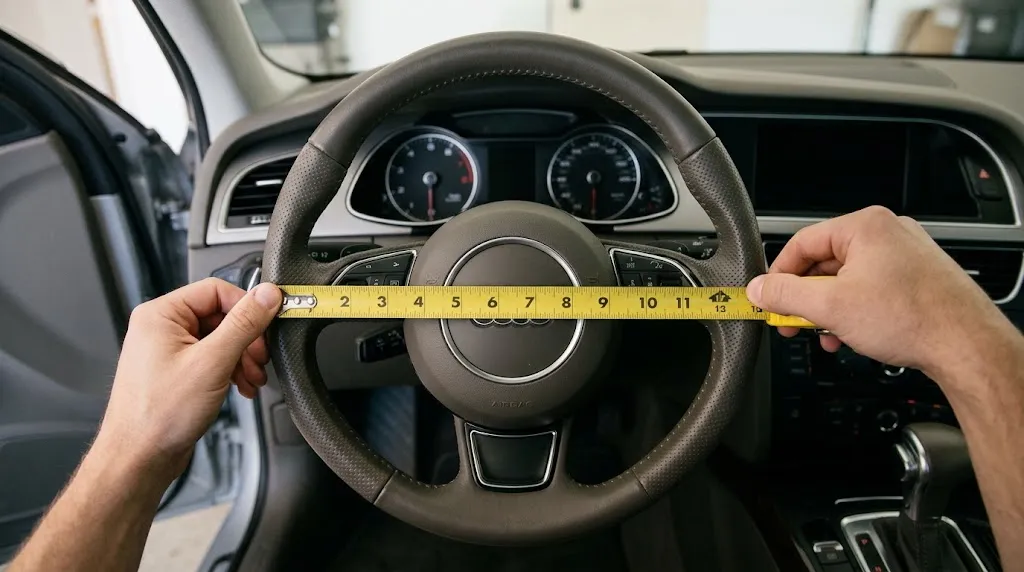
Most standard passenger vehicles, sedans, and compact SUVs utilize a steering wheel measuring approximately 14.5 to 15.5 inches in diameter. Measure straight across the center of your wheel from outer edge to outer edge with a tape measure to confirm your exact sizing before purchasing.
Can I use tape or glue to fix a loose steering wheel cover?
Adhesives, tape, or rubber shims should never be used to secure a loose cover. Under high cabin temperatures and friction from steering movements, adhesives fail unpredictably, creating an even worse hazard if the cover slips mid-turn.
How long do tight-fitting steering wheel covers last?
High-quality leather and synthetic covers typically last between 3 to 5 years depending on sun exposure and usage. Over time, constant friction and UV rays can degrade the inner core elasticity, meaning the cover should be inspected and replaced if any looseness develops.
Do stitched-on steering wheel covers provide a tighter fit than slip-on covers?
Stitched-on wrap covers generally provide the tightest, most customized fit because they conform precisely to the contours of the rim and are laced tightly into place by hand, eliminating any possibility of rotational slipping.
Conclusion
A properly fitted steering wheel cover must be tight enough to eliminate any risk of independent rotation or shifting. While the initial installation requires patience and physical effort—often aided by gentle warming—achieving a secure, snug fit is vital for maintaining total control over your vehicle. Taking the time to select the correct diameter and mounting the cover securely ensures both driving safety and long-lasting cabin comfort.

Daniel Brooks is an automotive writer and product researcher focused on car accessories, car tech, maintenance, and practical driving guides. At Plug-in Car World, he helps drivers make smarter automotive decisions through honest reviews and research-driven content.
