
How to Measure Your Steering Wheel for a Cover: Easy Guide
Quick Answer
To measure your steering wheel for a cover, use a flexible tape measure or string to measure the outer diameter from edge to edge straight across the center. Next, wrap your tape measure around the thickest part of the steering wheel grip to find the circumference.
Why Accurate Measurements Matter
Buying a steering wheel cover without measuring your wheel often leads to a cover that is either dangerously loose or impossible to install. A cover that slips during a sharp turn creates a serious safety hazard, while an undersized cover can tear at the seams during installation.
Most steering wheel covers are sold in standard sizing categories, such as small, medium, or large. However, automotive manufacturers vary significantly in rim thickness and outer diameter across different model years and trim levels. Taking two quick measurements takes less than a minute and guarantees a secure, professional fit.
Tools Needed for the Measurement Process
You do not need specialized automotive tools to measure your steering wheel. Gathering the right items beforehand makes the process quick and accurate.
- A flexible tape measure (tailor’s tape works best) or a long piece of non-stretch string
- A standard rigid ruler or tape measure
- A pen and paper to note your numbers
Step 1: Measuring the Outer Diameter
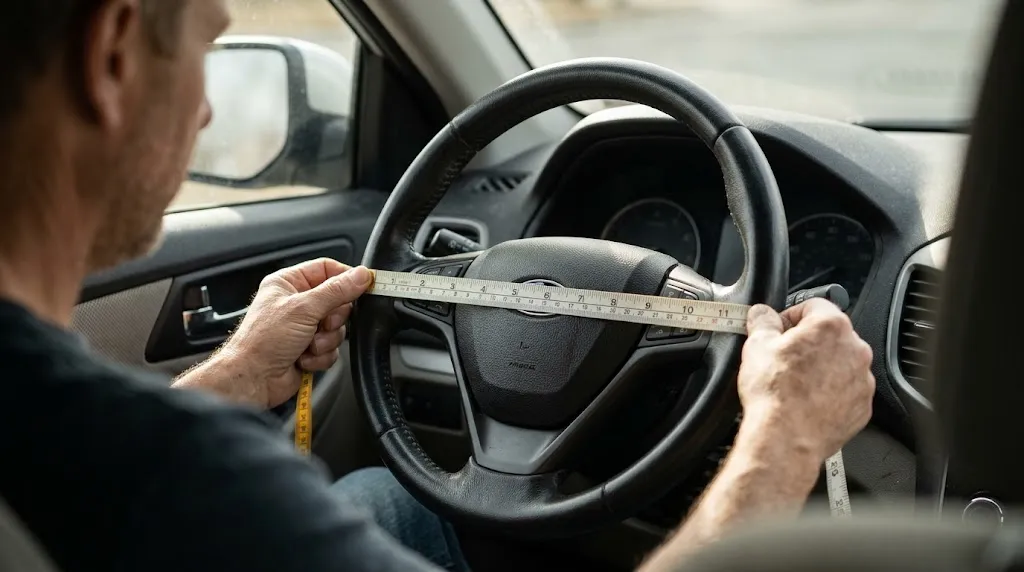
The outer diameter is the most critical measurement when shopping for a steering wheel cover. This tells manufacturers how wide the entire wheel spans from edge to edge.
- Sit in the driver’s seat and center your steering wheel so it points straight ahead.
- Place the zero end of your flexible tape measure against the far outside edge of the steering wheel.
- Pull the tape measure straight across the exact center of the hub to the opposite outside edge.
- Read the measurement in inches or centimeters and write it down.
If you are using a piece of string instead of a flexible tape measure, stretch the string across the center, mark where the opposite edge hits, and then lay the string flat against a rigid ruler to get your precise number.
Tip
Always measure from the outermost edge of the steering wheel material, not from the inner ring. Measuring from the inside will leave you with a cover that is far too small.
Step 2: Measuring the Grip Circumference
While diameter determines the overall span, the grip circumference determines how thick the padded ring is where your hands rest. Some performance wheels or trucks have much thicker grips than standard commuter cars.
- Wrap your flexible tape measure or string completely around the thickest part of the steering wheel rim.
- Note the distance it takes to wrap around the grip once.
- Compare this thickness to the grip specifications listed by steering wheel cover manufacturers.
Most standard steering wheel covers fit grip circumferences ranging from 3.5 inches to 4 inches. If your grip is unusually thick or thin, checking this dimension prevents you from buying a cover that fails to zip or lace up completely.
Standard Steering Wheel Size Reference
Once you have recorded your measurements, you can compare them against common industry sizing categories. Most passenger vehicles fall into a narrow range of standard dimensions.
| Cover Size | Outer Diameter Range | Common Vehicle Types |
|---|---|---|
| Small | 13.5 to 14 inches | Compact cars, sports cars |
| Medium | 14.5 to 15 inches | Sedans, crossovers, mid-size SUVs |
| Large | 15.5 to 16 inches | Full-size trucks, large SUVs, older vans |
If your measured diameter falls right between two standard sizes, check the manufacturer’s specific product packaging. Many elastic-core covers stretch slightly to bridge small sizing gaps, while leather-laced covers require exact matching.
Common Mistakes to Avoid When Measuring

Taking accurate dimensions is simple, but a few minor errors can throw off your final calculation. Keep these common pitfalls in mind before making your purchase.
- Measuring at an angle: If your tape measure does not pass directly through the absolute center of the steering wheel hub, your diameter reading will be artificially inflated.
- Leaving an old cover on: Always measure the bare steering wheel. Measuring over a worn-out or thick existing cover will result in purchasing a replacement that is too large.
- Ignoring specialized wheel shapes: Modern vehicles often feature flat-bottom steering wheels or sports grips. If your wheel is not a perfect circle, measure both the horizontal and vertical outer spans.
Warning
Never force an undersized steering wheel cover onto a wheel using excessive tools like screwdrivers. This can puncture the steering wheel material or damage built-in heating elements.
What to Do If Your Steering Wheel Is an Odd Size
Not every vehicle fits neatly into standard retail sizing buckets. Heavy-duty commercial trucks, older classic cars, and specialized sports vehicles frequently feature non-standard steering wheel dimensions.
If your steering wheel measures 16.5 inches or falls into another unusual range, look for universal laced covers rather than slip-on rubberized models. Laced steering wheel kits allow you to pull the material tight and trim excess cord, making them much more adaptable to unique custom interiors.
Related Product
Steering Wheel Covers
Explore a wide selection of standard and custom-sized steering wheel covers once you have confirmed your vehicle’s exact diameter.
As an Amazon Associate, we earn from qualifying purchases.
Frequently Asked Questions
Do all steering wheel covers stretch to fit?
Most standard slip-on covers feature an inner rubber or silicone core designed to stretch slightly during installation. However, leather or synthetic covers that require lacing offer very little stretch and rely entirely on precise measurements.
How do I measure a steering wheel with integrated audio controls?
Measure the outer metal or core rim directly, ignoring any plastic spoke housings or buttons mounted on the inner face. Cover manufacturers size their products based on the outer structural rim.
Can I measure my steering wheel without taking off my old worn cover?
It is not recommended. Old covers add extra thickness and diameter padding. Removing the old cover ensures your new accessory fits tightly and safely without slipping during operation.
What size is a standard car steering wheel?
The vast majority of standard passenger cars, sedans, and compact SUVs feature a steering wheel diameter of approximately 14.5 to 15 inches, which corresponds to a medium-sized cover.
Are steering wheel covers universal across all car brands?
No. While many vehicles share standard 15-inch wheels, heavy-duty trucks, subcompact hatchbacks, and luxury vehicles often feature smaller or larger diameters that require specific sizing.
What should I do if my measurement falls right between two sizes?
If you are choosing a slip-on rubberized cover, opting for the smaller size usually ensures a tighter, safer grip. For stitched or laced covers, refer to the manufacturer’s exact sizing chart.
Conclusion
Taking accurate measurements of your steering wheel takes only a moment and prevents the hassle of returns or loose installations. By checking both the outer diameter across the center and the grip thickness around the rim, you can easily match your vehicle to the correct cover size. Taking this quick step ensures a secure grip, enhanced driving comfort, and a clean interior look.

Daniel Brooks is an automotive writer and product researcher focused on car accessories, car tech, maintenance, and practical driving guides. At Plug-in Car World, he helps drivers make smarter automotive decisions through honest reviews and research-driven content.
