
Lace-On vs. Slip-On Steering Wheel Covers: Which Is Better?
Quick Answer
Lace-on steering wheel covers offer a permanent, flush, custom-like fit that never slips, making them ideal for long-term durability and safety, though they require significant installation time and patience. Slip-on covers install in seconds and provide immediate cushion or aesthetic changes, but they carry a higher risk of shifting or rotating over time if they lose tension.
Understanding the Core Differences
Choosing the right steering wheel cover changes your daily driving experience, affecting grip, hand comfort, and steering confidence. The market is broadly split between two main designs: lace-on covers and slip-on covers.
A slip-on cover relies on an inner rubber or silicone core stretched tightly over the rim of the steering wheel. A lace-on cover uses a continuous cord or thread threaded through pre-punched or stitched edges, allowing you to pull the material tight around the wheel frame manually.
The primary divergence lies in how they anchor to the wheel. While slip-ons depend entirely on elastic tension and friction, lace-ons use mechanical closure. This fundamental difference dictates installation effort, safety profiles, longevity, and tactile feel.
Installation Process and Time Investment
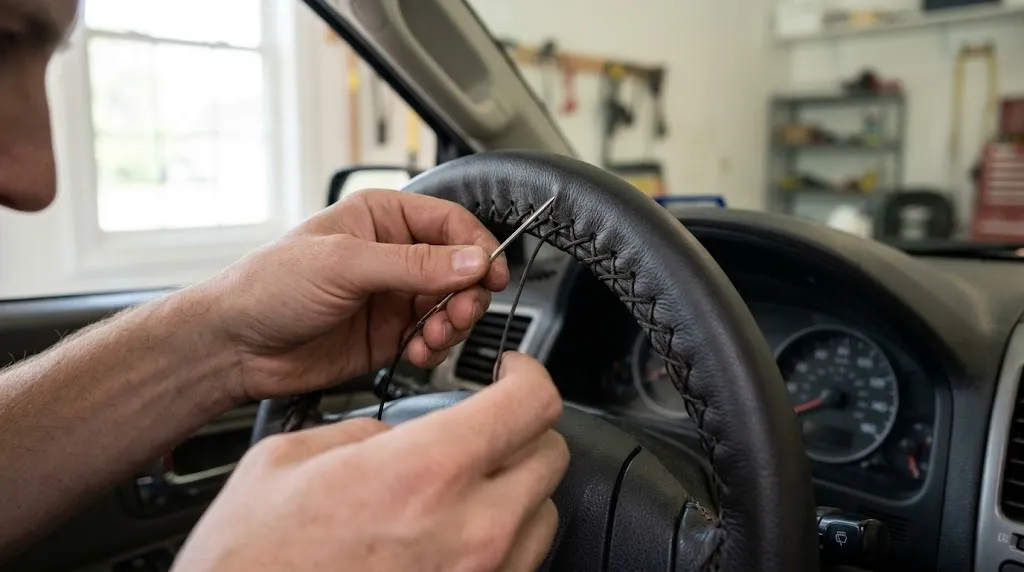
Installation is often the deciding factor for drivers who want an immediate upgrade without a tedious project.
Slip-on covers require minimal effort. You position the top over the steering wheel and pull downward, stretching the material around the sides and bottom. Depending on how stiff the inner core is—especially in cold weather—you may need some muscle leverage, but the process typically takes less than two minutes.
Lace-on covers demand an entirely different commitment. Installing a lace-on wrap takes anywhere from 30 to 60 minutes of careful hand-stitching. You must align the cover precisely, tuck the edges neatly into the spokes, and pull the cord tight at regular intervals to achieve a smooth, wrinkle-free surface. Rushing the lacing process leads to loose spots and uneven gaps.
Tip
If you choose a slip-on cover during colder months, warm it up indoors or leave your vehicle’s heater running for a few minutes before installing it. Warm rubber or TPE stretches significantly easier, making the fit much smoother.
Fit, Grip Stability, and Safety Performance
Safety is critical when modifying any primary vehicle control. A loose steering wheel cover can slip mid-turn, creating a dangerous delay in vehicle response.
Lace-on covers excel in structural stability. Because they are laced tightly around the entire rim and individual spokes, they become an integrated part of the steering wheel. They cannot rotate independently of the wheel frame, ensuring predictable friction even during emergency maneuvers.
Slip-on covers vary widely based on quality. Premium slip-ons feature a textured anti-slip rubber inner lining that grips the factory wheel tightly. However, low-cost or worn-out slip-on covers can lose their elasticity over time, particularly under intense summer heat. If a slip-on cover begins to rotate independently when you apply turning torque, it must be replaced immediately.
Warning
Never continue using a slip-on steering wheel cover that shifts, slides, or spins around the steering wheel rim while driving. Sudden loss of steering traction can cause a serious loss of vehicle control.
Aesthetics and Tactile Profile
The visual and physical finish of your steering wheel changes significantly depending on which option you select.
Slip-on covers add noticeable thickness and bulk to the steering wheel rim. For drivers with larger hands or those seeking a plush, cushioned grip, this extra padding reduces hand fatigue on long drives. However, bulkier slip-on options can feel oversized on smaller steering wheels or obscure digital instrument clusters behind the top rim.
Lace-on covers maintain a low-profile, OEM-like finish. Because they wrap closely around the original factory leather or polyurethane, they add minimal thickness. They are typically crafted from genuine leather, synthetic microfibers, or perforated materials that mimic factory-installed steering wheel wraps. The texture feels streamlined and professional, without the bulky seams common in slip-on designs.
Durability and Long-Term Wear
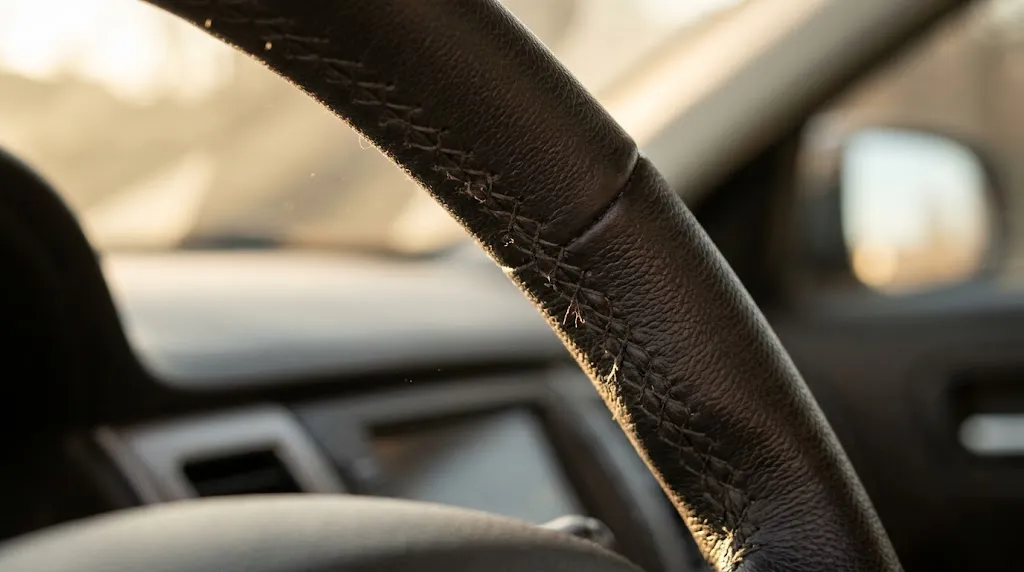
Long-term performance depends heavily on material quality and environmental exposure, especially in vehicles parked under direct sunlight.
| Feature | Lace-On Cover | Slip-On Cover |
|---|---|---|
| Installation Time | 30 to 60 minutes | 1 to 5 minutes |
| Slippage Risk | Extremely low (secured by thread) | Moderate (relies on inner friction) |
| Profile Thickness | Slim, OEM-like feel | Thicker, cushioned feel |
| Removal/Swapping | Requires cutting thread | Easy to pull off instantly |
| Lifespan | Longer lasting if genuine leather | Shorter if elastic inner core degrades |
When you evaluate longevity, lace-on covers generally outlast slip-ons. Quality lace-on kits use durable leather or heavy-duty synthetic fibers anchored securely with nylon cord, meaning they resist shifting and friction wear over years of use.
Slip-on covers face structural degradation at the inner core. Constant exposure to extreme cabin heat causes cheap rubber or synthetic inner linings to dry out, crack, and lose elasticity, resulting in a loose fit that requires replacement.
Key Insight
A lace-on cover protects the underlying factory steering wheel material from oil, sweat, and UV rays more effectively than a slip-on cover because it covers the entire rim and spokes without leaving gaps where debris can accumulate.
Which Type Should You Choose?
Your choice ultimately depends on your priority between convenience and permanence.
Choose a lace-on steering wheel cover if you want a custom, professional finish that never slips, prefer a slim grip profile, and are willing to spend an hour meticulously stitching the cover into place for long-term durability.
Choose a slip-on steering wheel cover if you want instant installation, prefer a softer, thicker cushion for your hands, or like changing your vehicle interior’s look and feel with minimal effort.
Related Product
Leather Steering Wheel Wrap Kit
A durable, tight-fitting lace-on leather wrap that provides a custom factory feel and slip-free grip.
As an Amazon Associate, we earn from qualifying purchases.
Frequently Asked Questions
Do lace-on steering wheel covers damage the original steering wheel?
No, quality lace-on covers do not damage the underlying wheel. In fact, they protect the factory material from wear, sweat, and sun damage. However, pulling the lacing cord with extreme, uneven force can occasionally cause minor indentations on soft factory leather if over-tightened.
Can slip-on steering wheel covers fit all steering wheel sizes?
No, slip-on covers are manufactured in specific size ranges, typically standard 14.5 to 15.5-inch diameters. Measuring your steering wheel rim diameter and outer grip circumference before purchasing is essential to ensure a secure, safe fit.
Is it difficult to remove a lace-on steering wheel cover?
Removing a lace-on cover is straightforward but destroys the cover itself. You simply cut the stitching thread with a pair of scissors or a utility knife, and the wrap unwraps from the wheel.
Do slip-on covers interfere with heated steering wheels?
Thick slip-on covers act as an insulator, which significantly reduces the warmth you feel from a factory heated steering wheel. Thin lace-on leather covers transfer heat much more efficiently.
How do you clean a steering wheel cover?
Leather and synthetic lace-on covers can be wiped down with a damp microfiber cloth and mild automotive interior cleaner. Slip-on covers made of fabric or mesh can sometimes be spot-cleaned, while rubberized versions wash easily with mild soap and water.
Why do some slip-on covers slide while driving?
Slip-on covers slide when the inner rubber lining loses its elasticity due to age, heat exposure, or incorrect sizing. Once a slip-on cover begins to rotate independently under steering torque, it represents a safety hazard and must be replaced.
Conclusion
Deciding between a lace-on and a slip-on steering wheel cover ultimately comes down to a balance between installation effort and long-term security. If you value a permanent, flush, factory-grade finish that stays completely locked in place, a lace-on cover provides superior reliability. If you want a quick fix, added hand cushioning, and the flexibility to change your interior style in minutes, a quality slip-on cover delivers immediate convenience. Evaluate your patience for installation and your need for tight grip stability to make the right choice for your daily drive.

Daniel Brooks is an automotive writer and product researcher focused on car accessories, car tech, maintenance, and practical driving guides. At Plug-in Car World, he helps drivers make smarter automotive decisions through honest reviews and research-driven content.
