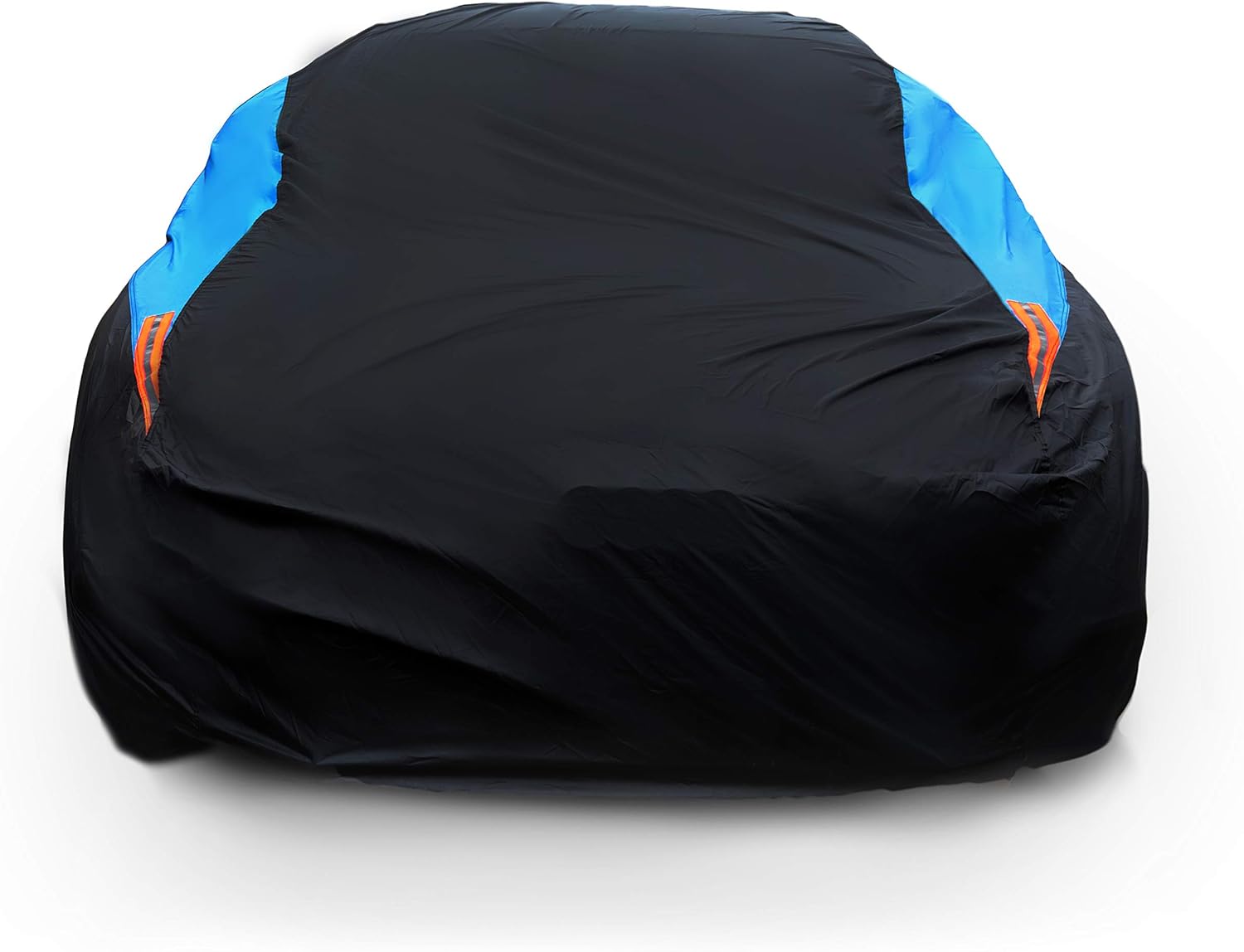
Are Car Cover Cable Locks Effective? The Honest Answer
⚡ Quick Answer
Car cover cable locks work — but not the way most people expect. They won’t stop a determined thief with bolt cutters. What they do extremely well is deter opportunistic theft, prevent covers blowing off in strong winds, and add just enough friction to make your car a harder target than the next one.
What you need to know about car cover cable locks:
- Theft deterrence: Stops casual thieves; won’t stop someone with bolt cutters.
- Wind protection: Keeps covers secure in winds above 40 mph.
- Grommet required: Your cover needs built-in grommets for the cable to anchor properly.
- Best use: Most effective as one layer in a broader vehicle security plan.
To get the most out of a cable lock:
-
✓
Choose a thick-shackle brass padlock, not a cheap thin one -
✓
Confirm your cover has reinforced grommets before buying -
✓
Position the lock underneath the car, not on the side
You walk out to your car and the cover is gone. No damage, no trace — just an empty parking spot where your $200 cover used to be. I’m Daniel Brooks, and after years of writing about vehicle protection, I’ve seen this happen more than it should. Car cover cable locks exist for exactly this reason — but do they actually work, or are they just a way to feel secure?
In this guide, I’ll break down what cable locks do well, where they fall short, and exactly how to use one right.
📌 Key Takeaways
-
→
Cable locks deter opportunistic theft but won’t stop a thief with bolt cutters. -
→
Wind gusts above 40 mph can pull an unsecured cover completely off your car. -
→
Standard kits include a 7–8 ft vinyl-coated steel cable, padlock, and 2 keys. -
→
Reinforced grommets are required — a cover without them makes cable locks useless. -
→
Brass padlocks with thick shackles resist weather and forced entry far better than cheap alternatives.
Do Car Cover Cable Locks Actually Work?
Yes — car cover cable locks work, but effectiveness depends on what you’re asking them to do. Against an opportunistic thief who wants a quick, tool-free grab, a cable lock is highly effective. Most casual thieves won’t bother with a cover that requires tools to remove — they’ll move on to an easier target.
Against someone willing to bring bolt cutters, a standard cable lock won’t hold. The cable can be cut. That’s the honest truth. But here’s why that matters less than you think.
Most car cover theft is opportunistic. A thief sees an expensive cover, checks if it pulls off easily, and takes it in under 30 seconds if it does. A cable lock eliminates that scenario entirely. It forces the thief to use tools, spend time, and draw attention — three things opportunistic thieves actively avoid.
30 sec
Time to grab an unlocked cover
$400
Max value of a quality outdoor cover
$15–40
Typical cost of a cable lock kit
Quality outdoor car covers cost between $150 and $400. Without a cable, someone pulls it off in seconds with no tools. A $20 cable lock protects that entire investment from the most common type of theft. The math works in your favor.
The National Highway Traffic Safety Administration (NHTSA) consistently reports that layered deterrence — multiple small friction points rather than one perfect lock — is the most effective approach to reducing vehicle-related theft. A cable lock is exactly that: one friction point in a smarter security plan.
So what comes next? Understanding exactly what’s in a cable lock kit helps you choose the right one. Not all kits are equal.
What Does a Car Cover Cable Lock Kit Include?
A standard car cover cable lock kit comes with 3 core components. Knowing what each part does helps you spot a quality kit from a cheap one that will fail in 6 months.
📋 What’s inside a car cover cable lock kit
-
Vinyl-coated steel cable (7–8 ft): Threads under the car through both grommet holes. The vinyl coating protects your undercarriage panels from scratches — bare steel will damage them. -
Padlock (keyed or combination): Secures the looped cable ends together. Quality kits use brass or laminated steel. Avoid locks with thin shackles — they cut quickly. -
2 keys (keyed kits only): Always store one spare in a safe location. If you lose both keys, the cable must be cut off with bolt cutters to remove the cover.
Some premium kits also include quick-grip friction clamps or adjustable cords for extra security. These hold the cover snug at multiple points, not just at the cable ends.
Recommended Product
Master Lock 715DAT Braided Steel Car Cover Cable with Laminated Steel Padlock, 7 ft
★★★★☆ Highly rated on Amazon
A trusted name in locks — this kit uses a braided steel cable and a laminated padlock built to resist cutting, weather, and corrosion, making it one of the most reliable options for securing an outdoor car cover.
As an Amazon Associate, we earn from qualifying purchases.
Now that you know what’s in the kit, the next step is installing it correctly. A cable that’s run the wrong way won’t secure anything.
How to Install a Car Cover Cable Lock
Installation takes about 2 minutes once you’ve done it once. The key is running the cable under the car correctly so it can’t be lifted from either side.
🔢 Step-by-Step: Installing Your Car Cover Cable Lock
-
1
Check your cover for grommet holes
Look along the bottom hem for small reinforced metal rings. If none exist, the cable has nothing solid to anchor to.
-
2
Thread the narrow cable end through the first grommet
Push the tapered tip through the grommet on one side of the cover’s hem, then pull it snug.
-
3
Run the cable under the car
Pass the cable under the vehicle from one side to the other. Keep the vinyl coating intact — bare steel will scratch the undercarriage.
-
4
Thread through the opposite grommet
Feed the cable up through the second grommet on the other side of the cover hem. Pull it firm so there’s no slack.
-
✓
Lock both cable ends together under the car
Snap the padlock through both looped ends. Position the lock underneath the vehicle — hidden and harder to access than if left on the side.
⚠️ Warning
If your cover doesn’t have reinforced grommets, threading a cable through plain fabric will tear the cover. Don’t force the cable through unprotected cloth — the whole setup will fail under tension.
With installation done, let’s look at the benefit that often surprises people the most: what cable locks do to your cover on a windy night.
Will a Cable Lock Keep Your Cover on in High Winds?
Yes — and this is where cable locks shine beyond theft protection. Winds above 40 mph will lift an unsecured car cover completely off your vehicle. Even a light 15 mph gust can shift a cover halfway open without you knowing, leaving your paint exposed to the elements it was supposed to block.
A cable lock running under the car holds the cover anchored at both sides simultaneously. The cover can't lift cleanly because the cable creates a fixed tension across the full width of the vehicle.
But here’s the thing: a shifted cover is actually worse than no cover in some situations. When cover fabric drags across your paint — especially if there’s dust or grit trapped underneath — it causes fine scratches and dull patches over time. A locked cover stays in place, stays flat, and keeps that abrasion from happening.
✅ Tip
If you park in a consistently windy area, run the cable with as little slack as possible. A taut cable holds the cover tighter and prevents side-to-side movement that creates fabric friction on your paint.
So whether your concern is theft or wind, the cable lock addresses both. Next, you need to decide which type of lock is the right fit for how you use your car.
Keyed Lock vs Combination Lock: Which Is Better for a Car Cover?
Both lock types work with car cover cable kits. The right choice depends on how often you remove the cover and where you park. Here’s a direct comparison to help you decide.
This table compares both lock types across the 4 factors that matter most for outdoor car cover use.
If you park in a high-theft urban area, choose a keyed brass padlock with a thick shackle. For a home driveway or low-risk parking, a combination lock removes the hassle without sacrificing meaningful protection.
One thing both lock types share: never buy a kit with a thin, hollow shackle. A cheap lock is the weakest point in the entire system. Spend the extra few dollars on a brass or laminated steel padlock — it’s the one part that actually needs to hold.
Does Your Car Cover Need Grommets for a Cable Lock to Work?
Yes — grommets are not optional. A car cover cable lock only works if the cover has built-in reinforced grommet holes for the cable to thread through. If your cover has plain fabric hems without grommets, the cable has no solid anchor point. Forcing the cable through bare fabric will tear the cover under tension.
Most quality outdoor car covers include reinforced grommets as a standard feature. Check the bottom hem of your cover — you’re looking for small metal rings, usually brass or steel, sewn into the fabric at each side. These are the only points strong enough to hold the cable under stress.
What if my car cover doesn’t have grommets?
You have 2 options. First, you can add aftermarket grommets — small snap-fit grommet kits are available and install without tools. They grip the fabric and create a solid anchor point. Some kits even include grommet patches as part of the cable lock set.
Second, you can replace the cover with one that has grommets built in from the start. For long-term outdoor use, a cover with factory-reinforced grommets handles cable tension far better than added-on versions.
💡 Key Insight
The grommet is what makes the cable lock work. A $20 cable lock paired with a quality grommet-equipped cover outperforms a $60 lock on a cover with no grommets. Always check the cover first.
With grommets confirmed, the lock chosen, and installation understood — the next question is what people consistently get wrong about cable locks. These misconceptions lead to bad purchasing decisions.
What Most People Get Wrong About Car Cover Cable Locks
Most of the frustration with cable locks comes from expecting them to do things they were never designed to do. Here are the 3 biggest misconceptions — and the truth behind each one.
Misconception 1: “A cable lock will stop any thief.” It won’t. A determined thief with bolt cutters can cut most car cover cables in under 30 seconds. Cable locks are built to stop casual, tool-free theft — not professional vehicle criminals. They add friction, not a vault.
Misconception 2: “If someone cuts the cover fabric around the grommets, the lock is useless.” Technically true — but it almost never happens. A thief who cuts the cover to steal it destroys the thing they came for. Car cover fabric can’t be resold once it’s slashed. Most thieves want an intact cover worth $200+, not a pile of ruined material. The lock makes cutting the fabric pointless.
Misconception 3: “The cable alone is the security — the padlock doesn’t matter.” The padlock matters a lot. A cable is only as secure as the lock holding it. Cheap padlocks with thin shackles can be snapped in seconds. If you buy a solid cable but put a $3 padlock on it, the weakest point defeats the whole system. Always pair a quality cable with a quality lock.
Should You Pair a Cable Lock With Other Security Measures?
For most people parking in a typical driveway or low-risk lot, a cable lock alone is enough. But if you park on a public street, in an urban area, or own a vehicle that attracts attention, adding one or two more layers raises the bar significantly for any thief.
📋 Effective security layers to pair with a cable lock
-
Park in a well-lit, visible area: Thieves avoid spots where they can be seen. Visibility alone deters a large percentage of opportunistic theft. -
Add a battery-powered motion alarm: A compact alarm clipped inside the cover triggers when disturbed. The sound alone causes most thieves to abandon the attempt. -
Mark your cover with your plate number: A cover marked with identifiable info is much harder to resell. Thieves skip marked items because they can’t move them. -
Use a steering wheel lock on high-value vehicles: If the goal is protecting the car itself — not just the cover — adding a visible steering wheel lock signals that this vehicle takes effort to steal.
For more complete guidance on layered vehicle theft prevention, the GEICO auto theft prevention guide and Colorado Auto Theft Prevention Authority both outline proven strategies that work alongside physical deterrents like cable locks.
The goal is never one perfect lock. The goal is making your car the hardest target on the street — and a cable lock is one solid step toward that.
Conclusion
Car cover cable locks are effective — within the right expectations. They stop casual, tool-free theft, hold your cover through strong winds, and protect a $150–$400 investment for under $40. They’re not a fortress, but they don’t need to be.
The key factors are grommet compatibility, padlock quality, and correct installation. Get those 3 things right and a cable lock earns its place on every outdoor car cover.
One thing to do right now: Check the bottom hem of your car cover for grommet holes. If they’re there, a cable lock kit is ready to use. If not, order a snap-fit grommet kit alongside your cable lock — 5 minutes of work, and your cover goes from vulnerable to secured.
Frequently Asked Questions
Can a car cover cable lock be cut?
Yes — most cable locks can be cut with bolt cutters by a determined thief. Standard vinyl-coated cables are not cut-proof. Their purpose is deterrence, not absolute security. They stop casual, tool-free theft, which makes up the vast majority of car cover theft cases.
What is the best car cover cable lock?
The Master Lock 715DAT is consistently well-rated for car cover use. It features a braided steel cable and a laminated steel padlock that resists both cutting and weather. For a budget option, any kit with a vinyl-coated cable and a brass padlock with a thick shackle will perform adequately.
Do all car covers work with cable locks?
No. Cable locks only work with covers that have reinforced grommet holes along the bottom hem. Covers without grommets can’t anchor a cable safely. You can add snap-fit aftermarket grommets to most covers, but the best option is choosing a cover with factory-built grommets from the start.
How long does a car cover cable lock last?
A quality vinyl-coated cable lasts several years outdoors if the coating stays intact. The padlock is the part most likely to fail first — exposure to rain and UV degrades cheap locks quickly. Choose a weatherproof brass or laminated steel padlock and inspect it every few months for rust or damage.
Can I use a car cover cable lock on a truck or SUV?
Standard 7–8 ft cables fit most passenger cars but may fall short on wide trucks and full-size SUVs. Before buying, measure the width of your vehicle at its widest point. If a cable can’t reach comfortably from grommet to grommet under the vehicle, it won’t hold properly. Look for kits with 8–10 ft cables for larger vehicles.
Will a car cover cable lock scratch my paint?
The cable itself won’t touch painted surfaces if installed correctly — it runs under the vehicle along the undercarriage. The vinyl coating on the cable protects the undercarriage panels from scratches. Never use a bare steel cable without coating, as it will scratch metal surfaces on contact.
Why do car covers get stolen in the first place?
Quality outdoor car covers retail for $150 to $400, making them an attractive target for opportunistic thieves. They’re easy to fold, carry away quickly, and resell at flea markets or online. Without a cable lock, removing one takes under 30 seconds and requires no tools — which is exactly why a lock changes the equation so effectively.

Daniel Brooks is an automotive writer and product researcher focused on car accessories, car tech, maintenance, and practical driving guides. At Plug-in Car World, he helps drivers make smarter automotive decisions through honest reviews and research-driven content.