
Best Steering Wheel Cover for Small Hands: Grip & Comfort Guide
Quick Answer
For drivers with smaller hands, the best steering wheel cover is typically a thin-profile, form-fitting cover made from high-friction materials like microfiber leather or textured silicone. Avoid thick, bulky padded wraps that increase grip diameter and cause hand fatigue.
Why Standard Steering Wheel Covers Often Fail Smaller Hands
Most standard steering wheel covers on the market are designed for average or large hands. They frequently feature thick foam padding, bulky seams, or thick rubber linings that substantially increase the overall circumference of the steering wheel.
When the grip diameter becomes too wide, drivers with smaller hands cannot wrap their fingers securely around the wheel rim. This lack of proper purchase forces an unnatural, strained grip, which quickly leads to hand fatigue during longer commutes, reduces tactile feedback from the road, and can compromise vehicle control in emergency steering maneuvers.
Selecting the right cover requires focusing on physical dimensions, material texture, and secure installation rather than generic styling or extra padding.
Key Factors to Evaluate When Shopping
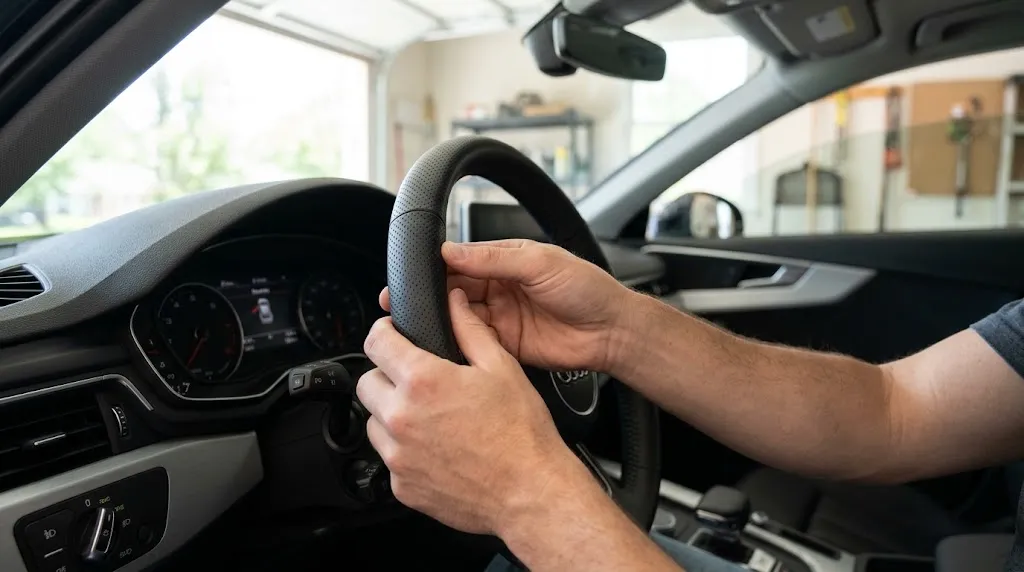
Before purchasing any steering wheel wrap, evaluate how its physical properties align with hand size and ergonomics.
Profile and Thickness
The primary consideration is thickness. Look for ultra-thin or low-profile designs that add minimal bulk to the factory steering wheel rim. A slim profile allows smaller fingers to close completely around the wheel, ensuring a stable, confident grip.
Material Texture and Friction
Surface texture dictates how much muscular effort is required to maintain a secure hold. Materials that offer natural tackiness or micro-perforations prevent slipping without requiring a tight, fatiguing grip.
Diameter Precision
A cover must match the exact steering wheel diameter of the vehicle, typically ranging from 14.5 to 15.5 inches in passenger cars. A loose or sliding cover creates a severe safety hazard, especially for drivers who rely on precise hand placement.
Material Comparison for Smaller Hands
| Material Type | Thickness Profile | Grip & Traction | Suitability for Small Hands |
|---|---|---|---|
| Microfiber Leather | Thin to Moderate | Good natural tack | Excellent when low-profile |
| Textured Silicone | Very Thin | High friction | Very Good for secure hold |
| Plush / Furry Fabric | Extremely Bulky | Low / Slippery | Poor; avoid completely |
| Perforated Carbon Fiber Style | Slim / Rigid | Firm grip via texture | Good for tactile feedback |
Reviewing these material differences helps narrow down options based on personal comfort preferences and seasonal climate factors.
How Grip Diameter Affects Control and Fatigue
Hand span directly dictates how comfortably a driver can operate vehicle controls. When a steering wheel is enlarged by a thick, padded accessory, the hand’s natural mechanical advantage is reduced.
Smaller hands require a tighter muscle contraction to maintain friction against a large perimeter. Over extended driving periods, this constant tension fatigues the forearm and hand muscles. Furthermore, an oversized grip can delay quick corrective steering inputs during unexpected road hazards.
Key Insight
The goal of a steering wheel cover for smaller hands is not to add cushioning, but to optimize surface texture and maintain the factory rim’s slim diameter.
Common Mistakes to Avoid When Choosing a Cover
Drivers frequently encounter specific pitfalls when shopping for steering wheel accessories that do not accommodate smaller hand dimensions.
The most common mistake is prioritizing aesthetic bulk or soft plushness over functional ergonomics. Heavy padding often reduces steering responsiveness. Another frequent error is neglecting to measure the outer diameter of the steering wheel accurately, which can lead to a loose cover that shifts dangerously during turns.
Warning
Never use a steering wheel cover that slips, rotates independently from the wheel rim, or feels loose during sharp turns. A shifting cover can cause a sudden loss of vehicle control.
Tips for Ensuring a Secure and Snug Fit

Proper installation ensures that a thin-profile cover remains anchored firmly in place.
- Measure the outer diameter of your steering wheel from edge to edge before purchasing.
- Warm up rigid rubber or leather covers in the sun or with a hair dryer briefly to make them pliable during installation.
- Start fitting the cover from the top of the wheel and work downward evenly on both sides.
- Check that no gaps or loose sections remain along the inner rim where fingers rest.
Tip
If installation proves difficult due to tight tolerances, enlist a second person to hold one side steady while you stretch the remaining section over the rim.
Related Product
Thin Profile Steering Wheel Covers
Explore slim, textured steering wheel wraps designed to improve grip security without adding excessive bulk.
As an Amazon Associate, we earn from qualifying purchases.
Frequently Asked Questions
Do thin steering wheel covers provide enough comfort on long drives?
Yes. Comfort depends primarily on ergonomic grip and material texture rather than thick foam padding. A slim, high-friction surface reduces hand strain by allowing a natural grip without excessive muscular tension.
How do I measure my steering wheel correctly?
Use a rigid tape measure or flexible ruler to measure straight across the center of the steering wheel from the outermost edge to the opposite outermost edge, including the thickness of the rim.
Are silicone steering wheel covers safe for smaller hands?
Textured silicone covers offer excellent grip and a very thin profile, making them suitable for smaller hands. However, ensure the inner lining features anti-slip rubber or texture to prevent the cover from rotating independently.
Can I use a laced-on steering wheel cover for a better custom fit?
Laced-on covers are often an excellent choice for smaller hands because they wrap tightly around the exact contours of the rim without adding bulky foam layers, though installation requires patience and precision.
What should I do if my steering wheel cover feels too slippery?
If a cover lacks sufficient friction, clean the surface according to the manufacturer’s instructions to remove manufacturing oils. If slipperiness persists, replace the cover with a textured microfiber or leather option.
Do steering wheel covers affect heated steering wheel performance?
Thick covers insulate the wheel and significantly reduce the effectiveness of factory heated steering wheels. Choosing a thin, low-profile cover minimizes this insulation barrier, allowing warmth to transfer more effectively.
Conclusion
Finding the right steering wheel cover for smaller hands comes down to prioritizing a slim profile, secure friction, and a precise diameter over plush padding. By avoiding bulky wraps that increase grip circumference, drivers can maintain firm control, reduce hand fatigue, and ensure a safer, more comfortable driving experience.

Daniel Brooks is an automotive writer and product researcher focused on car accessories, car tech, maintenance, and practical driving guides. At Plug-in Car World, he helps drivers make smarter automotive decisions through honest reviews and research-driven content.
