
What Size Steering Wheel Cover Do I Need? Complete Sizing Guide
Quick Answer
To determine the right steering wheel cover size for your vehicle, measure the diameter of your steering wheel from outer edge to outer edge straight across the center. Most standard steering wheels measure either 14.5 to 15 inches (the most common size for sedans, SUVs, and trucks) or 13.5 to 14 inches (found on many compact and subcompact cars). Always check your specific wheel size before purchasing, as guessing can result in a cover that is either dangerously loose or impossible to install.
Why Steering Wheel Cover Sizing Matters
Choosing the correct steering wheel cover size is not merely about achieving a snug cosmetic fit. An incorrectly sized cover creates significant safety risks while driving.
A cover that is too large will slip and rotate independently of the steering wheel. If your hands need to make a sudden defensive maneuver, a slipping cover can delay your steering response or cause your hands to lose traction entirely.
Conversely, a cover that is too small can tear during installation, strain the core materials, or exert constant pressure that interferes with the wheel’s internal components.
Taking a few minutes to measure your steering wheel accurately ensures a secure grip, safe operation, and a clean, factory-like appearance inside your cabin.
How to Measure Your Steering Wheel Diameter
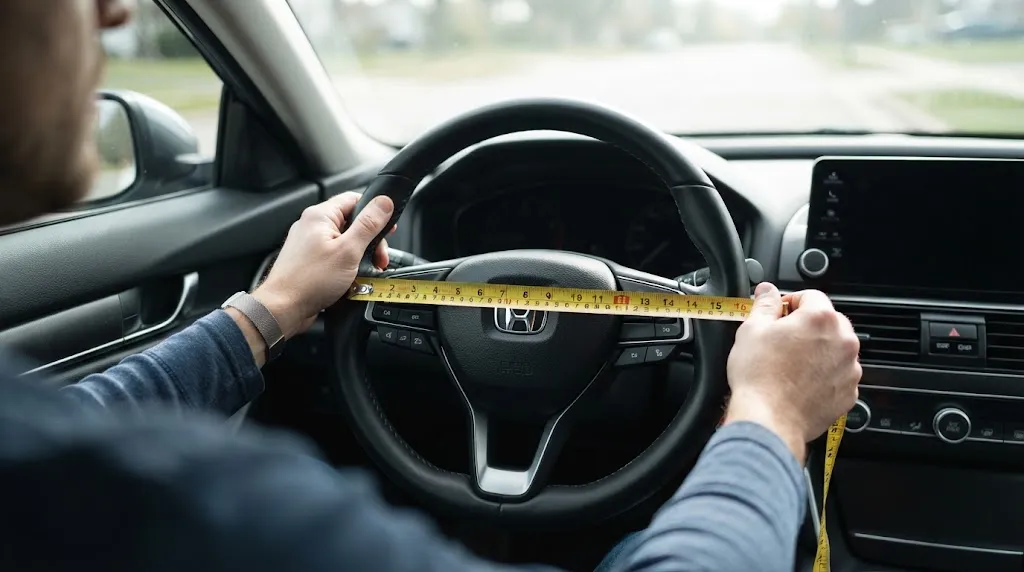
Measuring your steering wheel requires only a standard flexible tape measure or a rigid yardstick. You do not need to remove the steering wheel or disconnect any components.
Step-by-Step Measurement Process
- Position your steering wheel so it points straight ahead and your front wheels are aligned.
- Place the zero end of your measuring tape on the outermost edge of the steering wheel rim.
- Pull the tape straight across the exact center of the steering wheel hub to the directly opposite outer edge.
- Read the measurement in inches or centimeters at the widest point.
- Measure a second time vertically from top to bottom to verify your horizontal reading.
Tip
If your steering wheel has thick padded grips or sport contours, measure from the outside of the padding rather than the inner core to account for the total thickness the cover must stretch over.
Standard Steering Wheel Cover Size Categories
Most automotive manufacturers design steering wheels to fit within specific standardized diameter ranges. Matching your measurement to these categories simplifies shopping.
| Size Category | Diameter Range | Common Vehicle Types |
|---|---|---|
| Small / Size S | 13.5 to 14 inches | Subcompact cars, smart cars, older compact models |
| Standard / Size M | 14.5 to 15 inches | Most sedans, mid-size SUVs, crossovers, and modern trucks |
| Large / Size L | 15.5 to 16 inches | Full-size trucks, large SUVs, vans, and older classic vehicles |
| Extra Large / D-Shape | Specialty / Custom | Commercial trucks, RVs, flat-bottom sports steering wheels |
Reviewing this size distribution helps identify why a generic cover marked as standard might fit your sedan perfectly but slide around dangerously on a compact hatchback.
Exceptions and Special Steering Wheel Designs
Not all steering wheels follow a simple circular geometry. Specialized designs require careful measurement and targeted cover selection.
D-Shaped and Flat-Bottom Wheels
Many modern performance cars and electric vehicles feature a flat-bottom or D-shaped steering wheel. Traditional round covers will leave loose fabric hanging at the bottom. Check product descriptions specifically for D-shape compatibility before ordering.
Thick-Rimmed Truck and SUV Wheels
Heavy-duty trucks often feature thicker wheel rims for durability. Even if the outer diameter measures 15 inches, the circumference around the grip itself may require an expandable or heavy-duty cover designed for high-torque applications.
Warning
Never force an undersized cover onto a large steering wheel using extreme heat or sharp tools. Stretching material past its engineered limit can cause sudden tearing while driving.
How Material Choice Affects Fit and Installation
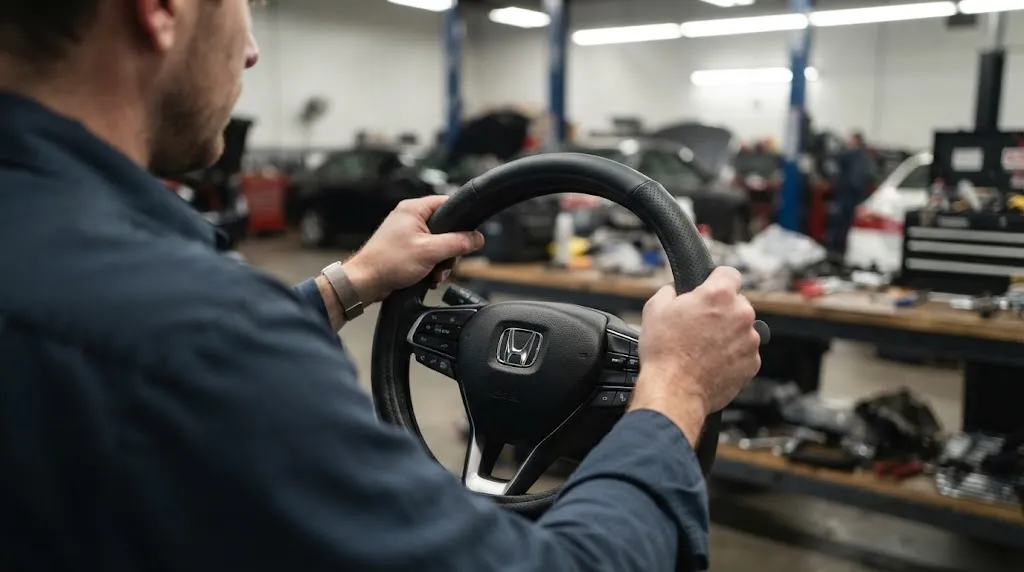
The material composition of the steering wheel cover influences how easily it installs and how tightly it grips the wheel over time.
Rubber and Silicone Cores
Covers featuring inner rubber or flexible TPE cores offer high grip against the steering wheel surface. They require some effort to stretch into place during installation, especially in colder weather, but provide exceptional slip resistance once fitted.
Lace-Up Leather Covers
Lace-up covers require manual stitching around the rim using an included needle and thread. While installation takes longer, this style delivers a custom, flush fit that never rotates or shifts under hard steering inputs.
Related Product
Standard 15-Inch Steering Wheel Covers
Explore durable, breathable steering wheel covers designed to fit standard 14.5 to 15-inch vehicle steering wheels securely.
As an Amazon Associate, we earn from qualifying purchases.
Frequently Asked Questions
How do I know if my steering wheel is 14.5 or 15 inches?
Measure straight across the exact center of the wheel from outer edge to outer edge. Most standard passenger vehicles measure close to 14.5 or 15 inches. If your measurement falls right between sizes, check the manufacturer specification or choose a flexible cover with a rubber inner ring that accommodates slight variances.
Can a steering wheel cover be too tight to install?
Yes, covers designed for smaller diameter wheels will not stretch over larger rims. If a cover resists installation after warming up in the sun or inside your home, stop pulling to avoid tearing the seams or damaging your steering wheel column.
Do steering wheel covers fit all car models?
No universal steering wheel cover fits every vehicle. Compact cars, standard sedans, heavy-duty trucks, and commercial vehicles all utilize different steering wheel diameters ranging from 13.5 inches up to 16 inches or more.
How do I make a tight steering wheel cover easier to install?
Cold temperatures stiffen the rubber or plastic inner core of most steering wheel covers. Placing the cover in direct sunlight or warm indoor air for 15 to 30 minutes before installation increases material flexibility.
Will a steering wheel cover interfere with steering wheel heating elements?
Thick insulated covers can reduce the effectiveness of heated steering wheels by trapping heat or blocking direct contact. If your vehicle has a heated steering wheel, look for thin, breathable cover materials specifically rated for heated applications.
How often should a steering wheel cover be replaced?
Inspect your steering wheel cover annually for signs of cracking, fraying, loose stitching, or internal core slippage. Replace the cover immediately if it begins to rotate independently of the steering wheel during normal driving.
Conclusion
Finding the correct steering wheel cover size comes down to taking an accurate measurement across the center diameter of your wheel and matching it against standard sizing ranges. Taking the time to verify your measurements prevents purchase mistakes and ensures your steering remains secure, responsive, and comfortable on every drive.

Daniel Brooks is an automotive writer and product researcher focused on car accessories, car tech, maintenance, and practical driving guides. At Plug-in Car World, he helps drivers make smarter automotive decisions through honest reviews and research-driven content.
