
Are Leather Steering Wheel Covers Worth It? Pros, Cons & Guide
Quick Answer
Yes, leather steering wheel covers are generally worth it if you want to improve grip comfort, protect your steering wheel from sun damage and wear, and enhance the interior feel of your vehicle. However, their value depends heavily on material quality, correct sizing, and whether you prefer the feel of genuine leather or a durable synthetic alternative.
Understanding the Appeal of Leather Steering Wheel Covers
Steering wheel covers are among the most popular interior accessories for cars, trucks, and SUVs. While basic fabric or rubber covers primarily serve to protect hands from extreme temperatures, leather covers bridge the gap between practical protection and aesthetic upgrade.
For drivers who spend hours behind the wheel, the tactile experience matters. Factory steering wheels can become slick, sticky, or worn down over years of exposure to UV rays, skin oils, and friction. A quality leather cover introduces a softer, more secure grip that dampens road vibrations and reduces hand fatigue during long commutes.
Key Benefits of Leather Steering Wheel Covers

Investing in a leather steering wheel wrap or slip-on cover provides several distinct advantages for vehicle owners:
- Enhanced Grip and Comfort: Genuine or high-grade synthetic leather offers a textured, non-slip surface that improves control, especially during wet or humid weather conditions.
- Temperature Moderation: Unlike bare plastic or polyurethane wheels that become scorching hot in summer or freezing cold in winter, leather provides a more neutral tactile temperature.
- Protection for Factory Surfaces: A cover prevents the original leather, vinyl, or rubber rim from cracking, peeling, and fading under direct sunlight.
- Interior Customization: Leather covers provide an affordable way to upgrade a base-trim interior with a more premium, tailored appearance.
- Resale Value Preservation: Keeping the underlying steering wheel in pristine condition helps maintain the vehicle’s interior appeal when it is time to sell or trade it in.
Potential Drawbacks and Limitations
Despite their popularity, leather steering wheel covers are not ideal for every driver or vehicle. Consider these potential downsides before making a purchase:
- Bulkiness: Slip-on leather covers add thickness to the steering wheel rim. Drivers with smaller hands or those who prefer a slim factory grip may find slip-on styles uncomfortably thick.
- Installation Effort: While slip-on covers install in seconds, lace-up or stitch-on leather wraps require patience, precise alignment, and up to an hour of manual sewing for a custom fit.
- Durability Variation: Cheap bonded leather or low-end synthetic alternatives can peel, flake, or degrade rapidly when exposed to constant friction and sunlight.
- Fit Issues: Universal covers that do not match the exact outer diameter and circumference of the steering wheel can slip or rotate dangerously while driving.
Slip-On vs. Laced-On Leather Covers: Which Is Better?
When shopping for a leather steering wheel cover, you will generally encounter two primary design styles, each serving a different preference:
| Feature | Slip-On Covers | Laced-On / Stitch-On Wraps |
|---|---|---|
| Installation Time | 1 to 5 minutes | 45 to 90 minutes |
| Fit and Finish | Can feel bulky or slip slightly over time | Skin-tight, OEM-like appearance |
| Thickness Added | Noticeable increase in grip circumference | Minimal increase, maintains slim profile |
| Best Suited For | Quick protection and easy removal | Drivers wanting a permanent, custom steering wheel feel |
Drivers who prioritize quick installation and easy cleaning often prefer slip-on options. Conversely, enthusiasts seeking a professional, factory-stitched look typically invest the extra time into a lace-up wrap.
Tip
If you choose a slip-on leather cover during colder weather, warm it up indoors or leave it in the sun for 15 minutes before installation. Warming makes the inner rubber lining flexible and significantly easier to stretch over the steering wheel rim.
How to Choose the Right Size and Material
A poorly fitting steering wheel cover is a safety hazard. If the cover rotates independently of the steering wheel during an emergency maneuver, it can compromise vehicle control.
Before purchasing, measure the outer diameter of your steering wheel from edge to edge. Most passenger vehicles use standard steering wheel diameters ranging from 14.5 inches to 15.5 inches, but trucks and older vehicles often require larger sizes (16 inches or greater). Always verify manufacturer sizing charts rather than guessing based on vehicle class.
Regarding material, genuine cowhide leather offers superior breathability and longevity, developing a rich patina over time. High-end microfiber or polyurethane leather provides better resistance to moisture and oils at a lower price point, making it an excellent choice for work trucks or heavy daily use.
Warning
Never install a steering wheel cover that feels loose or slips around the rim when twisted. A loose cover can catch on your hands during tight turns or parking maneuvers, creating an immediate safety risk.
Maintenance and Care for Long-Lasting Wear
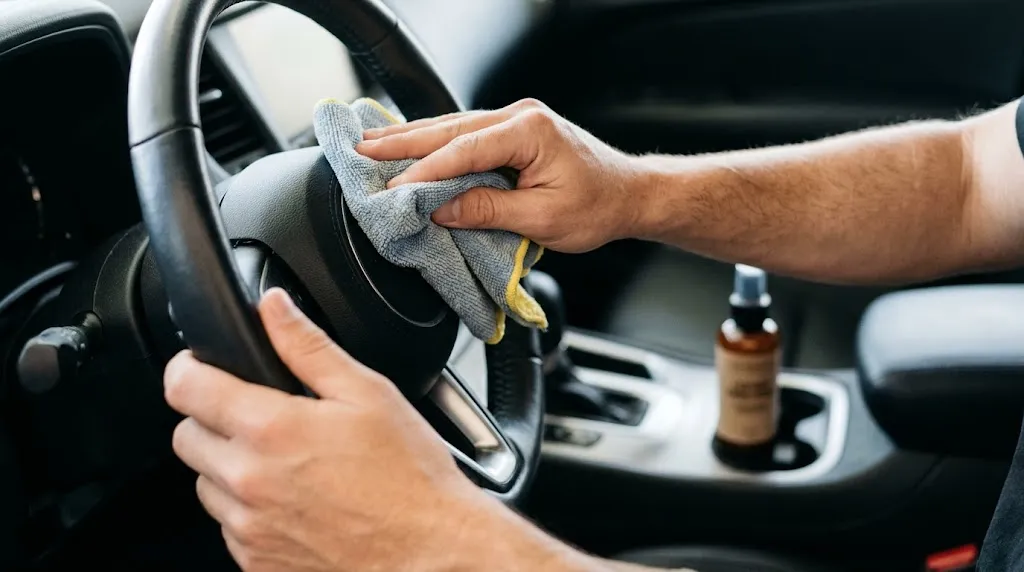
Leather requires minimal upkeep, but basic maintenance prevents premature drying, cracking, and discoloration:
- Regular Cleaning: Wipe down the cover periodically with a damp microfiber cloth to remove hand oils, dust, and sweat residue.
- Leather Conditioner: Apply a specialized automotive leather conditioner once or twice a year to keep genuine leather supple and resistant to UV damage.
- Avoid Harsh Chemicals: Do not use industrial solvents, bleach, or abrasive household cleaners, as these strip natural oils and degrade synthetic coatings.
Related Product
Leather Steering Wheel Cover & Care Kit
A durable, breathable leather cover paired with conditioning balm helps protect your steering wheel and maintain a secure, comfortable grip.
As an Amazon Associate, we earn from qualifying purchases.
Frequently Asked Questions
Are leather steering wheel covers difficult to install?
Slip-on covers require physical effort to stretch over the top and sides of the wheel, especially in cooler weather, but usually take less than five minutes. Laced-on custom wraps require significant time and patience to stitch together tightly, but offer a much cleaner, factory-style result.
Do leather steering wheel covers get hot in the sun?
While dark leather absorbs heat, genuine leather tends to dissipate heat much faster than bare plastic, vinyl, or rubber steering wheels. Using a windshield sunshade while parked outdoors is the most effective way to keep any steering wheel comfortable to touch.
Will a steering wheel cover damage my factory wheel?
High-quality leather covers with smooth inner linings will not damage your factory steering wheel. However, cheap covers with rough rubber or plastic backing can sometimes trap moisture or abrade the underlying wheel surface over years of friction.
Can I use a steering wheel cover on a heated steering wheel?
Yes, though thick slip-on covers will insulate the wheel and slightly reduce the speed and intensity at which heat transfers to your hands. Thinner lace-up wraps allow factory heated steering wheels to function much more efficiently.
How do I know what size cover my car needs?
Measure the outer diameter of your steering wheel straight across the center from edge to edge. Most passenger cars use a 14.5 to 15-inch cover, while larger trucks and SUVs often require a 15.5 to 16.5-inch cover.
Do leather covers smell bad when new?
New synthetic leather covers can sometimes have a faint chemical odor from manufacturing and packaging. Genuine leather typically has a distinct natural scent that dissipates within a few days of exposure to fresh air and cabin ventilation.
Conclusion
Leather steering wheel covers offer an effective balance of grip enhancement, temperature control, and interior protection. Whether you choose a quick slip-on style or a custom-stitched wrap, selecting the correct diameter and material ensures a secure driving experience. By protecting your factory steering wheel from wear and improving daily driving comfort, a quality leather cover proves to be a worthwhile upgrade for most vehicle owners.

Daniel Brooks is an automotive writer and product researcher focused on car accessories, car tech, maintenance, and practical driving guides. At Plug-in Car World, he helps drivers make smarter automotive decisions through honest reviews and research-driven content.
