
Steering Wheel Cover Size Chart: How to Measure & Fit
Quick Answer
To find the right steering wheel cover size, measure the outer diameter of your steering wheel straight across the center and check the grip circumference. Most passenger cars use a standard 14.5 to 15-inch cover, while larger trucks and SUVs often require a 15.5 to 17-inch size.
Why Steering Wheel Cover Sizing Matters
Choosing the correct steering wheel cover size is essential for both driving comfort and safety. A cover that is too small will be nearly impossible to stretch into place, risking damage to the wheel or seams. Conversely, a cover that is too large will slip, bunch up, and rotate independently of the wheel itself, creating a dangerous distraction while driving. Taking two minutes to measure your wheel ensures a snug, secure fit that improves your grip and protects your factory steering wheel from wear and tear.
How to Measure Your Steering Wheel

Measuring your steering wheel requires only a flexible tape measure, a pen, and a piece of paper. Follow these steps to gather your exact dimensions:
- Park safely and center the wheel: Turn off your engine and align your steering wheels so they are facing straight ahead. If you have an old, worn cover installed, peel it off first.
- Measure the diameter: Place your flexible tape measure flat across the center of the steering wheel, running from the outer edge on one side directly across to the outer edge on the opposite side. Make sure the tape passes right through the center hub for an accurate reading.
- Measure the grip circumference: Wrap your tape measure around the outer rim (the thickness of the grip where your hands rest) to find the grip thickness. Most standard grips measure between 2.75 and 4.25 inches around.
Steering Wheel Cover Size Chart
Once you have recorded your diameter measurement in inches, match it against standard industry size categories to find the correct fit for your vehicle.
| Size Category | Diameter Range | Typical Vehicle Type |
|---|---|---|
| Small / Compact | 13.5 to 14.0 inches | Compact sports cars, subcompact hatchbacks |
| Standard / Medium | 14.5 to 15.0 inches | Most standard sedans, crossovers, and mid-size SUVs |
| Large | 15.5 to 16.0 inches | Full-size trucks, large SUVs, and older vans |
| Extra Large / Custom | 16.5 inches and above | Heavy-duty commercial trucks, RVs, and vintage vehicles |
Keep in mind that minor variations can occur across different manufacturing brands and model years. Always verify your tape measure reading rather than relying solely on vehicle class assumptions.
Common Fitting Challenges and Solutions
Even with accurate measurements, installing a tight steering wheel cover can require patience and strategy. Quality covers are designed to fit snugly to prevent slippage, which means they often feel too small straight out of the box.
If you live in a colder climate, the material can stiffen and resist stretching. To make installation easier, warm the cover up inside your house or place it in direct sunlight for 15 to 20 minutes before taking it to your vehicle. The warmth softens the inner rubber core, making it much more pliable.
Warning
Never use tools like screwdrivers or metal pry bars to force a steering wheel cover onto your wheel. This can tear the synthetic backing, puncture the cover, or permanently scratch your factory steering wheel leather.
Tips for Getting a Secure, Professional Fit
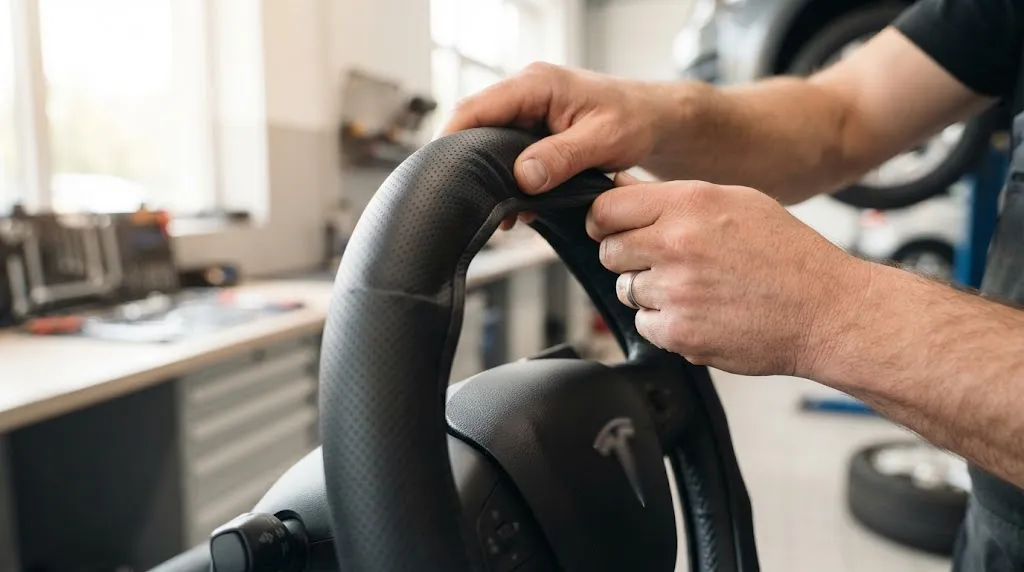
Achieving a smooth, professional-looking installation comes down to leverage and centering. Begin by slipping the top of the cover over the top of the steering wheel, then work your way down evenly along both sides. Pull downward gradually with your hands, feeding the remaining material over the bottom rim.
If your vehicle features a specialized D-shaped flat-bottom steering wheel, standard round covers will leave loose gaps at the base. Ensure you check for specialty covers explicitly shaped to match flat-bottom or heavily contoured steering wheels.
Related Product
Steering Wheel Covers and Interior Accessories
Browse a wide selection of durable, weather-resistant steering wheel covers designed to fit standard and heavy-duty vehicle sizes.
As an Amazon Associate, we earn from qualifying purchases.
Frequently Asked Questions
How do I know if my steering wheel is standard size?
If your tape measure reads between 14.5 and 15 inches straight across the center diameter, your steering wheel is considered a standard size. This fits the vast majority of everyday passenger cars, sedans, and compact SUVs.
What happens if I buy a steering wheel cover that is too small?
A cover that is significantly too small will either refuse to stretch over the rim or tear at the seams during installation. If you manage to force it on, the extreme tension can warp the inner core or make the wheel feel awkwardly thick.
Can I use a standard steering wheel cover on a truck?
Usually no. Most pickup trucks and large full-size SUVs feature wider steering wheels measuring 15.5 to 17 inches in diameter. Standard 15-inch car covers will be too tight to install on these larger wheels.
Do steering wheel covers stretch over time?
Yes, most leather, microfiber, and synthetic rubber covers stretch slightly as they break in under regular cabin heat and use. This is why a brand-new cover should feel quite tight and firm during the initial installation.
How do I measure an oval or non-round steering wheel?
For non-round or sports-style steering wheels, measure both the horizontal diameter and the vertical diameter from outer edge to outer edge. Use the larger of the two measurements to select a cover size that can accommodate the widest span.
Are universal steering wheel covers safe to use?
Universal covers are safe as long as they provide a tight, friction-based grip on the wheel. If the cover shifts, slides, or rotates around the wheel while you are turning, it should be removed immediately to prevent a loss of steering control.
Conclusion
Finding the right steering wheel cover size comes down to taking two simple measurements: the outer diameter straight across the center and the grip circumference. By matching these numbers to the correct size category—whether standard compact, medium sedan, or heavy-duty truck—you ensure a secure, slip-free fit. Taking a moment to measure accurately prevents installation frustration and keeps your vehicle safe and comfortable for every drive.

Daniel Brooks is an automotive writer and product researcher focused on car accessories, car tech, maintenance, and practical driving guides. At Plug-in Car World, he helps drivers make smarter automotive decisions through honest reviews and research-driven content.
