
Why Does a Car Seat Move Side to Side? Causes and Fixes
Quick Answer
Why does a car seat move side to side? A child safety seat usually shifts because its seat belt or lower-anchor installation isn’t tight enough. A vehicle’s built-in seat may move because of worn tracks, loose mounting hardware, or a faulty adjustment mechanism. According to NHTSA car seat installation guidance, a secured child restraint should move no more than 1 inch (2.5 cm) when checked at its belt path.
Common Causes
- Loose installation: The child seat’s belt or anchor strap lacks enough tension.
- Unlocked seat belt: The vehicle belt doesn’t hold the child restraint securely.
- Seat compatibility: Cushion shape or buckle placement makes installation difficult.
- Worn seat tracks: Damaged rails or locking components allow a factory seat to rock.
- Slipping seat cover: Loose upholstery accessories can shift independently of the seat.
What Should You Do?
- Identify which part moves, check the correct mounting points, and stop using an unsafe seating position until the problem is resolved.
A car seat that moves sideways can feel unsettling, especially when it shifts around corners or during braking. The important question is whether the movement comes from a child restraint, the vehicle’s original seat, or a loose seat cover.
I prefer to identify the moving component before touching any fasteners. That simple approach prevents unnecessary repairs and helps reveal genuine safety problems.
This guide explains the likely causes, practical checks, installation mistakes, and situations that require professional attention.
In This Guide
Is Side-to-Side Car Seat Movement Normal?
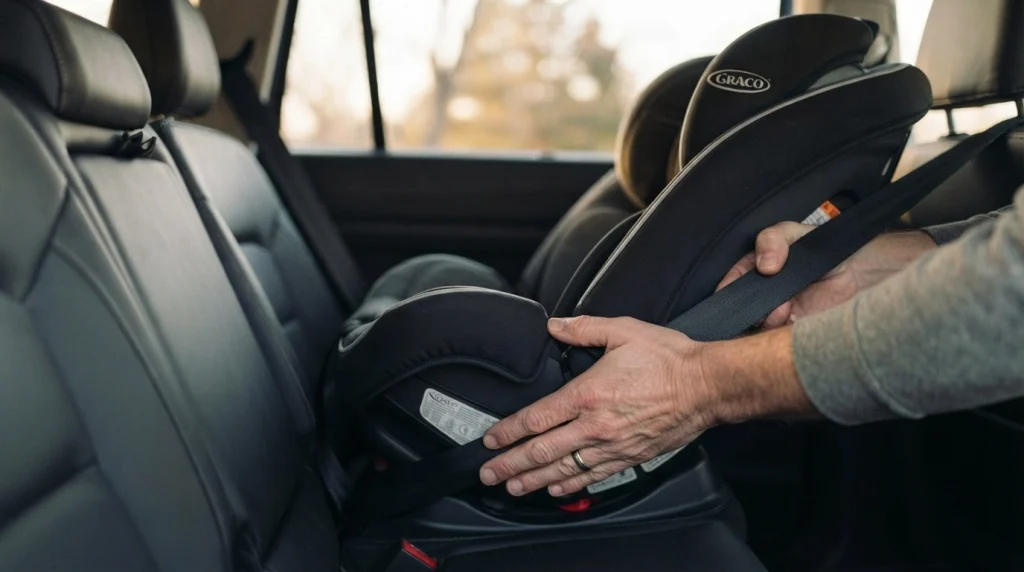
A small amount of movement can be normal, but the acceptable amount depends on which seat you’re checking. Child restraints, factory vehicle seats, and seat covers behave differently.
Definition: Side-to-side car seat movement means lateral shifting, rocking, or sliding when the seat experiences sideways force. The movement may involve the child restraint, vehicle seat frame, cushion, or removable cover.
How Much Should a Child Car Seat Move?
A properly installed child restraint should move no more than 1 inch (2.5 cm) sideways or forward when checked at the belt path. The belt path is the designated opening where the vehicle belt or lower-anchor attachment secures the restraint.
Hold the child seat near that location and pull firmly with one hand. Don’t judge installation tightness by shaking the top of the seat.
The upper shell of some rear-facing seats can move more than the secured base. Follow the manufacturer’s instructions for your specific model.
What About the Vehicle’s Original Seat?
Factory seats contain cushions, support structures, and adjustable mechanisms. Slight cushion compression is different from the entire seat frame rocking on its mounts.
A locked driver or passenger seat should remain securely attached. Noticeable movement at the rails, mounting points, or seatback mechanism deserves inspection.
Quick Comparison: Normal Movement vs. Possible Problems
| Seat Type | Movement | Recommended Action |
|---|---|---|
| Installed child restraint | Up to 1 inch at belt path | Check installation against both manuals |
| Loose child restraint | More than 1 inch at belt path | Correct installation before travel |
| Factory vehicle seat | Frame or rails rock or shift | Have mounting system inspected |
| Seat cover | Fabric slides over cushion | Check compatibility and attachment |
| Belt-positioning booster | May move when unoccupied | Follow booster securing instructions |
Belt-positioning boosters differ from harnessed child restraints. The 1-inch installation test does not generally apply to an unsecured booster.
Why Does a Child Car Seat Move Side to Side?
The most common explanation is an installation that hasn’t secured the restraint tightly enough. Several mechanical and fitment issues can produce the same symptom.
1. Loose Seat Belt Installation
A child seat can shift if the vehicle belt has slack or isn’t locked correctly. Some belts require engaging a locking retractor, while other installations use an approved lock-off mechanism.
Simply buckling the belt doesn’t always secure the child restraint. Check the vehicle manual for the correct locking procedure.
2. Loose Lower-Anchor Connections
Lower anchors are metal attachment points built into designated vehicle seating positions. A child restraint connects to them using compatible lower-anchor attachments.
If the connectors aren’t properly attached or the strap remains loose, the seat can move sideways. Twisted straps can also complicate tightening.
The NHTSA vehicle and car seat parts guide explains these attachments and their weight limits.
3. Incorrect Belt Path
Convertible seats often have separate rear-facing and forward-facing belt paths. Using the wrong route can prevent a secure installation.
Look for the colored labels or diagrams printed on your restraint. Follow the orientation-specific instructions rather than assuming every belt path works the same way.
4. Vehicle Seat Shape and Compatibility
Deeply contoured cushions, raised bolsters, and awkward buckle positions can make installation challenging. Some child restraints fit one vehicle seating position better than another.
If the installation stays loose despite correct tightening, investigate another manufacturer-approved seating position. Never improvise with wooden blocks, folded towels, or unapproved padding.
5. Incorrect Infant Carrier Attachment
Rear-facing infant seats sometimes have a removable carrier and a separate installed base. The base may be secure while the carrier hasn’t locked into it correctly.
Listen for the intended engagement and check the attachment as directed in the manual. Never assume an audible click alone confirms a secure connection.
6. An Unapproved Accessory Under the Seat
Thick seat protectors or slippery aftermarket materials can change how a child restraint contacts the vehicle cushion. Their effect depends on the restraint, accessory, and vehicle.
Only use protective accessories when the relevant manufacturers permit them. A product advertised as universal isn’t automatically compatible with every child seat.
Section Takeaway: Check the belt path, attachment method, and vehicle fit first. Most installation problems cannot be solved by adding padding or improvised supports.
How Do You Fix a Child Car Seat That Moves?
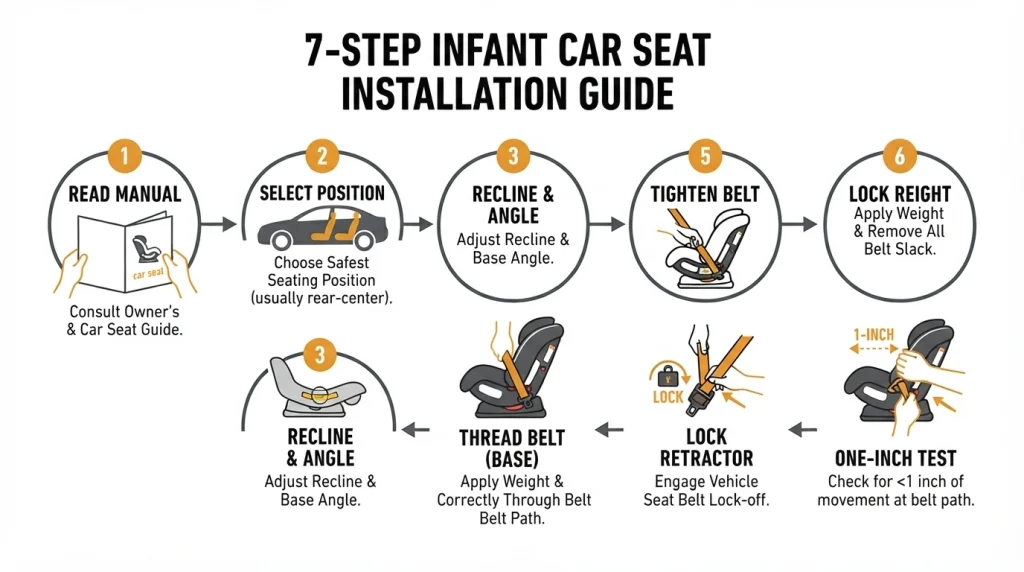
Start by reinstalling the restraint using the approved method for your car and child seat. Don’t tighten random straps without identifying their purpose.
Step 1: Read Both Instruction Manuals
Check the child seat manual and your vehicle owner’s manual before installation. Confirm the approved seating position, restraint orientation, anchoring method, and any applicable weight limits.
Step 2: Choose the Correct Installation Method
Most harnessed child seats install using either the vehicle seat belt or the lower anchors. Do not combine both methods unless the manufacturers explicitly allow that arrangement.
Choose a method that is permitted and gives a secure installation. Lower anchors aren’t automatically safer than a correctly installed seat belt.
Step 3: Position the Child Seat Correctly
Set the restraint in the approved vehicle seating position. Make sure its base rests as the manufacturer specifies.
For rear-facing seats, check the recline indicator. The correct recline is especially important for a baby’s airway.
Step 4: Route and Tighten the Belt or Anchor Strap
- Route the vehicle belt through the correct belt path, or attach the lower-anchor connectors.
- Remove twists from the belt or anchor strap.
- Lock the seat belt as directed, if using a belt installation.
- Press the child restraint firmly into the vehicle seat while removing slack.
- Check that the final installation meets the manufacturer’s instructions.
Use the restraint’s designated tightening points. Excessive force or an improvised tightening tool can damage components.
Step 5: Perform the One-Inch Test
Grip the restraint where the installation belt or anchor strap passes through it. Try moving it sideways and forward with one firm hand.
If it moves more than 1 inch, the installation needs correction. Don’t test by pulling the headrest or top of a rear-facing shell.
Step 6: Check the Top Tether When Required
A forward-facing harnessed seat generally uses a top tether attached to the vehicle’s designated tether anchor. This connection helps limit forward head movement during a crash.
Attach and tighten it according to both manuals. Never connect a tether to an ordinary cargo hook unless the vehicle manufacturer identifies it as an approved tether anchor.
Step 7: Check the Entire Installation Again
Confirm the harness, buckle, recline, and any carrier-to-base connection. Make sure no accessory interferes with the belt path or attachment hardware.
If a tight installation remains impossible, seek help from a certified child passenger safety technician. Don’t transport a child in a restraint that fails the installation check.
Pro tip: A secure installation matters more than how forcefully you can tighten one strap. Always follow the child seat manufacturer’s written procedure and the vehicle owner’s manual.
Section Takeaway: A correct installation uses an approved attachment method, proper routing, and a successful belt-path movement check.
Why Does a Driver or Passenger Seat Move Sideways?
If your vehicle’s original seat rocks during turns, the problem may involve the adjustment system or mounting structure. Unlike a removable child restraint, the factory seat attaches directly to the vehicle body.
Loose Seat Mounting Hardware
Factory seats attach through specified mounting points and fasteners. Loose or damaged hardware may allow the seat frame to move independently of the floor.
This is a structural safety concern. A qualified mechanic should inspect the mounting points and use the manufacturer’s specified repair procedure.
Worn or Damaged Seat Tracks
Seat tracks allow fore-and-aft adjustment. Internal wear, damage, or a faulty locking mechanism can create rocking, clicking, or unexpected movement.
You may notice the problem while braking or changing direction. Movement that becomes more obvious under load deserves prompt attention.
Faulty Seat Adjustment Mechanism
Manual seats rely on locking mechanisms, while powered seats use motors and mechanical adjusters. Problems in either system can prevent the seat from remaining secure.
A seat that moves after you’ve locked its position isn’t functioning as intended. Professional inspection can distinguish track wear from other component failures.
Damaged Seat Frame or Recliner
Sometimes the floor-mounted rails stay still while the cushion frame or backrest rocks. The looseness may come from the seat frame or reclining mechanism.
Don’t attempt to weld, drill, or modify structural seat components as a shortcut. Some seat assemblies also contain airbags, wiring, and occupant-detection equipment.
The UK’s vehicle inspection guidance classifies an insecure driver’s seat as a dangerous defect.
How to Check a Factory Seat Safely
- Park securely: Switch off the vehicle and apply the parking brake.
- Check adjustment: Verify that the seat locks in an intended position.
- Observe movement: Gently check whether the frame moves independently of the cushion.
- Listen for noise: Notice repeated clicking, rattling, or clunking.
- Inspect visually: Look for obvious damage without removing safety components.
Do not reach into powered seat mechanisms or disconnect wiring as part of a casual inspection. Have a technician investigate structural looseness.
Pro tip: Seat mounting bolts, side airbags, and occupancy sensors require vehicle-specific procedures. Never guess torque specifications or disturb supplemental restraint system components.
Can Car Seat Covers Cause Side-to-Side Movement?
Yes, a loose car seat cover can slide across the original upholstery. However, movement of the cover isn’t the same as movement of the seat frame.
Loose Universal-Fit Covers
Universal covers aim to fit many seat shapes. They may not follow every contour or stay properly positioned on a particular vehicle seat.
A cover that bunches near the seatback or slides under your body can create an unstable feeling. Check whether the fabric moves while the underlying seat remains stationary.
Incorrect Cover Attachment
Some compatible seat covers use straps, clips, or other approved attachment systems. An improperly fitted cover may shift during entry, exit, and cornering.
Use the cover manufacturer’s instructions, but never route attachments across seat tracks, electrical connectors, seat belt hardware, or airbag deployment zones.
Slippery or Poorly Matched Materials
Material texture affects how easily one surface slides against another. A cover may move more readily when its backing doesn’t grip the original upholstery.
Don’t add adhesive, improvised straps, or separate anti-slip pads without checking vehicle compatibility. Such changes may interfere with seat functions.
Airbag and Occupant Sensor Safety
Some vehicles prohibit aftermarket seat covers because they may interfere with seat-mounted side airbags or occupant-detection systems. This restriction depends on the vehicle and cover design.
For example, Tesla’s Model S airbag guidance warns against using seat covers because of these risks.
Never assume an advertised airbag-compatible cover is approved for your vehicle. Check the owner’s manual and manufacturer requirements before installing it.
Can a Seat Cover Fix a Loose Car Seat?
No. A fabric cover cannot repair loose mounting bolts, worn seat tracks, or an incorrectly installed child restraint.
If the underlying seat moves, repair that problem first. Adding friction or padding does not restore structural security.
Section Takeaway: Seat covers may cause surface slipping, but they must never substitute for correct installation or mechanical repair.
When Is Car Seat Movement Dangerous?
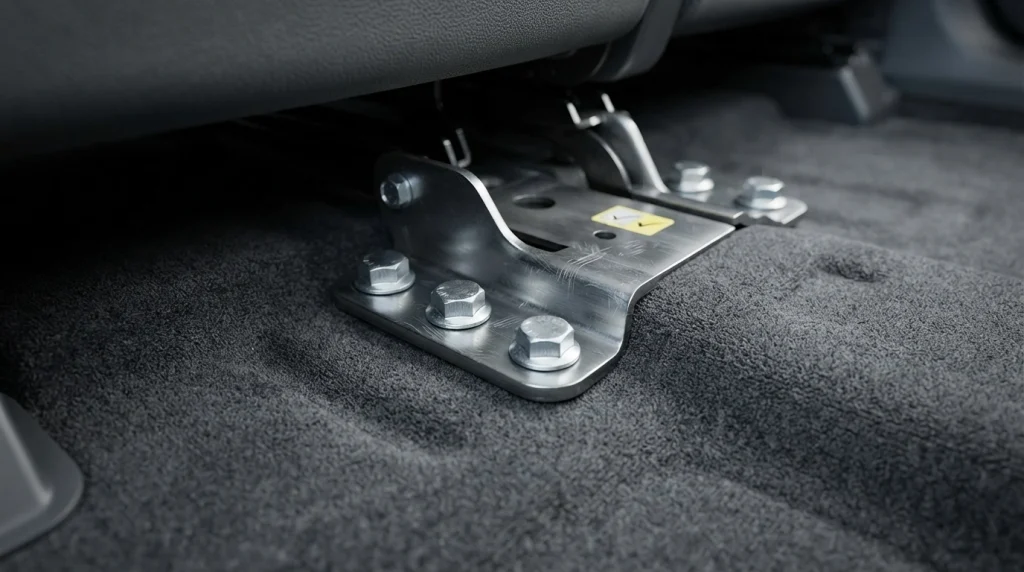
Seat movement becomes a safety concern when the restraint or structure cannot stay secured as designed. The most important warning signs involve attachment failure or unexpected movement.
Warning Signs You Shouldn’t Ignore
- A harnessed child restraint moves more than 1 inch at the belt path.
- The child seat’s belt or lower-anchor attachment doesn’t remain secure.
- A driver or passenger seat rocks at its mounting points.
- The seat unexpectedly shifts during braking or acceleration.
- The seat recliner or track fails to lock correctly.
- Visible cracks, damaged hardware, or repeated clunking accompany movement.
- An airbag warning appears after seat-related work.
Should You Keep Driving?
Don’t use a child restraint that cannot be installed securely. Correct its installation or arrange a professional check before transporting a child.
If a factory driver’s seat is structurally loose, avoid driving until the vehicle is assessed and repaired. An insecure seat can compromise occupant positioning and control.
Check for Safety Recalls
Some seating or child restraint problems may relate to manufacturer recalls. As of 2026, U.S. owners can use the NHTSA recall lookup to research affected vehicles and child restraint models.
Use your vehicle identification number for applicable vehicle searches. For a child restraint, check its brand, model, and manufacturer information.
Drivers outside the United States should consult the relevant manufacturer or national vehicle-safety authority.
When to Contact a Professional
Choose a certified child passenger safety technician for installation problems. For a loose factory seat, seek a qualified automotive technician experienced with seat structures and restraint systems.
Document when the movement occurs and what part shifts. Clear observations help the professional locate the problem.
Section Takeaway: Never dismiss obvious structural seat movement as ordinary comfort-related looseness. Secure mounting and correct restraint installation are essential.
Frequently Asked Questions
1. Is It Normal for a Car Seat to Move Slightly Side to Side?
For a harnessed child restraint, movement of up to 1 inch at the belt path can meet NHTSA’s installation guidance. Some upper-shell movement may also occur. A factory seat frame, however, shouldn’t rock on its mounting points when locked.
2. Why Does My Baby’s Car Seat Move Sideways?
Your baby’s car seat may move because the base isn’t tightly installed, the belt isn’t locked, or the lower-anchor attachments have slack. Check movement at the base’s belt path, confirm the infant carrier is attached correctly, and follow the manufacturer instructions.
3. Can I Put a Towel Under a Loose Car Seat?
Don’t add a towel simply to stop sideways movement. Some manufacturers permit specific positioning aids, but others prohibit them. Only use padding explicitly allowed by the applicable instructions. A towel cannot replace proper belt or anchor tension.
4. Why Does My Driver’s Seat Rock When I Turn?
A rocking driver’s seat may have worn tracks, loose mounting hardware, or a damaged adjustment mechanism. Cushion compression is different from structural movement. If the frame or backrest shifts unexpectedly, have a qualified technician inspect the seat before further use.
5. Can Car Seat Covers Make a Seat Feel Loose?
Yes. Poorly fitted covers can slide over the original upholstery, making the seating surface feel unstable. Confirm whether the cover or actual seat moves. Only use covers permitted by your vehicle manufacturer, especially on seats with airbags or occupant sensors.
6. Can I Tighten Car Seat Mounting Bolts Myself?
Factory seat bolts require the correct procedure, specified torque, and sometimes replacement hardware. Seat assemblies can also contain airbag-related components. Unless you have suitable training and manufacturer service information, leave structural seat repairs to a qualified technician.
7. Does a Loose Car Seat Need to Be Replaced?
Not necessarily. A loose child restraint may only need correct installation, while a moving factory seat may need component repair. Replacement becomes relevant when parts are damaged, incompatible, recalled without a completed remedy, or otherwise unsafe under manufacturer guidance.
Final Takeaway: If your car seat moves side to side, identify exactly what is shifting before attempting a fix. For child restraints, concentrate on the belt path and secure installation; for factory seats, investigate mounting and adjustment hardware.
Check your manuals, avoid unapproved accessories, and seek professional help when the movement cannot be resolved safely. A properly secured seat is essential for every journey.

Daniel Brooks is an automotive writer and product researcher focused on car accessories, car tech, maintenance, and practical driving guides. At Plug-in Car World, he helps drivers make smarter automotive decisions through honest reviews and research-driven content.
