
Can You Install a Car Seat in the Middle Seat?
Quick Answer
Yes, you can install a car seat in the middle of the back seat if your vehicle and car seat allow it and you can achieve a secure installation. The rear center is generally a preferred position because it is farther from the vehicle’s sides. However, a properly installed outboard seat is safer than an incorrectly installed center seat. Always follow the NHTSA car seat installation guidelines and both manufacturers’ instructions.
Before choosing the middle seat:
- Check compatibility: Confirm your vehicle permits a child restraint in that center position.
- Choose the correct attachment: Use the vehicle seat belt or approved lower anchors.
- Test installation tightness: Movement at the belt path must not exceed one inch in either direction.
- Check the tether: A forward-facing harnessed seat needs its appropriate top tether connection.
- Consider seat shape: Narrow cushions, raised humps, and awkward buckles can affect installation.
Important safety rule
- Never force a center installation. If the restraint will not fit or tighten correctly, use an approved rear outboard seating position.
The middle seat often looks like the obvious place for your child’s car seat. Yet the safest choice depends on more than its location.
I always recommend checking the actual seat fit before deciding where a child should ride. This guide explains middle seat installation, LATCH compatibility, seat belt methods, and situations where a side position makes more sense.
In This Guide
- Is the Middle Seat the Safest Place for a Car Seat?
- How Do You Know if Your Middle Seat Is Compatible?
- How Do You Install a Car Seat in the Middle Using a Seat Belt?
- Can You Use LATCH Anchors in the Middle Seat?
- Can Different Types of Car Seats Go in the Middle?
- When Is a Side Seat Better Than the Middle?
- Frequently Asked Questions
Is the Middle Seat the Safest Place for a Car Seat?
The rear middle seat is generally considered the safest seating location when a child restraint fits and installs correctly. It places the child farther from either side of the vehicle during a side-impact collision.
That location advantage matters. But it cannot compensate for an unstable installation.
Why the Center Position Can Offer Better Protection
A center position can provide additional distance between the child and the vehicle’s side doors. This separation is one reason child passenger safety guidance favors the rear middle position when practical.
The American Academy of Pediatrics car seat guidance recognizes the center rear seat as a good option, provided the restraint installs securely.
However, every vehicle has different seating surfaces, belt arrangements, and anchor locations. There is no universal guarantee that the center works best in every car.
Why Correct Installation Matters More Than Position
A car seat needs a secure attachment and the correct fit for the child. A loose or incorrectly positioned restraint may not protect the child as designed.
Before choosing the center, confirm these essentials:
- The child restraint is approved for the child’s height and weight.
- The car seat is permitted in the selected vehicle seating position.
- The installation stays secure at its designated belt path.
- The harness fits the child correctly.
- The recline angle and tether arrangement follow the manufacturer’s instructions.
Section Takeaway: Choose the rear center when you can install the car seat correctly. Otherwise, a properly installed rear side position is the better choice.
How Do You Know if Your Middle Seat Is Compatible?
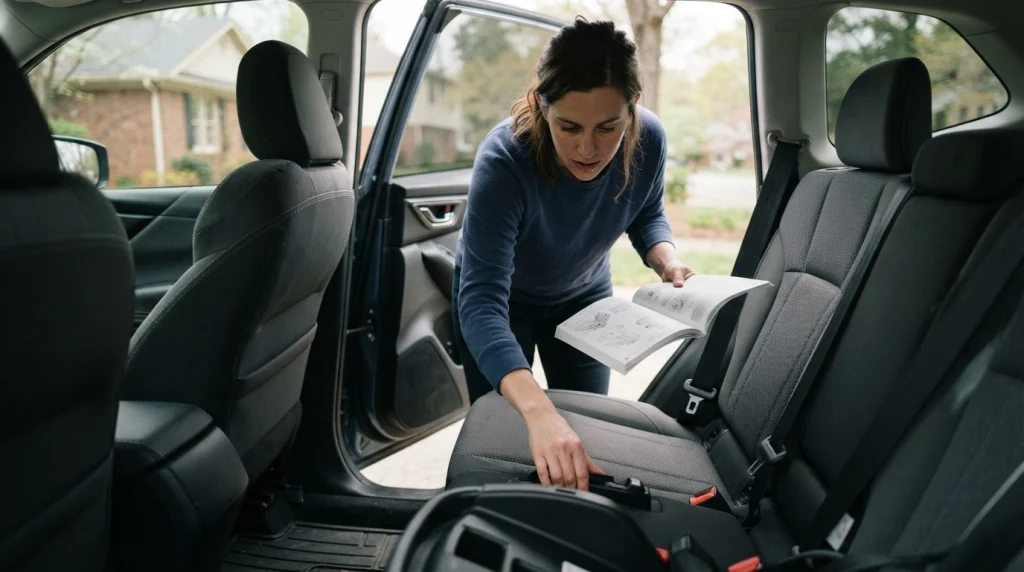
Start with the vehicle owner’s manual and car seat manual. Both must allow the specific installation method and seating location.
Don’t assume that a middle seating position automatically supports every type of child restraint.
Check the Vehicle Owner’s Manual
Look for the child restraint installation section, often under vehicle safety or seat belts. It should explain available seating positions and attachment equipment.
Pay attention to:
- Whether the center rear position permits child restraint installation.
- Whether dedicated center lower anchors are available.
- Where the approved center top tether anchor is located.
- How the center seat belt locks during installation.
- Restrictions involving folding seatbacks or movable seating sections.
- Any limitations involving support legs or underfloor storage.
Examine the Middle Seating Surface
Some vehicles have raised center cushions, pronounced contours, or a narrow seating area. These shapes can make a broad car seat base difficult to position.
Set the restraint in place before fastening anything. Check whether its base rests on the vehicle seat as permitted by the car seat manufacturer.
A raised floor tunnel may also matter when using a rear-facing seat with a support leg. Some manufacturers prohibit support-leg placement on certain floor surfaces.
Check the Buckle and Seat Belt
The center belt might use a conventional buckle, a ceiling-mounted belt, or another manufacturer-specific arrangement. Always follow the vehicle’s instructions for connecting and locking it.
Watch for long buckle stalks that interfere with the car seat’s belt path. A buckle pressing against the wrong area can prevent proper tightening.
Never modify a buckle or change belt routing based on guesswork. Ask a certified child passenger safety technician if the belt arrangement is confusing.
How Do You Install a Car Seat in the Middle Using a Seat Belt?
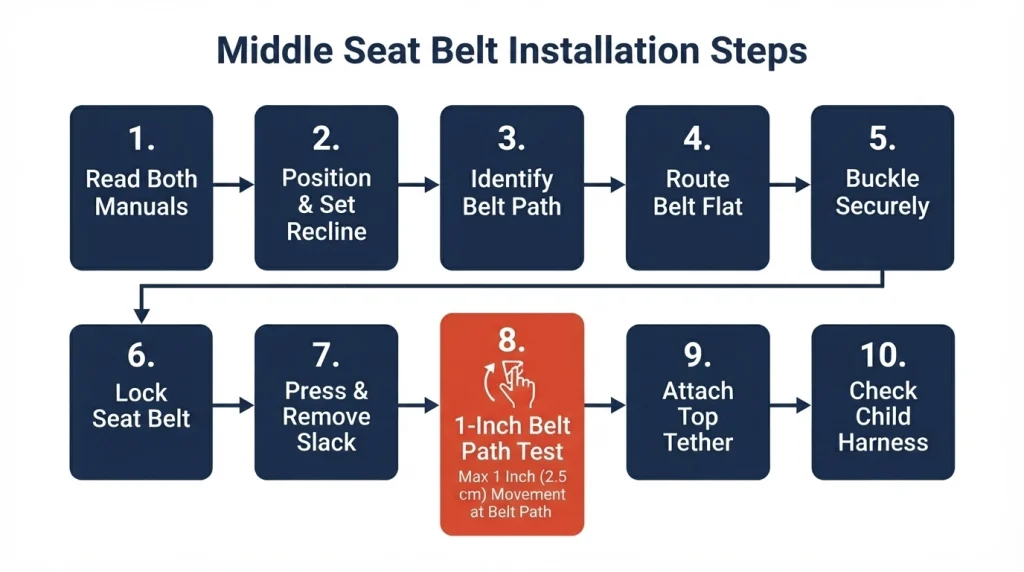
You can usually install a compatible harnessed car seat in the rear center using the vehicle’s approved seat belt. In many vehicles, this is the practical alternative to center LATCH anchors.
The basic process is similar to a side-seat installation, but belt geometry can differ.
Step-by-Step Middle Seat Installation
- Read both manuals. Confirm the center seating position and seat belt installation method are approved.
- Position the child restraint. Center it on the designated seating position and set the required recline angle.
- Identify the correct belt path. Rear-facing and forward-facing modes typically use different marked paths.
- Route the vehicle belt. Pass it through the approved path without twisting the webbing.
- Buckle the belt. Make sure the correct buckle and latch plate connect securely.
- Lock the seat belt. Use the vehicle’s prescribed locking mechanism or the car seat’s approved built-in lock-off.
- Tighten the installation. Apply pressure where the car seat manufacturer directs while removing belt slack.
- Check movement. Hold the seat at the belt path and test for sideways and front-to-back movement.
- Finish mode-specific steps. Check rear-facing recline or connect and tighten the forward-facing top tether.
- Check the child harness. Verify shoulder strap position, harness tension, and chest clip placement if applicable.
How Tight Should the Installation Be?
The car seat should move no more than one inch side-to-side or front-to-back when tested at its belt path. One inch equals approximately 2.5 centimeters.
Test at the belt path, not at the top of the shell. Some movement at the upper end of a rear-facing seat can be normal.
Avoid pulling or rocking the entire restraint aggressively. The purpose is to check the security of its attachment point.
What if the Center Seat Belt Will Not Tighten?
First, confirm you have used the correct locking procedure. Some belts require switching the retractor into a locking mode, while others use different mechanisms.
Check these common obstacles:
- The belt follows the wrong installation path.
- The buckle or latch plate interferes with the car seat shell.
- The belt contains hidden twists or slack.
- The seat base does not fit the vehicle cushion as required.
- The car seat lock-off is being used incorrectly.
Do not improvise with knots, extra straps, or unapproved accessories. If the center remains loose, try an approved side position or seek professional assistance.
Pro tip: Always follow the exact instructions for your vehicle and child restraint. A certified child passenger safety technician can help identify compatibility problems before you travel.
Section Takeaway: A center seat belt can provide a secure installation without lower anchors. Correct locking, belt routing, and the one-inch movement test are essential.
Can You Use LATCH Anchors in the Middle Seat?
Yes, but only when the vehicle and car seat manufacturers permit that specific center installation. Many vehicles provide lower anchors for the two outer rear seats without dedicated anchors for the middle.
LATCH stands for Lower Anchors and Tethers for Children. It provides designated hardware for attaching compatible child restraints.
Dedicated Center Anchors vs. Borrowed Anchors
Dedicated center lower anchors belong to the middle seating position. These can be used when the car seat and vehicle instructions permit the installation.
Some caregivers try using the inner lower anchors from the left and right outer seating positions. This is often called center LATCH borrowing.
Never assume borrowing is allowed. Both manufacturers must explicitly permit the arrangement, including the anchor spacing.
If either manufacturer prohibits it or does not authorize it, use the approved center seat belt instead.
Is LATCH Safer Than a Seat Belt?
Neither installation method is inherently safer when used correctly. The important factor is achieving a secure, manufacturer-approved installation.
The NHTSA explanation of car seat anchors and tethers describes the hardware and lower-anchor weight limitations.
Lower anchors have weight limits. Once your child exceeds the applicable limit, you must switch to an approved seat belt installation.
Can You Use the Seat Belt and LATCH Together?
Generally, no. Do not combine the vehicle seat belt and lower anchors to secure a harnessed car seat unless both manufacturers explicitly authorize that method.
A forward-facing top tether is different from lower-anchor attachments. It should normally be used with either an approved seat belt installation or an approved lower-anchor installation.
Pro tip: Find the vehicle’s designated tether anchor in the owner’s manual. Never attach a tether to an unapproved cargo hook or other convenient-looking metal fitting.
Can Different Types of Car Seats Go in the Middle?
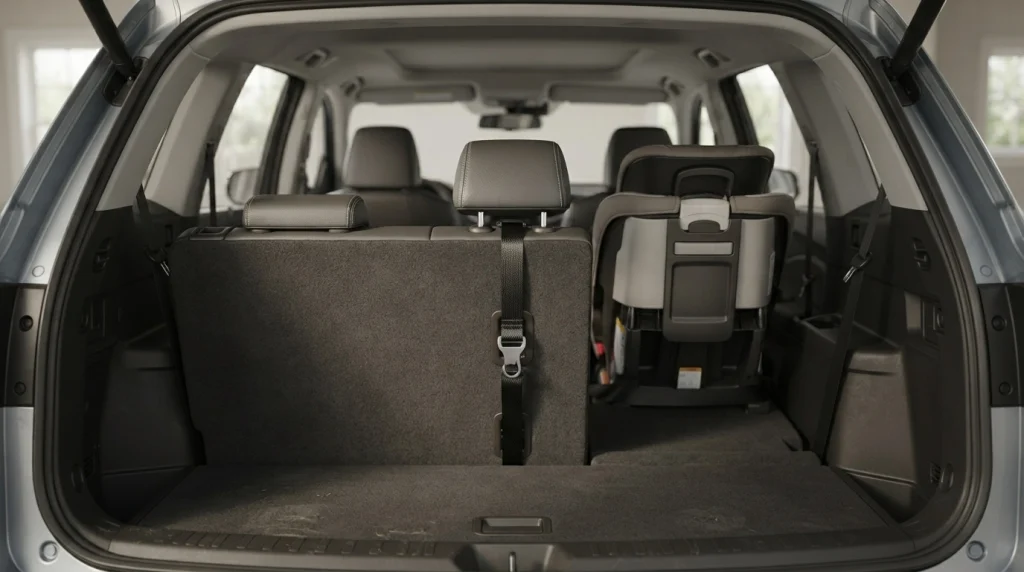
Rear-facing infant seats, convertible seats, forward-facing harnessed seats, and boosters may all work in the rear center. Compatibility depends on the restraint, the child, and the available belt or anchor equipment.
Rear-Facing Infant and Convertible Car Seats
A rear-facing car seat can be installed in the center if both manuals permit it and the installation is secure. Keep your child rear-facing until reaching the manufacturer’s maximum rear-facing height or weight limit.
Check the following before driving:
- The base or shell is installed using the correct rear-facing belt path.
- The recline angle matches the manufacturer’s indicator.
- The harness straps sit at or below the child’s shoulders.
- The harness fits snugly without twisted straps.
- Any load leg or anti-rebound feature is used exactly as instructed.
If the rear-facing car seat contacts a front seat, consult both manufacturers’ instructions. Some vehicles or child restraints have specific contact restrictions.
Forward-Facing Car Seats With Harnesses
A forward-facing harnessed seat can also work in the center when the installation position is approved. The top tether is especially important because it helps limit the child’s forward head movement during a crash.
Use the designated tether anchor for that seating position. Check that the tether route and any headrest adjustments match the manuals.
If you cannot correctly attach a required tether in the middle, choose another approved rear position with suitable hardware.
Booster Seats in the Middle
A belt-positioning booster works differently from a harnessed car seat. It positions the vehicle’s lap-and-shoulder belt correctly across the child.
The center seat must have a suitable lap-and-shoulder belt. A lap-only belt cannot be used with a belt-positioning booster.
The CDC child passenger safety recommendations explain why older children need proper lap-and-shoulder belt protection.
Middle Seat Compatibility Comparison
| Car Seat Type | Middle Seat Allowed? | Important Requirement |
|---|---|---|
| Rear-facing infant seat | Usually, if compatible | Secure base and correct recline |
| Convertible car seat | Usually, if compatible | Correct belt path for the selected mode |
| Forward-facing harnessed seat | Yes, when approved | Approved installation and top tether |
| Belt-positioning booster | Only with a suitable belt | Lap-and-shoulder belt required |
Section Takeaway: Most car seat categories can potentially use the center position. A booster must have a proper lap-and-shoulder belt, while a forward-facing harnessed seat needs an appropriate top tether.
When Is a Side Seat Better Than the Middle?
A rear side seat is the better choice whenever the center installation cannot meet the manufacturers’ requirements. Seat position should never take priority over correct attachment and fit.
When the Middle Seat Is Too Narrow or Uneven
A pronounced center hump or narrow cushion may prevent the car seat base from sitting correctly. Long buckle stalks and unusual seat belt angles can create additional problems.
I prefer testing the installation rather than judging it by appearance alone. A centered car seat that moves excessively is not a successful installation.
When You Need to Install Multiple Car Seats
Installing two or three child restraints across one back seat can become complicated. Width, buckle access, and the interaction between neighboring seats all matter.
Check each installation independently. Adjacent car seats must not hide instability or prevent proper belt routing.
Consider these points:
- Each restraint must use approved attachment hardware.
- Lower anchors must not be shared between restraints unless specifically authorized.
- Every required tether needs its designated anchor.
- Accessible buckles must remain usable without disturbing neighboring installations.
- All restraints must fit together as permitted by their manufacturers.
Should You Use a Car Seat Protector or Cover?
Aftermarket protectors may seem useful for preventing upholstery marks. However, extra padding or nonapproved materials beneath a child restraint can affect its installation.
Only use a protector, mat, or accessory when the car seat manufacturer specifically permits it. Avoid placing ordinary cushions, towels, or loose covers beneath the seat as a workaround.
When to Ask for a Professional Car Seat Inspection
Seek installation help when you cannot achieve a tight fit, identify the correct anchors, or resolve belt interference. This is especially useful for unusual center seating arrangements.
In the United States, you can look for a qualified technician through the NHTSA car seat safety and inspection resources.
Section Takeaway: The rear center is preferable only when it supports a correct installation. A secure rear side position remains an appropriate and safe alternative.
Frequently Asked Questions
Can you put an infant car seat in the middle of the back seat?
Yes, if the center position is approved and the infant seat installs securely. Follow the correct rear-facing belt path, locking instructions, and recline indicator. Check the child’s harness fit before every trip.
Is the middle seat safer than behind the passenger seat?
The middle rear position generally offers a location advantage because it is farther from side impacts. However, a securely installed seat behind the passenger is preferable to a loose center installation. Proper fit and attachment determine the best practical location.
Can you install a car seat in the middle without LATCH?
Yes. An approved vehicle seat belt is a suitable installation method for most harnessed car seats. Follow the required belt path and locking procedure, then confirm the seat moves no more than one inch at its belt path.
Can a booster seat go in the middle with a lap-only belt?
No. A belt-positioning booster requires a lap-and-shoulder belt to restrain the child correctly. If the middle seat has only a lap belt, move the booster to a rear seating position with an appropriate three-point belt.
Can two car seats share the middle seat’s LATCH anchors?
No. Do not attach two child restraints to the same lower anchor as a general installation method. Each seat needs its manufacturer-approved attachment arrangement. Never borrow or share lower anchors unless the relevant manufacturers explicitly permit the specific configuration.
Can you install a car seat in the middle of an SUV?
Often, yes. Many SUVs have usable rear center positions, but anchor placement, seat contours, and support-leg restrictions vary. Check the SUV owner’s manual and child restraint instructions before installation.
What if the car seat moves more than one inch?
The installation is not sufficiently tight when movement exceeds one inch at the belt path. Recheck belt routing, locking, and tension according to the manuals. If you cannot correct the problem, try another approved position or get expert help.
Final Takeaway: Should You Install Your Car Seat in the Middle?
Yes, the rear middle seat is often an excellent location for a child’s car seat. But it must be compatible with the vehicle, restraint, and chosen installation method.
Prioritize a tight installation, correct harness fit, proper recline, and approved tether use. Never sacrifice these essentials just to place the car seat in the center.
Before your next drive: Review both manuals, perform the belt-path movement test, and check your child’s harness. If the center position will not work correctly, choose a secure rear side position instead.

Daniel Brooks is an automotive writer and product researcher focused on car accessories, car tech, maintenance, and practical driving guides. At Plug-in Car World, he helps drivers make smarter automotive decisions through honest reviews and research-driven content.
