
Why Does a Newborn Slump in a Car Seat? Causes and Safety Tips
Quick Answer
A newborn slumps in a car seat most often because neck control is still weak, the seat is too upright, or the harness is too loose. Check recline, harness snugness, and chest-clip position first, and follow NHTSA car seat safety guidance and your seat manual before adding anything behind your baby.
Most likely causes
- Weak neck control: Newborns cannot yet hold their heads steady for long.
- Seat too upright: Too little recline lets the head fall forward.
- Loose harness straps: Slack lets the shoulders and torso slide down.
- Low chest clip: A clip below armpit level does not hold the straps in place.
- Bulky clothing or padding: Thick layers change how the harness fits.
Act right away if
- The chin rests on the chest and the airway looks closed.
- Breathing sounds laboured, or your baby looks pale or blue.
- Stop safely, take your baby out, and seek urgent help.
Seeing your baby slump forward can feel alarming, even on a short drive.
This guide explains the common causes in plain terms, shows how to check fit in a few minutes, and clears up a costly mistake: adding a generic cover or insert to fix the problem.
In This Guide
What Does Newborn Slumping Look Like?
Newborn car seat slumping means the baby’s body slides down or folds forward so the head drops toward the chest.
The chin-to-chest position matters most, because it can narrow a tiny airway.
A sleeping head tilted gently to one side, with the face clear and breathing easy, is not the same problem.
Watch for these signs on every trip, not just the first one:
- Chin on chest: The head flops forward and stays there.
- Shoulders sliding: The straps sit off the shoulders or the body sinks low.
- Head rolling side to side: The head has no steady support during turns or stops.
- Straps pulling loose: You can pinch slack in the harness webbing at the shoulder.
- Body leaning: The baby lists to one side instead of sitting centred.
Check your baby at the start of a trip and again after a stop.
Position can change once a baby falls asleep and muscles relax.
Section takeaway: Chin-to-chest slumping is the key warning sign. A tilted head with a clear face and easy breathing is a different, less urgent picture.
Why Does a Newborn Slump in a Car Seat?

A newborn slumps because the seat, the harness, and the baby’s own muscle control must all work together.
When one part is off, gravity does the rest.
Weak neck and trunk control
Newborns have large heads relative to their bodies and weak neck muscles.
They tire fast, and sleep makes that control weaker still.
Premature babies and babies with low muscle tone may slump more often.
This cause alone does not mean the seat is wrong, but it makes correct recline and harness fit more important.
Recline angle is too upright
A rear-facing seat needs a reclined angle so the head stays back.
Many seats use a recline indicator, a line, or a bubble level to show the right range.
Your manual gives the exact range for your model, so check it rather than guessing.
As a general guide, newborns need the more reclined end of the seat’s approved range.
Harness fit problems
Loose straps are one of the most common, fixable causes of slumping.
For a rear-facing baby, harness straps should sit at or just below shoulder level.
The chest clip should sit at armpit level, not on the belly or up near the neck.
After buckling, try the pinch test at the shoulder: if you can pinch the webbing, tighten it.
Bulky clothing and extra padding
Thick coats, snowsuits, and blankets under the harness create hidden slack.
Straps feel tight over the coat, then loosen once the coat compresses.
That slack lets the baby slide down during a drive.
Dress your baby in a thin layer for the seat, then add a blanket over the harness if needed.
Seat size and installation issues
Some newborns sit low in a larger convertible seat, even when the seat fits the stated weight range.
A seat that moves more than about 1 inch side to side at the belt path may need a reinstall.
Vehicle seat shape can also change the installed recline angle.
Always test the installed angle after you move the seat to a different car.
Section takeaway: Slumping usually comes from weak head control plus one fixable fit issue. Recline, harness height, harness snugness, and clothing are the first four checks.
Is Slumping Dangerous for a Newborn?
Slumping can be dangerous when it closes the airway, and the risk is highest for very young or premature babies.
Chin-to-chest posture can make breathing harder because the neck bends and the airway narrows.
That risk rises on long trips, when a baby sleeps deeply, or when breathing is already affected by illness.
Do not wait out repeated chin-to-chest slumping in the hope your baby will grow out of it on that trip.
Stop in a safe place, take your baby out, and let breathing settle before you continue.
Get urgent help if breathing looks laboured, pauses, or your baby turns pale or blue.
Call emergency services if your baby is hard to wake or not breathing normally.
For babies born early, ask your hospital team about a car seat test before discharge.
That test checks breathing and heart rate while the baby sits in the seat.
Pro tip: Check your seat manual, NHTSA guidance, and your paediatrician for your baby’s specific situation rather than relying on a general rule alone.
Section takeaway: Occasional head tilt is common, but repeated chin-to-chest slumping needs a stop, a refit, and medical advice if breathing is affected.
How Do I Check My Newborn’s Car Seat Fit?
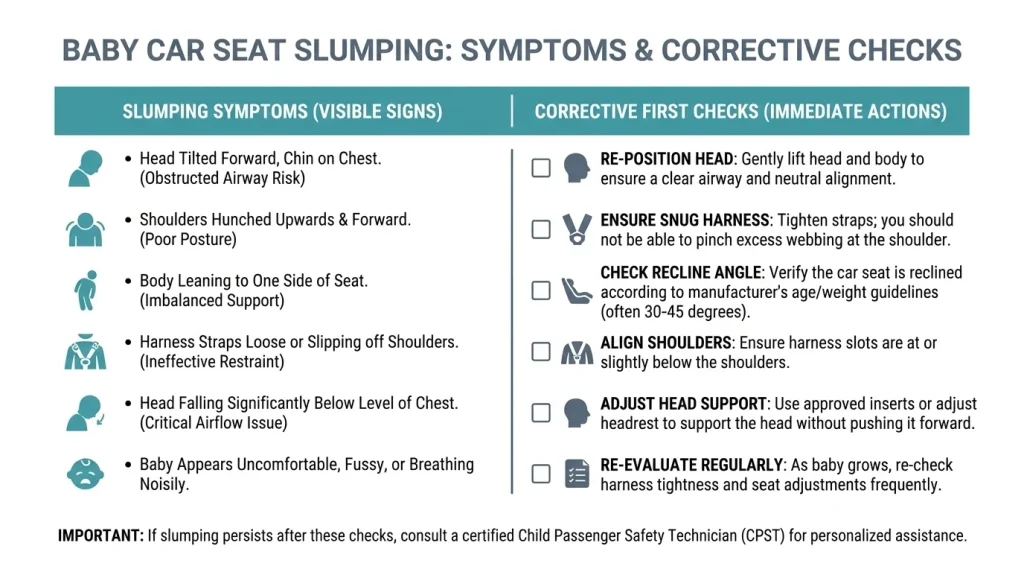
Use this five-minute check before you drive, with the car parked and the seat installed.
Work through the steps in order, because each one changes the next.
- Check recline: Read the seat’s recline indicator and your manual for the newborn range.
- Remove bulky layers: Take off thick coats and remove blankets from under the harness.
- Set harness height: For rear-facing use, place straps at or just below the shoulders.
- Buckle and tighten: Tighten until you cannot pinch webbing at the shoulder.
- Place the chest clip: Slide it to armpit level and keep it centred.
- Check head support: Use only head support that came with the seat or is approved in the manual.
- Check installation: Push the seat at the belt path; movement should stay within about 1 inch.
Recheck fit after a growth spurt, a clothing change, or a move to another car.
Straps that fit last month may sit too low this month.
| What you see | Likely cause | First check |
|---|---|---|
| Chin rests on chest | Seat too upright | Recline indicator and manual range |
| Body slides down | Harness too loose | Pinch test at the shoulder |
| Straps slip off shoulders | Chest clip too low | Move clip to armpit level |
| Seat feels roomy and low | Wrong insert or seat fit | Manual’s minimum weight and approved inserts |
| Slumping in a thick coat | Hidden harness slack | Thin layer under straps, blanket over straps |
Keep this check short and consistent, so it becomes part of buckling up.
A rushed check often misses the chest clip, and that one detail changes strap position.
Section takeaway: Recline, thin clothing, strap height, snugness, and chest-clip level cover most fit problems. Check them in that order before you blame the seat.
Do Car Seat Covers, Inserts, or Padding Fix Slumping?
A generic car seat cover does not fix newborn slumping, and some aftermarket padding can make fit worse.
This point causes confusion because the phrase car seat cover covers two different products.
Two different meanings of “car seat cover”
An adult vehicle seat cover protects a car’s front or rear seat from wear, spills, and heat.
An infant seat’s own cover is the fabric shell made for that child seat model.
Those two covers are not interchangeable, and an adult cover should never sit between a baby and the harness.
Why aftermarket inserts can backfire
Aftermarket inserts, head supports, and strap covers can change how the harness sits.
Extra padding behind the baby can push the body forward and alter strap routing.
Padding under the baby can also change recline and harness height in ways the manual did not test.
Use only inserts and covers that your seat maker lists as approved for your exact model.
If the manual does not list it, leave it out, even if the packaging calls it universal.
What about the covers reviewed on this site?
The car seat cover reviews on this site focus on adult vehicle seats, not infant seats.
They can help you choose protection for the driver’s or passenger’s seat, not a fix for a newborn.
For example, a cooling car seat cover review looks at comfort for an adult driver in heat.
A Sprints car seat cover review and an Astonish car seat cover review cover the same adult-seat category.
None of those products should go under a newborn, behind a newborn, or over a newborn harness.
Safe ways to handle comfort and temperature
Keep the car at a comfortable temperature before you buckle your baby in.
Use a thin, breathable layer under the harness, and add a blanket over the harness on cold days.
Remove hats and hoods that bunch behind the head once the baby is buckled.
For a soiled infant seat cover, follow the manual’s washing steps, because the wrong wash can shrink fabric and change fit.
Pro tip: If a cover, insert, or accessory did not come with your seat and your manual does not approve it, treat it as untested for your seat and skip it.
Section takeaway: Fix slumping with recline and harness fit, not with extra padding. Adult car seat covers belong on adult seats, and only manufacturer-approved infant inserts belong in a baby seat.
What Should I Do If My Baby Still Slumps?
If slumping continues after a careful refit, stop guessing and get a hands-on check.
A small install detail can hide in plain sight, even after several careful tries.
Start by rereading the manual sections on recline, harness height, and approved inserts.
Some seats allow a rolled towel or pool noodle under the seat base to correct recline, while others forbid it.
Use that method only if your manual names it, and never place padding behind your baby.
Next, book a check with a certified child passenger safety technician if one is available near you.
Bring the seat, the manual, and the car you use most, so the check matches real use.
Ask your paediatrician about slumping if it happens often, affects breathing, or involves a premature baby.
A different seat model may fit your baby better, but choose it on manual fit and a hands-on check, not on looks alone.
Plan shorter trips while you sort the fit, with safe stops to check breathing and position.
An adult riding in the back can watch, but that adult must stay buckled and must not distract the driver.
As of 2026, the safest habit stays simple: correct recline, snug harness, armpit-level clip, and no unapproved extras.
Section takeaway: A persistent slump needs a manual recheck, a technician check, and medical advice if breathing is involved. Do not add padding to force a fit.
Frequently Asked Questions
Is it normal for a newborn to slump in a car seat?
Some head movement is normal because newborn neck control is weak, but repeated chin-to-chest slumping is not a fit to ignore. Check recline, harness snugness, and chest-clip position, and seek advice if slumping keeps happening.
How do I stop my baby’s chin from dropping to the chest?
Start with a more reclined approved angle, a snug harness, and a chest clip at armpit level. Remove bulky clothing from under the straps, then recheck the seat manual before you change anything else.
Can I put a rolled towel behind my baby’s head?
No, do not place towels, blankets, or padding behind your baby’s back or head unless your manual specifically approves that item. Some manuals allow a towel or noodle under the seat base for recline, which is a different placement.
Can I add a head support insert to stop slumping?
Use only a head support that came with your seat or is approved in your manual for your exact model. An unapproved insert can push the baby forward, change strap position, and hide harness slack.
What recline angle should a newborn car seat use?
Follow your seat’s recline indicator and manual, since the approved range varies by model. As a general guide, newborns need the more reclined end of the rear-facing range, often around 45 degrees, but your manual controls.
Do car seat covers help a newborn sit up straighter?
No, a generic car seat cover will not correct slumping, and a cover placed under or behind a baby can worsen harness fit. Adult seat covers belong on adult seats, while infant seats should use only their own approved covers and inserts.
When should I see a doctor or car seat technician?
See a technician if slumping continues after a careful refit, and see a doctor promptly if breathing looks laboured, pauses, or your baby turns pale or blue. Premature babies and babies with low muscle tone need earlier advice.
Closing Takeaway
Newborn slumping usually points to a fit issue you can check in minutes.
Set the recline, tighten the harness, place the clip at armpit level, and keep unapproved padding out of the seat.
If slumping persists, get a hands-on technician check and talk to your paediatrician.
For background reading, Consumer Reports and HealthyChildren.org, from the American Academy of Pediatrics offer general child car seat guidance.
Your baby’s manual remains the final word for your exact seat.

Daniel Brooks is an automotive writer and product researcher focused on car accessories, car tech, maintenance, and practical driving guides. At Plug-in Car World, he helps drivers make smarter automotive decisions through honest reviews and research-driven content.
