
How to Check Whether a Seat Belt Fits a Child Correctly
Quick Answer
To check whether a seat belt fits a child correctly, have them sit upright with their back against the vehicle seat. Their knees should bend naturally at the seat edge, the lap belt should rest low across the upper thighs, and the shoulder belt should cross the middle of the chest and shoulder. They must maintain this position throughout the trip. If any check fails, they generally still need a booster seat, as explained in the NHTSA seat belt safety guidance.
Five Essential Fit Checks
- Back position: The child’s back rests against the vehicle seatback without slouching.
- Knee position: Their knees bend comfortably over the seat edge while sitting upright.
- Lap belt: The belt rests snugly across the upper thighs, not the stomach.
- Shoulder belt: The strap crosses the center of the shoulder and chest, away from the neck.
- Entire trip: The child can maintain correct posture without moving the belt.
Important Safety Reminder
- Age or height alone doesn’t prove a child is ready for an adult seat belt. Check the actual fit in every vehicle.
Knowing how to check whether a seat belt fits a child correctly is an important part of family car safety. A child may look tall enough for an adult belt while still sitting in a position that leaves their abdomen or neck exposed.
I like to approach this as a practical fitment check, much like checking whether any safety component sits where its manufacturer intended. This guide walks through the five-step test, booster seat readiness, common mistakes, and what to do when the belt doesn’t fit.
In This Guide
- What Does Correct Seat Belt Fit Look Like on a Child?
- How Do You Perform the Five-Step Seat Belt Fit Test?
- When Can a Child Stop Using a Booster Seat?
- What Should You Do If the Seat Belt Doesn’t Fit?
- How Does Vehicle Seat Design Affect Belt Fit?
- What Seat Belt Mistakes Should Parents Avoid?
- Frequently Asked Questions
What Does Correct Seat Belt Fit Look Like on a Child?
A correctly fitted seat belt holds a child’s body against the vehicle seat while positioning the restraint over stronger skeletal areas. The lap portion should contact the upper thighs and pelvis, while the shoulder portion crosses the chest and shoulder.
Definition: Proper child seat belt fit means the vehicle’s lap-and-shoulder restraint contacts the correct parts of the child’s body without requiring slouching, twisting, or moving either belt section out of position.
Why Is Correct Belt Position Important?
Vehicle seat belts are designed primarily around adult body dimensions. A smaller child may sit too low or too far forward for those belt anchor points to work as intended.
When the lap belt crosses the abdomen, crash forces may load vulnerable soft tissues instead of the pelvis. A misplaced shoulder belt can also reduce upper-body restraint.
Correct vs. Incorrect Seat Belt Fit
| Fit Check | Correct Fit | Incorrect Fit |
|---|---|---|
| Lap belt | Low across upper thighs | Across stomach |
| Shoulder belt | Center of chest and shoulder | Across neck, face, or arm |
| Back position | Upright against seatback | Slouching forward |
| Knees | Bend at seat edge | Legs extend straight |
| Movement | Stays positioned throughout trip | Belt moved or posture changes |
A child needs to pass every check. One correctly positioned belt section cannot compensate for another that fits poorly.
How Do You Perform the Five-Step Seat Belt Fit Test?
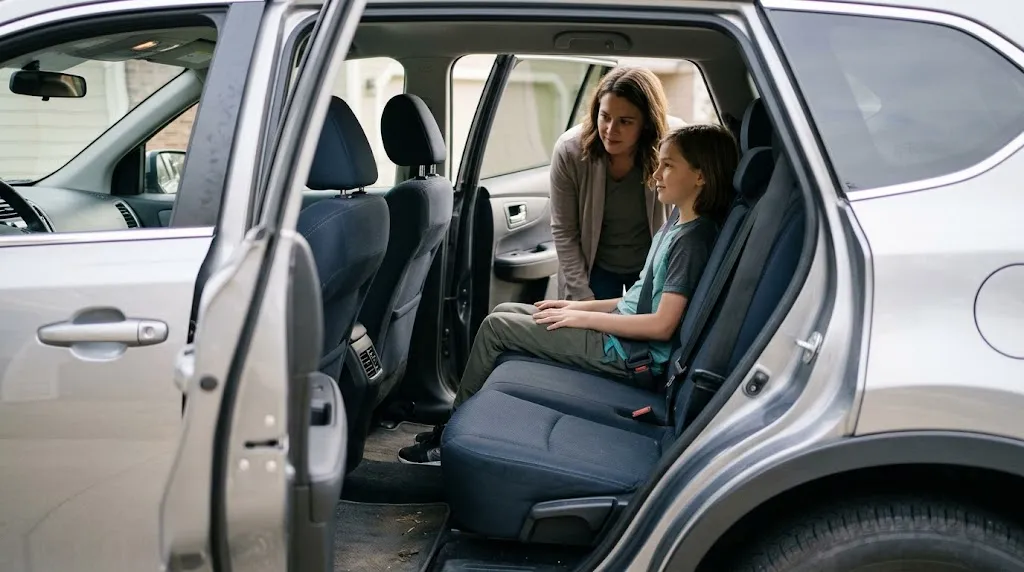
The five-step seat belt fit test helps determine whether a child can safely use an adult lap-and-shoulder belt without a booster. Perform it with the child sitting in the actual vehicle and seating position they will use.
Park on level ground and turn off the engine before beginning. The entire assessment is a visual and positioning check, not a driving test.
Step-by-Step Seat Belt Fit Checklist
Check the child’s back position.Ask your child to sit upright with their bottom and back against the vehicle seatback. They shouldn’t need to slide forward to feel comfortable.
If they must slouch to reach the seat edge, the vehicle seat may be too deep for proper belt-only use.
Check the knees and legs.Look at where the knees meet the front edge of the cushion. They should bend naturally while the child’s back remains against the seatback.
Check that their feet can rest flat on the floor, as recommended in NHTSA’s belt-fit guidance. Dangling legs or an uncomfortable position can encourage slouching.
Inspect the lap belt position.Buckle the seat belt and examine its lower section. It should lie snugly across the upper thighs and pelvis rather than crossing the stomach.
If the belt rides onto the abdomen, the child hasn’t achieved proper lap-belt fit. Don’t solve this by pulling the child forward.
Inspect the shoulder belt position.The diagonal strap should run across the center of the chest and shoulder. It must not touch the face, press against the neck, or slip off the shoulder.
Make sure the shoulder belt isn’t tucked under an arm or behind the back. Both positions interfere with the restraint’s intended protection.
Confirm the child can maintain the position.Ask whether the sitting position feels comfortable enough for the entire journey. A child who continually slouches, twists, or moves the shoulder strap may still need a booster.
Observe their normal posture rather than asking them to hold an unusually stiff position just to pass.
What Happens If Your Child Fails One Step?
If any step fails, continue using an appropriate belt-positioning booster seat. A booster raises the child and helps place the adult seat belt across the correct body areas.
Repeat the test in each vehicle they regularly use. A child may pass in one seating position and fail in another.
Section Takeaway: All five checks must pass without forcing an unnatural posture. If even one fails, the child generally still needs a booster seat.
When Can a Child Stop Using a Booster Seat?
A child can stop using a booster when the vehicle’s lap-and-shoulder belt fits correctly without it and the child can stay seated properly. Their age, height, and weight help guide the decision, but don’t replace a fit check.
According to the American Academy of Pediatrics booster seat guidance, correct fit typically occurs around 4 feet 9 inches tall and ages 8 to 12.
Does a Child Need to Be 4 Feet 9 Inches Tall?
Four feet 9 inches, or approximately 145 cm, is a common height guideline rather than an automatic graduation requirement. Vehicle seat geometry and individual body proportions also determine fit.
A child at that height might still need a booster in a vehicle with a deep rear-seat cushion. Another child may achieve correct fit differently, so the five-step check remains essential.
Does Weight Determine Booster Seat Readiness?
Weight alone doesn’t prove that the seat belt contacts the correct body areas. A heavier child may still have short legs or a torso that places the shoulder belt incorrectly.
Always check the height and weight limits printed on the child’s current restraint. Don’t move a child out of a forward-facing harness merely because a booster seems more convenient.
What Is the Correct Child Restraint Progression?
- Rear-facing car seat: Use until the child reaches the manufacturer’s maximum rear-facing height or weight limit.
- Forward-facing harness: Continue using the harness and top tether according to the seat’s instructions until the appropriate limit is reached.
- Belt-positioning booster: Use after outgrowing the forward-facing harness, until the adult lap-and-shoulder belt fits correctly.
- Vehicle seat belt: Use only when proper belt fit and seating posture are maintained without a booster.
The CDC child passenger safety recommendations explain these stages and advise keeping children properly restrained in the back seat until at least age 13.
As of 2026, these remain established U.S. child passenger safety recommendations. Local legal requirements may differ, so check the rules where you drive.
What Should You Do If the Seat Belt Doesn’t Fit?
If a child’s seat belt doesn’t fit correctly, use a suitable child restraint rather than improvising a belt adjustment. The solution depends on whether the child still needs a harnessed seat or is ready for a booster.
If the Shoulder Belt Touches the Neck
A shoulder belt resting against the neck indicates poor positioning. It may also encourage the child to move the strap under their arm.
- Use a correctly sized booster seat if the adult belt doesn’t fit without one.
- Follow the booster’s instructions for its shoulder-belt guide.
- Check whether the vehicle’s approved shoulder-belt height adjustment improves positioning.
- Recheck the entire lap-and-shoulder fit after any adjustment.
If the Lap Belt Rides Across the Stomach
A lap belt crossing the abdomen is a clear warning that the belt doesn’t fit correctly. Moving only the shoulder strap won’t solve this problem.
Use an appropriate booster seat and check that its belt guides position the lap belt low across the upper thighs. Follow both the vehicle and booster manufacturer’s instructions.
Should You Use a Seat Belt Adjuster or Clip?
A universal aftermarket adjuster is not a substitute for a proper booster seat. Some products pull the shoulder belt down while shifting the lap section upward or introducing unwanted slack.
Avoid unapproved clips, extenders, and positioning accessories for children. Use only restraint components and adjustments specifically approved for the application.
How Can a Booster Seat Correct the Problem?
A belt-positioning booster changes the child’s seating height and belt routing. That helps the vehicle’s adult restraint contact the shoulder, chest, pelvis, and thighs correctly.
According to NHTSA booster seat instructions, parents should follow the seat’s belt guides and inspect positioning regularly.
Pro tip: If you can’t achieve a correct fit with the approved equipment, consult a certified Child Passenger Safety Technician (CPST) and the applicable vehicle and restraint manuals.
How Does Vehicle Seat Design Affect Belt Fit?
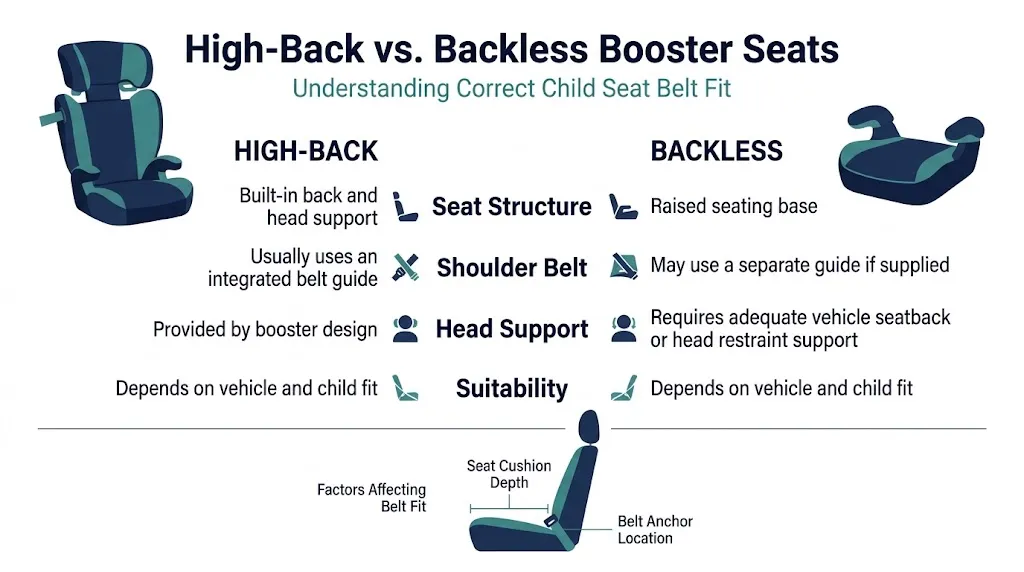
Seat belt fit can change between cars because seating dimensions and belt anchor locations differ. The same child may fit properly in one vehicle but require a booster in another.
Seat Cushion Depth and Shape
Deep seat cushions may prevent shorter children’s knees from bending naturally over the edge. The child may slide forward, which can raise the lap belt toward the abdomen.
Contoured cushions can also change how a booster rests against the vehicle seat. Check that the booster sits properly according to its manual.
Seat Belt Anchor Location
The position of the upper shoulder anchor affects where the diagonal strap crosses the child’s body. Lower belt anchors and buckle locations affect lap-belt geometry.
This is why moving a child from one row or seating position to another requires another fit assessment. Don’t assume that a passing result transfers automatically.
High-Back vs. Backless Booster Seats
Both styles can position a lap-and-shoulder belt correctly when used as directed. However, the vehicle seat, available head support, and booster manufacturer’s requirements affect which type is suitable.
| Feature | High-Back Booster | Backless Booster |
|---|---|---|
| Seat structure | Built-in back and head support | Raised seating base |
| Shoulder belt | Usually uses an integrated belt guide | May use a separate guide if supplied |
| Head support | Provided by booster design | Requires adequate vehicle seatback or head restraint support |
| Suitability | Depends on vehicle and child fit | Depends on vehicle and child fit |
Neither booster style is automatically the right choice for every child. Check the manufacturer’s size limits, vehicle compatibility, and final belt position.
What About Vehicles With Lap-Only Seat Belts?
A belt-positioning booster requires a lap-and-shoulder belt. Never use a conventional booster with a lap-only seat belt.
If the available seating position has only a lap belt, consult a certified safety technician about an appropriate harnessed restraint or other manufacturer-approved solution. Avoid improvising a shoulder restraint.
What Seat Belt Mistakes Should Parents Avoid?
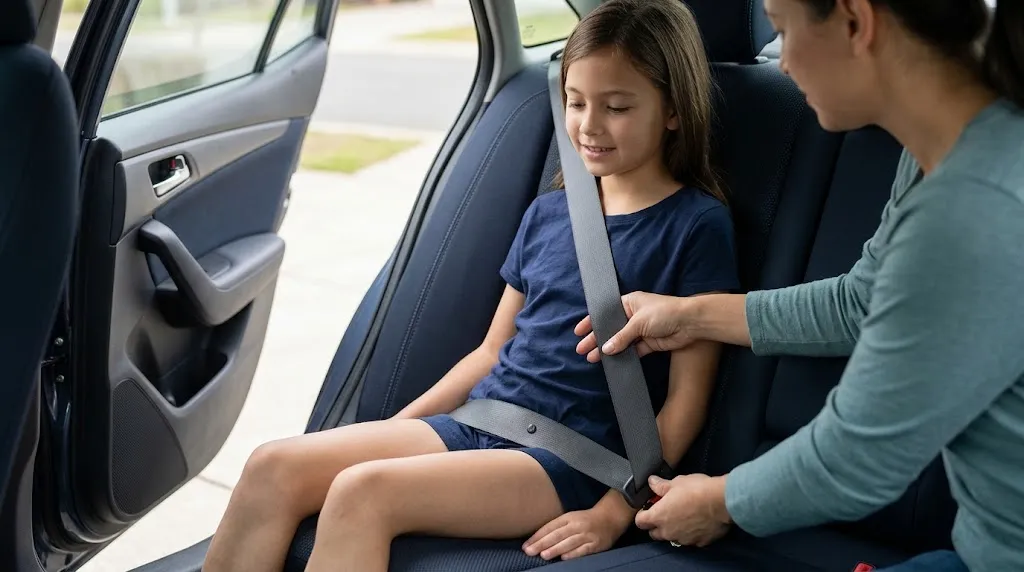
The most common seat belt mistakes happen when a child changes their position after being buckled. Correct initial fit matters, but the belt must remain properly positioned throughout the journey.
Common Mistakes to Watch For
- Moving the shoulder strap behind the back: This removes important upper-body restraint.
- Placing the strap under the arm: This changes how crash forces affect the torso.
- Allowing the lap belt over the stomach: This exposes the abdomen to harmful loading.
- Graduating from a booster too early: Age or appearance doesn’t replace proper belt fit.
- Allowing slouching: Sliding forward can move the lap belt away from the pelvis.
- Using unapproved accessories: Extra padding or belt-positioning devices can interfere with restraint performance.
- Sharing a seat belt: Each child needs their own appropriate restraint.
Can Car Seat Covers Affect Seat Belt Safety?
Some aftermarket seat covers or protective mats may obstruct buckles, alter booster positioning, or interfere with vehicle safety features. A decorative cover must never interfere with a child’s restraint.
Don’t place aftermarket padding beneath a child restraint unless the child seat manufacturer specifically permits it. Check the vehicle manual for seat-cover restrictions, especially around seat-mounted airbags.
A Quick Safety Routine Before Every Drive
- Confirm the child is using the correct restraint for their size.
- Check the buckle is fully latched into the proper receptacle.
- Inspect the lap belt across the upper thighs.
- Confirm the shoulder strap lies across the chest and shoulder.
- Remove any twists and check that the belt is snug.
- Remind the child to remain upright throughout the trip.
Make this routine a habit before leaving the driveway. A few simple observations can catch positioning problems before a journey begins.
Pro tip: Always follow the vehicle owner’s manual and car seat or booster manufacturer’s instructions. For uncertain installations or fit problems, arrange an in-person check with a certified Child Passenger Safety Technician.
Frequently Asked Questions
How do I know if my child is ready for a seat belt without a booster?
Your child is ready when their back rests against the seat, their knees bend at the seat edge, and both belt sections fit correctly. They must also stay in that position throughout the journey. If any part of the fit test fails, continue using an appropriate booster.
At what age does a child usually fit an adult seat belt?
Proper fit commonly occurs between ages 8 and 12, often closer to ages 10 to 12. However, age alone isn’t enough. The child’s height, body proportions, vehicle seating position, and ability to maintain proper posture determine whether the adult seat belt fits safely.
Can a 7-year-old ride without a booster seat?
Most 7-year-olds still require an appropriate child restraint or booster. The correct choice depends on their size, the limits of their current seat, and actual belt fit. A child shouldn’t switch to an adult seat belt merely because they’ve reached a certain birthday.
Is it safe if the shoulder belt touches my child’s neck?
No. A shoulder belt that crosses the neck or face doesn’t meet recommended fit guidelines. Use a suitable booster and follow its approved belt-routing instructions. Never place the shoulder strap behind the back or under an arm to make it feel more comfortable.
Can my child pass the seat belt test in one car but fail in another?
Yes. Differences in seat cushion depth, belt anchor locations, and seating position can change the fit. A child may need a booster in one vehicle even after passing the test in another. Repeat the assessment whenever they use a different car or seat.
Should children always ride in the back seat?
U.S. safety guidance recommends that children younger than 13 ride properly restrained in the back seat. This helps protect them from risks associated with front-seat crashes and airbags. Always follow applicable local laws and the vehicle manufacturer’s instructions.
What should I do if a booster seat still doesn’t position the belt correctly?
Check the booster’s size limits, belt guides, and vehicle compatibility. Try another manufacturer-approved seating position or a more suitable restraint if necessary. If the fit remains incorrect, seek help from a certified Child Passenger Safety Technician before relying on that setup.
Final Takeaway: Check the Fit, Not Just the Age
The safest way to decide whether a child can use an adult seat belt is to check their actual sitting position. A correctly fitted belt stays low across the upper thighs and crosses the chest and shoulder without touching the neck.
If your child can’t sit upright with their knees naturally bent while maintaining that fit, keep using an appropriate booster. Never rush the transition simply because classmates or siblings no longer use one.
Before your next family drive, perform the five-step test in every vehicle your child uses. Correct belt positioning should be a routine part of buckling up, not a one-time decision.

Daniel Brooks is an automotive writer and product researcher focused on car accessories, car tech, maintenance, and practical driving guides. At Plug-in Car World, he helps drivers make smarter automotive decisions through honest reviews and research-driven content.
