
What Is the Five-Step Seat Belt Fit Test for Children?
When a child starts looking too big for a booster seat, it’s tempting to move straight to the adult seat belt. However, looking grown-up and fitting the belt correctly are two different things.
I’m Daniel Brooks, and I believe checking belt position matters more than guessing based on age. This guide explains the five-step seat belt fit test, common mistakes, booster seat readiness, and how to check different vehicles.
In This Guide
What Is the Five-Step Seat Belt Fit Test?
The five-step seat belt fit test is a practical method for checking whether an adult seat belt fits a child correctly. It focuses on seating posture, knee position, belt placement, and the ability to maintain that posture.
Adult seat belts are designed around adult body proportions. Children often need booster seats to position those belts correctly across their bodies.
Why Is the Five-Step Test Important?
A seat belt works best when it crosses the stronger parts of the body. Poor belt positioning can place crash forces on vulnerable areas, including the abdomen and neck.
A properly positioned lap belt rests across the hips and upper thighs. The shoulder belt helps restrain the upper body across the chest and shoulder.
According to Johns Hopkins Medicine’s child passenger safety guidance, all five fit checks should be satisfied before transitioning to an adult belt alone.
Is the Five-Step Test the Same as a Five-Point Harness?
No. These terms describe different child passenger safety concepts.
- Five-step fit test: Checks whether an adult lap-and-shoulder belt fits without a booster.
- Five-point harness: A restraint system with straps securing the child at five contact points.
- Booster seat: Raises and positions an older child so the vehicle belt fits correctly.
Understanding these differences helps parents choose the correct restraint for their child’s current stage.
Section Takeaway: The test checks actual belt fit, not simply a child’s age, weight, or appearance.
How Do You Perform the Five-Step Seat Belt Fit Test?
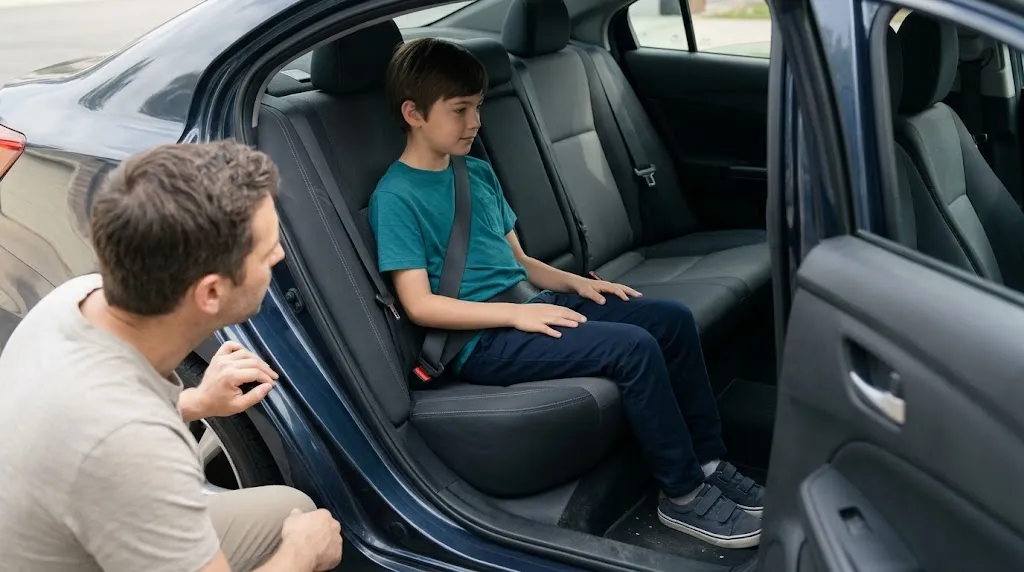
Perform the test while the vehicle is parked, using the seat where your child normally rides. Have your child sit naturally and buckle the lap-and-shoulder belt without a booster for this stationary check.
Ask each question in order. Every answer must be yes before considering regular travel without the booster.
Step 1: Does Your Child Sit Fully Against the Seat Back?
Ask your child to sit upright with their bottom and back against the vehicle seat. Their lower back should not need to move forward for comfort.
Check for these signs:
- The child’s back contacts the seat back naturally.
- The child does not need to slide forward.
- The seating position remains comfortable.
- The child can maintain an upright posture.
If your child must slouch to feel comfortable, the adult belt may not fit properly.
Step 2: Do Their Knees Bend Comfortably Over the Seat Edge?
With the child’s back against the seat, check whether their knees bend naturally at the cushion’s front edge. Their legs should not need to stretch straight ahead.
If the cushion extends too far beneath their thighs, they may slide forward to bend their knees. That movement can disturb both lap-belt and shoulder-belt positioning.
Also check whether their feet rest naturally on the floor. Foot support is another useful seating-fit consideration included in NHTSA guidance.
Step 3: Does the Lap Belt Rest Low Across the Hips?
The lap belt should lie snugly across the upper thighs and hips. It should never rest high across the soft stomach.
Look for three characteristics:
- The belt contacts the upper thighs.
- The webbing remains flat without twisting.
- The belt stays low rather than riding onto the abdomen.
This check matters because the pelvis can manage restraint forces better than the soft abdomen.
Step 4: Does the Shoulder Belt Cross the Middle of the Shoulder?
The diagonal belt should cross the center of the shoulder and chest. It should not touch the neck, cross the face, or fall off the shoulder.
Never allow children to place the shoulder belt behind their back or underneath an arm. Both positions reduce the protection provided by the restraint.
If the vehicle provides a shoulder-belt height adjustment, follow its owner’s manual instructions. An adjustment still does not replace a needed booster seat.
Step 5: Can Your Child Maintain This Position for the Entire Trip?
Correct positioning must remain comfortable throughout the journey. A child who passes the first four checks but repeatedly slouches has not passed the complete test.
Ask whether your child can:
- Stay upright without sliding forward.
- Keep the shoulder belt correctly positioned.
- Leave the lap belt low across the hips.
- Avoid moving the belt behind the back.
- Remain correctly seated during longer journeys.
You can observe their posture while parked, but also consider their normal travel behavior. If they cannot reliably maintain it, continue using an appropriate booster.
Section Takeaway: Passing requires five yes answers in the actual seating position. One failed step means the child still needs appropriate restraint support.
What Does a Passing or Failing Seat Belt Fit Look Like?
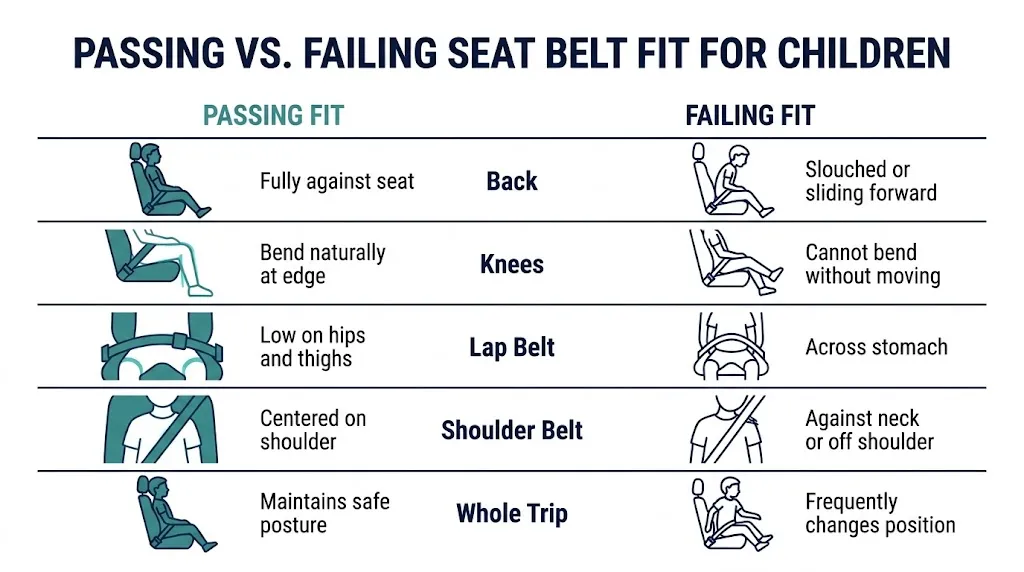
A passing fit looks natural and comfortable without repositioning the child repeatedly. A failing fit usually involves slouching, poor belt placement, or difficulty maintaining posture.
Use the following comparison when checking your child.
| Fit Check | Passing Fit | Failing Fit |
|---|---|---|
| Back | Fully against seat | Slouched or sliding forward |
| Knees | Bend naturally at edge | Cannot bend without moving |
| Lap belt | Low on hips and thighs | Across stomach |
| Shoulder belt | Centered on shoulder | Against neck or off shoulder |
| Whole trip | Maintains safe posture | Frequently changes position |
Why Can a Seat Belt Look Correct but Still Fail?
A shoulder belt may look centered while the lap belt rests too high. Likewise, correct lap-belt placement cannot compensate for a child who slides forward.
My preferred approach is to inspect the child’s posture before focusing on the buckle. The belt’s position only tells the full story when the child is sitting naturally.
Repeat the check whenever seating conditions change. A small difference in cushion depth can affect the result.
Section Takeaway: Evaluate every part of the fit together. Good shoulder-belt placement alone is not enough.
When Can Children Stop Using a Booster Seat?
Children can generally stop using a booster once the vehicle’s adult lap-and-shoulder belt fits properly and they can maintain that fit. They must also meet applicable child restraint laws.
The American Academy of Pediatrics explains that proper fit often occurs around 4 feet 9 inches tall, commonly between ages 8 and 12. However, many children need boosters until approximately ages 10 to 12.
These are general patterns, not guaranteed graduation measurements.
Does a Child Automatically Pass at 4 Feet 9 Inches?
No. A height of 4 feet 9 inches equals 57 inches, or about 145 centimeters, but it is not a universal pass mark.
Vehicle seat depth, shoulder-belt geometry, and body proportions all influence fit. Some children of this height still need a booster in particular vehicles.
The American Academy of Pediatrics car seat guide explains why children should remain in an appropriate restraint until the belt fits correctly.
What If Your Child Passes Before Age Eight?
Do not rely on the fit test alone to justify an early transition. Follow local child restraint laws and the relevant seat manufacturer’s instructions.
Passing a stationary posture check does not override legal minimums or other safety requirements.
Should Children Still Ride in the Back Seat?
Yes. Children younger than 13 should ride in the rear seating area, even after graduating from a booster.
The recommendation reflects the risks associated with front-seat crashes and passenger airbags. A correctly fitting seat belt does not eliminate those risks.
Pro tip: Check the vehicle owner’s manual, booster manufacturer’s instructions, and applicable child passenger safety laws before changing restraints.
Section Takeaway: Correct belt fit determines readiness better than age alone, but laws and rear-seat recommendations still apply.
What Common Seat Belt Fit Mistakes Should Parents Avoid?
The most common mistake is graduating a child before the belt fits naturally. Other problems involve changing the belt’s path or relying on accessories instead of an appropriate booster.
Moving Out of a Booster Too Early
Children often want to ride like older siblings or friends. That preference should not determine when they stop using their booster.
Keep the booster until the five-step test is passed consistently and applicable requirements are satisfied.
Putting the Shoulder Belt Behind the Back
A shoulder belt touching the neck may feel uncomfortable. Some children respond by moving it behind their back or under their arm.
Neither position is safe. Restore correct belt fit by using the appropriate restraint rather than bypassing the shoulder belt.
Using Unapproved Belt Adjusters or Cushions
Aftermarket belt clips, positioning devices, and cushions may promise a better fit. However, products not approved for the restraint can interfere with normal belt performance.
Even car seat covers or thick cushions deserve attention if they change seating posture, buckle access, or belt routing. Check compatibility with the vehicle and restraint manufacturers.
Allowing Bulky Clothing to Affect Belt Contact
Bulky clothing can leave unwanted space between the restraint and the child’s body. Adjust clothing so the belt rests snugly and correctly.
Check that the belt lies flat rather than twisting or bunching against fabric.
Confusing Booster Seats With Simple Seat Cushions
A belt-positioning booster is designed to help the vehicle belt fit a child. An ordinary cushion does not provide the same intended restraint positioning.
The Insurance Institute for Highway Safety’s booster guidance explains the importance of proper lap-and-shoulder belt placement.
Section Takeaway: Never solve poor belt fit by hiding the shoulder belt or adding unapproved accessories. Use a correctly fitted child restraint.
Does Seat Belt Fit Change Between Different Vehicles?
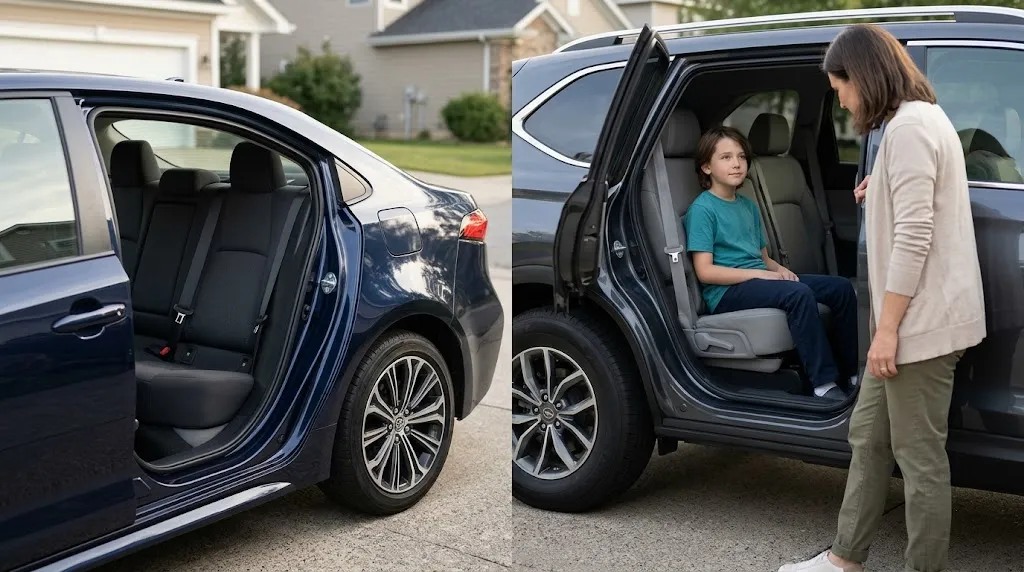
Yes. A child may pass the five-step test in one vehicle but fail in another. Seat cushion length, belt anchor location, and seating geometry can change the fit.
Always repeat the test in each vehicle and seating position your child uses.
What About SUVs, Sedans, and Pickup Trucks?
Different vehicles have different seat dimensions and belt arrangements. Even two seating positions within the same SUV may fit differently.
Consider a child whose knees bend comfortably in a sedan. A deeper rear cushion in another vehicle might prevent the same child from sitting correctly without a booster.
That is why testing the actual seat matters.
What If Your Child Rides With Grandparents or Friends?
Caregivers should know whether the child needs a booster in their vehicle. A passing result in the family car does not automatically apply elsewhere.
Before traveling, check:
- The child’s seating position.
- Availability of a lap-and-shoulder belt.
- Correct booster use when required.
- Head and neck support.
- The child’s ability to remain properly seated.
Can Children Use Booster Seats With Lap-Only Belts?
No. Conventional belt-positioning boosters require a lap-and-shoulder belt, not a lap-only belt.
If a seating position has only a lap belt, seek an appropriate restraint solution following the manufacturer’s guidance. A certified child passenger safety technician can help assess available options.
Additional information is available from Nationwide Children’s Hospital child passenger safety resources.
What If a Child Has Special Physical or Developmental Needs?
Some children need specialized transportation restraints or additional positioning support. Standard seat belt fit guidance may not address every individual need.
Consult a qualified child passenger safety technician experienced in special transportation needs. Follow professional recommendations and the approved restraint instructions.
Section Takeaway: Belt fit is specific to the child, vehicle, and seating position. Test every arrangement independently.
Frequently Asked Questions About the Five-Step Seat Belt Fit Test
1. What Are the Five Steps of the Seat Belt Fit Test?
The five checks are sitting fully against the seat back, bending the knees naturally, positioning the lap belt low, centering the shoulder belt, and maintaining proper posture throughout the trip. A child must pass all five before using an adult seat belt without a booster.
2. At What Age Can a Child Use an Adult Seat Belt?
Many children achieve proper belt fit between ages 8 and 12, although some need boosters longer. Readiness depends on body proportions, vehicle geometry, and consistent posture. Age alone does not establish correct fit, and local restraint laws must also be followed.
3. What Happens If a Child Fails One Step?
If any step fails, the child should continue using an appropriate belt-positioning booster or other suitable restraint. Do not move the shoulder belt behind the back or use unapproved accessories to compensate for poor fit. Repeat the test as the child grows.
4. Can a Ten-Year-Old Still Need a Booster Seat?
Yes. Many ten-year-olds still need boosters, especially when vehicle cushions are deep or shoulder belts do not fit correctly. The child’s height, body proportions, and seating position determine fit. A booster remains appropriate until the adult belt works properly.
5. Do Children Need to Pass the Test in Every Car?
Yes. Seat dimensions and belt anchor positions differ between vehicles. A child who passes in one car may fail in another. Check every regular seating position, including vehicles used by relatives, school-trip drivers, or other caregivers.
6. Can a Seat Belt Adjuster Replace a Booster Seat?
No. An unapproved aftermarket belt adjuster should not replace an appropriate booster seat. Such devices may change belt routing or introduce slack. Use a restraint suited to your child’s size, and follow the vehicle and child restraint manufacturers’ instructions.
7. Where Should the Lap Belt Sit on a Child?
The lap belt should lie flat and snug across the child’s upper thighs and hips. It must not cross the soft abdomen. The shoulder belt should run across the middle of the shoulder and chest, without touching the face or slipping off the shoulder.
Final Takeaway:
The five-step seat belt fit test gives parents a practical way to check booster seat readiness. The goal is not to graduate children quickly, but to keep them correctly restrained during every journey.
As of 2026, current child passenger safety guidance continues to prioritize proper belt fit over age alone. Check your child’s fit whenever they grow, change vehicles, or move to a different seating position.
Before your next family trip, perform all five checks. If anything looks wrong, keep using an appropriate booster and consult a certified child passenger safety technician for personalized guidance.

Daniel Brooks is an automotive writer and product researcher focused on car accessories, car tech, maintenance, and practical driving guides. At Plug-in Car World, he helps drivers make smarter automotive decisions through honest reviews and research-driven content.
