Long-Term Storage Mistakes When Using a Car Cover
⚡ Quick Answer
The biggest long-term car cover storage mistakes are covering a dirty or wet car, using a non-breathable cover, choosing the wrong fit, leaving it unsecured, and never lifting it to inspect the vehicle. Each mistake quietly damages your paint, promotes rust, or hides serious problems for months.
Top Car Cover Mistakes to Stop Making:
-
1
Covering a dirty or wet car — traps grit and moisture against paint -
2
Using a non-breathable cover — creates mold, rust, and condensation -
3
Using the wrong size or fit — loose covers scratch paint like sandpaper -
4
Never removing the cover to inspect — hides rust, pests, and paint bubbling -
5
Using a plastic tarp — traps moisture and accelerates rust
Fix It Right:
-
✓
Always wash and fully dry the car before covering -
✓
Use a breathable, fitted cover — not a tarp or plastic sheet -
✓
Lift the cover and inspect your car at least once a month
You put a cover on your car and walked away. Simple enough — until you pull it off 6 months later and find paint scratches, rust spots, or worse. I’m Daniel Brooks, and I’ve seen this exact situation more times than I’d like.
A car cover is supposed to protect your vehicle. But the wrong cover — or the right cover used the wrong way — can cause serious damage during long-term storage. Here’s how to make sure yours does its job.
📌 Key Takeaways
-
→
Covering a dirty car is the single fastest way to scratch your paint during storage. -
→
Non-breathable covers trap moisture and create a humid microenvironment that causes rust and mold. -
→
A loose or wrong-fit cover flaps against the paint in wind and causes abrasion damage over months. -
→
Plastic tarps are never a substitute for a proper car cover — they concentrate moisture and scratch paint. -
→
AAA recommends washing, waxing, and fully drying your car before using any cover for storage.
Mistake #1: Covering a Dirty or Wet Car
This is the most common mistake — and the most damaging. Dirt, dust, bird droppings, and tree sap on your car’s surface act like tiny pieces of sandpaper. When you put a cover on top, you press that grit directly against the paint.
Every shift of the cover, even from a gentle breeze, grinds those particles across the clear coat. Over months, that creates scratches, swirl marks, and paint dullness you can’t reverse without professional polishing.
Wet cars are just as dangerous. Trapping moisture under a cover creates a warm, dark, humid space — perfect conditions for mildew and mold. In humid climates, you can see surface rust begin to form within weeks.
AAA’s winter car storage guide is direct on this point: don’t put away a dirty car. Wash it, wax it, and make sure it’s completely dry before any cover goes on.
✅ Tip
Apply a coat of wax or paint sealant after washing. This adds a protective layer between the cover and your paint — especially valuable during storage lasting 3 months or more.
So what does that mean for you? If your car will sit for 6 months, spend 2 hours cleaning it properly first. That 2-hour investment can save you thousands in paint correction later.
Up next: the type of cover you choose matters just as much as how clean the car is underneath.
Mistake #2: Using a Non-Breathable Car Cover
A fully sealed, waterproof cover sounds ideal for long-term storage. It keeps rain out — but it also keeps moisture in. This is one of the most misunderstood mistakes in car storage, and it causes real damage.
Here’s what happens. Even in a dry garage, temperature changes cause condensation. Water vapor in the air turns to liquid on cool metal surfaces. A non-breathable cover traps that moisture against your car’s body for months, creating a humid microenvironment directly on the paint, seams, and undercarriage.
The result? Rust starts on metal edges. Mold forms on rubber seals. Paint can develop micro-blisters — small bubbles under the clear coat caused by trapped moisture expanding and contracting with temperature swings.
⚠️ Warning
Plastic tarps are never a substitute for a proper car cover. They don’t breathe at all, they concentrate moisture underneath, and their rough texture scratches paint. A tarp does more harm than nothing.
The right choice is a breathable cover — one that blocks rain and dust from outside while allowing water vapor to escape from underneath. This sounds like a contradiction, but modern multi-layer car cover fabrics achieve exactly this. Look for materials rated as both waterproof and breathable.
For indoor garage storage, you need a different cover than outdoor storage. Indoor covers focus on dust protection and breathability. Outdoor covers need waterproofing as a priority, but still must breathe.
The wrong material choice is fixable before storage starts. The damage it causes is not.
Mistake #3: Using the Wrong Size or Fit
A car cover that doesn’t fit your vehicle isn’t just annoying — it’s actively damaging. A loose cover shifts and flaps with every breeze. Each flap drags the fabric across your paint. Over 6 months of storage, that creates the same effect as repeatedly wiping your car with a rough cloth.
A cover that’s too tight creates a different problem. It stretches across body panels and presses into mirrors, spoilers, and trim. When it rains, the tight fabric acts like a sponge that holds moisture directly against specific spots.
Universal covers work in a pinch for short-term use. But for long-term storage — anything over 30 days — a custom-fit or vehicle-specific cover is worth every extra dollar. Custom covers wrap around every contour precisely. They leave no gaps at the hood or trunk where wind and moisture can sneak underneath.
📋 Cover Fit: Universal vs. Custom for Long-Term Storage
-
Universal covers: Fit a range of vehicle sizes but never any one perfectly — gaps at hoods, trunks, and mirrors let in wind and debris. -
Custom-fit covers: Tailored to your exact make, model, and year — wrap tightly at every edge with no exposed surfaces. -
Elastic hems: Look for covers with elastic at the front and rear hem — this keeps the cover snug even in wind without needing constant adjustment. -
Mirror pockets: A cover without mirror pockets sits awkwardly at the sides and pulls against the panel — this is a red flag for poor fit.
Always measure your car’s length before buying. Don’t assume you know what size you need based on “compact” or “full-size” labels. Covers sized incorrectly by even 8–10 inches cause visible problems within weeks.
The fit issue is closely tied to the next mistake — what happens when that loose cover starts moving in the wind.
Mistake #4: Leaving the Cover Unsecured in Wind
A car cover without tie-down straps secured is not protecting your car. It’s dragging across it. Wind causes the loose fabric to flap and shift repeatedly. Think of it like someone slowly scrubbing your paint with a dirty cloth — for months on end.
Even a well-fitted cover can cause damage if it’s not anchored. Most quality covers include front and rear windproof straps, click-tight buckles, and sometimes an undercarriage cable. These aren’t optional features — they’re essential.
An unsecured cover can also fly off entirely. A cover airborne in strong wind becomes a projectile. It can scratch your car on the way off, damage other vehicles, or land somewhere you’ll never find it.
🔢 Step-by-Step: Securing Your Car Cover for Long-Term Storage
-
1
Center the cover carefully
Lay the cover from front to rear so it sits evenly with no bunching on one side.
-
2
Clip the front and rear straps
Thread straps under the car and click the buckles firmly — tug to confirm they won’t slip.
-
3
Check the elastic hem sits low
The bottom hem should hug the sills evenly all the way around — no gaps where wind can get under.
-
✓
Lock it if you can
Covers with grommet holes allow a cable lock underneath — adds security and prevents the cover lifting in storms.
For vehicles stored outdoors in open areas, consider a wind gust guard or undercarriage strap kit for extra security. It’s a small addition that prevents months of wind-caused friction damage.
Mistake #5: Never Removing the Cover to Inspect the Car
A car cover is not an “install and forget” solution. Treating it that way is one of the costliest storage mistakes you can make. Problems that are minor at week 2 become serious at month 4 — and a car cover hides them completely.
Condensation builds up under covers in temperature swings. Pests find their way into engine bays and build nests. Paint can develop bubbling or blistering. Rodents can chew through wiring. None of these are visible without removing the cover.
Experts recommend lifting the cover and inspecting your car at least once a month during long-term storage. In humid or rainy seasons, do this every 2 weeks. On dry, sunny days, remove the cover entirely for a few hours to let the car and cover breathe.
💡 Key Insight
The cover protects your car from outside threats. Your inspections protect it from what the cover itself can hide. Both are required for safe long-term storage.
When you lift the cover, look for water pooling under the fabric, any musty smell indicating mold, signs of pest activity, and any paint surface changes. Catching these at week 4 costs you almost nothing. Missing them until month 6 can mean a full respray.
Now let’s talk about a mistake most people make with the cover itself — not the car.
Mistake #6: Storing a Dirty or Damp Cover
Most people focus on the car’s condition before covering it. Very few think about the condition of the cover when it’s being stored between uses or folded away after removal.
A dirty cover is full of grit, dust, and pollutants ground into the fabric. When you unfold that same cover and put it back on your clean car, you spread all of that contamination directly onto the paint. The cover becomes the source of the scratching, not a protector against it.
A damp cover is worse. Folding moisture into the fabric creates mold inside the cover itself. Next time it goes on the car, it transfers mold spores and trapped moisture to the very surface you’re trying to keep dry.
Before folding and storing your cover, always shake it out to remove loose debris. Let it air dry completely in the sun. Then fold it loosely and store it in a breathable bag — not a sealed plastic bag or airtight container. Store the bag away from direct heat and sunlight, which degrades cover fabric over time.
✅ Tip
Most quality car covers include a breathable storage bag. Use it. If yours didn’t come with one, a cotton pillowcase works as an alternative — it breathes and keeps the cover clean between uses.
Most car cover manufacturers recommend washing the cover every few months of active use. A buildup of road grime and pollutants reduces the fabric’s water resistance and breathability over time.
Mistake #7: Using an Indoor Cover Outdoors (or Vice Versa)
This mistake seems obvious once you know about it — but it’s extremely common. Indoor and outdoor car covers are made from completely different materials for completely different environments. Using one in the wrong setting causes exactly the damage you’re trying to prevent.
Indoor covers are made from soft, lightweight, breathable fabrics. They protect against dust, accidental dings, and light contact. They have no waterproofing. Put one outdoors, and it soaks through in the first rain — leaving your paint sitting in a wet fabric wrap for days.
Outdoor covers are made from heavier, weatherproof materials. They block rain, UV, and debris. But used indoors in a climate-controlled space, they can restrict airflow and trap any moisture that does exist. They’re also heavier to handle when all you need is dust protection.
The table below shows exactly which cover type belongs in which storage environment.
Matching your cover to your storage environment is the single biggest factor in whether your cover helps or hurts your paint.
Putting it simply: always buy the cover for where the car will actually live, not for how you wish it was stored.
Mistake #8: Covering the Car Immediately After Driving
This is an easy mistake to make. You pull into the driveway after a drive, want to protect the car, and throw the cover on right away. But the car’s engine, exhaust, and bodywork are all radiating heat.
Covering a hot car traps heat underneath the cover. This accelerates paint degradation and can cause the cover’s inner lining to soften and stick to wax or sealant on the paint surface. In extreme cases, repeated heat-trapping damages the clear coat.
The fix is simple: let the car cool for at least 30 minutes before putting any cover on. In hot climates, wait longer — especially if the hood area is still warm to the touch. This is a 30-minute habit that takes nothing away from your day but protects your paint every single time.
✓ Pre-Cover Checklist for Long-Term Storage
-
✓
Car is fully washed and dried — no dirt, sap, or bird droppings remain -
✓
Car has fully cooled — hood, roof, and exhaust area all at ambient temperature -
✓
The cover itself is clean, dry, and free of debris from its last use -
✓
Cover fits correctly — no obvious gaps at the hood, trunk, or sides -
✓
All straps and buckles are secured and inspected for wear
Running through this checklist takes under 5 minutes. Skipping it for months can mean a full paint correction — or worse.
Recommended Product for Long-Term Car Cover Storage
Recommended Product
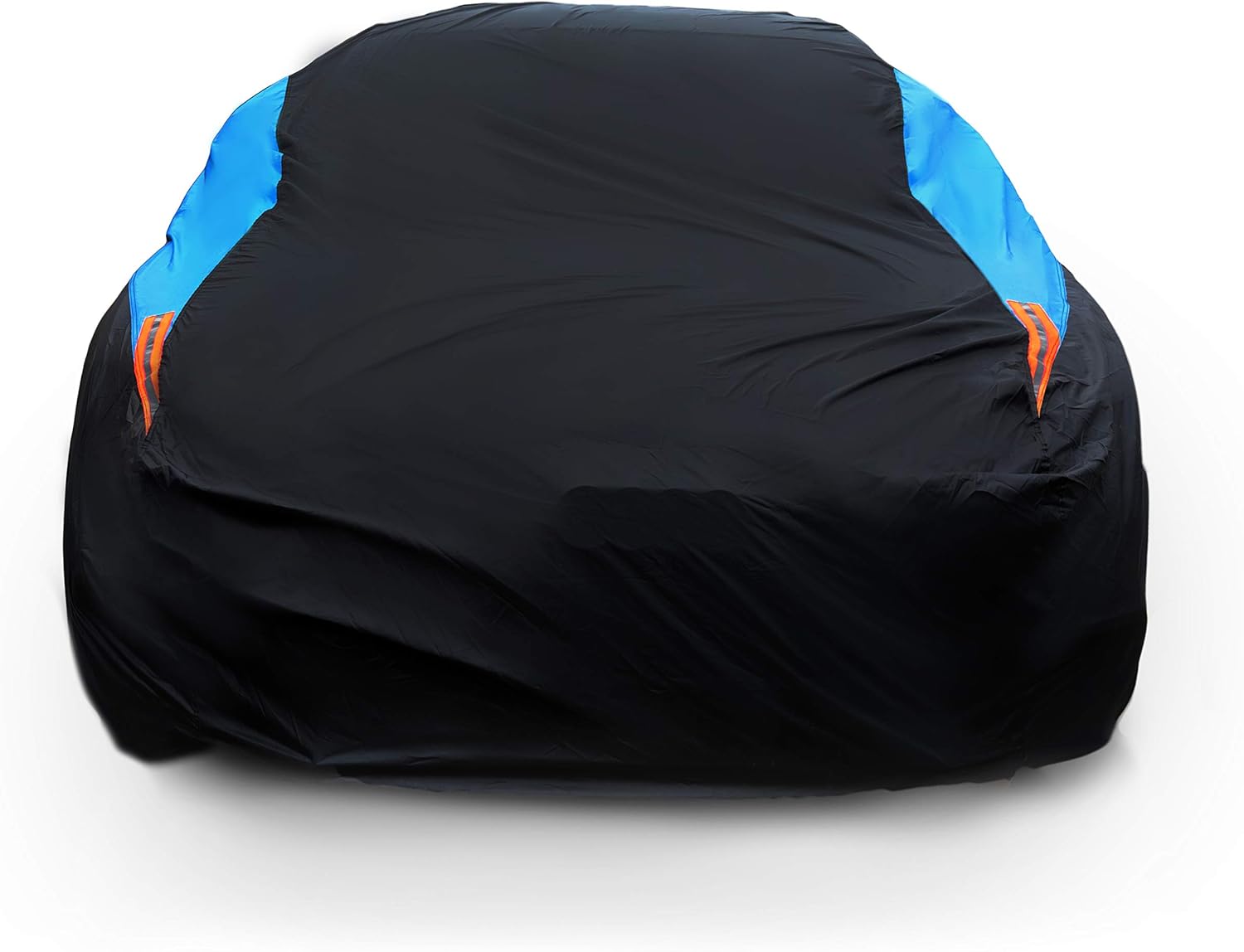
EzyShade 10-Layer Car Cover Waterproof All Weather — Full Exterior Cover for Sedan, SUV, Hatchback
★★★★☆ 4.3 stars — Highly rated on Amazon
A 10-layer breathable and waterproof cover with a soft cotton inner lining, windproof straps, mirror pockets, and a vehicle size chart — everything you need to avoid the most common long-term storage mistakes in one product.
As an Amazon Associate, we earn from qualifying purchases.
What Most People Get Wrong About Car Covers
There are 3 widespread beliefs about car covers that lead directly to storage damage. Let’s correct all 3 right now.
“A waterproof cover is always better for outdoor storage”
Not true. A fully sealed waterproof cover traps condensation underneath. Even outdoors, temperature drops cause moisture to form on your car’s surface. Without airflow, that moisture sits there for weeks. The right outdoor cover is both waterproof on the outside and breathable on the inside — a two-way system, not just a rain shield.
“A car cover protects against pests”
A cover does not seal out rodents or insects. Mice and rats can get underneath any cover and into your engine bay from below. If you’re storing in an area with pest risk, block your tailpipe and air intake with steel wool before covering, and place rodent deterrents inside the car. The cover alone won’t stop them.
“Once covered, you can leave the car untouched for months”
This is the most dangerous myth. Long-term use without regular checks leads to rust, mold, hidden pest infestations, and paint issues that only get worse over time. Monthly inspections are not optional — they’re part of what storage actually means. The cover handles the external threats. Your eyes handle everything else.
Conclusion
A car cover done right is one of the best investments in your vehicle’s long-term condition. A car cover done wrong silently destroys the paint, promotes rust, and hides serious problems for months.
The mistakes above are all fixable before storage starts — none of them require expensive tools or specialized knowledge. Wash the car, choose the right breathable cover for your environment, secure it properly, and check on it regularly.
One thing to do right now: Before your car goes into storage, take 10 minutes to wash and dry it completely. That single step eliminates the most common cause of storage-related paint damage — and it costs you nothing.
Frequently Asked Questions
How long can you leave a car cover on without removing it?
For long-term storage, lift and inspect the car at least once a month. In humid or rainy conditions, check every 2 weeks. Leaving a cover on for months without inspection hides condensation buildup, pest activity, and developing rust or paint problems that worsen over time.
Does a car cover cause rust?
Yes — if it’s the wrong type. A non-breathable cover traps moisture against the car’s metal surfaces, creating the exact conditions that accelerate rust and corrosion. A breathable cover that allows water vapor to escape prevents this problem and actively protects against rust during storage.
Should I use a car cover in my garage?
Yes, but use an indoor-specific cover. Garage storage still exposes your car to dust, accidental bumps, and humidity fluctuations. A soft, breathable indoor cover keeps the paint clean and protected. An outdoor cover in a climate-controlled garage restricts airflow unnecessarily and is heavier than needed.
Can a car cover scratch my paint?
Yes — if the car is dirty when covered, if the cover is loose and flapping in the wind, or if the cover’s inner lining is rough or has collected grit. A soft inner lining on a fitted, secured cover over a clean car will not scratch paint. The risk comes from improper use, not the cover itself.
Is a tarp okay for long-term car storage?
No. Tarps are made from non-breathable plastic that traps moisture underneath, concentrating condensation directly on the paint and metal. Their rough surface also causes scratches when the wind moves them. Tarps are not a substitute for a proper car cover — they actively cause more damage than having no cover at all.
What type of car cover is best for long-term outdoor storage?
Look for a multi-layer cover that is 100% waterproof on the outer surface and breathable on the inner surface, with a soft cotton inner lining. It should have a custom or snug fit for your vehicle, elastic hems, windproof straps, and mirror pockets. Custom-fit covers outperform universal covers for any storage lasting more than 30 days.
How do I prevent mold under my car cover during storage?
Use a breathable cover, make sure the car is completely dry before covering it, and place desiccant moisture packs inside the cabin. In unheated garages, a dehumidifier in the storage space helps significantly. Lift the cover monthly to allow airflow, and on dry sunny days, remove it entirely for a few hours to let everything air out.

Daniel Brooks is an automotive writer and product researcher focused on car accessories, car tech, maintenance, and practical driving guides. At Plug-in Car World, he helps drivers make smarter automotive decisions through honest reviews and research-driven content.