20 Car Cover Mistakes That Shorten Its Lifespan
⚡ Quick Answer
Most car cover mistakes happen in three moments: before you put it on, while you wash it, and when you store it. Covering a dirty or wet car, using a center-agitator washer, adding fabric softener, or stuffing a damp cover into its bag are the top killers of car cover lifespan.
Top car cover mistakes to stop right now:
-
✓
Never cover a dirty or wet car — dirt scratches paint from below -
✓
Never use fabric softener — it destroys the water-resistant coating -
✓
Never store a damp cover — mold sets in within 24 hours -
✓
Always use a commercial front-load washer — not a home agitator machine
20 Car Cover Maintenance Mistakes That Shorten Lifespan
You spent real money on a car cover. Now it’s thinning, smelling musty, or scratching the very paint it’s supposed to protect. I’m Daniel Brooks, and after years of covering cars correctly and incorrectly, I can tell you most cover failures come down to small habits done wrong, not the cover itself. These 20 mistakes are the ones most owners make every single week without knowing it.
📌 Key Takeaways
-
→
Covering a dirty car traps abrasive particles between the fabric and paint, causing micro-scratches every time the cover moves. -
→
Fabric softener permanently breaks down the water-resistant and UV-protective coatings built into most car cover fabrics. -
→
A damp car cover stored in its bag develops mold and mildew that permanently damages the fabric fibers and creates a persistent odor. -
→
The wrong cover size causes constant wind-driven rubbing that abrades paint and wears through the fabric itself in weeks.
Mistakes 1–5: What You’re Getting Wrong Before the Cover Goes On
The biggest damage to both your paint and your car cover happens before the cover even touches the car. These 5 pre-cover mistakes set up every problem that follows.
Mistake 1: Covering a Dirty Car
Every speck of dirt, grit, or dust on your car becomes an abrasive the moment a cover goes over it. Wind moves the cover slightly. That movement drags the grit across the clear coat like sandpaper.
You might not see the scratches today. But over weeks of daily covering, micro-scratches accumulate and dull your paint finish permanently.
⚠️ Warning
Always wash and dry your car before installing the cover. A dirty car under a cover is worse than a dirty car sitting open — the grit has nowhere to go but into the paint.
Mistake 2: Covering a Wet Car
Moisture trapped between a car cover and a wet car doesn’t evaporate quickly. It sits there in a warm, dark space — the perfect environment for mold and mildew to grow on your paint and under the cover fabric.
Even breathable covers slow down moisture escape significantly when the car is soaking wet. Always dry the car first, or wait until the sun has dried it naturally before covering.
Mistake 3: Covering Too Soon After Driving
A hot engine bay radiates heat upward through the hood for 20–30 minutes after you park. Installing a cover immediately traps that heat inside. This accelerates paint oxidation and softens any wax or sealant on your hood.
Wait at least 30 minutes after parking before covering. This lets the heat dissipate and protects both the paint and the cover fabric from unnecessary heat stress.
Mistake 4: Skipping the Pre-Cover Inspection
Bird droppings are acidic. Tree sap is sticky. Both will bond to your car’s clear coat if covered and left. The cover creates a sealed environment that accelerates how fast these substances etch into the paint.
Before covering, do a 30-second walk-around. Spot-clean any bird droppings or tree sap with a damp microfiber cloth. This one habit prevents etching damage that costs hundreds to fix.
Mistake 5: Using the Wrong Cover Type for Your Climate
A non-breathable waterproof cover used in a hot, humid climate traps condensation inside. A light indoor cover used outdoors provides no UV protection and deteriorates within a season.
Match your cover to your environment. Outdoor covers need UV resistance and breathability. Indoor covers prioritize softness and dust resistance. One cover does not work well for both.
According to California Car Cover’s official care guide, using an outdoor cover indoors in a climate-controlled garage is also a mistake — indoor-grade covers protect paint better in that setting because they’re softer and less abrasive.
Recommended Product
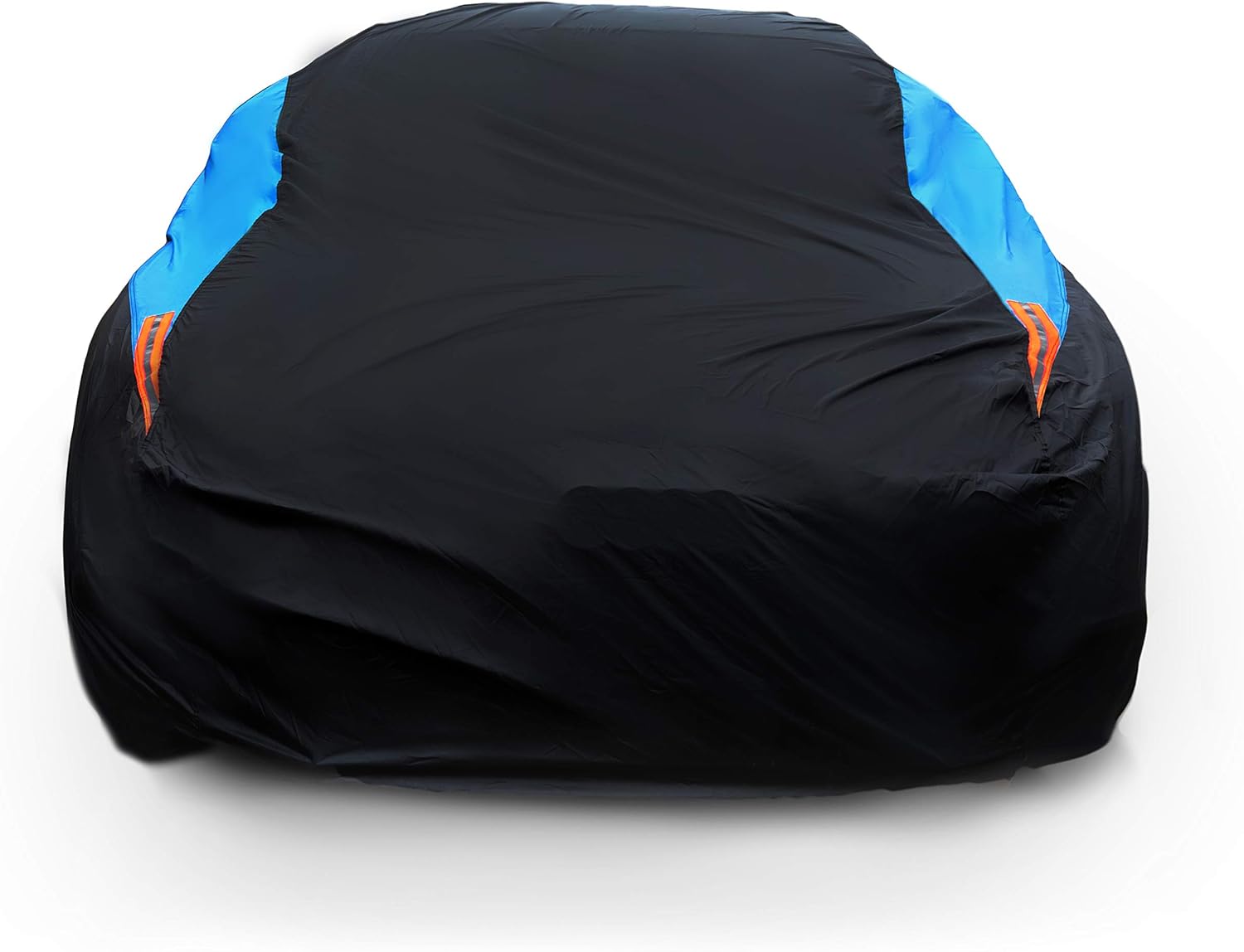
Kayme Sedan Car Cover Waterproof All Weather for Automobiles
★★★★☆ Highly rated on Amazon
A 10-layer all-weather cover with UV-reflective aluminum, soft cotton lining to protect paint, windproof straps, and a driver-door zipper — a solid upgrade if your current cover lacks breathability or a proper fit.
As an Amazon Associate, we earn from qualifying purchases.
Mistakes 6–10: How You’re Washing Your Car Cover Wrong
Washing a car cover incorrectly is one of the fastest ways to ruin it. The wrong machine, wrong detergent, or wrong temperature can destroy years of protection in a single wash cycle.
Mistake 6: Using a Top-Loading Washer with a Center Agitator
A center agitator in a domestic washing machine grabs and twists the cover fabric. This causes uneven stress, tears stitching, and thins the material unevenly. Most home washers are not built to handle the size or weight of a full car cover either.
Always use a commercial front-loading washer at a laundromat. These machines use a gentle tumbling action with no agitator. As Covercraft’s official care instructions state, using a washer with a center agitator is a hard no for nearly all cover fabrics.
Mistake 7: Adding Fabric Softener
Fabric softener coats the fibers of the cover with a chemical film. That film breaks down the water-resistant and UV-protective coatings that were built into the material at the factory.
After one or two washes with fabric softener, a previously waterproof cover will begin to allow water to wick through. This is called the wicking effect, and it’s permanent. Never use fabric softener on a car cover — not even “gentle” or “natural” formulas.
Mistake 8: Using Hot Water or Harsh Detergents
Hot water weakens the bonding agents that hold multi-layer car cover fabrics together. Harsh detergents — including bleach and all-purpose cleaners not rated for delicate fabrics — strip protective coatings fast.
Use cold or warm water only. Use a mild detergent like Woolite or about ¼ cup of Simple Green diluted in water. Run the delicate cycle only. Always rinse twice to remove all detergent residue.
📋 Car Cover Washing: Do’s vs Don’ts
Mistake 9: Never Washing the Inside of the Cover
Dirt, tree sap, and bird waste collect on the inside of the cover too. Most owners only clean the outside. The inside surface sits directly against your paint, so debris there causes direct paint contact damage.
Flip the cover inside out on the car. Wash the inside with the same mild solution and sponge. Then rinse. Do this every 2–3 washes as a minimum.
Mistake 10: Cleaning Spot Stains the Wrong Way
Scrubbing bird droppings or tree sap dry with a rough cloth tears cover fibers. The abrasion weakens the material at that spot. Over time it thins and creates a hole.
For bird droppings: soak a soft cloth in warm water with a splash of white vinegar. Press it onto the stain for 60 seconds. Then wipe gently. For tree sap: dab with mineral spirits on a soft cloth. Never scrub. Rinse the spot thoroughly afterward.
Mistakes 11–15: Drying and Folding Errors That Wreck the Fabric
Getting the wash right means nothing if you dry or fold the cover incorrectly. These 5 mistakes happen after the wash cycle and cause damage that’s often invisible until the cover fails entirely.
Mistake 11: Machine Drying a Non-Dryer-Safe Cover
Heat from a dryer shrinks and cracks the protective coatings on most car cover fabrics. Non-woven and specialty covers — which include most outdoor multi-layer covers — will warp, shrink, or delaminate in a dryer.
Only WeatherShield HP and WeatherShield HD fabrics can safely go into a dryer on regular heat. Everything else must air dry. Check the label first — always. When in doubt, air dry.
Mistake 12: Folding the Cover on the Ground
Ground surfaces — driveways, garage floors, grass — are loaded with grit, sand, and debris. Folding a clean cover on the ground re-contaminates the inside surface before it even goes back on the car.
Always fold on the roof of the car. Stretch the cover flat over the car first, then fold inward from both sides to the center. Then fold lengthwise 3–4 times into a manageable rectangle. Roll lightly before storing.
✅ Tip
The best folding surface is the roof of your car itself — it’s clean, flat, and the right height. Get all four sides of the cover centered on the roof before you start folding. This prevents picking up debris and makes folding symmetrical.
Mistake 13: Storing Before Fully Dry
A damp cover sealed into its storage bag creates exactly the conditions mold and mildew need: warmth, no airflow, and moisture. Mold sets in within 24 hours in a sealed bag.
The cover must be completely dry — not just surface-dry. Let it air dry on the car or draped over a clean surface in a shaded area. Check the inside surface too. The inside dries slower than the outside.
Mistake 14: Cramming It Into the Storage Bag Carelessly
Forcing a cover into its bag without folding strains the stitching along the seams. Those seams are the weakest structural points of the cover. Repeated rough stuffing causes micro-tears that become visible tears within a few months.
Fold neatly first. The storage bag should accept the folded cover without force. If you’re pushing hard, the cover isn’t folded small enough yet — fold it once more.
Mistake 15: Never Turning the Cover Inside Out
Most owners only ever wash and dry the outside. The inside surface touches the car directly every day. It collects oils, wax residue, and fine dust that builds up and starts to scratch the paint over time.
Flip the cover inside out on the vehicle every 2–3 washes. Hand wash the inside surface with mild soap and a sponge. Rinse thoroughly. This also lets you check for interior wear and thin spots before they become holes.
Mistakes 16–20: Storage, Fit, and Daily Usage Mistakes
Even a perfectly washed and dried car cover will degrade fast if stored wrong, sized wrong, or used carelessly every day. These are the 5 habits that silently destroy covers over months.
Mistake 16: Storing in a Damp or Humid Area
A garage corner, a basement, or a car trunk in a humid climate stays damp even when the cover inside the bag feels dry. That ambient moisture penetrates the bag and starts the mold cycle without you noticing.
Store the cover in a cool, dry indoor space — not in a trunk, damp basement, or humid attic. If you must store in a garage, use a breathable storage container. Do not use an airtight plastic bin that traps moisture. As CarCovers.com’s storage guide recommends, breathable containers that seal out moisture but allow airflow are the right choice for damp environments.
Mistake 17: Using a Cover That’s the Wrong Size
A cover that’s too large billows in wind. Every gust slaps it against the car’s surface repeatedly. That constant flapping creates friction against the paint — and simultaneously stretches and weakens the cover fabric at stress points.
A cover that’s too small pulls tight at corners, stressing seams, and leaves sections of the car exposed. Always check the vehicle size chart before buying. A correct fit means snug but not tight, with the elastic hem sitting evenly around the bottom edge.
Mistake 18: Leaving It On During High Winds Without Securing It
Wind turns a loose car cover into sandpaper. Even a correctly sized cover will shift in high winds if the windproof straps aren’t fastened. A loose cover in wind also acts as a sail, pulling at the paint edges and causing uneven wear on the cover’s hem.
Always fasten the front and rear windproof straps before leaving the car in windy conditions. In very high wind areas, thread a cable lock through the grommets for added security. A cover flapping in the wind is doing more damage than no cover at all.
💡 Key Insight
The worst damage to a car cover — and the car’s paint — comes from a combination of two mistakes happening at the same time: a slightly dirty car plus an unsecured cover in wind. The cover scrubs grit across the paint with every gust. This one combo can ruin a finish in weeks.
Mistake 19: Never Inspecting the Cover for Wear
Thin spots, loose stitching, and small holes in a car cover are fixable — but only if you catch them early. Most owners never look at the underside or seams until the cover fails completely.
Every few weeks, flip the cover inside out and inspect the fabric in good light. Look for areas where the fabric is visibly thinning, stitching coming loose at the hem, or small holes forming. A $5 fabric repair patch fixes a small hole. Ignoring it means replacing the entire cover.
Mistake 20: Using One Cover for All Climates and All Seasons
A single car cover cannot perform equally in summer sun, winter snow, coastal salt air, and a dry desert climate. Using a summer UV cover in winter means poor moisture protection. Using a waterproof winter cover in summer heat traps heat under the cover.
If you live in a climate with distinct seasons, consider owning 2 covers: a breathable, UV-blocking cover for warm months, and a waterproof, insulated cover for cold and wet months. This doubles the lifespan of each cover because neither is being used outside its design range.
What Most People Get Wrong About Car Covers
Three wrong beliefs cause more car cover damage than all 20 mistakes combined. Here’s the reality behind each one.
Wrong belief #1: “A car cover protects the car, so the car doesn’t need washing first.”
This is backwards. A car cover amplifies whatever is already on the car. Dirt under a cover gets pressed and moved against the paint. The cover creates a sealed, warm environment where bird droppings and sap etch faster. The car must always be clean before covering.
Wrong belief #2: “All car covers can be washed the same way.”
Different fabrics have completely different care requirements. A WeatherShield HD cover can go in a dryer. Most other covers cannot. Some covers are machine washable. Some are hand-wash only. Treating every cover the same way is how people ruin expensive covers on the first wash.
Wrong belief #3: “A thicker cover is always better.”
A thicker cover traps more heat and is heavier — meaning it takes longer to dry, is harder to fold, and is more likely to develop mold if stored slightly damp. Thickness is one factor among many. Breathability, UV rating, and correct fit matter more than sheer layer count.
Conclusion
Car cover maintenance is simple once you know what not to do. The 20 mistakes above fall into 4 categories: pre-cover errors, washing errors, drying and storage errors, and fit and usage errors. Avoid them consistently and a quality cover will last 3–5 years instead of burning out in one.
The single most important habit is this: never cover a dirty or wet car. Get that one right, and you’ve eliminated the root cause of most cover and paint damage at the same time.
One thing to do right now: Go inspect your car cover’s inside surface. Look for thin spots, loose stitching, or debris clinging to the fabric. If it looks worn, start the washing process today — 30 minutes of care now adds months to its lifespan.
Frequently Asked Questions
How often should I wash my car cover?
Wash your car cover every 3 months for outdoor use, or immediately when you notice visible dirt, bird droppings, or tree sap. If you park under trees daily, monthly washing may be needed. Regular cleaning prevents debris from wicking through the fabric and damaging the paint beneath.
Can covering a dirty car scratch the paint?
Yes. Dirt, grit, and sand trapped between a car cover and the paint act as an abrasive every time the cover moves even slightly in wind. Over time, these micro-abrasions dull the clear coat and create fine scratches visible under direct light. Always wash and dry the car before installing any cover.
How long do car covers typically last?
A quality car cover lasts 3–5 years with proper care. Poor care — especially covering a dirty car, using fabric softener, or storing the cover damp — can reduce that to under 12 months. The biggest factor is how consistently you follow the washing and storage rules specific to your cover’s fabric type.
Why does my car cover smell musty?
A musty smell means mold or mildew has developed in the fabric — almost always from storing the cover while it was still damp. Wash the cover thoroughly in cold water with a mild detergent, rinse twice, and let it air dry completely over the car before storing. Hang it outside in sunlight for several hours after washing to kill mold spores.
Is it bad to leave a car cover on in the wind?
Leaving a car cover on in wind without securing the windproof straps causes repeated friction between the cover and the paint. It also stresses the seams and hem. Always fasten the front and rear straps before leaving the vehicle in windy conditions. In extreme wind, add a cable lock through the grommets for full security.
Can I use fabric softener when washing a car cover?
No. Fabric softener deposits a chemical coating on the cover fibers that permanently breaks down the water-resistant and UV-protective treatments built into the fabric. After even one or two washes with softener, the cover will allow water to wick through rather than repel it. Use only a mild detergent like Woolite on the delicate cycle.
How do I prevent my car cover from scratching the paint?
Always wash the car before covering. Keep the cover clean by washing it every 3 months. Choose a cover with a soft cotton or fleece inner lining rated for your vehicle. Make sure the cover fits correctly — a loose cover flapping in wind creates far more friction than a snug one. Inspect the inner surface regularly for trapped debris.

Daniel Brooks is an automotive writer and product researcher focused on car accessories, car tech, maintenance, and practical driving guides. At Plug-in Car World, he helps drivers make smarter automotive decisions through honest reviews and research-driven content.