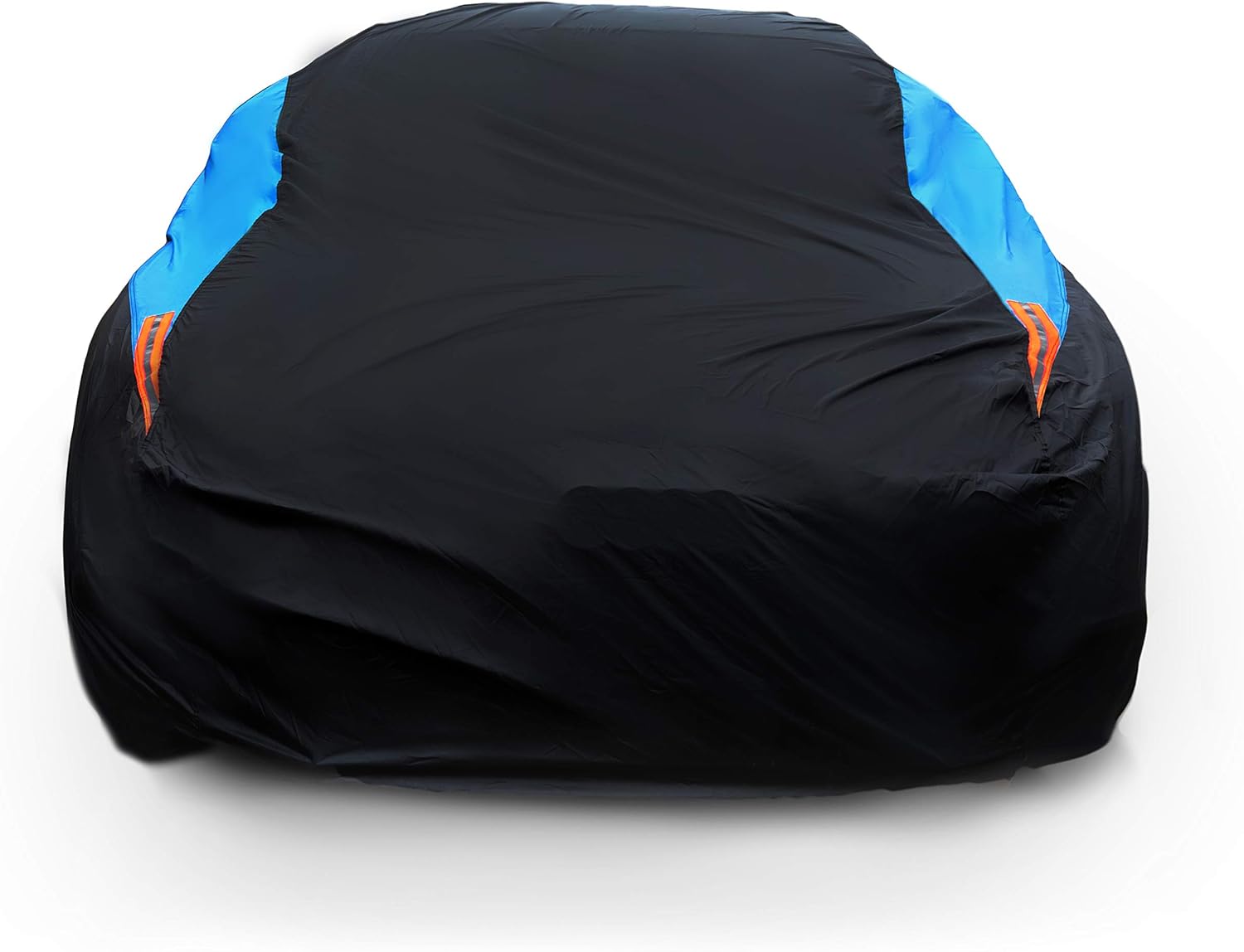
10 Mistakes to Avoid When Washing a Car Cover (And What to Do Instead)
⚡ Quick Answer
The biggest mistakes when washing a car cover are using bleach, fabric softener, hot water, a top-load washer with an agitator, and skipping the extra rinse cycle. Each one damages the fabric’s protective coating or tears the material. Use cold water, mild detergent, a front-load commercial washer, and always air dry in the shade.
Top mistakes car cover owners make:
- Bleach use: Destroys water-resistant coating and weakens fabric fibers fast.
- Fabric softener: Clogs the fabric and kills breathability permanently.
- Top-load washer: The center agitator rips and tears the cover material.
- Machine drying: Shrinks the cover and ruins the fit permanently.
Always do these 3 things:
-
✓
Check the care label before washing anything -
✓
Run 2 rinse cycles to remove all detergent residue -
✓
Air dry completely in the shade before storing
You pull the car cover off, toss it in the washer, and think you’ve done the right thing. Then it comes out stiff, warped, or smelling like mildew — and suddenly your car’s paint is at risk from a cover that no longer works. I’m Michael, and after years of reviewing car protection products, I’ve seen this exact story play out dozens of times. A car cover is one of the best tools for protecting your paint from UV damage, bird droppings, and dust. But wash it wrong, and it turns into sandpaper draped over your vehicle. This guide covers the 10 mistakes that silently destroy car covers — and exactly what to do instead.
📌 Key Takeaways
-
→
Never use bleach on a car cover — it destroys the water-resistant coating in a single wash. -
→
Top-load washers with agitators will tear the cover’s fabric — always use a commercial front-load machine. -
→
Fabric softener clogs the cover’s breathable pores and permanently reduces its moisture-wicking ability. -
→
Wash every 2–3 months or sooner if visibly dirty — dirty covers scratch car paint just like sandpaper. -
→
Always air dry in the shade — a dryer or direct sun will shrink the cover and break down UV-protective fibers.
Mistake #1: Skipping the Care Label Before You Wash
Every car cover has a care label — and ignoring it is the fastest way to ruin an expensive cover in one wash. Car covers are made from very different materials: polyester, polypropylene, cotton blends, and specialty fabrics like WeatherShield HP all need different cleaning methods. What works for one cover can destroy another.
The care label tells you the water temperature, cycle type, and whether the cover can go in a dryer at all. Some covers — like satin-stretch styles — require dry cleaning only. Others specify cold water only or a specific delicate cycle. Reading the label takes 30 seconds. Skipping it can cost you the price of a new cover.
⚠️ Warning
If you’ve lost the care label or the original instructions, follow the most conservative method: cold water, gentle cycle, mild detergent, no dryer, air dry only. The Covercraft care guidelines confirm this as the safe default for nearly all cover types.
So if you’re not sure what your cover needs — treat it like delicate clothing. You can always wash it more aggressively next time. You can’t un-shrink a cover that’s been cooked in a dryer.
Mistake #2: Using a Top-Load Washing Machine with a Center Agitator
A top-load home washer with a center agitator is the single biggest threat to a car cover. The agitator — that tall plastic column in the middle of the drum — spins and twists the fabric violently. A car cover is large, heavy when wet, and not designed to handle that force. The result is torn seams, stretched fabric, and small rips that grow bigger every wash.
Industry experts consistently say: never clean a car cover in a washer with a center agitator. The only exception is certain WeatherShield-fabric covers, which are durable enough to handle it — and even then, only if the care instructions specifically allow it.
🔢 Step-by-Step: Choosing the Right Washer for Your Car Cover
-
1
Check your home washer first
If it’s a front-loader with no agitator, it may work for smaller covers. Check the care label to confirm.
-
2
Go to a laundromat for larger covers
Commercial front-load machines are agitator-free and large enough to let the cover move freely without stress.
-
3
Select delicate or gentle cycle
This reduces spin speed and prevents the fabric from being pulled or twisted during the wash cycle.
-
✓
Hand wash as the safest alternative
Place the cover on the car, mix mild detergent with water, and scrub gently with a soft sponge. Rinse with a hose.
For SUV covers and large vehicle covers, a home washer — even without an agitator — won’t spin correctly because the cover is too heavy. A commercial laundromat machine is the right tool. It’s worth the trip.
Mistake #3: Using Bleach or Harsh Cleaning Products
Bleach is an absolute no. Most car covers have built-in protective coatings — water resistance, UV blocking, and breathable membranes — that bleach destroys on contact. Even a single wash with bleach can strip these coatings completely, leaving you with a cover that lets in water and provides zero UV protection.
The same applies to enzyme-based cleaners, color-safe bleach, strong detergents, and anything with optical brighteners. All of these attack the fibers or coatings in ways that mild soap won’t. Stick to a bleach-free, fragrance-free, mild liquid detergent — about ¼ cup per wash is enough for most covers.
Recommended Product
Woolite Delicates Hypoallergenic Liquid Laundry Detergent
★★★★★ Highly rated on Amazon
Woolite’s gentle, bleach-free formula cleans delicate fabrics without stripping water-resistant coatings — exactly what a car cover needs for safe washing.
As an Amazon Associate, we earn from qualifying purchases.
You might be wondering if stronger soap gets the cover cleaner. It doesn’t — it just removes more of the protective layer. A mild detergent lifts dirt without attacking the fiber structure. That’s the right trade-off.
Mistake #4: Adding Fabric Softener to the Wash
Fabric softener feels like a harmless extra — it makes fabric soft, right? For car covers, it’s damaging. Car cover fabrics are engineered to be breathable and water-resistant. Fabric softener works by coating fiber strands with a chemical layer. That coating blocks the tiny pores that allow moisture to escape from under the cover.
Once those pores are blocked, moisture gets trapped between the cover and your car’s paint. That trapped moisture breeds mold, mildew, and rust — especially on metal surfaces. One wash with fabric softener can permanently reduce breathability, and there’s no good way to reverse it.
⚠️ Warning
Dryer sheets have the same effect as liquid fabric softener. Don’t use them in the dryer either — even if you’re drying a cover that allows low-heat machine drying.
This also means you should skip scented detergent pods that contain softening agents. Read the label on any detergent before using it on your car cover. If it says “softening,” “fabric conditioner,” or “dryer sheet safe,” leave it on the shelf.
Mistake #5: Washing the Cover with Hot Water
Hot water breaks down synthetic fibers and causes shrinkage. Most car covers are made from polyester or polypropylene — both of which lose their shape and stretch when exposed to hot water repeatedly. A cover that used to fit your sedan perfectly can end up too tight, causing stress on the seams every time you remove it.
Hot water also accelerates the breakdown of water-resistant coatings. Cold water does the same cleaning job on dirt and grime without the heat damage. Always set the washer to cold — it protects the fiber structure and the protective treatment the cover relies on to do its job.
✅ Tip
For indoor car covers, the care label often allows up to 30°C (86°F) machine washing. Always stay at or below the stated temperature — never above it, even if the cover looks heavily soiled.
If your cover is very dirty, don’t try to compensate with higher heat. Pre-soak it for 15 minutes in cold water with mild detergent first. That loosens the grime before the wash cycle starts.
Mistake #6: Skipping the Second Rinse Cycle
One rinse cycle is rarely enough for a car cover. Car covers are thick, multilayer fabrics that hold onto soap long after the wash cycle ends. Detergent residue left in the fabric does 3 things over time: it attracts more dirt, weakens the fiber structure, and reduces water resistance by coating the threads from the inside.
Most car cover care guides — including Covercraft’s official instructions — recommend rinsing twice. Run a second rinse cycle every time, no exceptions. This step takes 10 extra minutes and protects the cover’s performance for months.
💡 Key Insight
Soap residue in a car cover acts like a magnet for dust. A cover with leftover detergent gets dirty faster — so skipping the rinse cycle means you need to wash it more often, not less.
For hand-washed covers, rinse with a garden hose until the water runs completely clear. Squeeze sections gently as you rinse to push soap out of the fabric layers.
Mistake #7: Putting the Car Cover in a Machine Dryer
Machine dryers run hot — and high heat is one of the fastest ways to ruin a car cover permanently. The intense heat causes synthetic fabrics to shrink, seams to separate, and any bonded layers to delaminate. A cover that fits your car today won’t fit it after one dryer cycle at regular heat.
Beyond shrinkage, the tumbling action creates friction that pills and weakens the outer surface. The cover may look dry when you remove it, but the internal fabric structure has been stressed at the fiber level.
✅ Tip
The one exception: WeatherShield HP and HD fabric covers from Covercraft can be dried on regular or low heat per their official care instructions. Always check your specific brand before using any dryer setting.
Air drying is the default for every car cover unless the care label explicitly allows machine drying. There’s no shortcut worth taking here.
Mistake #8: Drying the Cover in Direct Sunlight
Air drying sounds simple — but where you dry the cover matters. Hanging it in direct sunlight seems fast and free, but UV radiation breaks down the fibers in synthetic car cover materials over repeated exposure. The same UV rays your cover was designed to block will slowly degrade the fabric itself when it’s wet and unprotected during drying.
High heat from direct summer sun can also cause uneven shrinkage — one side dries and contracts faster than the other, leaving you with a cover that pulls to one side when installed.
Dry the cover in a shaded area with good airflow. You can drape it over the car in the shade, which also helps it keep its shape while it dries. This usually takes 3–6 hours depending on air temperature and humidity. Don’t rush it.
Mistake #9: Storing the Cover Before It’s Completely Dry
A damp car cover stored in its bag is a perfect environment for mold and mildew. Both grow quickly on wet fabric in confined spaces — within 24–48 hours in warm conditions. Once mold takes hold in the fabric fibers, it’s very difficult to remove completely, and the cover develops a persistent musty smell that transfers to your car’s interior over time.
Beyond the smell, mold and mildew weaken the fabric structure and can leave stains that don’t wash out. A cover with mold growth is no longer clean — it’s depositing biological material onto your car’s paint every time you use it.
✓ Before you fold and store the cover, confirm:
-
✓
No damp patches anywhere — check both sides and the inner lining -
✓
No musty odor — smell the center of the cover, not just the edges -
✓
Store in a dry, cool place — not a damp trunk or humid garage corner
When in doubt, leave the cover draped over the car for one more hour. Patience here protects the cover for years.
Mistake #10: Scrubbing Stains with Abrasive Brushes or Colorful Cloths
Bird droppings, tree sap, and road grime can tempt you to grab a stiff brush and scrub hard. That’s the wrong move. Abrasive brushes create micro-tears in the cover’s outer surface. Over time, those tears let water penetrate into layers that were meant to stay dry. The protective coating on most car covers is thin — it doesn’t take much friction to damage it.
Colorful cloths — red, blue, or green rags — carry the additional risk of dye transfer, especially on light-colored covers. Always use white or neutral-colored cleaning cloths to avoid staining.
How to Remove Tough Stains Without Damaging the Cover
📋 Safe stain removal for common car cover stains
-
Bird droppings: Soak in warm water first for 10 minutes, then apply a mix of mild detergent and white vinegar. Blot with a soft white cloth — don’t scrub. -
Tree sap: Dab rubbing alcohol or denatured ethanol onto the spot with a cloth. Let it sit for 2 minutes, then gently wipe. Rinse the area with cold water after. -
Grease stains: Apply a small amount of mild dish soap directly to the spot. Rub gently with your fingers, let sit 5 minutes, then rinse cold. -
Mold or mildew smell: Add baking soda to your wash water. Soak the cover for 30 minutes before washing normally with mild detergent.
Pre-treating stains before washing — not during — gives the cover the best chance of coming out clean without damage. The key is patience over pressure.
What Most People Get Wrong About Washing a Car Cover
A few widespread myths keep car cover owners making the same mistakes year after year. Here are the 3 most common wrong beliefs — and the facts that correct them.
📋 Common car cover washing myths debunked
-
Myth: “Hotter water cleans better.” Fact: Cold water removes dirt from car covers just as well as hot water. Hot water shrinks the fabric, breaks down coatings, and causes seam stress — none of which makes the cover cleaner. -
Myth: “A dry cover is a clean cover.” Fact: A cover can look clean on the outside but carry embedded dust, soap residue, and grime in its inner layers. Always do a full wash — not just a visual check — every 2–3 months. -
Myth: “More detergent means cleaner results.” Fact: Excess detergent doesn’t rinse out fully — it stays in the fabric and attracts dirt faster. About ¼ cup of mild detergent per wash is the right amount for any size car cover.
These myths spread because they feel logical. They aren’t. The physics of how car cover fabric works — porous, coated, layered — means less is more in every cleaning decision.
Conclusion
Washing a car cover correctly isn’t complicated — but it’s easy to get wrong with the habits we use for regular laundry. Bleach, fabric softener, hot water, and a home top-load washer are the 4 things that cause the most damage. Avoiding them adds years to the life of your cover and keeps your car’s paint protected the way it should be.
The right method is always: cold water, mild detergent, commercial front-load washer, double rinse, and shade-dry until completely bone dry.
One thing to do right now: Check the care label on your car cover. Take a photo of it so you always have it. That label is the most important piece of information for every future wash — and it takes 30 seconds to find.
Frequently Asked Questions
Can you put a car cover in the washing machine?
Yes, but only in a front-load machine without a center agitator. Most standard home top-load washers have a center agitator that tears and stretches car cover fabric. Use a commercial front-load washer at a laundromat, set to the delicate cycle with cold water. Always check the care label first.
What detergent should I use to wash a car cover?
Use a mild, bleach-free liquid detergent with no fabric softening agents. Products like Woolite Delicates or simple Green All-Purpose Cleaner (¼ cup per wash) are widely recommended by car cover manufacturers. Avoid enzyme cleaners, color-safe bleach, and heavily fragranced detergents.
How often should you wash a car cover?
Wash your car cover every 2–3 months under normal conditions, or sooner if visibly dirty. Cars parked under trees, near the ocean, or in dusty environments need washing every 4–6 weeks. Dirty covers grind grit against your car’s paint with every gust of wind, causing micro-scratches.
Can fabric softener ruin a car cover?
Yes. Fabric softener coats fiber strands with a chemical layer that blocks the breathable pores in car cover material. Once blocked, moisture gets trapped between the cover and your paint — creating conditions for mold, mildew, and surface rust. Never use fabric softener or dryer sheets with any car cover.
Why does my car cover smell after washing?
A musty smell after washing means the cover wasn’t fully rinsed or wasn’t dried completely before storage. Detergent residue left in the fabric ferments in a sealed bag. Run an extra rinse cycle, then air dry in a shaded area until completely dry — including the thick center sections — before folding.
Can you hand wash a car cover?
Yes, and for delicate or non-machine-washable covers it’s the safest method. Place the cover on the car, mix ¼ cup of mild detergent with a gallon of lukewarm water, and scrub gently with a soft sponge in sections. Rinse thoroughly with a garden hose until the water runs completely clear.
How do you remove bird droppings from a car cover?
Soak the affected area in warm water for 10 minutes to soften the dropping. Mix mild detergent with a splash of white vinegar, apply it to the spot, and blot gently with a soft white cloth. Never scrub — scrubbing spreads the stain and damages the fabric coating. Rinse cold and air dry.
—
Meta Title:
Meta Description:
URL:
Tags: car protection
—
Internal links placed from sitemap:
Note: The plugincarworld.com sitemaps returned 404 errors and the site’s content is primarily focused on Tesla, Nissan Leaf, Prius, and other EV topics — no directly relevant car cover or car cleaning articles were found. No internal links were placed to avoid forced, irrelevant connections. The editor should add internal links manually once relevant content exists on the site.

Daniel Brooks is an automotive writer and product researcher focused on car accessories, car tech, maintenance, and practical driving guides. At Plug-in Car World, he helps drivers make smarter automotive decisions through honest reviews and research-driven content.