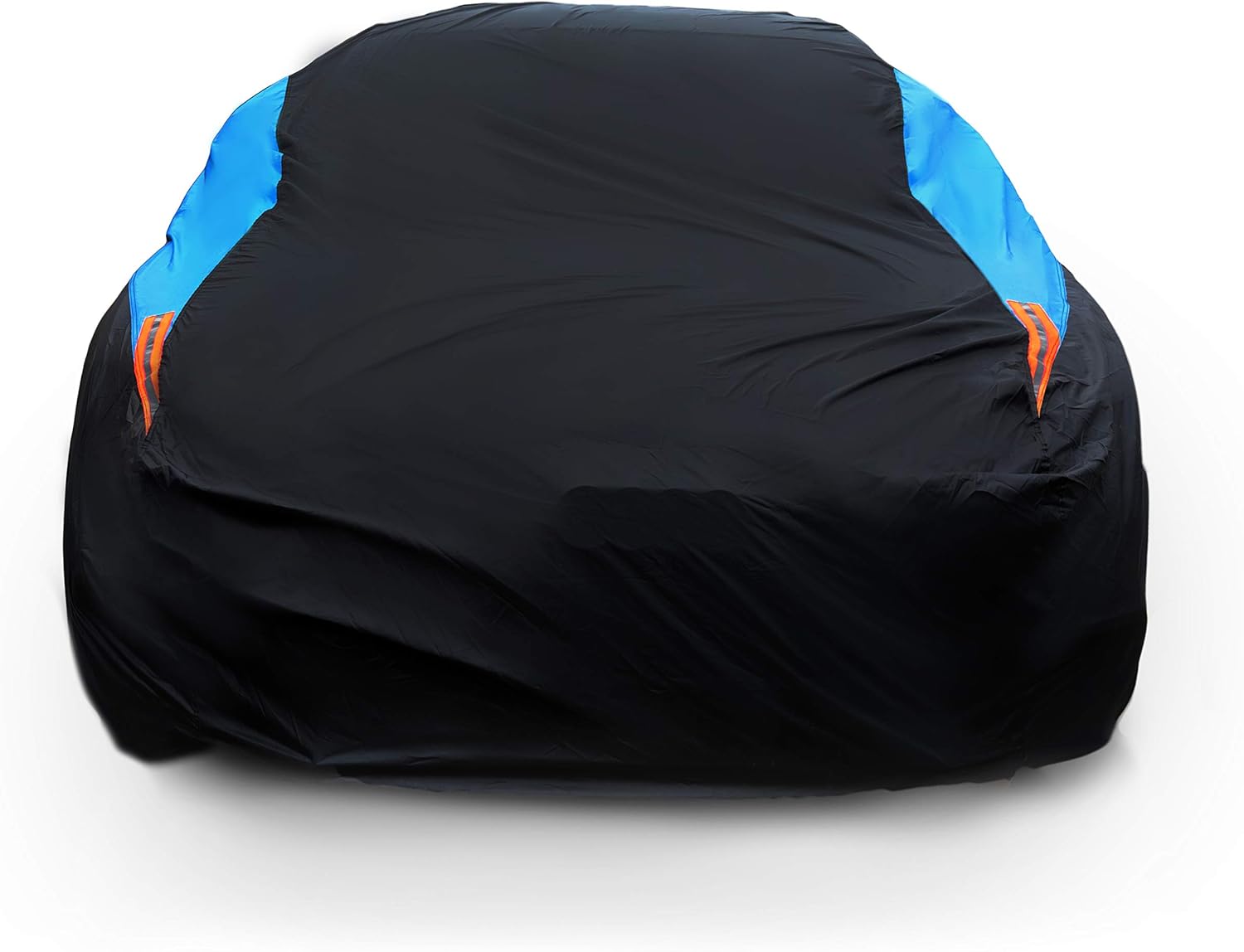
Moisture Under a Car Cover: Causes, Risks, and How to Fix It
⚡ Quick Answer
Moisture under a car cover comes from condensation — warm, humid air cools against the car’s surface and turns to water droplets. A non-breathable cover traps this moisture, leading to rust, mold, paint damage, and mildew. The fix is switching to a breathable cover and ensuring your car is dry before covering it.
Why moisture builds up under a car cover:
- Condensation: Temperature drops cause humid air to release water onto your car’s surface.
- Wrong cover type: Non-breathable or plastic covers seal moisture in instead of releasing it.
- Wet car at cover time: Covering a damp car immediately traps moisture underneath.
Quick fixes to stop moisture buildup:
-
✓
Switch to a breathable car cover made from polypropylene or multi-layer fabric -
✓
Always dry the car fully before putting the cover on -
✓
Lift the cover once a month in cold weather to let trapped moisture escape
You pull back your car cover and find the paint damp — or worse, spotted with mildew. It’s frustrating, especially when the whole point of the cover was to protect your car. I’m Michael, and after years of testing car covers in all kinds of weather, I’ve seen this exact problem destroy paint jobs that should have lasted decades.
Moisture under a car cover is one of the most misunderstood problems in vehicle storage. Most people blame the cover — but the real culprit is almost always condensation, the wrong cover type, or a wet car at cover time.
This guide covers every cause, every risk, and every proven fix — so you never lift your cover to a wet, rusty, or mildew-damaged car again.
📌 Key Takeaways
-
→
Condensation is normal — even breathable covers allow some moisture, but it should evaporate once temperatures rise. -
→
Non-breathable covers are the #1 cause of trapped moisture — plastic or fully waterproof covers seal humid air in with no escape route. -
→
Long-term trapped moisture causes rust, mold, mildew, paint spotting, and leather cracking — damage that costs hundreds to fix. -
→
Relative humidity of 35–55% is the ideal storage range to protect metal, paint, leather, and rubber from moisture damage.
Why Is There Moisture Under My Car Cover?
Moisture under a car cover almost always comes from condensation — not from rain leaking through. When warm, humid air touches a cooler surface (your car), it releases water droplets. This is the same process that fogs a cold glass on a warm day.
Breathable covers let this moisture evaporate as temperatures rise. Non-breathable covers trap it, keeping water in contact with your paint and metal for hours or days at a time.
Here’s a breakdown of the 3 most common causes:
📋 The 3 Main Causes of Moisture Under a Car Cover
-
Temperature drop at night: Air cools overnight, reaches the dew point, and deposits water directly on your car’s surface under the cover. -
Non-breathable cover material: Plastic or fully waterproof covers seal humid air in. With nowhere to go, moisture sits against paint and metal. -
Covering a wet or warm car: Putting a cover on right after driving — or after rain — traps warm, moist air and accelerates condensation buildup inside.
You might be thinking: “But I’m using a waterproof cover — shouldn’t that stop water getting in?” That’s the most common mistake. A waterproof cover stops rain from entering, but it also stops moisture from escaping. The humid air already under the cover has nowhere to go, and condensation builds up from inside.
So what’s the solution? The next section shows exactly what damage you’re risking if you leave the moisture problem unresolved.
What Damage Does Moisture Under a Car Cover Actually Cause?
Trapped moisture is not just a cosmetic issue. Left unchecked for weeks, it triggers a chain of damage across your car’s paint, metal, interior, and mechanical parts — much of it invisible until it’s too late to reverse cheaply.
Here’s what moisture under a car cover does to each part of your vehicle:
The earlier you catch moisture buildup, the cheaper the fix. Paint spotting is reversible — rust and mold often aren’t.
⚠️ Warning
Check your engine’s aluminum surfaces — cam cover, carburetor, valve covers — for white powdery oxidation. That’s an early warning sign that moisture levels under your cover are too high. Don’t ignore it.
Now you know what’s at risk. So let’s look at exactly how to stop it — starting with the most important fix of all.
How Do You Fix Moisture Under a Car Cover?
The core fix is switching to a breathable car cover — one that allows air and humidity to pass through the fabric, so condensation evaporates naturally instead of sitting against your paint. But breathability alone isn’t enough. You need to combine it with a few habits that cut moisture off at the source.
Here are the 6 proven fixes, in order of impact:
🔢 Step-by-Step: How to Eliminate Moisture Under Your Car Cover
-
1
Switch to a breathable cover
Choose polypropylene or multi-layer fabric — not plastic. Breathable fabric lets moisture escape rather than trapping it inside.
-
2
Dry the car before covering it
Never cover a wet or freshly driven car. Trapped warm, damp air is the fastest route to condensation buildup underneath.
-
3
Park in the sun, not shade
Sunlight warms the cover and the air beneath it, which drives moisture away. Shade keeps everything cool and damp for longer.
-
4
Lift the cover once a month
In cold or wet weather, lift the cover briefly to let trapped moisture escape. Especially important in winter when low temps prevent natural evaporation.
-
5
Use a floor moisture barrier in the garage
Concrete floors release moisture upward. Place a thick tarp or moisture barrier mat under the car to block ground humidity from rising.
-
✓
Add a dehumidifier or silica gel packets
For indoor storage, a garage dehumidifier keeping humidity between 35–55% is the most reliable long-term solution for classic and stored vehicles.
Run a fan under the car on the first clear, sunny day if you’ve already had moisture buildup. This moves the damp air out fast and stops condensation from lingering.
But which cover type is actually best for preventing moisture? The next section breaks that down directly.
Breathable vs. Waterproof Car Covers: Which One Should You Use?
This is the most important decision for controlling moisture. Most people assume waterproof is better — but for everyday storage, a breathable cover almost always wins.
Here’s how the two types compare side by side:
| Feature | Fully Waterproof / Plastic | Breathable Fabric ✓ Best |
|---|---|---|
| Moisture control | Traps condensation inside | ✓ Lets moisture evaporate freely |
| Rain protection | Excellent (keeps rain out) | ✓ Good (repels while allowing airflow) |
| Rust risk | High — trapped moisture speeds oxidation | ✓ Low — moisture escapes before damage |
| Mold/mildew risk | High — sealed humid environment | ✓ Low — airflow prevents spore growth |
| Best use | Short heavy rainstorms only | ✓ Daily, long-term, and seasonal storage |
For any storage longer than a few hours, a breathable cover is the right choice. Save the fully waterproof option for short-term heavy storm protection only.
💡 Key Insight
No car cover can physically stop condensation from forming — not even the best breathable ones. The goal is to let condensation evaporate fast enough that it never sits long enough to cause damage.
Now that you know which cover type wins, here’s how to choose the right one for your specific situation.
🎯 Which Cover Type Is Right for Your Situation?
If you are…
Storing indoors or in a garage long-term
→ Choose a breathable polypropylene cover
If you are…
Parking outside daily in mixed weather
→ Choose a multi-layer breathable outdoor cover
If you are…
Facing a short, heavy rainstorm only
→ Waterproof cover is fine for short-term use
Does a Car Cover Cause Rust? The Truth About Long-Term Moisture Exposure
A breathable car cover does not cause rust. A non-breathable or poorly fitted car cover absolutely can. The distinction matters because many people ditch car covers entirely after finding moisture — when the real fix is just using the right type.
Rust forms when metal, water, and oxygen combine — a process called oxidation. When a non-breathable cover holds moisture against metal surfaces for days or weeks, it creates exactly this environment. The undercarriage and wheel wells are especially vulnerable, since moisture rising from the ground can collect there.
But here’s the thing: experts consistently agree that a breathable cover used correctly does not create more rust risk than no cover at all. In fact, it reduces the amount of time water contacts the metal by allowing it to evaporate. The key word is “correctly” — which means the car is dry at cover time and the cover fits snugly without pooling water.
✅ Tip
Wax your car before covering it for long-term storage. A coat of wax creates a barrier between any brief moisture contact and the paint surface, buying you extra protection even if some condensation forms.
So the answer to “does a car cover cause rust?” is: a bad one can, a good breathable one won’t. Now let’s cover the storage environment — because where you park matters just as much as the cover itself.
Does Where You Park Affect Moisture Under the Cover?
Yes — parking location makes a major difference. The same breathable cover behaves very differently parked in full sun versus under a tree, or on drained concrete versus bare damp ground.
The 3 factors that most affect moisture buildup by location:
📋 How Parking Location Affects Moisture Under Your Cover
-
Sun vs. shade: Parking in full sun means daytime warmth dries moisture quickly. Parking in shade keeps the car and air cool all day, preventing evaporation and allowing moisture to sit longer. -
Ground type: Bare concrete releases moisture upward. Well-drained concrete or surfaces with a moisture barrier mat reduce ground humidity significantly. -
Trees overhead: Tree cover means constant organic debris, dripping moisture, higher local humidity, and animal activity — all of which worsen moisture problems under covers dramatically.
If you’re storing a car under a cover for a full season, indoor storage on well-drained concrete with a dehumidifier keeping humidity at 35–55% is the gold standard. For outdoor parking, full sun and good drainage matter more than almost anything else.
What Most People Get Wrong About Moisture Under Car Covers
Most car owners make 2 or 3 of these mistakes. Each one turns a protective car cover into something that actively harms the paint and metal it’s meant to protect.
Mistake 1: “A fully waterproof cover gives the best protection”
This is the most widespread misconception. A 100% waterproof cover keeps rain out, but it also keeps all condensation in. The moment humid air under the cover drops to the dew point, water forms — and it has nowhere to go. Breathable covers let that moisture escape, which is why they’re the right choice for anything longer than a few hours of rain protection.
Mistake 2: “Condensation under the cover is the cover’s fault”
No cover — breathable or not — can stop condensation from forming. Condensation is a physics process: it happens whenever moist air cools to its dew point. A breathable cover simply allows that moisture to evaporate once temperatures rise again. Blaming the cover and switching to a plastic alternative makes the problem much worse.
Mistake 3: “It’s fine to put the cover on right after driving or washing”
Covering a warm, damp car immediately traps all of that heat and moisture underneath. As the car cools, it creates a perfect condensation cycle from the inside out. Always let the car cool completely and dry fully before covering — even in a garage.
Recommended Product: Best Breathable Car Cover for Moisture Prevention
Recommended Product
Budge Lite Car Cover, Indoor Protection, Breathable Dustproof Cover, Fits Mid-Size Sedans up to 200 Inches, Gray, Size 3
★★★★☆ Highly rated on Amazon
Made from breathable polypropylene that allows airflow to reduce condensation — the exact cause of moisture damage — while the soft, non-abrasive interior protects your paint.
As an Amazon Associate, we earn from qualifying purchases.
How to Choose the Right Breathable Car Cover for Your Car
Not all breathable covers are equal. A poor-fitting cover pools water, shifts in the wind, and picks up abrasive dirt that scratches your paint when you remove it. Here’s what actually matters when choosing one:
✓ Breathable Car Cover Checklist Before You Buy
-
✓
Material is polypropylene, spunbond, or multi-layer breathable fabric — not plastic or PVC -
✓
Soft, non-abrasive interior lining that won’t scratch paint when fitting or removing -
✓
Elastic hem that fits snugly — loose covers shift in wind and collect dirt on the surface -
✓
Sized correctly for your car — order slightly larger if between sizes to ensure full coverage -
✓
UV resistant coating to protect the fabric itself from breaking down in sunlight
One more thing: always clean the cover before putting it back on. A dirty cover carries grit and chemicals that press against your paint every time you use it. Clean cover, clean car, dry surface — those 3 conditions together make a breathable cover genuinely protective.
Conclusion
Moisture under a car cover is a solvable problem — and the fix is simpler than most people think. Switch to a breathable cover, dry your car before covering it, park in the sun, and lift the cover once a month in cold weather. Those 4 habits alone eliminate the vast majority of moisture damage risks.
The biggest takeaway: condensation is unavoidable, but trapped condensation is. A breathable cover lets moisture escape before it ruins your paint, feeds rust, or grows mold. A non-breathable one doesn’t — and that single difference is what separates a cover that protects from one that harms.
One thing to do right now: Check your current car cover’s label. If it says “100% waterproof” or “PVC” — lift it off your car today and let the car air out for a few hours. Then start shopping for a breathable replacement before your next storage period.
Frequently Asked Questions
Is it normal to have condensation under a car cover?
Yes — condensation under a car cover is completely normal, especially in the early morning or after cold nights. When humid air cools to its dew point, it releases water onto any surface it contacts. With a breathable cover, this moisture evaporates once temperatures rise. The problem only starts when a non-breathable cover traps it.
Can a car cover cause rust?
A non-breathable or poorly fitted car cover can cause rust by trapping moisture against metal surfaces for extended periods. A breathable cover used correctly does not increase rust risk — it reduces the time water contacts the metal. The key is using breathable fabric, ensuring the car is dry before covering, and maintaining a snug fit to prevent water pooling.
Why is my car wet under the cover even though it didn’t rain?
That wetness is condensation, not rain water. Even under a cover, air is present around the car. When the temperature drops overnight to the dew point, that air releases moisture as water droplets on the car’s surface. This happens regardless of weather — it’s a natural physics process driven by temperature and humidity.
How do I stop moisture from building up under my car cover?
Switch to a breathable polypropylene or multi-layer car cover, always cover a clean dry car, park in full sun rather than shade, place a moisture barrier mat under the car on concrete floors, and lift the cover at least once a month in cold or wet weather to let trapped moisture escape.
Should I use a car cover in winter?
Yes — car covers are valuable in winter for protecting against snow, ice, and road salt. But in cold weather, temperatures rarely rise high enough for condensation to evaporate on its own. Lift the cover at least once a month to release trapped moisture. A garage dehumidifier set to 35–55% humidity helps enormously for long winter storage.
Can moisture under a car cover cause mold?
Yes. When moisture is trapped under a non-breathable cover in warm conditions, it creates an ideal environment for mold and mildew to grow — on the exterior paint, in door seals, and inside the cabin if humidity penetrates. Mold growth typically appears within 2 to 4 weeks of continuous high-humidity exposure under a sealed cover.
What humidity level is safe for storing a car under a cover?
The industry-accepted safe range for car storage is 35% to 55% relative humidity. Below 35%, rubber seals and leather dry out and crack. Above 55%, corrosion, rust, mold, and leather deterioration accelerate. A garage dehumidifier can maintain this range reliably, and it’s considered the best long-term solution for classic or stored vehicles.

Daniel Brooks is an automotive writer and product researcher focused on car accessories, car tech, maintenance, and practical driving guides. At Plug-in Car World, he helps drivers make smarter automotive decisions through honest reviews and research-driven content.